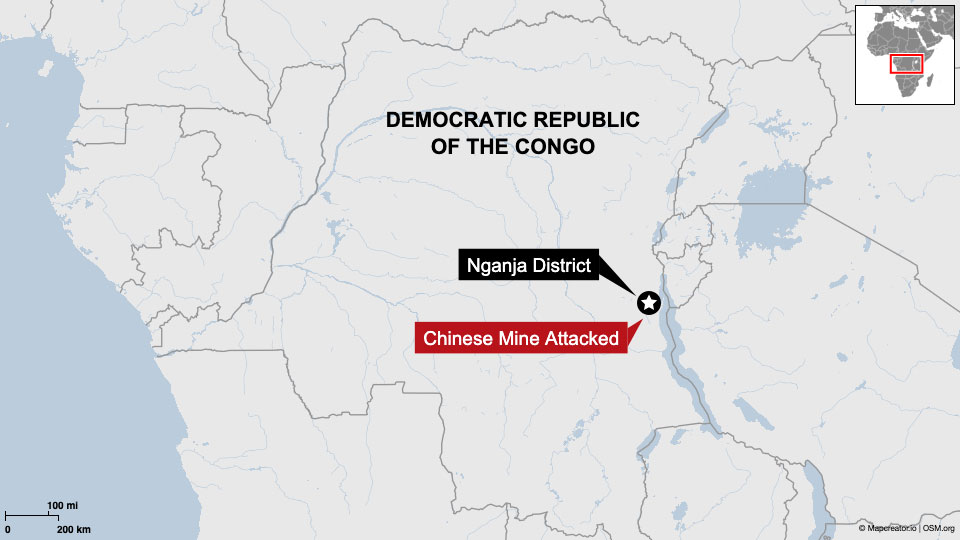


DRC Prime Minister Sama Lukonde on Friday cut the ribbon on a new data center financed by China and built by Huawei. The minister said the center will improve data management and national ...
The News Feed is curated by CGSP’s editors in Asia and Africa.
A new Pew Research poll of 24 high and middle-income countries shows that while the U.S. has generally improved in popularity compared to China, views about the two are quite different among rich versus middle-income countries.
The poll provides an interesting snapshot of how the superpowers are seen.
 Eric Olander

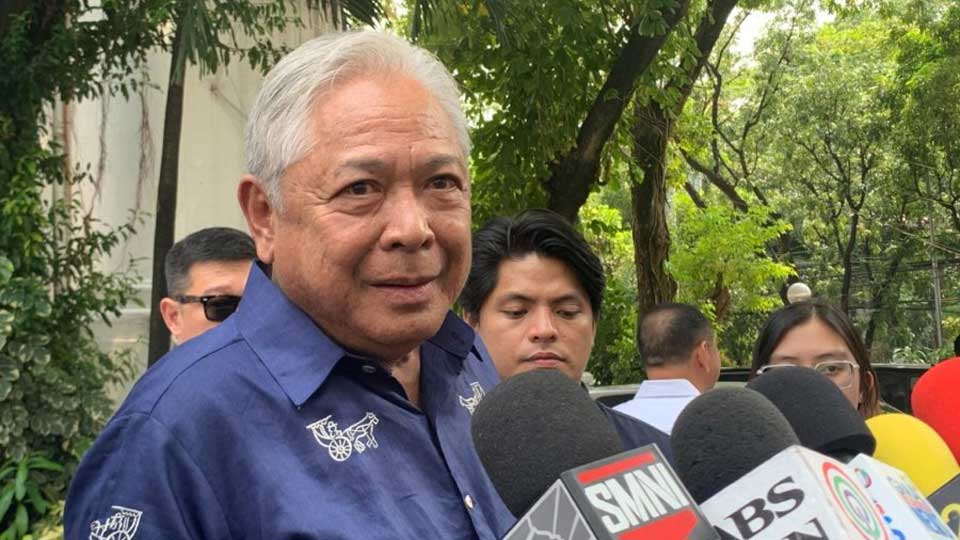
Japan and the Philippines agreed to begin talks to allow Japanese troop deployments on Filipino soil, as China’s actions in the region drive the two partners into their closest-ever security ties.
Japanese Prime Minister Fumio Kishida’s weekend trip to meet with President Ferdinand Marcos Jr. in Manila also focused on bolstering trilateral cooperation with the U.S., a treaty partner to both countries.
The three have conducted joint military drills this year in the South China Sea as confrontations between Chinese and Philippine ships became increasingly dangerous.
WHY IS THIS IMPORTANT? Boosting the security ties goes beyond bilateral — or even trilateral — strategic importance. Tokyo has been on a two-decade drive to deepen security ties with Southeast Asia. Those efforts are bearing fruit and at a crucial time. Tokyo will host the 50th-anniversary ASEAN-Japan friendship summit next month and will look to cement further security pacts. China’s assertiveness in the region is helping pave the way for military cooperation that once seemed impossible.
SUGGESTED READING:
 Han Zhen
Chinese and U.S. officials accused each other of bearing responsibility for dangerously high tensions that have turned the South China Sea into one of the most volatile flashpoints in the world.
Officials from the U.S. State Department and China's Boundary and Ocean Affairs agency met Friday in Beijing.
While this round of discussions focused on maritime issues, the talks are part of a broader diplomatic push, particularly from Washington, to maintain open lines of communication to avoid miscommunication and miscalculation at a time when both superpowers have aircraft carrier strike groups deployed in the region.
During the discussions, the Chinese side accused the U.S. of encouraging other countries to provoke matters in the area. The U.S. side reiterated its concerns about "dangerous and unlawful" Chinese actions, including obstructing a Philippine vessel last month.
Most confrontations in the region recently have been between Chinese and Filipino ships. The U.S. has a Mutual Defense Treaty with Manila and has repeatedly said it would honor its commitment to defend Philippine forces in the event of an armed attack.
The talks come as U.S. President Joe Biden and Chinese President Xi Jinping are expected to meet on the sidelines of the APEC summit in San Francisco next week.
Han Zhen
Bloomberg correspondent Matthew Hill hosts a compelling eight minute mini-documentary on how the United States is now starting to mount a response to China's dominance of certain sectors of Africa's critical minerals supply chain.
Eric Olander
The UN Security Council (UNSC) will hold a closed session on the Israel crisis on Monday at the request of China and the United Arab Emirates. China pledged to promote peace in the Palestinian territories as it took over the presidency of the UN Security Council last week.
China’s Special Envoy to the UN, Zhang Jun, said the Israel issue will top the UNSC agenda for November and laid out China’s priorities: "It is imperative to promote a cease-fire and halt the fighting, prevent further civilian casualties, prevent a larger-scale humanitarian disaster and prevent the conflict from spilling over."
Meanwhile, China’s special envoy to the Middle East, Zhai Jun, wrapped up a tour of the Middle East that took him to Egypt, Qatar, the UAE, Saudi Arabia, and Jordan. He attended the Cairo Peace Summit and met with the Secretary-General of the League of Arab States and the Commissioner-General of the United Nations Relief and Works Agency for Palestine Refugees in the Near East (UNRWA).
Zhai’s efforts are part of a three-pronged effort that includes UN outreach by Zhang and direct coordination with world leaders by China’s Foreign Minister Wang Yi.
However, up to now, it’s unclear what China would like to achieve. Unlike U.S. and European leaders, neither Chinese President Xi Jinping nor Wang Yi have visited the region. Some observers have argued that the engagement has more to do with looking like a big power and sending messages of solidarity to the Arab World and the larger Global South than taking on peacemaking more directly.
WHY IS THIS IMPORTANT: While China has invested billions of dollars in Israel, its economic relationship with Saudi Arabia is far larger. This may shape its approach to the crisis.
SUGGESTED READING:
Indonesia is on a quest to build an end-to-end electric vehicle (EV) industry. The country is rich with nickel, an important raw material for nickel cobalt manganese (NCM)-based EV batteries. It’s a “confident middle-income” country, according to the World Bank, and it’s got a thriving automotive industry that contributes 10% to GDP. All the ingredients for success are there, right?
On paper, perhaps. Looking closer, making the dream a reality has been difficult and risky, not to mention the marginalizing of local communities in the process. Whoever takes the baton from current Indonesian President Joko “Jokowi” Widodo must realize a few points: things may not go according to plan, and relying on China’s foreign investment alone is not enough.
First, nickel is a limited resource. There are various estimates of when Indonesia will run out of nickel, including one that says the current reserves will be depleted in 15 years.
Because of this, the government is planning to limit construction of new smelters. Indonesia has also started to import nickel ore from the Philippines. Meanwhile, exploration for new nickel reserves is difficult, with miners often failing to meet environmental standards.
“It does appear that Indonesia has overplayed its hand on nickel,” said The Jakarta Post.
Building a comprehensive supply chain is a long and expensive road. Right now, China dominates only the upstream, smelting nickel ores using HPAL technologies. Indonesia has to work hard to secure investments for the rest of the chain, particularly the midstream, as shown in research by the Institute for Essential Services Reform (IESR).

Source: IESR
“Uncertainty about the start date of battery production facilities still limits the absorption of MHP upstream products by the domestic EV battery midstream industry,” IESR researchers wrote.
Another growing risk is the trend of battery technologies moving towards lithium-iron-phosphate (LFP), which requires zero nickel and is cheaper in general. Many EV players, including Tesla, have started adopting LFP.
While China is known to have a grip on the global nickel supply, it is also the world’s top leader for LFP. Hence, wherever the trend goes, China wins. Indonesia, on the other hand, may not do so well if it continues to bet 100% of its EV development on nickel.
These are the reasons Indonesia must tread with care. Overconfidence with nickel may jeopardize Indonesia’s grand plan, and overreliance on China isn’t helping.
To balance China’s dominance, experts have discussed the importance of diversifying with other powers such as the U.S., EU, Japan and South Korea. But inter-ASEAN cooperation has been an underexplored idea that Indonesia should approach with more curiosity.
President Biden has nominated top Asia strategist Kurt Campbell as Deputy Secretary of State. The choice of Campbell as Secretary of State Antony Blinken's second-in-command signals continued attention to China despite the U.S.'s growing focus on conflicts in Europe and the Middle East.
The selection comes two weeks before Biden and Chinese President Xi Jinping are expected to meet at the Asia-Pacific Economic Cooperation forum in San Francisco.
Campbell currently serves as the White House’s Indo-Pacific coordinator and was the architect of the Obama administration’s “pivot to Asia” strategy — a doctrine to rebalance away from the Mideast and toward East Asia.
With significant U.S. resources being allocated to the wars in Ukraine and Israel, Campbell’s nomination may ease concerns of Asian allies that Biden’s attention was being drawn away from the region.
The move also comes amid increasing criticism of Biden’s response to China’s confrontations with the Philippines in the South China Sea. On Friday, top Republican senators urged the president to respond more forcefully to what they called “Chinese aggression” and “malign action” against Manila.
WHY IS THIS IMPORTANT? The appointment reflects the ongoing tension between foreign policy focus areas relating to NATO and the Middle East that have preoccupied the U.S. since the 20th century and how the global landscape is being rearranged by the rise of China. Campbell's appointment and the Biden administration's numerous Asia-Pacific initiatives indicate an ongoing desire to focus on China, but it remains to be seen how these competing interests will be balanced.
SUGGESTED READING:
Han Zhen
Licenses issued by the Zimbabwean government could lead to $2.79 billion in Chinese investment flowing into the country. The funding will mostly go to the mining and energy sector.
Zimbabwe has one of the largest deposits of lithium in the world and recently banned the export of raw ore. This has forced some of the mostly Chinese companies operating there to invest in refining facilities, as well as in power infrastructure to run them.
Chinese companies are also involved in revamping Zimbabwe’s energy sector. The investments include a large energy and mining complex, as well as a $500 million solar plant.
The pledged Chinese investment is ten times more than in the same quarter last year, a reflection of the intense investment in the lithium sector. The United Arab Emirates is a distant second, at $498.5 million.
Zimbabwe’s export earnings from lithium tripled to $209 million in the first nine months of this year.
WHY IS THIS IMPORTANT? The investment numbers show that Zimbabwe’s ongoing sanctioned status is creating opportunities for Chinese investors. Of the 180 investment applications, two-thirds were Chinese.
SUGGESTED READING:
China’s government pointed out that its official maps include Israel, after social media users noted that the country was missing from maps services run by companies Baidu and Alibaba.
The issue initially caused confusion, as multiple Western media outlets asserted that Israel was removed due to the recent conflict with Hamas or because of Beijing’s pro-Palestinian stance.
Deeper searching showed Israel has been absent from the Baidu and Alibaba maps for at least two years and that the Palestinian territories are also missing.
Baidu denied deliberately omitting Israel and said the names of some small countries don’t always display.
China's official map released by the Ministry of Natural Resources includes the names of both Israel and Palestine.
Read a full account of the controversy in the Pekingnology newsletter
Han Zhen
Clashes along China’s 2,000km border with Myanmar are raising concerns about trade disruptions and a possible refugee problem in China. Since Friday, fighting between the military junta and local militias has erupted in Shan State and Kachin State, which share borders with China’s Yunnan Province.
Rebels from the Kachin Independence Army, the Ta’ang National Liberation Army, the Arakan Army, and the Myanmar National Democratic Alliance Army have reportedly seized military posts previously controlled by the junta and key roads leading to China.
Meanwhile, the junta continued its bombing of a rebel-held town on the border with China on Wednesday. A military jet struck a site near the town of Laiza in Kachin state, according to a Kachin Independence Army spokesperson. The casualties are unknown.
The UN reports that several hundred people have fled across the border into China and Chinese schools near the border suspended classes.
The U.S. announced sanctions on the Myanmarese state oil and gas company this week in response to violations by the ruling junta. Meanwhile, China is working closely with the junta to control cross-border scamming operations that target Chinese citizens.
This week Chinese Public Security Minister Wang Xiaohong pledged to deepen law enforcement and security cooperation during a meeting with the country’s military leader Senior General Min Aung Hlaing.
WHY IS THIS IMPORTANT? Even though China hasn’t officially recognized the ruling military government, it is its de facto biggest ally. That, and sizeable investments in the country, exposes China to the conflict.
SUGGESTED READING
The Biden administration is facing growing criticism over its commitment to defend the Philippines as confrontations with Chinese forces escalate in the South China Sea.
The U.S. is bound by its Mutual Defense Treaty to defend Manila against any armed attack. And even if China’s recent “aggressive behavior” has not constituted military action, some say Beijing has gone too far and Washington has failed to respond.
Others say the Philippines defense pledge should not extend beyond the Philippines' home islands.
WHY IS THIS IMPORTANT? Any adjustment by the U.S. on its defense commitments will have a direct impact on events on the ground. Beijing’s tense engagements with Filipino forces gauge Washington’s resolve as much as Manila’s.
SUGGESTED READING:
Han Zhen
China’s embassy in France caused an online stir by posting a meme comparing Gaza and Xinjiang. The meme, labeled “Untitled” shows an image of a bombed street in Gaza juxtaposed with an intact and seemingly thriving one in Xinjiang.
The image seems to suggest that Chinese policies that impose draconian social control measures, including extreme forms of surveillance and widespread detainment, lead to better outcomes than the brute force currently seen in Gaza.
The image is a volatile one because it positions China as equivalent to Israel in terms of both “handling” highly contained Muslim populations. In that sense, it’s a blow to China’s attempts to align itself with the Global South, where concerns about the current conflict in Gaza stretch beyond demands for a ceasefire to a broader demand for full Palestinian statehood.
China has also publicly committed itself to a two-state solution between Israel and Palestine. The fact that the meme is being circulated by an embassy account implicitly questions this position because of China’s strong opposition to separatist demands for a Uyghur state.
The meme reflects conversations on Chinese social media, where Xinjiang is being touted as a “solution” to the Palestinian plight, together with growing waves of antisemitism.
The image was quickly countered on Western social media with charges that China’s policies in Xinjiang constitute cultural genocide. It should be noted that these policies receive less criticism from many governments in Muslim-majority countries where anxieties about separatism are equally high.
Ghana is becoming a test case in the United States’ drive to find critical mineral supplies that sideline Chinese mining and refining operations.
Australia’s Atlantic Lithium is building the Ewoyaa mine in Ghana. Half of the mine’s output will go to a new refinery in Tennessee, built by Piedmont Lithium, Atlantic Lithium’s second-largest shareholder.
The operation aims to feed into the Biden administration’s Inflation Reduction Act, designed to avoid Chinese critical mineral supply lines: “Our investment in Ewoyaa will help alleviate potential future US supply constraints and provide crucial resources to help reduce America’s dependence on foreign nations, like China,” Keith Philips told Bloomberg.
Ewoyaa will be in operation in 2026, and its lithium will go into Tesla and LG products. However, it will face an increasingly competitive field. Lithium prices sank this year due to lower EV sales because of tight economic conditions.
WHY IS THIS IMPORTANT? On the African side, the deal is a mixed bag. Atlantic approved equal ownership with the Ghanaian government, while Chinese bidders reportedly pushed for a controlling share. Yet, at present the operation will simply extract raw ore, not locating any refining in Ghana as Chinese companies have done in Zimbabwe. However, there may be more refining of the output not destined for Piedmont’s operations in Tennessee in the future.
SUGGESTED READING:
China’s Special Envoy to the Middle East, Zhai Jun, met with Jordan’s Minister of Foreign Affairs and Expatriates Ayman Safadi on Monday to discuss the conflict in Gaza. This is the newest in a series of meetings about the crisis with diplomats across the region.
China was a co-sponsor of a draft General Assembly resolution calling for a humanitarian pause in the conflict presented by Jordan on behalf of the Arab world last week.
Zhai has been traversing the region recently, meeting with the Deputy Foreign Minister of Saudi Arabia, Waleed Al-Khuraiji, and UN Relief and Works Agency for Palestinian Refugees (UNRWA) Commissioner-General Philippe Lazzarini.
This outreach is part of a multi-front diplomatic effort. While Chinese Premier Li Qiang met with Iranian Vice-President Mohammad Mokhber on the margins of the Shanghai Cooperation Organization gathering in Kyrgyzstan, Foreign Minister Wang Yi met with his U.S. counterpart Antony Blinken, while also conducting numerous phone calls to officials in Brazil, Iran, Egypt, and Saudi Arabia.
At the same time, China has also leaned into UN diplomacy via its special envoy, Zhang Jun, where it has also emphasized acting in concert with Arab states.
WHY IS THIS IMPORTANT? China was criticized at the beginning of the crisis for its relatively slow and ambiguous response. Since then, its position has become clearer, and it now seems to position itself with the Palestinians, the Arab world, and Russia in calling for a ceasefire. Whether China will be willing and able to use its relationship with Iran to avoid a regional escalation of the conflict remains uncertain.
SUGGESTED READING:
The Philippines and China are trading conflicting accusations following yet another encounter in the South China Sea.
On Monday, a Philippine Navy ship sailed near the disputed Scarborough Shoal, prompting China to dispatch air and naval forces of the People’s Liberation Army (PLA).
Neither side reported open conflict. But, as has become routine with these disputes, their versions of events sharply differed — and both strove to show they were in command amid the confrontation.
WHAT CHINA SAYS HAPPENED: A Filipino frigate made an “illegal intrusion” into Chinese waters “without approval from the Chinese government,” said Senior Colonel Tian Junli, a spokesperson for the PLA’s Southern Theater Command. In response, Chinese air and sea forces “followed, monitored, warned and blocked” the vessel in accordance with international law.
WHAT THE PHILIPPINES SAYS HAPPENED: National Security Advisor Eduardo M. Años said the Philippine navy conducted a routine patrol in its own Exclusive Economic Zone, also in accordance with international law. “China is again over-hyping this incident and creating unnecessary tensions between our two nations.”
A military spokesperson insisted that the vessel was neither blocked nor pushed away by the Chinese. “An illegal occupant cannot prevent the legitimate owner from entering his own house and backyard.”
WHY IS THIS IMPORTANT? The encounter is notable in that both sides were utilizing navy forces and not merely those of their coast guards. Incidents involving these higher-grade military craft are becoming increasingly common. The rhetoric, too, shows the importance both sides place on being seen as in control of such events, a key part of establishing legitimacy for their territorial claims.
SUGGESTED READING:
Han Zhen
A Philippine Coast Guard spokesperson criticized domestic communities he said are pushing false narratives about the country's territorial conflict with China.
Commodore Jay Tarriela pointed out what he called three misleading claims that he says support China’s agenda and have gained prominence within the Philippines.
In a thread on X, Tarriela singled out three claims as pushing Chinese talking points and provided counterarguments to each.
CLAIM 1: Calling out China’s “aggression” in the South China Sea could push the countries into war.
Tarriela framed the government's vocal position as promoting transparency and informing citizens.
CLAIM 2: Pushing for transparency is a U.S.-orchestrated tactic.
Tarriela characterized the Philippine tactic of embedding journalists on Coast Guard vessels bound for standoffs with Chinese counterparts as promoting transparency and an example of Philippine agency.
CLAIM 3: Being critical of China’s actions is anti-Filipino and pro-U.S.
Tarriela insisted on Manila's role as a full actor in the dispute rather than a U.S. proxy.
WHY IS THIS IMPORTANT? This is the latest evidence that the China-Philippine dispute is being waged on two fronts: at sea and in the media. It implicitly touches on the sensitive issue of ethnic Chinese in the Philippines, who, like in other Southeast Asian countries, raise the risk of scapegoating amid rising nationalism.
SUGGESTED READING:
Han Zhen
The surge in maritime tensions between the Philippines and China that began in February is largely due to the United States instigating its ally in Manila, according to Wu Shicun, director of the South China Sea Research Center at Xiamen University.
Wu contends the U.S. is pushing the Philippines to change the status quo in the South China Sea through frequent confrontations over territorial claims that the Chinese government rejects outright.
This idea that the Philippines lacks agency in this dispute and is working at the behest of the U.S. is widely believed throughout the Chinese political establishment and critical to understanding Beijing's framing of this issue.
In an interview with the popular online news portal Observer, Wu identified three problems that China has to contend with in the unfolding confrontation with the Philippines in the South China Sea:
WHY IS THIS IMPORTANT? This idea that the U.S. is at the root of China's disputes with developing countries occurs frequently in Chinese policy and academic circles. However, this risks diminishing the agency of these countries and some of the key factors underlying these disputes.
SUGGESTED READING:
Eric Olander
The Communist Party of China (CPC) said any efforts by the U.S. and its partners to reduce their dependence on Chinese critical resources used to manufacture electric vehicle batteries is "futile and will backfire."
The CPC's typically acerbic comments came in response to U.S. Trade Representative Katherine Tai's remarks over the weekend that the U.S. and UK made "significant progress" towards finalizing a critical minerals agreement to build alternative supply chains for cobalt, nickel and other raw materials needed to power EVs.
Global Times scoffed at the idea given China's current dominance in both mining and refining of these resources:
Despite their political slogans, Western countries will be very cautious about taking action in the future, as China is one of the world's major exporters of critical minerals, Lin Boqiang, director of the China Center for Energy Economics Research at Xiamen University, told the Global Times on Monday.
Many of the minerals critical for the global green transition are from China. Data showed that China supplies about 90% of the world's gallium, 78% of the rare earths and 79% of the silicon, according to media reports.
WHY IS THIS IMPORTANT? This Global Times article highlights China's well-earned confidence in building seemingly insurmountable dominance in the EV battery supply chain, yet at the same time also reveals Beijing's deep-seated insecurity about the de-coupling/de-risking movement that's now a popular topic of discussion in G7 capitals.
SUGGESTED READING:
Eric Olander
China was one of 121 countries that voted for a UN General Assembly resolution calling for an immediate humanitarian truce in Gaza on Friday. The vote positioned it against Israel and its key ally, the U.S. Gilad Erdan, Israel’s ambassador to the UN, accused the countries voting for the resolution of voting in “the defense of Nazi terrorists.”
China has worked to improve relations with Israel in recent years, which included inviting Israeli Prime Minister Benjamin Netanyahu to Beijing in June. Its refusal to denounce Hamas for the October 7 attacks was seen as a blow to intentions stated earlier to serve as a mediator in the Israel-Palestine dispute.
On the one hand, this can be seen as proof that the “Chinese never had the same involvement or knowledge or rapport with different players” that could make it a major mediator in the conflict, argues Trita Parsi of the Quincy Institute for Responsible Statecraft.
But while China’s relatively slow and vague responses could be proof that it’s not ready as a mediator in the Middle East, that might not be its main ambition. Rather, China may be playing a broader game of building captions among the Global South, where sympathy for the Palestinian plight has only grown.
In this sense, the optics of the U.S. being abandoned in the UN by even some of its core European allies could be playing into a wider Chinese ambition of reshaping the global order with the help of scores of countries that have long chafed under the Western coalition’s outsized influence.
WHY IS THIS IMPORTANT: China has significant economic skin in the game, with $259 billion in trade with the Middle East and North Africa in 2021. At three times as much as the U.S. trade with the region, that also buys some leverage. While its relationship with Israel took a knock due to China’s support for the Palestinian position, their trade relationship is relatively small ($18 billion in 2021) and it is unclear whether trade would necessarily be directly affected.
SUGGESTED READING:
The deterioration of an aging Filipino ship grounded in the South China Sea is becoming the center of an already concerning global flashpoint between China, the Philippines, and the U.S.
No one knows just how fast the BRP Sierra Madre is falling apart. The Philippines purposefully marooned the World War II-era navy vessel at Second Thomas Shoal in 1999 as a territorial marker amid perceived Chinese encroachment in the area.
Much of the recent tensions — including collisions between Filipino and Chinese vessels near the shoal — surround the Philippines, bringing materials to bolster the structure itself and bring supplies to the few soldiers stationed there.
“The deterioration is faster than the supply that we do,” Philippine defense senior undersecretary Ireneo Espino said last month.
Two unknowns have risen in importance in recent weeks: How forcefully will the Chinese seek to prevent future resupply missions? And what will Beijing do in the event the vessel falls apart?
"We will admit we're worried,” Philippines military chief General Romeo Brawner Jr. told the press recently.
China claims the ship lies in its territorial waters and has repeatedly asked the Philippines to remove it. Beijing said Manila reneged on an agreement to do so, an assertion the Philippines denies.
“By sending a military ship to ‘ground’ at [the shoal], the Philippines has gravely violated China’s territorial sovereignty,” Chinese Foreign Ministry Spokesperson Mao Ning said last week.
“We urge the Philippines to tow away the illegally ‘grounded’ warship as soon as possible.”
Beijing has occasionally tamped down on traditional and social media coverage of politically hot-button issues. But it seems to have left this topic open, and widespread condemnation of the resupply missions has permeated state media and social apps Weibo, WeChat, and Xiaohongshu.
“We should keep playing this cat-and-mouse game with the Philippine supply ships and block their ships carrying construction materials and let them crash into our bigger ships if they want to. Once the Philippine ships are sunk, they deserve it. If the U.S. and the Philippines dare to take drastic retaliatory action, we will make them pay a heavy price,” controversial influencer Hu Xijin posted to his 25 million followers on Weibo, in a stance representative of the current Chinese social media zeitgeist.
WHY IS THIS IMPORTANT? The many unknowns here make confrontation and miscalculations harder to anticipate. The U.S. and China both have aircraft carrier groups nearby in the region, and the U.S.-Philippines Mutual Defense Treaty calls for Washington’s defense of Filipino forces in the event of an “armed attack” — another unknown, as no side has said exactly what such an act of aggression entails.
SUGGESTED READING:
Bloomberg: Race to Fix Crumbling Ship Threatens Conflict in South China Sea by Philip Heijmans and Cliff Harvey Venzon
Philippine Daily Inquirer: BRP Sierra Madre a Symbol of Philippine Sovereignty That China Wants to Destroy by Kurt Dela Peña
Han Zhen
If conflict were to break out in the South China Sea, the Philippines faces a much larger and more sophisticated military in China, which now has the world’s biggest naval fleet.
That has put a growing focus on support Manila might receive in the event of hostilities with China, from official allies like the U.S. to less formal potential partners.
Recent perceived aggressiveness by China “could result in more willing nations to join our fight,” Philippines Defense Secretary Gilberto Teodoro said last week.
Here’s a glance of where potential support for Manila stands:
WHY IS THIS IMPORTANT? With Manila easily outgunned by China, support from other countries could serve as a vital deterrent preventing conflict or could dramatically affect how military action might unfold.
SUGGESTED READING:
Han Zhen
Han Zhen

The Philippines has long been critical of what it deems China’s misinformation campaigns around increasingly contentious issues such as South China Sea disputes.
But now Manila says there is a “small but vocal group of Filipinos echoing pro-Beijing narratives” as well.
“We’ve presumed there was a Chinese information operation [in the Philippines]. They operate everywhere in the world. But we started really being alarmed when we saw that there were Filipinos who were parroting the Chinese narrative,” Jonathan Malaya, Assistant Director General of the National Security Council (NSC), told the Philippine Center for Investigative Journalism (PCIJ) in an interview.
Recent posts on social media sites such as X seem to illustrate Malaya’s concern, including one account repping itself as a fact-check source that hints it may be Philippines-based. Its tactics include posting edited videos and questioning Manila’s version of events such as the recent collisions of Chinese and Filipino vessels.
The approach mirrors those used by alleged China-affiliated groups in other places, such as in Taiwan, where a government task force says such misinformation has “severely infiltrated” Taiwan’s society, with some of it coming from within its borders.
Last month, the U.S. State Department released a lengthy report entitled “How the People’s Republic of China Seeks to Reshape the Global Information Environment.” In it, it claims Beijing “spends billions of dollars annually on foreign information manipulation efforts.”
China strongly denies such accusations and said the U.S. government “invented the weaponizing of the global information space.”
WHY IS THIS IMPORTANT? China appears to be leveraging its considerable strengths in disinformation tactics to try to complicate the narratives surrounding the confrontation with the Philippines, and such information accuracy is becoming increasingly difficult to determine. Moreover, the suspicion that Filipinos themselves are contributing to pro-China narratives is a newer and more alarming issue for Manila.
SUGGESTED READING:
Han Zhen
China on Thursday formally handed over Zimbabwe’s new $100 million parliament building. The six-floor, 33,000-square-meter complex was fully funded by the Chinese government and framed as “a gift to the people of Zimbabwe.”
This use of buildings as a form of diplomacy has become an important part of Africa-China relations. China provided the headquarters of the new African Centers for Disease Control, the Economic Community of West African States, and government buildings in Ghana, Tunisia, Malawi, and Lesotho.
These ‘gifts’ come with some complications. There were prominent accusations of spying enabled by Chinese-built data facilities in the African Union Headquarters in Addis Ababa, and some observers have speculated that Chinese-built facilities may be enabling surveillance of African officials’ interactions with Western counterparts.
WHY IS THIS IMPORTANT? China’s building diplomacy helps to cement Chinese influence at the heart of African governance institutions and to provide China with a semi-permanent and highly symbolic stake that these governments will find hard to ignore in the future.
SUGGESTED READING:


Special Report
Indonesia’s China-Backed Nickel-to-Battery Ambition

Data Tool
Track cobalt mining and processing in the DRC

Data Tool
The CGSP China-Africa Energy Tracker : trace Chinese energy projects by type
CGSP Intelligence gives you the information advantage on Chinese activities in the Global South. CGSP Intelligence is launching in Summer 2025, with analysis and a full set of data tools designed for corporate and enterprise leaders.