Live Feed

The News Feed is curated by CGSP’s editors in Asia and Africa.

Saudi Arabia to Boost Oil Sales to China Next Year

Saudi Arabia is preparing to increase oil shipments to China in 2024 to meet growing demand from a crop of new refineries that will come online next year, according to S&P Global Commodity Insights.

While Russian sales are expected to remain strong next year, watch for Saudi Arabia to increase its market share in China thanks to massive new investments in the Asian country's downstream petrochemicals industry that were announced earlier this year.

Venezuelan President Nicolás Maduro Arrived in Beijing on a High-Speed Train

Venezuelan President Nicolás Maduro arrived on Tuesday on one of China's new high-speed trains at the Beijing South rail station ahead of a meeting with his Chinese counterpart Xi Jinping. Video via @NicolasMaduro.
Venezuelan President Nicolás Maduro arrived in Beijing on Tuesday in a rather unusual manner for a visiting head of state. Rather than fly into Beijing’s sprawling Capital Airport on the outskirts of the city, 

Zambian President Haikinde Hichilema Does the Rounds of Shenzhen’s Tech Giants

Zambian President Haikinde Hichilema at EV giant BYD (top left), Huawei (top right), Tencent (lower left) and ZTE (lower right). Images via @HHichilema.
Zambian President Haikinde Hichilema devoted the third day of his week-long China tour to visiting some of the country’s largest tech companies headquartered in the southern megacity of Shenzhen. The president visited the ...

Forget About Everything Else, Hichilema’s in China to Resolve Zambia’s Still Unfinished Debt Restructuring Deal

Zambian President Haikinde Hichilema is spending much of this week visiting Chinese business hubs in Shenzhen and Shanghai, but the real focus of this trip will be dealt with later in Beijing, where he will tackle the sensitive issue of debt.

Last June, Zambia reached a deal with its bilateral creditors to restructure nearly $13 billion of external debt, half to a consortium of Chinese creditors. A lot of people mistakenly thought that the deal was largely done but that's not the case, say experts, who contend a lot of details still need to be negotiated.

The precise terms of the restructuring deal also haven't been released and they still need to be formally approved by China and other governments involved in the negotiations.

Ahead of Hichilema's arrival in Beijing later this week, two leading debt analysts, Brad Setser from the Council on Foreign Relations and Theor Maret, a research analyst at Global Sovereign Advisory, summarized in a Financial Times column published on Tuesday the ten lessons from Zambia's ongoing debt restructuring process that will no doubt be useful for Hichilema's team now in Beijing and other developing countries seeking to follow Zambia's lead.

Three of those lessons include:

  • CHINA CAN OFFER REAL DEBT RELIEF: China Exim agreed to reduce the coupon on its $4 billion or so in recognized official claims to 1% for the remainder of Zambia’s IMF program, and if Zambia’s underlying riskiness (as assessed by the IMF) remains high, to accept a 2.5% coupon for the remainder of the loan’s life. That is a real concession.

  • GETTING SIGNIFICANT DEBT RELIEF FROM CHINA WILL NOT BE EASIER FOR THE NEXT COUNTRIES IN LINE: It took close to two years and several trips by the IMF’s top leaders to China to convince the Chinese to accept these terms. In addition, China and other official creditors made it clear that neither the treatment of multilateral development banks nor non-resident holdings of domestic debt in Zambia would create a precedent for other countries. 
  • CHINESE STATE CREDITOR GET INSPIRATION FROM THE PRIVATE CREDITORS: The debt relief that China offered Zambia is contingent on whether the IMF upgrades Zambia’s “debt-carrying capacity” at the end of the program period. With an upgrade, the coupon jumps to 4% and the pace of amortizations steps up significantly, with the final maturity reduced by five years.

WHY IS THIS IMPORTANT? The Zambian debt deal agreed to in Paris was described as a "landmark" and a "milestone" that could be applicable to other developing countries applying for relief under the G20's Common Framework. But it's notable that one of the key lessons from Zambia's experience, according to Setser and Maret, is that the "Common Framework is a dud."

SUGGESTED READING:

Two Weeks After the Coup, It’s Business as Usual For Gabon’s Chinese Community

Shelves are well-stocked at this Chinese supermarket in Gabon's capital Libreville. Image via Xinhua.
Other than a 6 p.m. curfew every night, daily life for most of the 3,000 Chinese expatriates in Gabon hasn’t changed much since the military overthrew the government of longtime dictator Ali Bongo ...

New “Chinese Savior” Medical Drama Set in Africa Now Streaming

A new big-budget Chinese medical drama set in a fictitious African country was released this week on major Chinese streaming platforms, the latest installment in the burgeoning genre of “Chinese savior” narratives. “Welcome ...

Remember Those Exploitative African “Blessing Videos” on Chinese Social Media? They’re Back. This Time in the West.

It was once very easy for Chinese social media users to spend between $15 and $40 to get a bare-chested man, a scantily clad woman or even a child to do demeaning performances in short videos that were often highly exploitative.

In China, for the most part, those so-called "blessing videos" were banned from advertising on online shopping sites and social media platforms following last year's exposé of the practice by the BBC.

https://www.youtube.com/watch?v=I0DJlSqlmEw

But now, they're back. This time targeting U.S. and European social media users on Instagram and TikTok.

Seemingly out of nowhere, at least half a dozen services have appeared on these social video platforms promoting video greetings from Africans, Egyptians and Ukrainians among others.

Given that Ukraine, Egypt and various African countries were precisely the same locales that Chinese producers used when they were targeting their compatriots back home with these services, it's quite likely that the same agents have simply shifted their focus from China to the customers in the U.S. and Europe instead.

These services also seemed to have learned from their previous experience and were accused of exploiting the individuals featured in the clips. 

Before they said nothing about whether the performers were fairly compensated and now the issue is addressed in the FAQs: "We are working together and are Partners. They are getting paid well for every single Video. (SIC)"

Check out some of these new services hereherehere and here.

Proposed India-Middle East-Europe Trade Route Could Take India-China Rivalry to Israel

This map of the proposed corridor has been circulating on X
Few people have been as enthusiastic about the announcement of an ambitious proposed trade corridor linking India and Greece via Saudi Arabia, the UAE, Jordan, and Israel as Israeli Prime Minister Benjamin Netanyahu. ...

Cambodia’s New PM to Visit China

Cambodian Prime Minister Hun Manet at the ASEAN Summit in early September. Image: Yasuyoshi Chiba
Cambodia’s new Prime Minister, Hun Manet, will visit China for two days from Thursday, one of his first official overseas visits since taking over from his father, Hun Sen. He will meet with China’s President ...

Venezuela Wants to Join BRICS

Venezuelan President Nicolás Maduro’s six-day visit to China has included stops in the economic and tech hubs of Guangdong, Shanghai and Shenzhen. He is also likely to meet with Chinese President Xi Jinping. Venezuelan Executive Vice President Delcy Rodriguez met with Chinese Foreign Minister Wang Yi earlier this week to discuss economic and trade agreements.

Cooperation in tech, as well as mining, agriculture and special economic zones is on the agenda. Maduro also wants Venezuela to join the BRICS group, which he called “the great engine for the acceleration of the process of the birth of a new world."

In an interview with Xinhua, he said ”There would be three lines of work: strengthening the China-Latin America and the Caribbean relationship with the Celac [Community of Latin American and Caribbean States], strengthening and expanding the group of defense of the United Nations Charter for a re-foundation of the UN and the entry of Venezuela to the BRICS to continue strengthening the process of the birth of a new world.”

He also thanked China for its assistance during the pandemic, saying U.S. sanctions would have blocked the arrival of vaccines.

Meanwhile, Venezuelan bond prices are creeping up amid rumors that a diplomatic breakthrough with the U.S. could ease the sanctions blockade of the oil-rich country. Venezuela defaulted on its $60 billion in debt in 2017. China is its biggest creditor.

WHY IS THIS IMPORTANT? This is Maduro's first visit to China in five years. It represents an attempt to warm up ties against the background of greater U.S.-China rivalry.

SUGGESTED READING AND WATCHING:

China Thinks New India-Mideast-Europe Railway Announced at G20 is Really About China

The Chinese Communist Party is not impressed with the "historic" announcement made at the G20 summit in New Delhi on Saturday that aims to build a vast multi-modal transportation corridor linking India to Europe via the Middle East.

The new railway, according to the CPC-run nationalist tabloid Global Times, is yet another case of "much said, little done" by the United States in an ongoing effort to "isolate China" and curtail Beijing's advances in the Middle East.

The proposed mega-project will integrate railway lines and port connections all the way from India to Europe across dozens of countries in between that will also enable the transport of green hydrogen and data along newly laid undersea cables.

The leaders from the various countries involved in the project did not provide any details on the cost or timing of such an ambitious initiative but were effusive about its potential:

  • UNITED STATES:“This is a big deal. This is a really big deal... This project is about more than just laying tracks. [It's] going to have a hydrogen pipeline there. This is going to significantly reduce the amount of carbon emitted in the air, but it costs a lot of money to put that down. And the world is going to say it’s in our interest — collective interest to do it. -- U.S. President Joe Biden (THE WHITE HOUSE)

  • EUROPE: This is nothing less than historic. It will be the most direct connection to date between India, the Arabian Gulf and Europe. This corridor is much more than just a railway or a cable, it is a green and digital bridge across continents and civilizations" -- EU Commission President Ursula von der Leyen (EUROPEAN COMMISSION)

  • SAUDI ARABIA: "[The railway plan] is built on principles that serve the common interests of our countries by enhancing economic connectivity and positively impacting our partners in other countries and the global economy as a whole” -- Crown Prince Mohammed bin Salmaan (ZAWYA)

  • INDIA: "India does not limit connectivity into regional borders. It has been India's priority to increase connectivity with all regions. We believe that connectivity between various countries is not only a source of increasing trade but also for strengthening mutual trust" -- Indian Prime Minister Narendra Modi (HINDUSTAN TIMES)

A lively debate broke out online after the announcement as to whether the project is specifically aimed at countering China's Belt and Road Initiative. 

U.S. and Western media outlets rushed to frame it as "an alternative to China's Belt and Road vision" or specifically intended to "counter the BRI."

But Evan Feigenbaum, vice president of the Carnegie Endowment for International Peace and one of Washington's most experienced Asia Watchers, cautioned that is the wrong way to look at this kind of deal.

"The problem with “counter BRI” is that it is a US narrative, while local narratives are nearly always about multiplication/addition, not subtraction," he said in a post on X.

WHY IS THIS IMPORTANT? Biden is right when he says this is a "big deal," but that may be precisely the problem. It could be too big of a deal. The coordination task in building a project on this scale across countries and continents is unprecedented and both the U.S./EU don't exactly have a stellar track record building infrastructure in the Global South, much less on a scale as massive as this.

SUGGESTED READING:

This Chart Explains Why Xi Jinping Will Probably Go to Next Year’s G20 Summit in Brazil

Source: China's General Administration of Customs, GeoEconomics Center Calculations
Until recently, there was never any doubt that a Chinese president would participate in major summits like the G20 or ASEAN. Chinese leaders in the post-Mao era saw their attendance at these events ...

U.S., EU Unveil Next Steps in the Expansion of Angola’s Lobito Corridor Railway

The United States and the European Union are moving forward with a plan to upgrade the 1,300-kilometer Lobito rail corridor that links the copper and cobalt belts in Zambia and the DR Congo with ...

Biden says U.S. Not Looking to Contain China Following Diplomatic Upgrade With Vietnam

U.S. President Joe Biden pushed back against the accusation that newly-elevated diplomatic ties with Vietnam are part of a larger effort to "contain China" or start a new "Cold War."

“I think we think too much in ... cold war terms,” Biden said at a news conference in Hanoi on Sunday. “It’s not about that. It’s about generating economic growth and stability in all parts of the world. And that’s what we’re trying to do.”

The President's remarks follow a whirlwind day where he met with Vietnam's Communist Party General Secretary Nguyễn Phú Trọng to oversee the elevation of diplomatic ties to Hanoi's highest-level, a comprehensive strategic partnership that puts Washington on par now with Beijing.

Despite the President's assurances that his eagerness to foster closer ties with Vietnam is not specifically about China, few observers really believe that given Washington's stepped-up effort to forge closer security ties with China's neighbors in both East and Southeast Asia.

For the Vietnamese, however, the political calculations are quite different. The enhancement of ties with the U.S. is just one of several upgrades that it has planned with major countries in the region, including Indonesia, Singapore and Australia.

While Hanoi's relations with Beijing are largely stable, with the exception of a bitter territorial dispute in the South China Sea, Vietnamese leaders are nonetheless keen to fortify their ties with other powers as part of a longheld great power hedging strategy.

It's also worth noting that while Vietnamese public opinion about China is decidedly negative, the leadership in Hanoi, particularly General Secretary Trọng, is far more open to engaging the Chinese -- both politically and economically.

Analyst Reaction to the Upgrade of U.S.-Vietnam Diplomatic Relations

  • COUNTER CHINA"The strategic partnership with Hanoi is a remarkable achievement for Biden given Vietnam’s long-standing ties to Moscow and Beijing, and one that will help counter China’s worrisome influence in the region" -- Washington Post Columnist Max Boot (@MAXBOOT)

  • VIETNAM'S DIPLOMATIC HEDGE: "In Vietnam's calculation, enhanced ties with the United States should not lead to a deterioration in its relationship with China. We are already seeing some indications that Vietnam may even be receiving President Xi soon" -- Yusof Ishak Institute Senior Fellow Le Hong Hiep (BBC NEWS)

  • INTERESTS VS. IDEALS: "By embracing the Vietnamese government despite its repression, Biden abandons the global contest between democracy and autocracy in favor of a mere geopolitical struggle" -- Visiting Princeton University Professor Kenneth Roth (@KENROTH)

WHY IS THIS IMPORTANT? There is no doubt this weekend's enhancement of U.S.-Vietnam diplomatic ties is going to add to Xi Jinping's anxiety about the U.S. encirclement of China in the Asia-Pacific region. While Vietnam will never be a full-fledged ally of the U.S., the increasingly close ties with Washington also mean that it will be more complicated for the Chinese to feel as if Hanoi is fully aligned with their worldview.

SUGGESTED READING:

Analysis from Cobus van Staden

The G20 Summit and the Half-Life of a Joke

When it was announced in 2023 that the African Union would become a full member of the G20, I darkly joked on a podcast that the AU’s entry into the body could very well mark the moment the G20 lost its status as one of the most important global coordination forums. Mark my words, I said, soon The Economist will be like “Uhhh, the G20 is OVER – it’s the ...

China Blocks Vietnamese Fruit Trucks From Entering One Day After Hanoi Upgrades Diplomatic Ties With Washington

Hundreds of Vietnamese trucks carrying fresh fruit are backing up at Chinese border crossings due to newly introduced inspection requirements.

The timing of these new inspections is prompting speculation that it could be a form of retaliation against Vietnam for upgrading diplomatic ties with the United States on Sunday.

If that indeed is what's happening (and it's not certain), it would fit a larger pattern of China using inspections to intentionally slow trade from countries that it is upset with. In 2018, for example, Ford vehicles were inexplicably held up at Chinese ports, presumably in response to new tariffs imposed by the Trump administration on Chinese goods.

WHY IS THIS IMPORTANT? China is clearly anxious about closer U.S.-Vietnamese ties and while officials in Beijing haven't explicitly said so, a trade slowdown like what's happening now on the Vietnamese border could very well be their way of conveying that message without actually saying anything.

SUGGESTED READING:

Philippines and Chinese Coast Guard Face Off Again in South China Sea With the U.S. Air Force Overhead

A China Coast Guard vessel almost rammed a Philippine Coast Guard ship on Friday in the latest confrontation between the two sides over disputed territorial claims in the South China Sea. Video by Barnaby Lo.
The Philippines Coast Guard and Navy successfully outmaneuvered a Chinese blockade to bring food and other provisions to a remote outpost in the South China Sea — but not before several harrowing confrontations with ...

How Chinese Maritime Forces Tried to Blockade a Philippines Re-Supply Mission in the South China Sea

Image via the Philippines Coast Guard
In this image taken by the Philippine Coast Guard (PCG), seven Chinese vessels, including unmarked “maritime militia” ships, surrounded a pair of PCG ships during a re-supply mission on Friday.

Zambian President Arrives in China for Crucial Debt Talks

Zambian President Haikinde Hichilema landed in the southern Chinese megacity of Shenzhen on Sunday to kick off a six-day visit to China that will include highly-anticipated talks with his Chinese counterpart Xi Jinping to finalize the details of a debt restructuring deal signed last June.

Chinese creditors own an estimated two-thirds of Zambia's bilateral debt and played a central role in more than two years of negotiations that resulted in the deal that was agreed to in Paris earlier this summer.

Hichilema's challenge this week, according to Zambian scholar Emmanuel Matambo, researcher director at the Centre for Africa-China Studies at the University of Johannesburg, is to keep Beijing engaged in the debt restructuring process while at the same time try to persuade the Chinese government to provide new development financing:

  • DEBT RESTRUCTURING: China was curiously reticent about the debt restructuring process right up to the consummation of the deal in June 2023. Thus, the invitation to visit China is supposed to clear some of the misunderstandings, if not in substance, at least in form. Hichilema will want to get more assurance from China about continuing its commitment to Zambia in terms of infrastructure in the transport and energy sector.

  • DEBT WRITE-OFFS: There has been widespread disenchantment about the rising costs of commodities in Zambia. Beijing, through its Embassy in Zambia, is well aware of how Hichilema has been embarrassed by angry citizens twice this year in the Mandevu constituency. To help him, China might actually want to write off some of the debt owed to it by Zambia.

  • STABLE TIES: China's detractors are keen to draw adverse conclusions from China's unusual silence during the debt restructuring negotiations. China was silent but not hostile to the process. Relations between the two countries remain on an even keel and will do so, if not out of genuine diplomacy, then out of history and necessity.

The president is also scheduled to meet with Chinese investors to try and entice them to invest in Zambia's mining, energy and infrastructure sectors.

WHY IS THIS IMPORTANT? This trip is going to be critical for both countries to try and close the debt restructuring deal and put it behind them. China's critics have long blamed Beijing for dragging out the process, while Hichilema is coming under increasing pressure at home for letting this drag on. While the deal may have been agreed to back in June, it still needs to be finalized by the various creditors, which is what he's hopefully going to do this week.

SUGGESTED READING:

WEEK IN REVIEW: South Africa Reportedly in Negotiation With Chinese EV Giant BYD to Open Manufacturing Plant in the Country

Jade GAO / AFP
South Africa is reportedly in negotiation with the Chinese electric vehicle giant BYD to open a manufacturing plant in the country, according to the cabinet. BYD, China’s best-selling car brand, launched its first e-vehicle ...

ASEAN Talks with Major Powers Navigate Numerous Controversies

Chinese Premier Li Qiang (with red tie) speaking with Indonesian President Joko Widodo (R) on the way to the ASEAN leaders' 'family photo.' Image: Mast Irham, Willy Kurniawam / AFP.
China’s Premier Li Qiang warned against a ‘new cold war’ as the ASEAN summit moved on to a series of talks between the bloc and its partners. Calling for ways to “appropriately handle differences ...

New Prominence for Premier Li Qiang as Xi Skips Summits

China's Premier Li Qiang speaking during the ASEAN summit in Jakarta. Image: Yasuyoshi Chiba / AFP
Chinese Premier Li Qiang is gaining unexpected prominence thanks to the fact that he is standing in for President Xi Jinping at this week’s ASEAN and G20 summits, where he’ll represent the PRC in ...

Africa Climate Summit Ends With Anger at Western Dominance, Near No-Show from China

Panelists lead by Kenya's President William Ruth (C) conduct a session during the Africa Climate Summit 2023 at the Kenyatta International Convention Centre (KICC) in Nairobi on September 5, 2023. Luis Tato / AFP
The African Climate Summit wrapped up on Wednesday with the adoption of the Nairobi Declaration. It calls for:  Reforms of the international financing system to lower the cost of climate financing for poor ...

TRANSLATION: Africa Is Not Paradise for Chinese Bosses

File image of a Chinese manager inspecting a shoe produced at a now-defunct apparel manufacturing facility in Ethiopia. ZACHARIAS ABUBEKER / AFP
There’s been a recent flurry of posts on WeChat from various accounts in different countries that tout the enormous opportunities available for Chinese entrepreneurs on the continent. Some of these accounts are either ...

Premier Li Qiang Tries to Reassure China’s Southeast Asian Neighbors in ASEAN Address

China’s Premier Li Qiang (L) is greeted by Indonesia’s President Joko Widodo upon his arrival at the 43rd Association of Southeast Asian Nations (ASEAN) Summit in Jakarta on September 6, 2023. Mast IRHAM / POOL / AFP
Chinese Prime Minister Li Qiang sought to soothe tensions with its neighbors in Southeast Asia during his keynote address on Wednesday at the ASEAN leaders summit in Jakarta. Li did not specifically reference ...

While ASEAN Diplomats Converge in Jakarta, Major Powers Conduct Joint Military Exercises Across Southeast Asia

Whether by coincidence or design, three Southeast Asian countries launched high-profile joint military exercises this week with various major powers while leaders from these countries met in Jakarta for the ongoing ASEAN summit.

On Sunday, the Chinese and Thai navies kicked off the annual Blue Strike 2023 joint exercises that includes a number of advanced Chinese warships, submarines and hundreds of troops.

And in Indonesia, thousands of army soldiers from the U.S. and Australia took part in joint jungle training exercises with their Indonesian counterparts as part of Super Garuda 2023.

Also, this week, U.S., Japanese and Philippines navy forces conducted anti-submarine warfare drills followed by a first-ever joint sail in the South China Sea.

That joint sail between the U.S. and the Philippines navies definitely got a lot of attention in Beijing, where there's mounting anxiety over the increasingly close military ties between Washington and Manila.

Communist Party-run media, however, is trying to downplay the issue by showcasing the views of prominent scholars like Zhuo Hua from Beijing Foreign Studies University and Ding Duo from the China Academy of South China Sea Studies, who made the case in the Chinese-language edition of Global Times on Tuesday that the U.S. is an unreliable partner for the Philippines:

This marked the first time that Philippine and U.S. Navy ships crossed through the waters of the South China Sea west of Palawan Island in the Philippines, which is adjacent to the South China Sea's Spratly Islands.

This move by the United States and the Philippines is highly provocative and carries strong symbolic significance. Its purpose appears to be to disrupt ASEAN's stance on the South China Sea issue. Since the Marcos government came to power, the Philippines has taken a series of actions aligning itself closely with the United States, including joint military exercises and provocative actions near Thitu Island.

The joint maritime patrol in the South China Sea by the United States and the Philippines at this moment sends a signal of strengthening the U.S.-Philippines alliance to the outside world. Simultaneously, it conveys a message to ASEAN countries and may attempt to influence ASEAN's position on the South China Sea issue.

It's true that in the short term, the United States and the Philippines have found common interests and cooperation opportunities. However, as the objective dynamics of regional power evolve, their interests may eventually diverge when the balance of power shifts.

WHY IS THIS IMPORTANT? The optics of all this military firepower on display this week seem to convey the sober message that if diplomacy fails, then today's joint exercises could quickly become tomorrow's reality.

SUGGESTED READING:

U.S. Says China’s Map Claims Over South China Sea, Indian Border Regions Are “Unlawful”

The United States joined a growing list of countries to reject China's territorial claims detailed in its new standard map that was published last week.

State Department Deputy Spokesperson Vedant Patel addressed the issues on Tuesday at the daily press briefing and said Beijing's claims are "unlawful" and called on China to settle territorial disputes in the South China Sea in accordance with the international law of the sea.

While U.S. criticism of China's controversial territorial claims was widely expected, the ferocity of the pushback against the map by Asian countries is more surprising, according to Prashanth Parameswaran, deputy head of research at the Washington, D.C.-based consulting firm BowerGroupAsia and author of the popular ASEANWONK newsletter:

It is rare to see such a series of quick coordinated statements among Southeast Asian states, with five countries issuing statements in the span of just four days.

While the Philippines and Vietnam have generally been the two more vocal South China Sea claimants in Southeast Asia, Malaysia, which has seen the issue be in the spotlight a few times already during Prime Minister Anwar Ibrahim’s first year in office, was the first to issue a response.

Even Brunei, whose responses to China are often the quietest and the hardest to detect publicly among the four Southeast Asian claimant states, issued a statement of its own.

WHY IS THIS IMPORTANT? The timing of the map's release was just reckless in terms of ruining whatever positive vibe there was coming out of the BRICS summit in Johannesburg last week and it likely contributed to Xi Jinping's decision to stay home from both the ASEAN and G20 summits. 

SUGGESTED READING:

Chinese, Vietnamese Communist Party Leaders Meet Ahead of Biden Visit to Hanoi

China dispatched a high-level Communist Party (CPC) emissary to Vietnam days before U.S. President Joe Biden is set to arrive when he is expected to upgrade diplomatic ties with Hanoi.

Liu Jianchao, head of the CPC's international liaison department, met with the General Secretary of Vietnam's Communist Party, Nguyễn Phú Trọng, on Tuesday.

The official readout of the meeting, according to Vietnamese state media, was rather bland with few details of what they talked about. However, the timing of the visit suggests that Hanoi wants to convey its assurances that Biden's visit is not intended to roil ties with Beijing.

Biden will make a stopover in Vietnam on his way home from the G20 summit in New Delhi and is expected to upgrade bilateral ties to a “strategic partnership,” or possibly even a “comprehensive strategic partnership” – the top tier in Vietnam’s diplomatic hierarchy and the same level that Hanoi currently has with Beijing.

WHY IS THIS IMPORTANT? Vietnamese leaders have moved quickly this year to bolster diplomatic ties not only with the U.S. but also with a number of Asian neighbors in what is likely a hedge against China. So far this year, Hanoi has elevated relations with South Korea, Singapore and Australia, with Indonesia next.

SUGGESTED READING:

China’s Ambassador to Nepal Sparks New Uproar in India

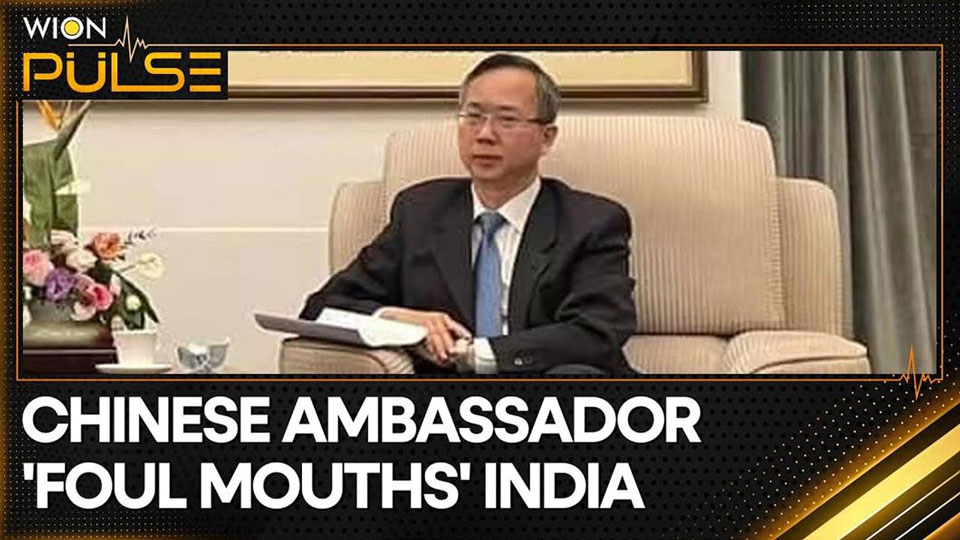
China’s steadily worsening ties with India soured further on Tuesday when Beijing’s ambassador to Kathmandu, Chen Song, criticized New Delhi’s “policies towards Nepal and other neighbors” as “not so friendly.” Chen’s remarks sparked ...

China Offers to Serve as Mediator in Niger

Niger's security officers stand guard as supporters of Niger's National Council of Safeguard of the Homeland gather oustide Niger and French airbase in Niamey on September 3, 2023, to demand the departure of the French army from Niger. AFP
The Chinese ambassador to Niger, Jing Feng, met with the transition Prime Minister Ali Mahamane Lamine Zene on Monday and offered to serve as a mediator to help defuse the escalating political crisis in ...

China Uncharacteristically Muted Response to Taiwan President’s Trip to Eswatini

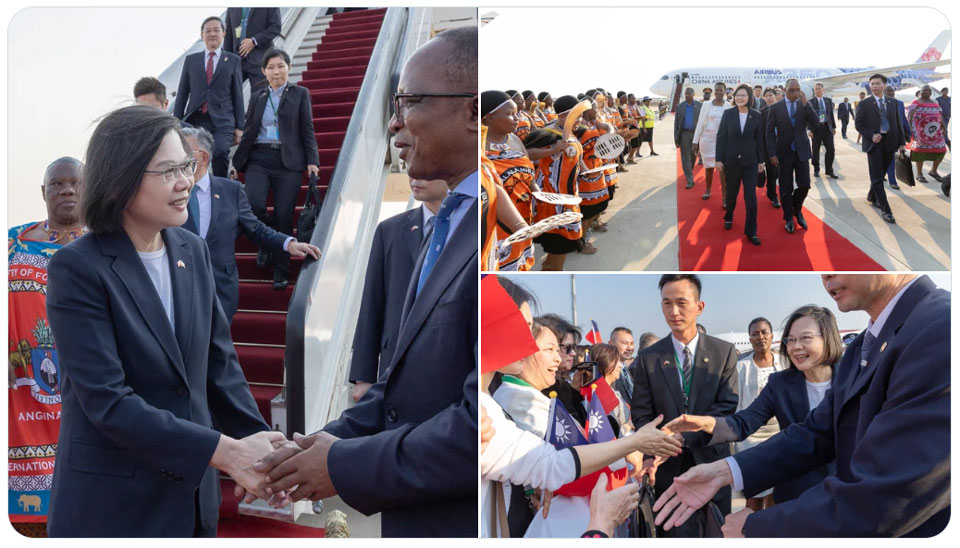
Taiwan President Tsai Ing-wen was greeted at the airport in Eswatini by Prime Minister Cleopas Dlamini. Images via @iingwen.
Taiwan President Tsai Ing-wen arrived in Eswatini on Tuesday for a three-day visit to mark the tiny landlocked country’s 55th anniversary of its independence. The visit is symbolically important given that the southern ...
Page 93 of 2171929394217

[ATTENTION SUBSCRIBERS] Delivery of the daily email newsletter will resume on Monday, January 5th.

X