Live Feed

The News Feed is curated by CGSP’s editors in Asia and Africa.

Exploring China’s Increasingly Prominent Role in Africa’s Media Sector

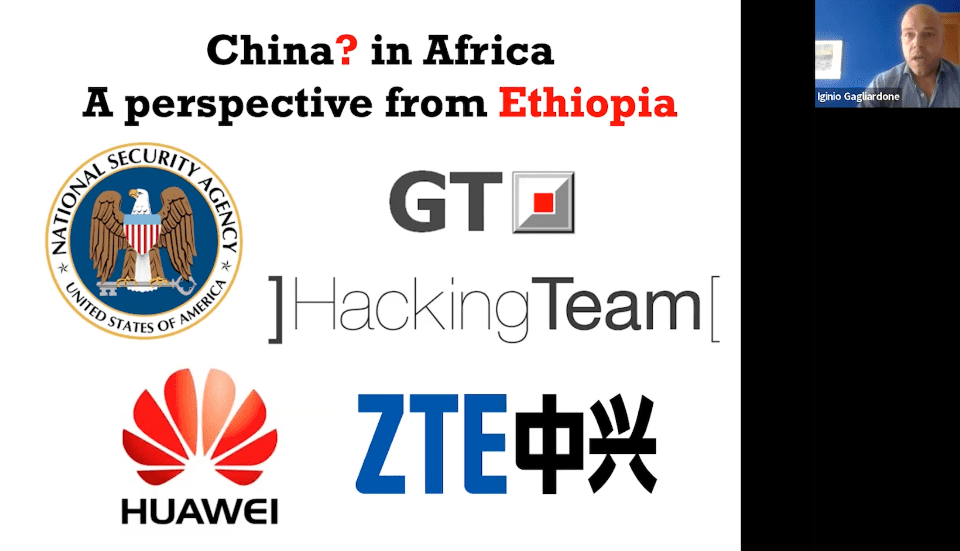
Dr. Iginio Gagliardone presenting at a recent online seminar convened by the University of London on China's media and digital engagement in Africa.
China is now a major player in the African media market, particularly in anglophone countries across the continent where its government-produced digital, broadcast, and print services are all widely available. The Chinese have ...

Hello World! China’s AU Mission is Now on Twitter

China's mission to the African Union opened a Twitter account on Monday, becoming the 53rd Chinese diplomatic entity in Africa that's now active on the microblogging platform. 

For some unknown reason, Chinese diplomats and missions in Africa are far more active on Twitter than their peers in other parts of the world, especially in Latin America and the Middle East where most Chinese diplomatic Twitter activity is still relatively rare.

CAP maintains a list of every Chinese diplomatic Twitter account that is open to anyone to follow. A similar list of Chinese diplomatic accounts in the Middle East and North Africa is also available.

Rising Debt and a Sinking Currency is a Bad Combination For Kenya

Kenya's embattled currency, the shilling, sank even further on Monday, dipping to an all-time low of 115 against the U.S. dollar, prompting renewed concerns that the country will soon face a dramatic economic reckoning. 

The problem is that every time the shilling depreciates against the dollar it means that the Central Bank has to spend more of its hard currency reserves to service the country's ballooning foreign debt, mostly dollar-denominated, and to cover the cost of imported goods, also priced in dollars.

China, of course, is central to all of this given its role as Kenya's largest bilateral creditor and its number one source of imported goods. Kenya barely sells anything in return to China, so a $3+ billion trade deficit also contributes to undermining the value of the shilling.

Traders are bailing on the shilling and a number of other African currencies out of concern that the combination of higher food and energy costs brought on by Russia's invasion of Ukraine combined with steadily rising debt levels point to weak economic fundamentals in these countries.

3 Things China Could Do Right Now To Help Ease the Economic Pain in Kenya and Other African Countries

  • RELEASE SOME OF ITS GRAIN RESERVES: China has done an excellent job in stockpiling key grains and food reserves in recent years, so much so that it now has 69% of the world's maize reserves, 60% of its rice and 51% of global wheat reserves. Of course, China has enormous domestic needs but it can likely afford to release some of its vast stockpiles for use in Africa and other developing regions to help ease the immediate crisis.

  • IMPOSE AN IMMEDIATE DEBT REPAYMENT MORATORIUM:  It's well-established that Chinese creditors do not believe in large-scale debt cancellation but a 12-month debt repayment holiday would give Kenya and other borrowing states badly-needed relief to use their diminishing dollar reserves on urgent social service needs. China has restructured a sizable portion of its debt portfolio in Africa, but not everywhere, especially in Kenya where China Exim Bank last year refused to extend a 6-month debt service suspension.

  • INTRODUCE A "PHASE ONE"-STYLE BUYING PROGRAM:  The central challenge in Kenya and most African countries isn't the debt or weak currency, but the lack of revenue these economies are generating. China can help to alleviate that by embarking on the same kind of buying sprees that it regularly does with the U.S. (remember the famous "Phase One" deal?). Increased Chinese purchases of African agriculture and commodities would boost local suppliers in Africa, add badly-needed revenue into the economy and send an important signal to other international buyers that African countries are open for business.

SUGGESTED READING:

Anti-Russia Sanctions Could Boost Chinese Weapons Sales to Africa

Western pressure on African countries to stop trading with Russia could make China a more important supplier of weapons to the continent. Russia is Africa’s largest arms supplier, but now major arms buyers ...

Will the Ukraine Conflict Lead to a Russia-China-Africa Bloc?

The global blockade of Russia due to its invasion of Ukraine could unite it with China and Africa in a ‘non-democratic bloc’ that could encircle Europe. This was the conclusion of a new ...

It Was ASEAN’s Turn For China’s Fast-paced “Speed Dating” Diplomacy

Right after Chinese Foreign Minister Wang Yi returned from his annual trip to Africa in early January he decamped from Beijing to set up shop temporarily in the small eastern city of Tunxi, 400km outside of Shanghai. 

By relocating to a relatively remote town with a large enough airport to accommodate mid-sized jets, Wang created a COVID bubble that allows his guests to make quick trips without having to endure China's arduous quarantine restrictions.

One after another they've come... first, it was a batch of four Persian Gulf foreign ministers, Turkey and the General Secretary of the Gulf Cooperation Council. Later, foreign ministers from Afghanistan's neighboring states along with Sergei Lavrov swept into town for back-to-back meetings with Wang. Then it was Africa's turn with three lightning round sessions with FMs from Algeria, Zambia, and Tanzania (remote).

Late last week it was ASEAN's turn as Wang's counterparts from MyanmarIndonesiathe Philippines, and Thailand zipped in and out for what looked to be rather upbeat meetings.

The timing of the ASEAN meetings was especially important as it came during the same week that the United States was supposed to have convened President Joe Biden's first leaders' summit that the White House abruptly canceled at the last minute.

Beijing, it appears, saw an opportunity to one-up Washington and quickly scrambled to pull together the FM meetings for what was clearly a diplomatic win in the never-ending Sino-U.S. optics duel. 

Key Highlights From Wang Yi's ASEAN FM Meetings

  • THAILAND: Fast-tracking construction of the now-stalled China-Thai railway and connecting that line with the new China-Laos railway were high on the agenda. While China's railway financing in Africa has all but ended that is not the case in Southeast Asia. (READ MORE)

  • MYANMAR: Myanmar is largely an international pariah state and like Russia, Wang reassured Wunna Maung Lwin that Beijing will support the government "no matter how the situation changes." Wang's statement marks a return to "business as usual" just over a year after the military overthrew Aung San Suu Kyi’s civilian government. (READ MORE)

  • INDONESIA: Just as with Thailand, railway development also featured prominently in Wang's talks with his Indonesian counterpart Retno Marsudi regarding the timely completion of the Chinese-financed and built Jakarta-Bandung high-speed railway. Also, the two discussed China's pledge to build a COVID vaccine production center in Indonesia. (READ MORE)

  • PHILIPPINES: Fewer details were released about this meeting than Wang's other sessions, likely due to the fact that China's ties with the Philippines are among its most contentious in Southeast Asia because of territorial disputes in the South China Sea. Xinhua's readout of Wang's meeting with Teodoro Locsin said vaguely that the "two sides exchanges views on the SCS issue." (READ MORE)

New Transport Corridor Gives China Direct Access to the Indian Ocean for the First Time

File image of "new international land-sea trade corridor" rail-ocean intermodal train bound for Indonesia in southwest China's Chongqing. Image via Xinhua.
A new overland transport corridor has made history by linking China directly to the Indian Ocean for the first time. Built jointly by Chinese provinces and Singapore, the transport corridor links ...

Angolan Logistics Management Tender Will Increase Chinese Influence

The Angolan government is currently deciding which of two China-linked consortiums will manage a transport link that could significantly speed up shipments of strategic minerals from the Democratic Republic of Congo.

The corridor includes the Chinese-built 1,344 km Benguela rail line linking Lobito port with the border of the DRC. It will speed up mineral shipments from the DRC that currently pass through South Africa’s port of Durban.

One of the bidders for the tender is made up of Chinese company CITIC partnered with Sinotrans and China Railway 20 Bureau Group. The second includes the Singapore-based logistics company Trafigura, Mota Engil from Portugal, and Vecturis from Belgium.

However, the Chinese state-owned construction giant China Communications Construction Co. bought a 32% stake in Mota Engil in 2021. The fact that both bidders are linked to China will no doubt raise concerns among Western stakeholders about China's involvement at all stages of the DRC's strategic metals industry, including in the transport of ore.

The Angolan corridor will add new pressure on other African ports, several of which are competing to facilitate shipments from the DRC. A key contender here is Tanzania, which has plans for a regional rail and logistics network.

The government's decision is expected in May.

SUGGESTED READING:

Brazil’s Central Bank Quadruples Yuan Holdings, Raising Chinese Hopes for Greater RMB Acceptance

Brazil’s Central Bank increased its reserves of Chinese renminbi (RMB) fourfold last year. It is the latest indication that the RMB is set to become much more influential in the global financial landscape.

A survey last week indicated that more than a third of central bankers around the world plan to add the Chinese currency to their reserve assets.

Brazil increased its RMB holdings while reducing its reserve of U.S. dollars and euros. This is a significant shift: until 2018, the Central Bank didn’t have any RMB reserves. Now the yuan is its third-largest currency. The U.S. dollar fell by about 5% to 80.34% of the total.

While its total share is still relatively small, the development shows that the Chinese government's drive to internationalize the RMB is moving the needle. This follows Beijing's enhanced economic diplomacy with other regional powers. Argentina recently announced that, as part of joining the BRI, China will subsidize its importation of Chinese goods.   

SUGGESTED READING:

Experts React to China’s New Green BRI Guidelines

The Chinese government is trying to make the Belt and Road Initiative greener, with a new set of guidelines for overseas projects released last week by the powerful National Development and Reform Commission. But how will these new guidelines affect Chinese infrastructure projects around the world?

Boston University garnered reaction from international development experts on how these new guidelines will affect China’s international development role:

  • GROUNDBREAKING: “China’s new directive is the first of its kind—a large emitter with a major global carbon footprint committing to enable low-carbon transitions overseas. For China, what makes this so significant is the fact that it comes from the highest levels and is mainstreamed across all the leading Chinese agencies engaged in overseas economic activity from finance to the environment" -- Kevin P. Gallagher, Director at GDPC

  • NEW CLARITY: "This guidance represents the first real clarity regarding policy implementation of Chinese leader Xi Jinping’s 2021 statement that China would not build new coal plants overseas. Planned coal plants are unlikely to go forward, while plants under construction are likely to proceed, which could add nearly 50GW of new overseas coal capacity and up to 300 million tons of annual CO2 emissions" -- Cecilia Han Springer, Assistant Director of the Global China Initiative at GDPC

  • LOCAL CONCERNS: "This guidance marks an important step forward in prioritizing the environmental concerns of local communities, not just national governments. Communities around the world have long sought protections to ensure that they share in the economic benefits – and are protected from the environmental costs – of international investments, but very few safeguards exist to steer global commercial investment in this direction. As a result, projects may exacerbate existing conflicts and face delays or even cancellations. This guidance recognizes the serious environmental, social and economic risks that can arise from ignoring those concerns." -- Rebecca Ray, Senior Academic Researcher at GDPC

SUGGESTED READING:

China’s Australia Tensions a Win for South African Wines 

South Africa doubled its exports of wine to China last year, following the souring of relations between Beijing and its biggest wine seller, Australia.

While we’ve seen sporadic reports of how Western Cape wine farmers are leaning into their China connection, the global press seems to be waking up to the fact that the tiff with Australia is translating into South African profits.

South African wine-makers are making the most of Chinese interest by tweaking their products to suit Chinese consumers. This includes focusing more on red than white varietals, minimizing the tannin content, and returning to traditional corks, rather than screw-top lids.

China imposed a 212% tariff on Australian wines in 2020 after Canberra called for an investigation into the origins of COVID-19.

SUGGESTED READING:

Solomon Islands Claps Back at Australia for China Pressure

Solomon Islands Prime Minister Manasseh Sogavare hit out at critics of the Pacific Island nation’s recent security deal with China. The contract of the deal was recently leaked, raising alarm in New Zealand and Australia about a possible Chinese military presence in the region.

Addressing the Parliament, Sogavare said: “We find it very insulting, Mister Speaker, to be branded as unfit to manage our sovereign affairs.”

He singled out Australian media coverage, which alleged that the agreement will lead to a Chinese base in the Solomons, about 2,000 km from the Australian coast, calling it ‘nonsense.’

He dismissed the narrative that China is exerting undue pressure on the small state: “The security treatment, Mister Speaker, is [being] pursued at the request of the Solomon Islands’ government. We are not pressured. We are not pressured in any way.”

The island state’s relationship with Australia has long been fractious. In 2019 Australia’s Deputy Prime Minister Michael McCormack dismissed the Solomons’ concern over sea level rise, saying Pacific island nations affected by the climate crisis will continue to survive “because many of their workers come here to pick our fruit.”

SUGGESTED READING AND VIEWING:

A Glimpse Into Communist Party Outreach to Africa

Leaders of 17 political parties from 16 African countries participated in a video conference on Tuesday hosted by the Communist Party of China (CPC). While the theme "Modernization in line with national conditions: the exploration and practice of political parties in China and Africa" seems a bit of a snooze, these kinds of events are key to Chinese influence-building in the Global South.

Unlike many other major powers, Chinese diplomacy runs on both a country-to-country and a party-to-party tier. It allows the CPC to build relationships with counterparts overseas and simultaneously provides Beijing with a valuable hedge against sudden changes in power by shaping relations with both incumbent and opposition parties in key states.

According to the official coverage, “African political parties unanimously expressed their willingness to strengthen exchanges and cooperation with the Communist Party of China, including promoting party-media cooperation, consolidating the public opinion foundation of Africa-China friendship, and promoting greater development of Africa-China relations.”

Read the full article on the Direct to Africa WeChat page (in Chinese).

China Moly Back in Control of the Massive TFM Mine in the DR Congo

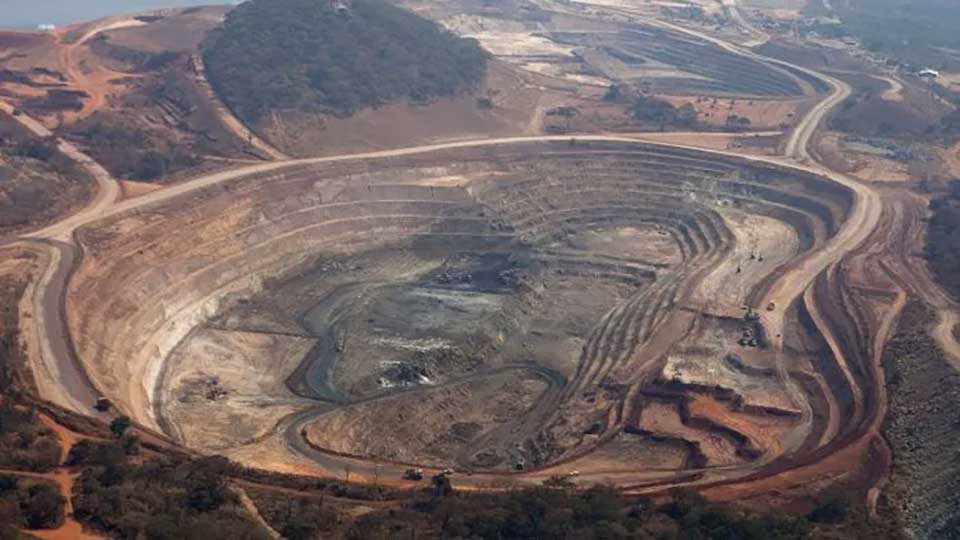
In a surprising reversal, the office of Congolese Prime Minister Sama Lukonde issued a statement late Monday night that suspended all legal proceedings against mining giant China Molybdenum (China Moly) and paves the way for the company to regain control of the massive Tenke Fungurume (TFM) copper and cobalt mine.

Last December, the DRC's state-run mining company Gécamines sued China Moly for allegedly under-reporting TFM's reserves. Then, in February, the court dealt China Moly a major blow when it temporarily stopped the company from operating the mine and appointed a Gécamines administrator. That administrator was named to give Gécamines access to the reserves information that it felt it had been denied.

Now, the Prime Minister's directive appears to reverse the court's decision and allows China Moly to resume its management of TFM.

A few weeks ago, there were indications that China Moly was working on a solution directly with the Prime Minister's office. CEO Sun Ruiwen returned to Kinshasa for the second time in just a few months to meet with Lukonde, conveniently when President Félix Tshisekedi was in Belgium for medical treatment.

This latest twist in the story, according to Congolese mining analyst and CAP Francophone Editor Christian Geraud Neema, is a major setback both for the court system that was seemingly overruled by political imperatives, and for the Presidency that appears to have lost control of the mining portfolio in favor of the Prime Minister's office.

More than anything else, though, explained Neema, this is the latest evidence of how sophisticated China Moly has become in maneuvering through the DRC's complex political system where it not only survives but thrives -- a major accomplishment in what is effectively a failed state.

Read the DRC government's full statement on the Minister of Communications' Twitter page (in French)

Analysis from Cobus van Staden

CGSP Take: How Does the Venezuela Crisis Affect China’s Relationship with the Global South?

By Cobus van Staden, CGSP Head of Research,
China has sharply criticized the Trump administration’s incursion into Venezuela and its detention of President Nicolás Maduro. 

Get a daily email packed with the latest news and analysis from Africa, Asia, and across the Global South.
Read exclusive insights on the key trends shaping China’s relations across the Global South.
Full access to the News Feed that provides ...

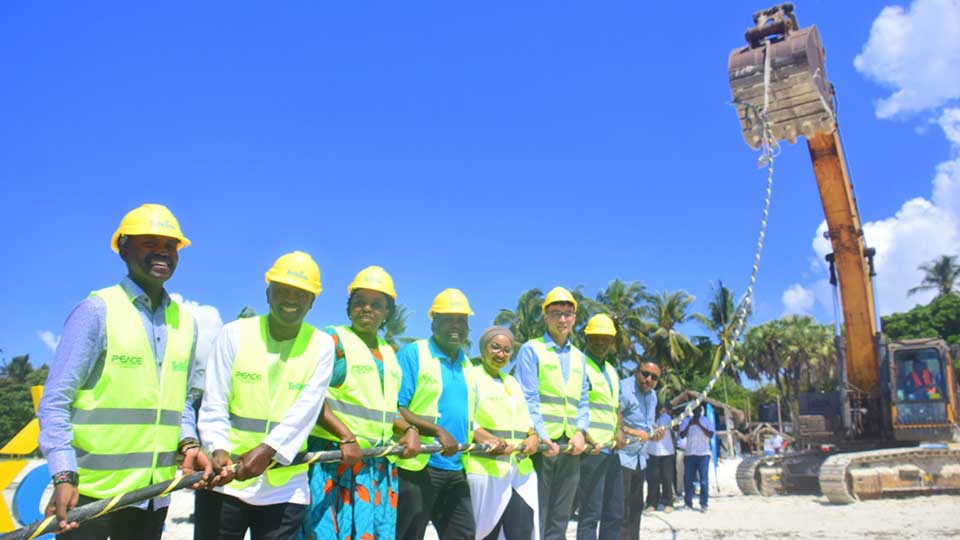
Chinese-backed Asia-Africa-European Undersea Cable Makes Landfall in Kenya

Kenya's Cabinet Secretary in the Ministry of Information and Communications Joe Mucheru (left) marked the arrival of the PEACE undersea cable in Mombasa. Image via @MoICTKenya.
Kenya’s ICT minister Joe Mucheru gleefully welcomed the arrival of the 15,000-kilometer PEACE (Pakistan & East Africa Connecting Europe) undersea cable when it came ashore in the port ...

Huawei’s Mideast-Africa Cloud Summit Wraps Up in UAE With a Warning From South Africa: Fix Your Employment Issues or Else…

The head of South Africa's State Information Technology Agency, Luvuyo Keyise, made it clear on Tuesday that Huawei had better start hiring more local employees if it wants to continue doing business with the SA government.

Earlier this year, South Africa's labor department took action against the Chinese telecom giant after it discovered that 90% of its local workforce were foreign nationals, more than double what's permitted by law.

The company eventually settled out of court and committed to ensuring that half its workforce is locally hired within three years. But Keyise's comments appear to add new pressure that Huawei has to show meaningful progress before the end of the year.

The government's IT lead made the remarks at the end of a two-day convention in Dubai where the Chinese tech giant promoted its new cloud computing services for clients in Africa and the Middle East.

SUGGESTED READING:

Blinken’s Visit to Algeria Highlights North Africa’s Heightened Geopolitical Importance

US Secretary of State Antony Blinken speaks during a news conference with Morocco's Foreign Minister Nasser Bourita, at the Foreign Ministry in Rabat, Morocco, on March 29, 2022. Jacquelyn Martin / POOL / AFP
U.S. Secretary of State Antony Blinken (photo) will cross the border from Morocco to Algeria on Wednesday where he’s to meet with President Abdelmadjid Tebboune. And the fact that this is the ...

China Calls Out European Racism Against Non-White Refugees While at the Same Time Displaying a Bit of Chutzpah of Its Own

Chinese Foreign Ministry Spokesman Wang Wenbin criticized this week the blatant racism that's been on display in Eastern European countries that have warmly welcomed millions of white Ukrainian refugees crossing the border but have refused entry to predominantly non-white refugees from Global South countries.

While the Chinese government is absolutely correct to call out the apparent double standard for the treatment of certain refugees in European countries, it's a bit of a cheap shot when you consider that China has not exactly been very welcoming to refugees from those same Global South countries.

In fact, according to UNHCR statistics from January 2021, China absorbed a grand total of 313 refugees from African and Middle Eastern countries.

Just something to keep in mind the next time you hear a Chinese spokesperson become sanctimonious about Global South refugees that Beijing purportedly defends.

China’s State Banks Extended No New Loans to Latin America and the Caribbean Last Year

For the second year in a row, Chinese policy banks (China Exim Bank and China Development Bank) extended no new loans to governments or state-owned enterprises in Latin America and the Caribbean (LAC). This was the finding of a new study by Boston University’s Global Development Policy Center in collaboration with Inter-American Dialogue.

It echoes a BU study released earlier this month that found that Chinese policy bank lending for overseas energy projects also plunged to zero.  

The findings further confirm a massive change in China’s lending to both LAC and the wider Global South. Compare these findings with 2009, when the China Development Bank alone lent $30 billion to the region.

This doesn’t mean that all lending has stopped. A wider range of Chinese lenders have become active, including commercial banks and state-owned enterprises. The policy banks are also still lending a limited amount directly to Chinese companies for projects in the region.

However, these trends reveal how fundamentally Beijing is rethinking its lending to the Global South. It likely reflects the impact of the pandemic, concern about debt sustainability (especially regarding Venezuela), and the inward direction of domestic resources as part of China’s ‘dual circulation’ economic independence strategy.  

This chimes with trends in Africa. Policymakers in Ghana and Nigeria have publicly acknowledged that their repeated requests for further project financing have gone unheeded. This will likely push them towards more commercial loans, as concessional lending from the policy banks dries up further.

Highlights from BU and IAD's New Report on Chinese Lending to Latin America:

  • A TURNING POINT: China Development Bank and China EXIM Bank are no longer issuing the multi-billion-dollar, oil-backed loans that once characterized Chinese financial engagement with the region. Possible reasons include the effects of the COVID-19 pandemic, CDB's commitment to meeting development goals at home and a sometimes problematic portfolio in LAC, including the prospect of continued losses in Venezuela (Venezuela represents 45 percent of total policy bank finance to LAC since 2005, but neither policy bank has lent to the country for the past five years.)

  • DOWN, BUT NOT OUT: While total combined Chinese finance to the region is unlikely to return to earlier levels, there is some possibility for limited policy bank lending to LAC governments and state-owned enterprises in 2022. China Exim Bank will reportedly back the expansion of Argentina’s Cauchari solar project and may also play a role in some of the other agreements between President Alberto Fernández and Chinese leader Xi Jinping announced during their meeting in February 2022.

  • THE NEW NORMAL: China’s policy banks, as well as a growing rank of Chinese commercial creditors, are still actively supporting China’s broader economic activity in the region. China Development Bank and China Exim Bank will remain engaged by issuing finance directly to Chinese and LAC companies, which is then invested in regional projects, as well as through policy coordination with regional development banks, or by partially backing regional private equity funds, such as the China-LAC Cooperation Fund.

  • THE BOTTOM LINE: "Even if the policy banks feature barely at all in future transactions, the combined effect of Chinese policy bank activity, co-financing initiatives, commercial bank finance, private equity investment, and other forms of engagement will ensure a sizable Chinese financial presence in the region for years to come."

SUGGESTED READING:

China’s Influence a Key Theme of Senate Armed Services Committee Testimony on Latin America and the Caribbean

Threats from China are emerging as a common theme across different U.S. Commands at the U.S. Senate Armed Services Committee hearings.

The issue of China’s influence in Latin America and the Caribbean (LAC) was raised by General Laura Richardson, the head of the U.S. South Command, during a session that included her colleague Air Force General Glen D. VanHerck, who leads the U.S. North Command.

Similar to sessions earlier this month with General Stephen Townsend, the head of the U.S. Africa Command, the committee heard alarmist testimony from Genl. Richardson about China’s investments in projects near the Strait of Magellan and the Panama Canal, which she said could have dual civilian and military uses. China is funding port projects in 17 LAC countries, she said.

General Townsend has repeatedly claimed that China is planning to use port developments in Equatorial Guinea for military purposes, and has also accused China of predatory lending.

This claim was also repeated by General Richardson. Beijing "doesn't invest in Latin America, it extracts," she said.

Highlights from General Laura Richardson's Testimony:

  • INVESTMENT: Richardson said that China has invested $50 billion in the region from 2017 to 2021, compared to an annual investment of $50 million by the U.S. Army Corps of Engineers. “These investments are very methodically thought out,” Richardson said. “I worry about the access that they get in there.”

  • MILITARY TRAINING: Richardson raised the issue that LAC military personnel are receiving training in China. Though the training does not resemble the large, multi-country training exercises in which the U.S. specializes, Richardson said she sees China and Russia “using part of our playbook against us.”

New Guidelines Puts Green Development at the Heart of the BRI

China’s National Development and Reform Commission (NDRC), the most powerful state body overseeing economic planning, released a new set of guidelines on Monday that will shape the Belt and Road Initiative over the next decade.

These guidelines put green development at the center of the BRI. They set 2025 as the target for the implementation of shared green norms with BRI partner countries, and 2030 for fully implementing green standards across all aspects of the BRI, including trade, energy, and transportation.

The NDRC's new guidelines mark a major contrast with Western countries’ current focus on new sources of oil and gas due to the Ukraine conflict, commented Kevin Gallagher, the head of Boston University’s Global Development Policy Center, an important tracker of the environmental impacts of Chinese investment.

However, the guidelines also indicated that while China won’t build any new coal energy plants overseas, those currently in development will be allowed to continue. This is the first clue to the fate of these mega-billion near-stranded assets, which are still being promoted by some Global South governments.

SUGGESTED READING:

Global Times Claps Back at Japan’s ‘Debt Trap’ Allegations

China’s government-owned nationalist tabloid Global Times has hit back at comments by Japan’s Foreign Minister Yoshimasa Hayashi (photo) that Japan will help developing countries out of China’s ‘debt traps.’

GT called the debt trap allegation “an insult to developing countries,” and said: “the so-called "debt trap" is nothing but a lie fabricated by Western countries to smear and disrupt a deepening economic and trade relationship between China and developing countries.”

Hayashi was speaking at a session on Sunday that laid the groundwork for the upcoming Tokyo International Conference on African Development, Japan’s regular meeting with African countries.

GT alleged that the comments were “fully wrapped up by [Japan’s] anxiety of losing overseas projects” and complained that opportunities for China-Japan cooperation in the Global South were being ruined by Tokyo’s "zero-sum mindset."

SUGGESTED READING:

Kenyan Professor Explains Why China, Not the West, Became Nairobi’s Creditor of Choice

When Kenya embarked on its national infrastructure development agenda back in the early 2000s, policymakers didn't have a lot of options when it came to financing. Traditional lenders weren't interested and the cost of borrowing from banks was too expensive.

Enter the Chinese, who United States International University-Africa professor Elijah Munyi told a national radio audience on Spice FM's popular morning show "The Situation Room" had the capital and, more importantly, the risk appetite to finance the country's railways, ports, and roads.

Munyi's discussion with host Eric Latiff was notable because it's one of the few instances on a mass media platform where the topic of China-Africa ties did not bring up well-worn tropes like debt traps and neo-colonialism.

Key Highlights From Elijah Munyi's Appearance on Spice FM Radio:

  • [6:32] WHY DID CHINA BECOME KENYA'S LENDER OF CHOICE? "Traditionally when you look at infrastructure, which is where China has become big, that was not the traditional interest [of the West]. So, the OECD bilaterals, the way they tended to look at loans was mostly in the social sectors like education, health, and so on. China was interesting, unique, and different with their focus on infrastructure, and it's really worked as you see the kind of infrastructure development that's going on. 

    "So, the alternatives did not have the kinds of ideas that China had. The alternatives also didn't have the kind of risk-taking that China has done in terms of the amount of money that China was willing to put in. And, therefore, to some extent, you can see why China is very attractive [as a creditor]."

  • [13:43] DO YOU THINK KENYA HAS FULLY TAKEN ADVANTAGE OF THE RELATIONSHIP WITH CHINA? "I think they've capitalized very well in terms of capital procurement -- so debt. For some years, they didn't care what the OECD countries were doing because they could get the money we wanted from China... I would say the (Kenyatta) administration is capitalizing on the relationship with China in terms of changing their own thinking that says we don't need to have one model so we can be looking at what China has done.

    However, this is where I have a problem because I wonder if we are really looking at the Chinese model domestically to see how they raised themselves up and I don't think we are doing that. 

Watch the full interview with Elijah Munyi on the Spice FM YouTube channel.

China’s Minmetals Doubles Down on DRC Cobalt

File image of the Kinsevere cobalt and copper mine in the Democratic Republic of Congo.
The lure of greater access to the DR Congo’s vast copper and cobalt reserves is drawing more Chinese mining companies to expand their investments in the country. Mining giant Minmetals Resources on Monday ...

A Sixth Chinese Ambassador in Africa Says Farewell

Li Lianhe, China's ambassador to Algeria, is the sixth Chinese ambassador wrapping up his tour of duty to Africa. He joins his colleagues in Burkina Faso, Rwanda, Namibia, and Gabon who have finished their tours.

https://twitter.com/ChinaEmbAlgeria/status/1508471824602079232

While the number is unusual, this is a normal part of diplomatic life, and doesn't indicate any underlying concern.

SUGGESTED READING:

China’s Mideast Special Envoy Visits Morocco in the Latest Stop of His Low-Key Regional Tour

China's Special Envoy to the Middle East, Zhai Jun (left), traveled from Khartoum to Rabat late last week where he held talks with Moroccan Foreign Minister Nasser Bourtia (right) in what appears to be a low-key meet 'n greet regional tour.

Over the last few days, Zhai has traveled to Jordan, Saudi Arabia, Egypt, Sudan, and now Morocco to meet with various leaders and stakeholders. However, his tour doesn't seem to have a specific agenda. The readouts from all these meetings are vague and lack any specifics.

Also, in contrast to his Horn of Africa Special Envoy colleague Xue Bing who spoke with local media throughout his recent tour, Zhai is maintaining a much lower profile.

One issue of note that did emerge from Friday's meeting with Bourtia in Rabat was the statement by Zhai that China and Morocco would "coordinate positions on all developments on the international scene" which some media reports interpreted as a nod to the two countries' shared abstention from a United Nations vote earlier this month to condemn Russia's invasion of Ukraine.

For much of the past year, China has said that it would like to play a larger role in Mideast diplomacy, and in the Arab-Israeli peace process in particular. Until recently, Beijing's done relatively little to make that happen, but Zhai's tour may signal change. That would explain why this round of meetings is focused more on just getting to know the various players rather than discussing specific initiatives.

Zhai, like Xue, was warmly received at each stop along his tour, and there seems to be at least some appetite on the part of MENA and Mideast leaders for China to play a larger diplomatic role, especially since there's a growing perception that a geopolitical realignment is underway in response to diminished U.S. influence in the region.

Fresh From His Meetings With Zhai, Morocco's FM to Welcome Blinken

Jacquelyn Martin / POOL / AFP

U.S.-China Great Power Politics will be in play in North Africa this week when Secretary of State Antony Blinken arrives in the region this week for talks in both Algeria and Morocco.

Blinken is currently in Israel, where he met over the weekend with both Israeli and Palestinian leaders. On Monday, the Secretary will attend the so-called "Negev Summit" along with his counterparts from Bahrain, the UAE, Morocco, Egypt, and Israel.

Moroccan Foreign Minister Bourtia will get quite a bit of face time with Blinken this week both in Israel and then back in Rabat. Blinken will visit the Moroccan capital later this week after a stop in Algiers.

So far, there's no indication that China-related topics will be on the agenda during Blinken's trip to North Africa. But Beijing's heightened presence in the region will likely be hard to avoid, especially since the Secretary's arrival follows visits by two Chinese Special Envoys to the region this month.

U.S. State Department spokesman Ned Price made it clear last week that building support against Russia for its invasion of Ukraine will be a key topic of discussion in both Rabat and Algiers. But that's likely going to be a hard sell, as Algeria joined China in abstaining from the UN resolution to condemn Russia earlier this month, and Morocco avoided the vote. China has also been in the region to bolster its coalition of developing countries that tacitly support Moscow and broadly oppose Western military intervention in regional conflicts.

SUGGESTED READING:

Foreign Intervention is the Root Cause of Conflict in the Horn of Africa Says China’s Special Envoy

Foreign intervention more than anything else is to blame for the current instability in the Horn of Africa (HoA), according to Xue Bing, China's Special Envoy for the region.

Xue made the remarks during a small press briefing this weekend in Uganda before leaving for the final stop of his nearly two-week tour of countries in the HoA. For the first time on this trip, Xue provided more details about the peace conference Beijing hopes to convene in the next few months - an idea he said has been well received by regional leaders:

"This region is not safe. Security is a problem, like in Somalia, the conflict in Ethiopia, and other parts. So, that's why the Chinese have put forth such a proposal (for a peace conference) to bring the regional countries together to talk about their differences through peaceful negotiations.

China proposes to provide a platform for regional countries to come together, to settle their differences through peaceful means. In order to implement this proposal, China suggests holding a peace conference as soon as possible, hopefully in the first half of this year. 

The essence of this proposal is to get rid of foreign intervention. We think the root cause of the conflicts [in the Horn of Africa is] foreign intervention and neocolonialism. 

I've [traveled] to several countries already. I've been to Eritrea, Somalia, Ethiopia, Djibouti, Kenya and now I'm in Uganda. From here, I'll also go to South Sudan. The initial response that I've [received] from these countries is very positive. They're all supportive of China's proposal and they're all ready to cooperate with China and to participate in this first peace conference."

Xue's reference to "foreign intervention" was likely code for the U.S. He's insinuated on repeated occasions during this visit of that American influence is destabilizing the region. He probably did not mean China's friends in the United Arab Emirates who, more than any other country, provided arms to the Ethiopian government, to the extent that it helped to tip the balance in the Tigray war.

It's becoming increasingly apparent that the U.S. and likely the European Union will not be invited to the proposed Chinese-sponsored peace conference for the HoA.

Xue will next travel to South Sudan for the final stop of his tour.

https://www.youtube.com/watch?v=qZOCZXyl60E

SUGGESTED VIEWING AND READING:

China Rallies Countries in Africa and Other Developing Regions to Bolster Its Position on Ukraine War

China is leaning heavily into its ties among developing countries to build support for its stance on Russia’s invasion of Ukraine which Beijing feels is a proxy issue for Western militarism. The issue ...
Page 139 of 2191138139140219