Live Feed

The News Feed is curated by CGSP’s editors in Asia and Africa.

China’s Ambassador to the African Union Among the Growing Number of Chinese Envoys Rotating Out of Their Posts

China’s ambassador to the African Union, Liu Yuxi, is among the unusually large number of Chinese envoys on the continent who are rotating out of their posts this month.  Liu ...

Chinese COVID Vaccine Deliveries Around the World Have Essentially Stopped

China's once enormous global COVID vaccine distribution drive has effectively come to a halt this year, according to new data published by the public health consultancy Bridge Consulting in Beijing. It's not clear what prompted the sharp dropoff in vaccine deliveries, but it could complicate China's pledge to Africa to donate 1 billion doses before the end of the year.

Last Fall, Chinese President Xi Jinping announced at the FOCAC conference in Senegal that China would donate 600 million jabs and provide another 400 million from joint venture manufacturing facilities on the continent. But so far there are only two factories in Africa that produce Chinese vaccines, one in Egypt and the other in Morocco, and their output are in the tens of millions of jabs -- far below the hundreds of millions that will be required for China to meet its goal.

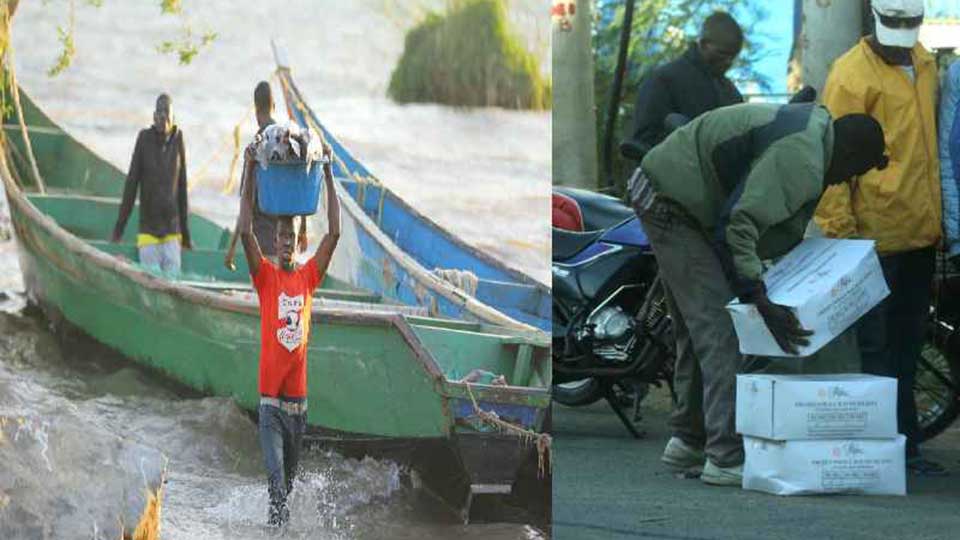
Frozen Imported Chinese Fish Being Passed Off as Fresh Catch in Kenya

Image via The Standard.
Unsuspecting shoppers at the fish markets in the western Kenyan city of Kisumu on Lake Victoria have been buying frozen imported fish from China that’s being passed off by unscrupulous vendors as fresh ...

China’s Special Mideast Envoy Meets With Sudan Leader

Zhai Jun, China’s Special Envoy to the Middle East, met on Tuesday with the head of Sudan’s army and the leader of the October 25 military coup that plunged the country into crisis, Lieutenant-General Abdel Fattah Al-Burhan.

Zhai’s trip is part of a concerted Chinese diplomatic effort in East Africa and the Middle East. His colleague Xue Bing, China’s Special Envoy to the Horn of Africa, is also on a tour of the region, and Foreign Minister Wang Yi met with counterparts from several Islamic countries in Pakistan.

Details of their discussion haven’t been released, but it reportedly included discussions of a possible future democratic transition for Sudan.

Read more on this story on the Al-Ahed website (in Arabic)

U.S. and Chinese Special Envoy Visits Raise Great Power Questions in Horn of Africa 

Xue Bing, China’s Special Envoy to the Horn of Africa, is winding down his visit to the region with a two-day stop in Uganda, after visiting Eritrea, Ethiopia, Djibouti, and Kenya. His last stop before returning will be South Sudan. His tour coincided with a visit to Sudan by his colleague Zhai Jun, the Special Envoy for the Middle East.

Xue’s appointment as Special Envoy raises questions about how he’ll interact with his U.S. counterpart, David Satterfield, Washington’s Special Envoy to the Horn of Africa. Satterfield also visited the region this week, touching down in Addis Ababa on Monday to meet with officials from the Ethiopian government and the AU.

Xue and Zhai's visits seem to indicate that China could be exploring mediation in Northeast Africa. Xue hasn’t revealed many details, but he did mention that China is planning a peace conference for the region. Kenya and Ethiopia have reportedly both offered to host it.

At present it is unclear which of the region’s many conflicts would be the focus. Ongoing tensions in Sudan, South Sudan and Somalia are candidates, as is the civil war in Ethiopia, which has caused disruption across the Horn.   

The flurry of visits raises the stakes in the region. It also raises many further questions about how U.S.-China interactions will influence possible regional peace processes.

Key Questions Raised by China's Peace Conference in the Horn of Africa:

  • U.S.-CHINA: While Satterfield hasn't commented on China's possible involvement, Xue has been quite critical of America's role: "China will send out engineers and students. We don’t send out weapons. We don’t impose our views on others in the name of democracy or human rights." This makes one wonder whether the U.S. will be part of a possible peace conference, and if not, how legitimate the process will be.

  • FAIR DEALER: China has positioned itself on particular sides of a few regional conflicts. For example, Beijing has supported Somalia's opposition to the secession of the (Taiwan-affiliated) territory of Somaliland. Foreign Minister Wang Yi's December visit to Ethiopia was also read as taking sides in its civil war. Such explicit loyalties raise questions about whether China will be perceived as a credible mediator among opposition factions in the region's conflicts.

  • EXPERIENCE: China has had very limited experience in this kind of conflict mediation. Beijing has had some experience brokering multi-party talks in North Korea and Myanmar but very little in Africa. Its one attempt to broker a settlement in South Sudan ended inconclusively. It is unclear which skills China brings to a possible peace conference, and how realistic its peace-through-development proposals are.

SUGGESTED READING:

Russia Shores Up BRICS Support on Ukraine

Russia Foreign Minister Sergei Lavrov (second from the left) hosts ambassadors from China, South Africa, Brazil and India. Image via the Russian Foreign Ministry.
Russian Foreign Minister Sergey Lavrov (photo, second from left) met with ambassadors of the BRICS countries earlier this week to discuss the crisis in Ukraine. The meeting formed part of Moscow’s campaign to characterize the ...

Four Different Chinese Ambassadors are Moving On

An unusually large number of Chinese ambassadors announced this week they will be leaving their posts in at least four African countries. It’s just a coincidence that so many are happening at once ...

The Increasing Closeness Between China and Somalia Raises Questions for U.S.

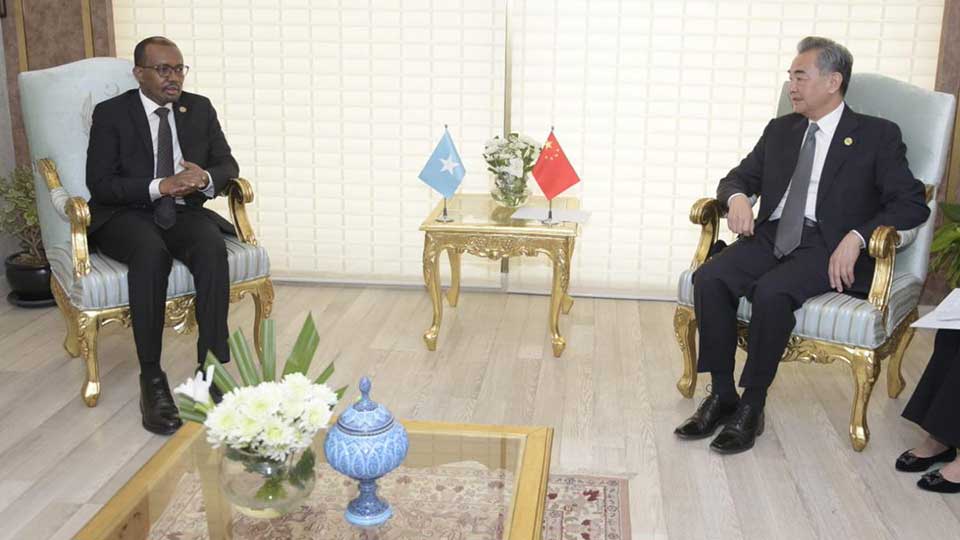
Somali Foreign Minister Abisaid Muse Ali meeting with Chinese Foreign Minister Wang Yi opn the sidelines of the OIC in Pakistan. Image via @MinisterMOFA.
Somalia is emerging as a focus for China, following a meeting between Chinese Foreign Minister Wang Yi and his Somali counterpart Abisaid Muse Ali on the sidelines of the Organization of Islamic Cooperation meeting ...

If You Want to Read Bad Things About China’s Engagement in Africa, You’ll Enjoy the Hoover Institution’s New Handbook

The conservative Hoover Institution at Stanford University spent several months working with thirty civil society organizations from 24 African countries to produce a new handbook that is purportedly intended to help policymakers better understand the key issues related to China's engagement in Africa.

The 40-page report by Glenn Tiffert, a research fellow at the Hoover Institution and Oxford University doctoral candidate in Middle Eastern studies Oliver McPherson-Smith, provides a comprehensive overview of the key themes that frame the broader China-Africa relationship -- however, their assessments are almost entirely negative.

"Beijing’s high-flown rhetoric masks a deeply asymmetric relationship [with African countries] full of unfulfilled promises, hidden costs, and corrosive impacts," the authors conclude. "The goal is not to exclude China from Africa, but rather to shift its engagements there onto a more equitable footing and to equip Africans to make wiser, more informed choices among all the global partners available to them," they added.

Highlights from Hoover's New Report on Chinese Sharp Power in Africa:

  • DEBT: "Because China’s loans put the logic of geopolitics ahead of economics, the money flows easily and quickly, which makes lending from China attractive to African governments. Unencumbered by the rigorous studies of economic feasibility and environmental and social impact that Western lenders typically require, China funds ventures that are more likely to cause harm to local communities, prove unsustainable, and never generate sufficient revenue to offset their costs, ultimately destroying more wealth than they create."

  • NATURAL RESOURCES: "Companies from China capitalize on gaps in administrative capacity and fault lines in local oversight to implicitly renegotiate [natural resource extraction] agreements through regulatory noncompliance, disregard for contractual terms, or repeated criminal violations. These irregularities impose tangible costs on host communities across Africa."

  • INFRASTRUCTURE:  "To end poverty on the continent, the African Development Bank estimates that an annual $68–108 billion infrastructure investment gap needs to be filled. Foreign lending, including from Chinese or Chinese-affiliated organizations, can help to fill the gap. However, predatory and unscrupulous practices impose additional costs on recipient economies and societies, thereby diminishing the benefit of infrastructural development."

  • TECHNOLOGY: "China is having a corrosive impact on internet freedom in Africa. While vendors from a variety of countries sell censorship and surveillance tools, China occupies a privileged position because African telecommunications networks rely heavily on hardware from China, and personnel from China are embedded in African providers, regulators, and enforcement agencies, where they offer support services and training."

https://www.youtube.com/watch?v=WFSEoYlIb6k

UGGESTED READING AND VIEWING:

Leading Scholar Argues the Middle East is Pivoting to Regional Cooperation and China

The retreat of the United States is causing a ‘wave of reconciliation' in the Middle East and reorienting these countries towards China. So says Ding Long, a prominent professor at the Middle East Institute at Shanghai University of International Studies.

Ding argued in an op-ed for the Chinese version of Global Times that the thawing of relations between Saudi Arabia and Iran, or Israel and the United Arab Emirates, points to a wider move towards cooperation largely due to an American retreat from the region.

He feels this shift is causing Middle East nations to look towards China, and that the recent flurry of Chinese Mideast diplomacy reflects a growing regional alignment with Chinese development-led models of peace-making.

Ding Long’s View of the Middle East’s “Tide of Reconciliation”:

  • DEVELOPMENT OVER CONFLICT: "Middle Eastern countries are [becoming] aware that their infighting, provoked by foreign forces such as the United States, makes them pursue so-called security at the expense of development and lose many development opportunities."

  • BYE-BYE, GEOPOLITICS: "For a long time, the United States and other Western countries have [...] coerc[ed] Middle East countries into endless geopolitical conflicts, and development was not on the agenda. The improved relationship between Saudi Arabia and Iran shows that the Middle East countries are trying to get rid of the curse of geopolitical struggle."

  • HELLO, CHINA: "The collective embrace of China by Middle East countries also reflects the new trend of economy and trade leading Middle East diplomacy, indicating that they have recognized China's view of "development as the key", and regard China as an important partner in economic development and transformation."

Read the full column on the Chinese edition of the Global Times newspaper.

Wang Yi Meets With African and Mideast FMs on Sidelines of OIC Gathering

Wang Yi used the opportunity of his visit to the OIC meeting in Pakistan for side-line talks with counterparts from prominent members of the organization of Islamic states, including Saudi Arabia, Somalia, Egypt, Turkey and Thailand.

These talks reportedly covered regional and bilateral cooperation across a wide range of issues, with Ukraine, Middle East security, and broad cooperation featuring prominently. The meetings also dovetailed with prominent visits byChinese Special Envoys to East Africa and the Middle East, and Wang’s meetings with African leaders this weekend.

Wang's meeting and photo-op with Somalian Foreign Minister Abisaid Muse Ali signaled Chinese support of Mogadishu's opposition to the secession of the Taiwan-aligned territory of Somaliland, as its president visited Washington DC (see below.)

SUGGESTED READING:

Somaliland President Taps into Washington’s China Issues

Somaliland President Muse Bihi Abdi speaking at Georgetown University in Washington, D.C.
President Muse Bihi Abdi, the leader of the separatist region of Somaliland, wound up his visit to Washington, D.C. with significantly more U.S. support for independence. Somaliland is officially a province of Somalia, ...

No, China Did Not “Provide Weapons to Farmajo Regime in Somalia”

Washington's former top diplomat for Africa, Tibor Nagy, posted a highly misleading tweet on Tuesday that accused China of "hypocrisy" over remarks made by Chinese Special Envoy Xue Bing, who told Daily Nation correspondent Aggrey Mutambo earlier this week that "China will send out engineers and students. We don’t send out weapons" to the Horn of Africa.

Nagy took issue with China's $5 million donation of military equipment to the Somali National Army (SNA) on Friday, March 18 comprised of non-lethal material including ambulances, water trucks, landmine detectors, and medical/logistical materials. 

However, to characterize that donation as "weapons" is inaccurate.

The irony here is that the Chinese ambassador to Somalia, Fei Shengchao, said the equipment was intended to help the SNA more effectively combat Islamic militants from Al-Shabab which, of course, is the same group that U.S. military forces have been fighting for years.

China’s Ambassador to Somalia Makes Clear That When It Comes to Taiwan, There’s No Room For Compromise

Occasionally, China's famously media-shy ambassadors in Africa come out of their shells and engage in surprisingly frank discussions on social media. Admittedly, it doesn't happen very often but it did on Monday over on Fei Shengchao's Twitter page when the Chinese envoy to Somalia responded to critical comments about Xinjiang and Taiwan.

After a brief exchange about China's treatment of its Muslim Uyghur minority population, Somaliland freelance journalist Mohamed Amin commented on Taiwan. Fei, uncharacteristically calmly for a Chinese official in this day and age, laid out Beijing's position on the issue in clearer language than usual.

China's stance on Taiwan is a poorly understood issue among many African stakeholders, particularly just how contentious it is for those on both sides of the Taiwan Strait. So Fei's framing of the issue as a "litmus test" is an interesting way to convey an otherwise complex issue.

Read the full exchange on Ambassador Fei Shengchao's Twitter page.

Analysis from Cobus van Staden

CGSP Take: How Does the Venezuela Crisis Affect China’s Relationship with the Global South?

By Cobus van Staden, CGSP Head of Research,
China has sharply criticized the Trump administration’s incursion into Venezuela and its detention of President Nicolás Maduro. 

Get a daily email packed with the latest news and analysis from Africa, Asia, and across the Global South.
Read exclusive insights on the key trends shaping China’s relations across the Global South.
Full access to the News Feed that provides ...

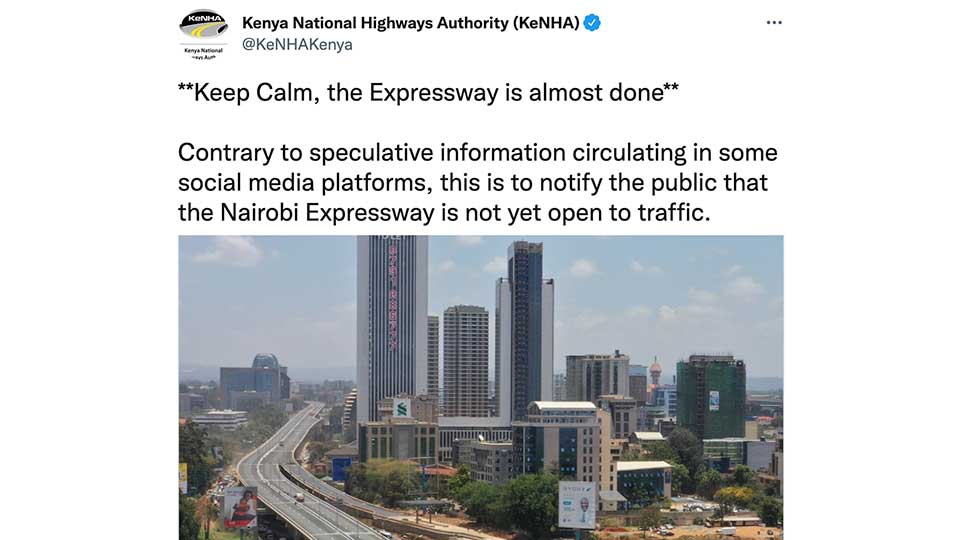
Excitement, Rumors in Nairobi about New China-built Expressway

The growing excitement in the Kenyan capital about the upcoming inauguration of its new Chinese-built Nairobi Expressway is also spawning a flurry of viral rumors. On Tuesday, The Standard newspaper published a fact-check ...

China’s Emerging “African Pawn” Position on Ukraine

TITLE TRANSLATION: The Associated Press analyzes "Why doesn't Africa condemn Russia," African netizens reply: are you okay?
The reluctance by about half of African countries to condemn Russia’s invasion of Ukraine is now being leveraged by media outlets closely aligned with the government and the Party as a way to ...

One of China’s Elder Statesmen of African Diplomacy Makes the Case For Why the Continent Must Remain a Strategic Priority

China’s growing relationship with Africa is crucial for attaining its wider global goals, according to veteran diplomat Kuang Weilin, China’s first ambassador to the African Union, and a highly-regarded commentator on African affairs in China.

Kuang spoke recently at a policy forum organized by three of Shanghai's leading international affairs think tanks that included the influential Shanghai Institute of International Studies. The fact that such prominent policy shops are engaging the likes of Kuang and other Africa scholars reveals that even amid the war in Ukraine and worsening relations with the United States there's an ongoing effort to ensure that Africa remains a priority in the Chinese policymaking process.

It's the same kind of policy dialogue that think tanks in Washington, D.C., Brussels and other Western capitals also organize on a regular basis to rally support for increased African engagement.

5 Reasons Why Kuang Weilin Thinks Engaging Africa is Key to China's International Agenda:

  • BOLSTERING SUPPORT: "Strengthening relations with developing countries is the foundation of my country's diplomacy, and Africa is the continent with the largest and most concentrated developing countries."

  • TAIWAN: "All African countries that have established diplomatic relations with my country have a clearer understanding of the one-China principle and have taken a correct stand on the Taiwan issue."

  • DISCOURSE POWER: "Strengthening cooperation between the two sides will help enhance the voice of developing countries as a whole in international affairs and global governance."

  • BELT AND ROAD: "Thirty-seven African countries and the African Union have signed the "Belt and Road" cooperation documents, and they all hope to use the "Belt and Road" to deepen cooperation with China."

  • SOUTH-SOUTH: "China has technology, management experience, and products suitable for Africa; Africa has resources, labor and markets."

Read a transcript of Kuang's address on the SIISS WeChat page (in Chinese)

Kenya’s Struggles to Repay China Exim Bank Loan Hint at Wider Troubles

Kenya is struggling to make payments on a $156.7 million Chinese Exim Bank loan that financed Nairobi’s Southern Bypass road. The country’s auditor general, Nancy Gathungu says Kenya now owes the Chinese state bank $31.3 million in delayed payments for the period up to 2021.
 
Kenya’s next election is scheduled for August 9, and it is becoming a vote on President Uhuru Kenyatta’s legacy of debt-financed infrastructure building, much of it built and financed by China. This is especially true for the controversial Standard Gauge Railway (SGR). Up to May 2020, the SGR made an operating loss of $188.8 million, which has to be covered by taxpayers.
 
The opposition party candidate Raila Odinga is running on a promise to renegotiate Kenya’s Chinese debt. Speaking at Chatham House in London on March 16, he said he’ll assemble a tough team of negotiators: "It depends on how you negotiate with the Chinese. If you don't have negotiators they will of course impose their terms on you."
 
However, Chinese creditors are notoriously resistant to renegotiating loan terms, and Chinese debt isn’t Kenya's only problem. Bilateral debt with China only makes up 9% of Kenya’s total debt portfolio. Repayment pressures come as Kenyan taxpayers are straining under a weak currency, yawning trade imbalances, and rising inflation, which have all been made worse by the war in Ukraine.

Background: Kenya's National Debt

  • CHINA'S SHARE OF DEBT TO DECREASE: China's overall share of Kenya's debt is steadily decreasing now as the Treasury makes regular payments to China Exim Bank and the country's total public debt continues to increase.

SUGGESTED READING:

More than a Quarter of All Debt Servicing Payments by Poor Countries will Go to China this Year

The world’s poorest countries will pay about $52.8 billion in debt servicing costs this year, of which 26% ($13.7 billion) will go to Chinese lenders, according to a new report released on Monday by the Green Finance and Development Center at Fudan University in Shanghai.

The report, by Mengdi Yue and Christoph Nedopil Wang, shows that China’s lending to developing countries is only outstripped by that of the World Bank’s International Development Association. The collective debt burden facing the world’s 68 low-income countries rose by 12%, to a record $860 billion in 2020. Compared to 2015, the number of these countries showing signs of debt distress has doubled.

China is the biggest creditor to 17 countries, on par with the World Bank (18 countries.) However, from 2019 to 2020, the International Monetary Fund and the World Bank’s lending grew more rapidly, by $18.3 billion and $17.1 billion respectively. In comparison, China’s official bilateral lending rose from $105 billion to $110 billion over the same period

Highlights of the Green Development Finance Center's New Report on Low Income Country Debt:

  • DEBTS DENT INCOME: The repayment costs to official Chinese creditors will exceed 2% of gross national income in eight nations in 2022. Angola is worst off, owing almost 5% of its national income to China to pay interest and repay the principal of previous borrowings.

  • CHINA'S OUTSIZED ROLE: As the main creditor to 17 low-income countries, China “has more responsibility and opportunities to provide bilateral and multilateral support for debt restructuring than other countries,” wrote the authors.

SUGGESTED READING:

Nigeria’s Debt is Growing, but China’s Share is Shrinking: Debt Management Office

Nigeria’s total public debt stood at $94.7 billion in 2021, up from $78.9 billion the previous year. Patience Oniha, the head of the country’s Debt Management Office (DMO) briefed journalists last Thursday in Abuja. Compared to other African finance ministries, Nigeria’s DMO has championed transparency, and these briefings demystify the country’s debt portfolio.

Oniha said the increase in lending was in line with global trends, as countries struggle to deal with the fallout of the COVID-19 pandemic. But she insisted that Nigeria is still within the IMF’s suggested 55% debt-to-GDP ratio, as well as the 40% limit set by the Nigerian government.

This puts the country in a better position than many other African countries, although critics have raised alarm at its debt-to-revenue ratio. In 2020, Nigeria spent 97% of its revenue on debt servicing.

Journalists asked Oniha about perceptions that Chinese lending for infrastructure projects has largely dried up. While she denied any official lending shut-down, she also downplayed the wider importance of a reduction in Chinese lending:

Is it true that China says it is no longer willing to lend to Nigeria? How dangerous is this, if it is true?

There is no official communication from China stating that it is not willing to lend to the Nigerian government. However, even if China discontinues lending to Nigeria, Nigeria’s sources of funding are well diversified.

The contribution of China’s loans of about $3.6 billion as at December 2021, to Nigeria’s external debt stock was only about 10%. Nigeria has other external funding sources like the World Bank Group, African Development Bank (AfDB) Group, African Export-Import Bank and the Islamic Development Bank. These are in addition to bilateral lenders such as Germany and France. The DMO also raises external funds from the issuance of Eurobonds.

SUGGESTED READING:

Chinese Infrastructure Loans to Africa Are Not Aid – But What Are They?

As concern grows as to how countries like Kenya will repay their loans to China, navigating misinformation about Chinese lending remains challenging. Johns Hopkins University Professor Deborah Brautigam, one of the world’s leading experts on Chinese lending to Africa, unpacked the issue in a public lecture on February 28 at New York’s Columbia University that was just published on YouTube.

Brautigam challenged many dominant ideas about Chinese lending, not least the ongoing ‘debt trap’ narrative – the idea that China plunges poor countries in debt on purpose in order to seize assets or build influence.

She also questioned more fundamental assumptions: for example that Chinese lending is traditional development aid: “Chinese finance is mainly not foreign aid. […]When our team examined [Chinese projects] in depth we found that they are straightforward commercial transactions, albeit with Chinese characteristics.”

The lecture is a deep dive into Chinese lending that will provide crucial input for journalists and others concerned about these loans’ impact on Africa.

Key Highlights of Deborah Brautigam's Lecture "China is Not a Donor"

  • CHINESE LENDING IS NOT CENTRALLY CONTROLLED: “China is often portrayed as a monolithic, highly coordinated actor, but our research suggests instead that project finance from China can be highly fragmented, uncoordinated, and even chaotic.”

  • WE NEED NEW WORDS TO DESCRIBE CHINA'S ROLE: "If China is not a donor country, what is it? Well, it is an East Asian developmental state operating overseas in sectors where the easy profits are long gone. Its companies and banks are cutting their teeth in countries where risks and returns are both high and corruption rampant, and they’re on a steep learning curve. But because journalists, public officials, think tank researchers [...] have been immersed in the world of foreign aid for so long, they don’t understand how business in risky countries operates."

  • MEGA-PROJECT BIAS: "Chinese lenders tend to go along with the borrower's desire to really have a project that they desire very strongly because the bigger the project, the bigger the contract for the Chinese company, and up until recently they just assumed that these sovereign borrowers are going to repay the loans. I think they really did. So it's really been a wake-up call, and I think it started in 2015, when they started to see that this is getting really risky."

https://www.youtube.com/watch?v=X7FgtOznAoo

Watch the full video of Brautigam's lecture on the Weatherhead East Asian Institute at Columbia University's YouTube channel.

Foreign Ministry Briefing Sums Up China’s Emerging Position on Ukraine, Africa

China's Foreign Minister Wang Yi's flurry of meetings with African stakeholders over the weekend was the top item of discussion at Monday's regular Foreign Ministry press briefing in Beijing.

While most of the briefing with spokesperson Wang Wenbin focused on issues related to Ukraine, a question that was likely choreographed right at very beginning of the briefing provided him the chance to repeat Wang's earlier statement on the importance of ensuring that African issues do not get overlooked by the war in Europe: "The more turbulent the international situation is, the more we must pay attention to the voices of African countries and increase our support for and assistance to Africa."

He also restated China's emerging position on Ukraine in relation to the Global South: calling for a negotiated settlement, refocusing the issue on the global economic damage caused by the sanctions campaign, and rejecting pressure on poor countries to choose sides. 

Read a full transcript of Wang's remarks on the Ministry of Foreign Affairs website.

Right Now There Are Two Chinese Special Envoys on the Move in Africa

Two Chinese Special Envoys are currently touring Africa. Zhai Jun, China's Special Envoy to the Middle East arrived in Sudan late Monday night, his second visit there in a month. Zhai is currently on a week-long tour of Middle East and North African countries that included stops in Jordan, Saudi Arabia and Egypt.

Meantime, his colleague, Horn of Africa Special Envoy Xue Bing is wrapping up his own tour of the region. Xue, together with Ambassador Zhou Pingjiang, met with Kenyan President Uhuru Kenyatta and Foreign Affairs Cabinet Secretary Raychelle Omamo at the State House in Nairobi. Earlier, Xue announced that China plans to convene a peace conference that both Ethiopia and Kenya have offered to host.

Xue will wrap up his tour in Uganda and South Sudan.

Other China-HoA News:

  • SOMALILAND: President Muse Bihi Abdi's trip to Washington. D.C. last week to lobby the U.S. for diplomatic recognition, predicated in part to help contain China's expanding influence in the region, did not produce the desired results as the State Department said it remains committed to its "single Somalia policy." (FOREIGN POLICY)

  • SOMALIA: China donated a $5 million package of military aid to Somalia last week that included armored personnel carriers, ambulances, water supply trucks, and landmine detectors among other items. Chinese diplomats said the new equipment is "intended to be used by the Somali military in the fight against Al-Shabaab." (MILITARY AFRICA)

SUGGESTED READING:

“Good Things” From Africa Featured at Hangzhou Trade Fair

Products from 17 African countries are being featured at a trade show in Hangzhou, Zhejiang Province in a bid to introduce the continent's specialties like wine, coffee, and tea, to Chinese consumers.

The African Goods brand pavilion opened at Zhejiang Merchants University Pioneer Park and was marked with a live online sessions explaining and promoting the products to consumers, led by China-Africa Bridge, a company marketing African products in China. 

Read more on this story on the China-Africa Bridge WeChat page.

China Went on a Three Day African Diplomatic Blitz to Rally Support For Its Stance on Ukraine

Chinese Foreign Affairs Minister Wang Yi met with his Zambian counterpart, Stanley Kasongo Kakubo in eastern Anhui province near Shanghai. Image via Xinhua.
Chinese President Xi Jinping and Foreign Minister Wang Yi wrapped up a three-day flurry of meetings on Sunday with counterparts from four African countries. Although each of the meetings, according to readouts, addressed ...

Xi-Ramaphosa Call Appears to Reveal that South Africa Has, in Fact, Taken a Side in the Ukraine War

South Africa's zig-zagging response to Russia's invasion of Ukraine appears to be straightening out with President Cyril Ramaphosa increasingly aligned with China's stance on the issue. After initially condemning Moscow's incursion, South Africa's foreign ministry (DIRCO) denounced the Russian attack. 

But things have changed a lot since then and both the Presidency along with the ruling ANC have made it clear that DIRCO's statement did not represent the consensus view of the government. That sentiment was further articulated on Friday during the President's call with his Chinese counterpart where he clearly sided with the Chinese -- effectively ending any hope that South Africa would join a U.S.-European-led coalition to condemn and sanction Russia.

SUGGESTED READING:

China’s New Special Envoy to the Horn of Africa Winds Down Tour With a Pointed Message:  “Countries are Fed Up With the West”

China's newly-appointed Special Envoy to the Horn of Africa (HoA), Xue Bing (photo), concluded the first portion of a week-long tour on Saturday with a stinging rebuke of U.S. and European-led diplomacy in the region. "Some countries in this area [the Horn of Africa] are fed up with the foreign intervention, the preaching from Western countries," he told reporters at a press conference at the Chinese embassy.

Instead, not surprisingly, he said the HoA leaders he met with last week told him that "China respects us, treats us as equals and so they want to see China play a more active and constructive role."

Xue also announced that China would convene its first peace conference for the region at an undetermined date within the next few months. Both Kenya and Ethiopia have offered to host the conference. 

It will be interesting to see how Xue's efforts to broker peace in the region align (or not) with similar initiatives undertaken by the U.S. Special Envoy for the Horn of Africa David Satterfield and whether Washington will be invited to take part in the upcoming Chinese-led conference.

After visiting Eritrea, Ethiopia, Djibouti, and Kenya last week, Xue will next head to Uganda and South Sudan.

SUGGESTED READING:

China’s Mideast Special Envoy Meets With Arab League Secretary-General

While China's Special Envoy for the Horn of Africa, Xue Bing, is on a tour of regional capitals, Beijing's other Special Envoy, Zhai Jun, is doing the same in the Middle East.

Zhai (second to the right) met on Sunday with the Arab League Secretary-General Ahmed Aboul Gheit in Cairo. The Chinese embassy in Egypt did not release details of their conversation.

The Chinese envoy also visited Jordan and Saudi Arabia last week as part of his current tour of the region.

SUGGESTED READING:

Chinese Commerce Ministry Official Dismisses WSJ Report that China Will Buy Saudi Oil Using RMB

A well-known Chinese Ministry of Commerce (MOFCOM) official in Beijing, Cheng Wang, dismissed the Wall Street Journal report that Saudi Arabia is considering the option of allowing China to purchase oil using yuan rather than U.S. dollars.

Cheng called the report "gossip" shortly after the WSJ published a story that claimed the two countries have accelerated talks about replacing the dollar with RMB.

The MOFCOM official also brushed aside a second WSJ report that speculated President Xi Jinping would accept an invitation from  Crown Prince Mohammed bin Salman to visit Riyadh after the Ramadan holiday in late April.

Cheng, a former longtime MOFCOM envoy at the Chinese embassy in Oman, instead suggested that both reports were leaked to the WSJ as part of a campaign to pressure the United States.

Why Boston College Prof Aleksander Tomic Thinks Saudi Arabia and China Would Want to Ditch the Dollar

  • HEDGE: The Saudis potentially see the yuan as a hedge against the dollar that they feel may devalue in the future if the U.S. Fed once again loosens money supply in response to economic difficulties.

  • SANCTIONS: China doesn't like what it sees with the severity of U.S.-European sanctions against Russia and may want to reduce its own exposure to sanctions by using its own currency for critical imports like energy.

Tomic, however, believes that Africa, not the Middle East will be the first region where the yuan gains traction given China's outsized role in certain African economies. But there is little hard evidence to suggest that yuan adoption in African countries is more successful than it is elsewhere. 

The most ambitious effort to date continent, a $1.7 billion yuan-naira currency swap in Nigeria, collapsed last year.

SUGGESTED READING:

U.S. Generals Emphasize China in House Hearings on Africa and Middle East Defense

China played a central role in testimony from senior generals on U.S. defense postures in Africa and the Middle East late last week. General Kenneth McKenzie, head of U.S. Central Command in the Middle East and General Stephen Townsend who oversees U.S. troops in Africa addressed the House Foreign Affairs Committee.  

While the hearings ranged across many issues, strategic competition with China in both regions came up repeatedly. It is important to note that the committee will decide budgetary support for U.S. military activity on the continent. General Townsend repeatedly stressed how U.S. Africa Command (AFRICOM) has achieved outsized influence beyond the size of its budget.

He also repeated (discredited) claims that China lures countries into debt traps, and earlier allegations that China is seeking to enlarge its current military footprint in Africa: "The primary thing that concerns me with China's military competition in Africa is that they are seeking - actively seeking - a military base on the Atlantic coast of Africa."

https://www.youtube.com/watch?v=U4mb4biI2Mc

One Theory Why China May Be Interested in a Military Outpost on Africa's Atlantic Coast

The top U.S. commander for U.S. forces in Africa, General Stephen Townsend, has spent much of the past year telling anyone who will listen that he is convinced China is determined to build a second military base in Africa, this time on the Atlantic coast.

Although neither he nor any of his Pentagon colleagues have provided even a hint of evidence to bolster the claim (they say it's all classified intelligence), he's nonetheless resolute that the People's Liberation Army Navy (PLAN) is eyeing ports in West Africa, most likely in Equatorial Guinea, to build a base or some other kind of installation.

The Pentagon's own data (image) reveals almost no traffic by the PLAN along Africa's Western seaboard, so it then begs the question why is the general that concerned? Furthermore, there's been virtually no discussion among Chinese think tanks, scholars, or the government about building a base in West Africa.

U.S. Defense Department map of Chinese and Russian navy activity from 2020 shows how logistics have limited China’s Naval operations in the Atlantic.

But maybe a traditional navy base comparable to what the PLAN built in Djibouti isn't what they're looking to do on the other side of the continent but instead develop a submarine re-supply facility.

Alex Hollings, editor in chief of the military blog Sandboxx, made the case in a recent blog post that a future Chinese naval facility in West Africa would be focused on supporting China's most advanced nuclear submarines.

Why the Americans Are So Concerned About Chinese Subs in the Atlantic

  • WEAPONS RANGE: The Chinese Type 094 submarine is the PLAN's main nuclear-weapons delivery platform but the Julang-2 (JL-2) submarine-launched ballistic missiles they carry only have a range of 5,500 miles -- this means that if launched from China they wouldn't be able to reach cities along the eastern seaboard, namely Washington, D.C. and New York. But that would be possible if they could if fired from the Atlantic Ocean.

  • RE-SUPPLY: A typical modern-day nuclear submarine can operate for 20 years without refueling but can only go for 60-90 days without having to stock up on food and other supplies for the crew. China's ability to support its comparatively small submarine fleet so far from home ports remains very limited. Therefore, having a submarine re-supply station in a place like Equatorial Guinea would allow missions to be extended for months, even years, without having to return to Asia.

It's very important to note that while Hollings' theory is intriguing, and really the best explanation to date, it's nonetheless just a theory. Until there is some actual evidence made available to the public by either the U.S. or Chinese militaries, all of this discussion is just speculation.

SUGGESTED READING: 

Page 140 of 2191139140141219