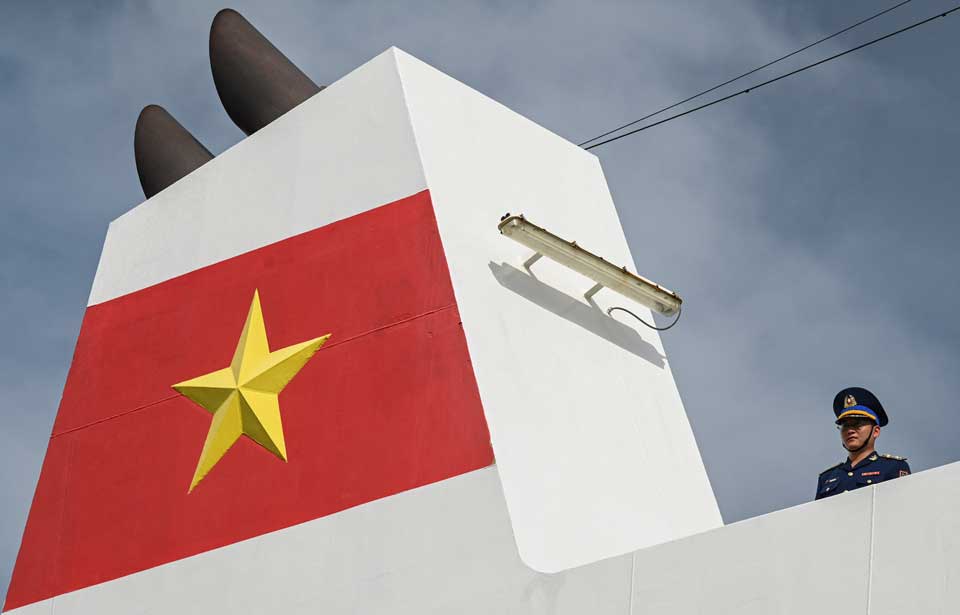
In this edition of M&M, I want to analyze the role of Vietnam’s naval bases in checking China’s maritime assertiveness. This is an important factor to consider because Vietnam enjoys some of the world’s best natural deep-water harbors. Two of them, Da Nang and Cam Ranh, directly face the Paracel and Spratly Islands, and they were home to the U.S. and Soviet/Russian navies at some point.
If Vietnam decides to seek foreign assistance to gain an edge in its maritime disputes with China, these bases will be the focal point of Vietnam’s efforts.
What Is the Misperception?
Many scholars suggest that these ports constitute Vietnam’s trump card in its maritime disputes with China due to their advantageous geographic features. As such, foreign powers want to return to these ports to check China. The logic here is straightforward: because these naval bases allow Vietnam to patrol the South China Sea with ease, Vietnam can resolve the “tyranny of geography” and “power asymmetry” with China.
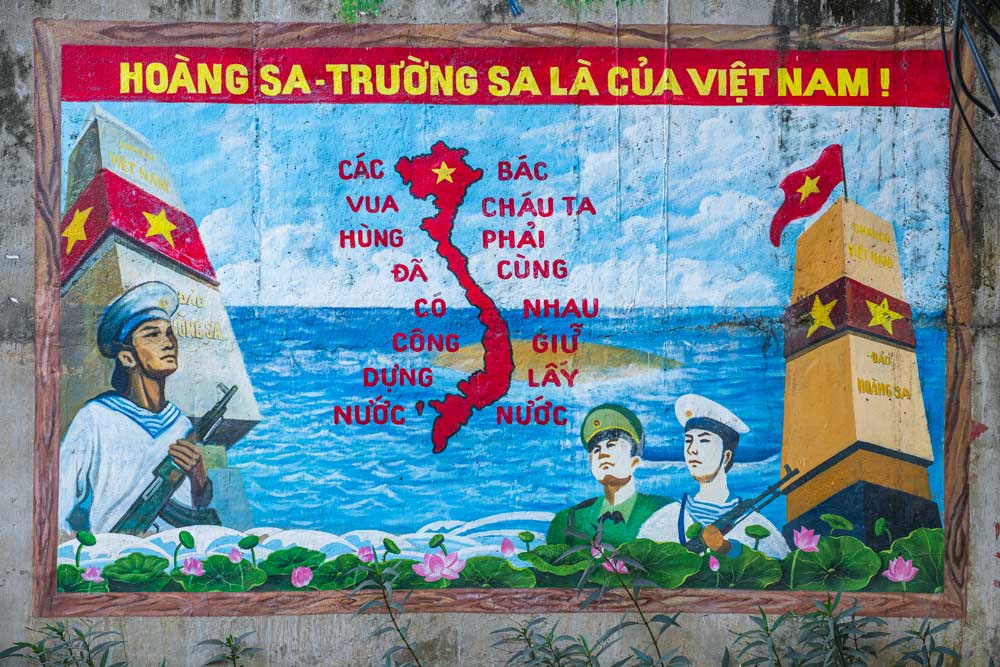
If Vietnam can also exploit foreign powers’ desire to contain China, it can drive a hard bargain over upgrading facilities or securing a foreign naval presence, as it did with the U.S. Navy during the Vietnam War and the Soviet/Russian Navy after 1979. Geographical advantages and a shared political will to balance against China suggest Hanoi can check China’s maritime assertiveness from these naval bases.
Why Do People Believe It?
Da Nang’s and Cam Ranh’s geographical advantages cannot be disputed. As deep-water ports, they can host aircraft carriers. Facilities left behind by the US and the Soviet/Russian navies at Cam Ranh, for instance, provide a reliable logistical network connecting those bases with the inland cities or adjacent major airports. This network allows for quick refueling of airplanes and ships, provides shelter for sea patrol assets, or supplies them with weapons.
Their proximity to the disputed islands means that Vietnam or its allies can fire long-range missiles against Chinese maritime outposts or ships in support of their naval assets patrolling at sea. In wartime, Vietnam can receive foreign military supplies from those bases if the land routes are all closed. The Soviet Union supplied North Vietnam via Hai Phong during the Vietnam War because the Sino-Soviet Split impeded transportation by train.
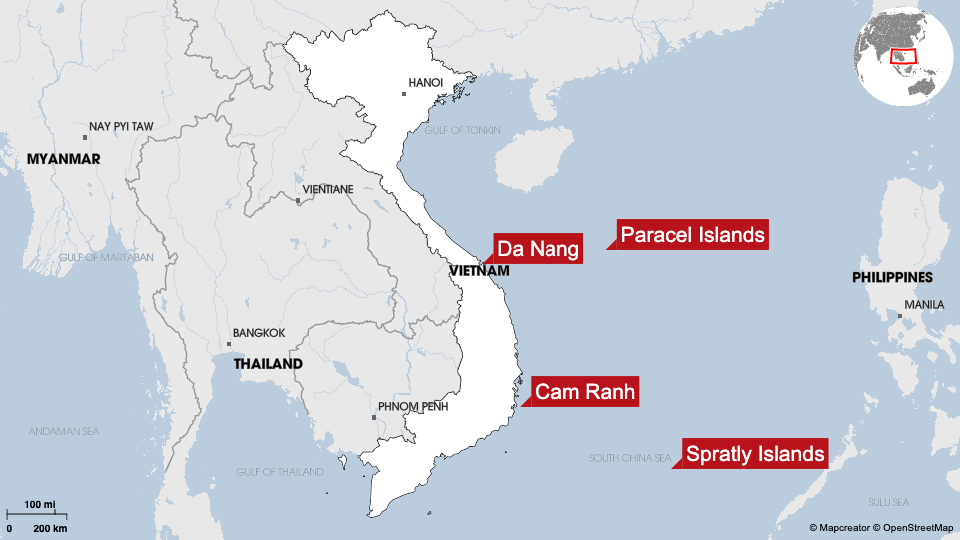
Cam Ranh Bay is roughly 250 nautical miles (460 kilometers) away from the Spratly Islands, while Da Nang Port is around 120 nautical miles (220 kilometers) away from the Paracel Islands. Missiles with a range of 600 kilometers based in these ports can tip the maritime balance in Vietnam’s favor.
Hai Phong is itself close to the China-Vietnam land border. Foreign navies with sophisticated fleets of ships and planes can easily build upon Vietnam’s geographical advantages. This explains why the United States has sought access to Vietnam’s bases, even not on a permanent basis.
What Does History Tell Us?
However, arguing that Vietnam can overcome its material weaknesses in the maritime sphere vis-à-vis China by upgrading these ports with foreign assistance ignores a fundamental feature of the Vietnam-China relationship: China also shares a long land border with Vietnam. Any military advantages Vietnam gains from a foreign presence in its naval ports can easily be offset by Chinese punishments elsewhere.
This is not a far-fetched scenario. After the Third Indochina War (1978-1991) broke out, Vietnam hosted the Soviet Pacific Fleet at Cam Ranh. At that time, the Soviet Union boasted a much stronger navy than China, and Moscow was obliged to assist Vietnam if Vietnam were under attack under the terms of the 1978 Treaty of Friendship and Cooperation.
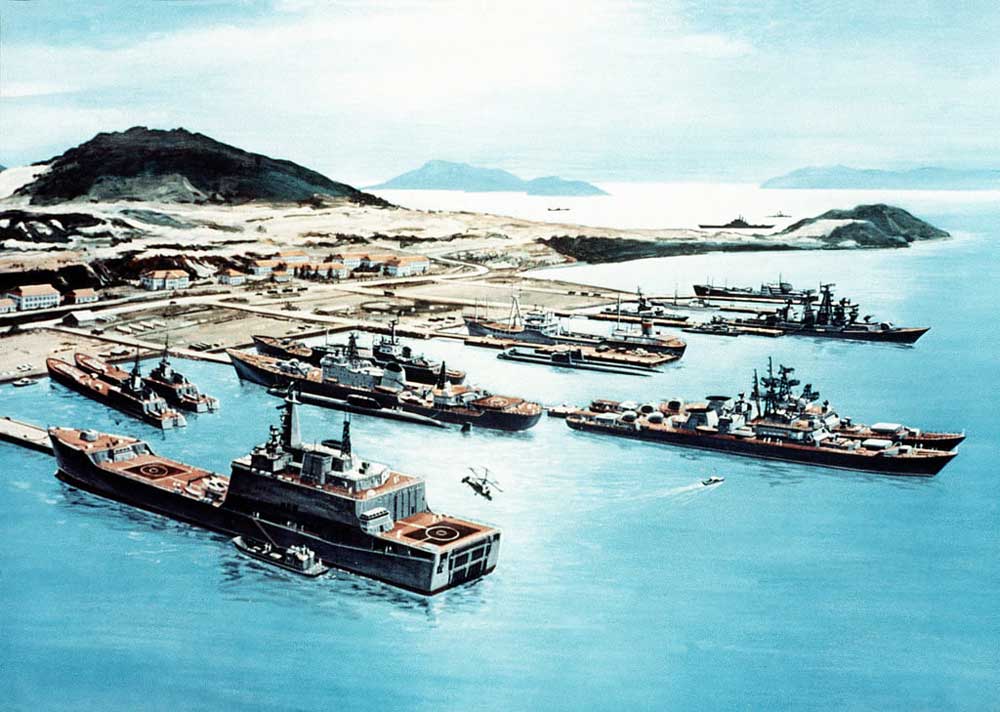
Vietnam and China had territorial disputes over the land border, the Gulf of Tonkin, and the Paracel and Spratly Islands at the time. The Soviet presence at Cam Ranh Bay bolstered Vietnam’s security to some degree, as Moscow could monitor ships passing through the South China Sea and helped Vietnam modernize its navy to defend its claims.
However, these benefits were offset by China’s relentless provocations along the China-Vietnam land border throughout the 1980s and most remarkably its occupation of Vietnam-controlled Johnson South Reef in 1988. The Soviet Union, in deference to the ongoing normalization process with China, did not assist Vietnam in defending its maritime outposts.
Because Hanoi had to focus on defending the northern border, Vietnam’s navy was not a match for the Chinese navy. This shows that hosting a foreign navy at its ports does not guarantee that Hanoi can defend its maritime sovereignty.
After the collapse of the Soviet Union, Russia inherited the Soviet basing rights at Cam Ranh, which remained until 2002. After the Russian withdrawal, Vietnam has committed to not hosting foreign bases on its soil. Instead of relying on a single power to balance against Chinese maritime assertiveness, Vietnam has opened Cam Ranh and other ports to regular port calls by foreign navies, including those from China. Vietnam has shunned external help in contesting Chinese maritime claims.
What Does the Finding Mean?
Vietnam’s naval bases may not be the game changer that many watchers had hoped, but they remain the country’s backbone to defend its maritime sovereignty. The main takeaway is that observers should not overestimate their importance, which can lead to overconfidence. The United States should not conclude that gaining access to Vietnam’s ports can fundamentally contest China’s dominant power position in the South China Sea or bridge the ship gap with the Chinese navy.
For Vietnam, hosting foreign navies at these bases may not significantly alter the maritime balance vis-à-vis China, but doing so will surely invite Chinese retaliation elsewhere along the line of the 1988 Johnson South Reef skirmish, given Vietnam’s violation of its pledge not to host foreign bases on its soil.
Khang Vu is a visiting scholar at Boston College.