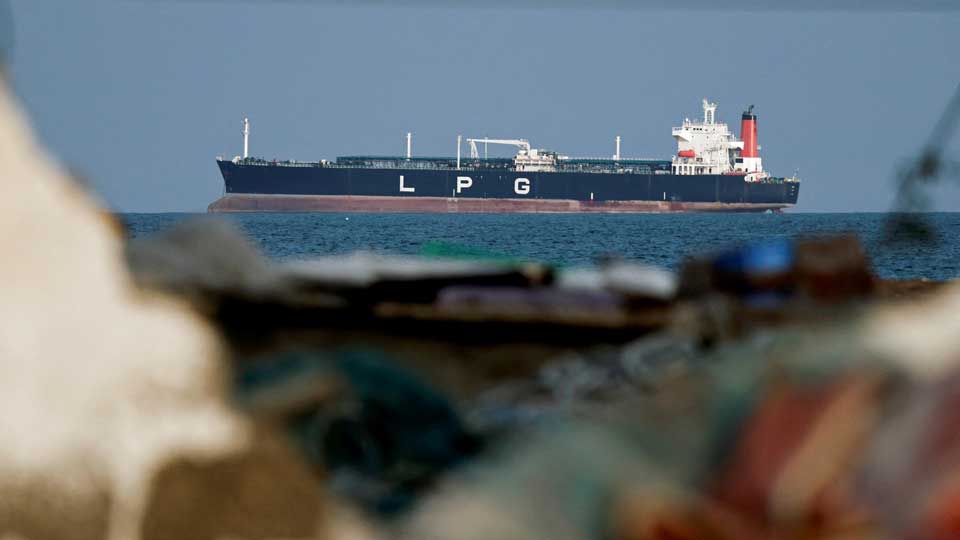
Conflict in the Middle East has only intensified over the past two years. The recent disruption of the Strait of Hormuz, the world’s most critical energy chokepoint, has sent shockwaves across Southeast Asia, a region heavily dependent on fossil fuel imports.
Around one-fifth of global liquified natural gas (LNG) trade transits the Strait, with 83% of those volumes destined for Asian markets. The impact has been immediate: Thailand and Vietnam have ordered public sector employees to work from home, while the Philippines imposed a four-day government workweek and aimed to cut electricity consumption by up to 20% due to energy shortages.
China is also exposed, but in a different way. Around one-quarter of the LNG flowing through the Hormuz is destined for China, yet the disruption has not posed an immediate threat. China’s diversified energy system gives it a buffer its neighbors do not have.
This is a wake-up call for Southeast Asia to build more renewables, but green energy cannot solve the immediate shortage. How China’s role in the regional energy ecosystem evolves in the coming months deserves closer attention.
LNG: Bridging Fuel for ASEAN Energy Transition
Southeast Asian countries are among the biggest and fast-growing energy markets in the world, and rising demand has been largely met by fossil fuels. As governments across ASEAN set ambitious transition goals and begin phasing out coal, LNG has emerged as the transitional fuel of choice. It is cleaner than coal, easier to transport than pipeline gas, and can be deployed fast enough to keep the lights on while renewables catch up.
The problem is that Southeast Asia imports almost all of its LNG. Singapore and Thailand are the two largest buyers, with Qatar as their single biggest supplier, providing 45% and 28% of their LNG respectively in 2025. Australia and the United States fill in the rest, but the dependency on a single Gulf supplier has never been more alarming. Southeast Asia is set to become anet LNG importer by 2032, with demand forecast to surge 182% over the next decade.
Despite the volatility, natural gas will continue to anchor the region’s energy system, as projected by Wood Mackenzie; it will account for 30% of Southeast Asia’s primary energy mix by 2050.
China, the region’s neighbor, also imports large amounts of LNG, but has a different story to tell.
China: The Global LNG Market Balancer
China became the world’s largest LNG importer in 2023. Although around a third of the LNG floating through the Hormuz straits is destined to China, gas-fired power accounts for just 3% of its electricity generation. China is the biggest buyer in the market and at the same time depends least on the imported supply. The diversified energy supply of coal, nuclear, renewables and gas from Russian pipelines make the imported LNG less important. This is a very different scenario compared to ASEAN countries.
Because China is the world’s biggest buyer for LNG, it naturally plays the role of the market balancer. When the demand from China is high, it drives up the competition for LNG import and will hence drive up the prices. When the demand is stable, it helps to release the LNG for other markets, providing a supply buffer for the rest of the world.
This was demonstrated in 2022. As Europe struggled for LNG supplies following Russia’s invasion of Ukraine, China’s LNG imports fell by roughly 20% due to COVID-19 lockdowns and high prices. These diverted cargoes became a lifeline for the global market, allowing some Asian buyers with long-term contracts to avoid the worst spot-market volatility.
Ultimately, when China retreats, global price pressure softens; when it enters the market, prices spike. Most ASEAN nations lack this strategic leverage. They are primarily “price-takers” in a market where their neighbor acts as a “price-setter.” Consequently, for Southeast Asian buyers, energy security is no longer just a matter of global supply, but also a factor of China’s domestic demand.
ASEAN’s Long Term Solution: Connectivity for Energy Security
With the Strait of Hormuz effectively closed, the competition for LNG remaining in the global market has become brutal. For ASEAN, this is an acutely unequal fight. Some Asian countries like Japan and South Korea have spent decades locking in long-term contracts and maintaining strategic reserves to compete on the LNG spot market. Southeast Asia, with its heavier reliance on spot purchasing, is competing for leftovers.
The structural answer to this instability is not more LNG, but less dependence on needing it. This is where the ASEAN Power Grid (APG) becomes a strategic necessity. By integrating the electricity networks of all ten member states, the APG allows countries to share diverse energy resources across borders. By tapping into Laos’s hydro power, Vietnam’s wind potential, and Indonesia’s geothermal energy, the region can balance its load collectively. This connectivity transforms energy security from a competition for imported fuel into a shared and resilient regional power system.