Indonesia’s energy transition strategy has sparked debate after conflicting statements from top officials about the future of coal power.
While President Prabowo Subianto recently announced, at the G20 summit in Brazil, an ambitious plan to cease all coal and fossil fuel power generation within 15 years, a top aide has refuted the news and clarified that coal energy plants will not be phased out entirely by 2040.
Prabowo’s Vision

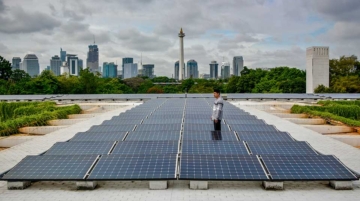
At the G20 Summit in Brazil, President Prabowo emphasized Indonesia’s commitment to achieving net-zero emissions by 2050. He outlined an ambitious strategy to build over 75 gigawatts (GW) of renewable energy, including geothermal, wind, and solar, along with 5 GW of nuclear power.
“We plan to stop using coal and all fossil fuels within 15 years,” Prabowo stated in front of all G20 leaders. “With our extraordinary geothermal resources, we can drive this transition while ensuring energy security.”
This vision highlights Indonesia’s ambition to lead Southeast Asia in renewable energy development.
Hashim’s Clarification
However, Hashim Djojohadikusumo, President Prabowo’s special envoy for energy and the environment, who is also Prabowo’s younger brother, has clarified that Indonesia is not committing to a full phase-out of coal power plants by 2040, or 15 years from now.
Hashim stated that the plan is to gradually reduce coal dependency, or “phase down,” rather than immediately shut down coal plants.
“I need to correct the misinformation,” Hashim said at a COP29 debriefing in Jakarta last Wednesday.
“Indonesia has not committed to shutting down all coal plants by 2040. Instead, we will reduce their intensity and supplement the energy mix with renewables, nuclear, and natural gas.” Hashim further emphasized the practical challenges of such an extreme shift.
“We choose the middle path,” Hashim continued. “Closing all coal plants by 2040 would be economic suicide for the industrial sector and, I dare say, political suicide for future leaders.”
Hashim clarified that new coal plants would not be immediately decommissioned. Instead, their operational intensity would be gradually reduced through the expansion of renewable energy.
“We will not shut down our coal plants by 2040,” Hashim asserted. “We will not disrupt newly built coal plants. I think this is very important because this message has been miscommunicated to the public, especially the international community.”
“Adding 75 GW of renewable energy by 2040 will only generate fossil-free electricity for about 35% of projected national electricity demand. To meet President Prabowo’s vision, Indonesia must more than double this target.”
Katherine Hasan, analyst at the Center for Research on Energy and Clean Air
He further detailed the energy mix Indonesia is targeting for 2040: 75% Renewable Energy: Geothermal, wind, hydro, and biomass; 25% Other Sources: Including 5 GW of nuclear power and 22 GW from natural gas.
Hashim made it clear that the notion of completely shutting down all coal plants by 2040 is unrealistic, calling the idea “economically and politically unfeasible.”
“We adhere to a phase-down principle, not a phase-out,” he reiterated.
China’s Role in Indonesia’s Captive Coal Power Industry
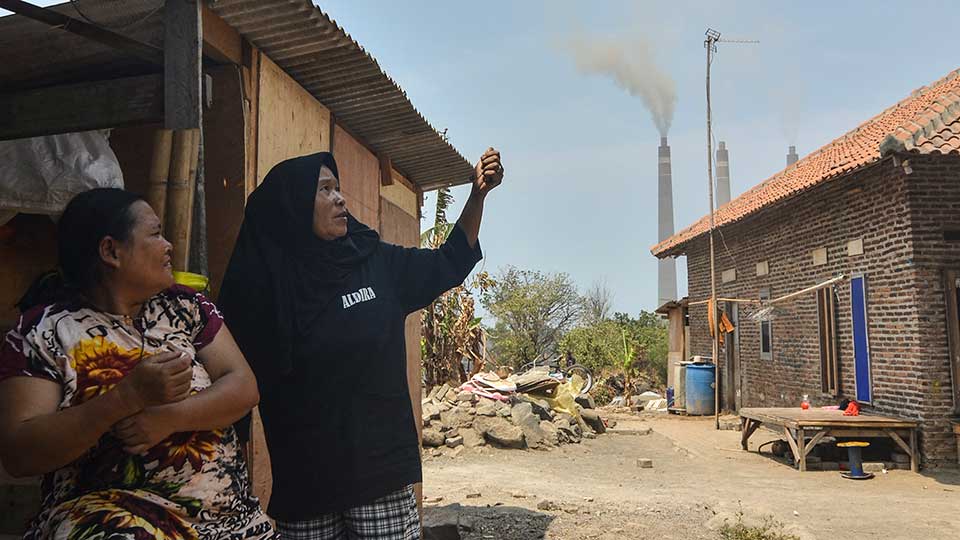
Indonesia relies heavily on coal-powered electricity, and captive plants—those dedicated to powering industrial facilities—are a key piece of the puzzle.
As of September 2024, 93 of the country’s 201 coal plants operate as captive facilities, supplying energy to sectors like mining and smelting.
While critical for industrial growth, these plants contribute significantly to emissions, complicating Indonesia’s path to greener energy.
Out of these, 33 captive plants in Central, South, and Southeast Sulawesi power Chinese-owned nickel smelters, fueling a key part of the global electric vehicle battery supply chain.

Similarly, ten captive plants in North Maluku support nickel operations tied to Chinese financing, such as the Weda Bay Industrial Park.
These facilities are indispensable for processing nickel ore but rely on coal, creating a paradox where high-emission energy supports clean technology industries.
Indonesia’s captive coal power plants, crucial for fueling smelters, highlight a significant Chinese footprint in the country’s industrial landscape.
In Central, South, and Southeast Sulawesi, these coal-powered plants are expected to operate for another 21 to 27 years.
Similarly, in Maluku and North Maluku, ten such plants are projected to run for 23 to 27 years.
In Sulawesi, Jiangsu Delong Nickel Industry dominates ownership of the 33 plants powering smelters in Morowali and its Industrial Park, with Qingdao Zongsheng owning a smaller share.
In North Maluku, major players include Jinchuan Group, operating in Kawasi, Obi Island, and Tsingshan Group, which owns the Weda Bay Industrial Park Self-Provided Power Plant.
This underscores China’s strategic involvement in Indonesia’s nickel processing sector, leveraging coal power to drive industrial operations.
The Energy Mix Debate
The Indonesian government plans to build a total of 103 GW of power generation capacity by 2040, with 75% of it coming from renewable sources like geothermal, wind, hydro, and biomass. Additionally, nuclear and natural gas power plants will complement the energy mix, ensuring that no power plants will rely on coal.
To address the carbon footprint, Indonesia is also offering Carbon Capture and Storage (CCS) solutions, with a potential capacity of 500–700 gigatons of CO2.
Hashim’s Warning and Additional Plans
Hashim stressed that the transition would not disrupt Indonesia’s industrial and economic stability.
He also clarified Indonesia’s stance on global carbon credit markets, stating that the government plans to offer up to 577 million tons of CO2-equivalent carbon credits, with an additional 600 million tons in the verification stage.
“Reforestation and social forestry projects will also play a crucial role in this transition,” Hashim added, aligning with Prabowo’s broader environmental agenda.
Katherine Hasan, a Jakarta-based analyst at the Center for Research on Energy and Clean Air (CREA), warned that Indonesia’s current renewable energy targets might fall short of what is needed to meet future energy demands.
“Adding 75 GW of renewable energy by 2040 will only generate fossil-free electricity for about 35% of projected national electricity demand,” Hasan stated. “To meet President Prabowo’s vision, Indonesia must more than double this target.”
CREA’s analysis also suggests that, without further commitments to green energy, Indonesia might continue relying on fossil fuels, potentially increasing its emissions footprint.