
This is a free preview of the upcoming Africa EVs Weekly Digest, part of the new CGSP Intelligence service.
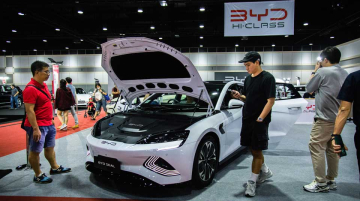
This week, the enhanced technology features of some Chinese electric vehicles (EVs) are proving a challenge after claims that embedded cameras, microphones, sensors, and connectivity modules are capable of transmitting data externally.
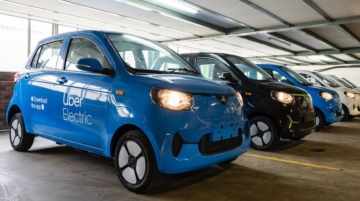
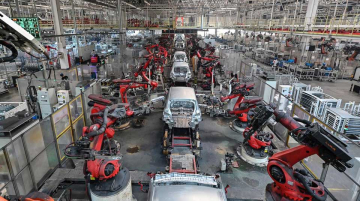
But, Chinese automakers are intensifying their sales campaigns and expanding manufacturing operations in different African countries as they seek foreign consumers to avoid domestic market saturation and trade barriers in the U.S. and Europe.
These automakers are also complementing efforts by African innovators seeking to build suitable e-mobility solutions for their communities, largely without government subsidies.
This week in Africa’s EV scene:
South Africa’s Fast Emergence as a Major Chinese Auto Sales and Manufacturing Hub
As the continent’s largest automobile market, accounting for roughly one-third to one-half of all vehicle sales across the continent, adoption trends in South Africa may determine how Chinese EV players launch and sustain themselves in different African countries.
Chinese automakers are also becoming more innovative and taking a multipronged approach to help them enter and sustainably supply electric vehicles in different African countries.
Why This Matters: South Africa may become the scene of a turf war between different Chinese automakers. For the customer, it is a “the more the merrier” kind of situation, which will afford them more variety in terms of choice and price.
Israel Recalls Chinese EVs Over Spy Tech Risks
The Israeli Defense Forces (IDF) has begun recalling roughly 700 Chinese-made vehicles from its officers after an internal security assessment determined that certain models — particularly from Chery — may carry risks of data leaks or espionage due to embedded cameras, sensors, and wireless connectivity modules.
Why This Matters: With African countries increasingly adopting Chinese EVs, this case serves as a cautionary signal about broader data security implications. While some consumers may not be concerned about where their data ends up, the question is whether governments will take any steps to prevent data leaks from imported vehicles.
Manufacturing: EV Chargers Made in Ethiopia
Ethiopia has unveiled its first domestically manufactured electric vehicle charger, joining a growing list of African nations developing their own charging technology. The chargers were produced by the National Technical and Vocational Training Institute (NTVI), which has also begun manufacturing EV body components and industrial electric motors for utility vehicles and other equipment.
Why This Matters: Job creation is a priority for many African countries, and Ethiopia is rewriting the playbook. The recent ban on the import of fuel-powered vehicles could spark a surge in demand for EVs, leading to expanded local manufacturing, lessening the country’s dependence on imports, and generating much-needed jobs.
Vietnamese Conglomerate to Launch its First EV Project In DR Congo
Vingroup, a Vietnamese conglomerate, plans to launch its first electric vehicle project in Africa after signing an agreement with the Democratic Republic of Congo. Under the deal, the partners will jointly convert more than 300,000 fuel-powered vehicles to electric and build a comprehensive network of electric buses and charging stations.
Why This Matters: The initiative marks a major step in expanding Vingroup’s EV ambitions beyond Asia and into one of the world’s most resource-rich yet infrastructure-challenged regions. The DRC project’s success depends not only on stability but also on the availability of vehicles to convert, given the dynamics in Africa’s second-largest country by land area.
In context
The electric vehicle landscape in many African countries is shifting fast, with Chinese automakers not only selling cars but also setting up factories, expanding distribution networks, and partnering with local players eager to electrify transport systems. Reports that some Chinese EVs may transmit data externally have sparked global security concerns but for many African countries hungry for affordable, accessible EV options, the benefits are hard to ignore.
The takeaway:
With the continent’s own innovators finding their footing and countries like Ethiopia producing EV chargers, and Vietnam’s Vingroup is betting big on the Democratic Republic of Congo, these dynamics show that the continent is racing toward electrification while drawing in foreign influence and homegrown innovation to shape a future that fits Africa’s roads, realities, and ambitions.