In this edition of M&M, I want to investigate a common claim that Vietnam’s policy toward China is set by a single individual leader, typically the General Secretary of the Communist Party of Vietnam (CPV). Whenever Vietnam elects a new General Secretary, or when there is a leadership shakeup, such as President Nguyen Xuan Phuc’s stepping down in 2023 or his successor, Vo Van Thuong, resigning in 2024, there are always questions about the trajectory of Vietnam’s foreign policy, including its China policy.
General Secretary and President To Lam is no exception, as he is often framed as a pragmatist who tilted Vietnam toward China shortly after taking office. Understanding who really sets Vietnam’s China policy matters to grasp what may trigger a policy change or a lack thereof.
What is the Misperception?
The argument here is straightforward: a new leader always wants to leave their marks on a country’s foreign policy, and they will exercise their agency to that end. The general secretary is Vietnam’s most powerful position, so it is expected that they can shape the country’s foreign policy to their preferences. Other positions such as the president or the prime minister, who represent Vietnam as on a state-to-state level unlike the general secretary who speaks on behalf of the CPV, can also exert the same influence on foreign policy.
This argument is directly related to a previous edition of M&M on the role of factions in Vietnam’s foreign policy. The idea here is that an individual leader from a “pro-China” faction will tilt Vietnam toward China, while one from a “pro-US” faction will swing Vietnam to the West.
To put it in political science terms, this is an individual level of analysis.
Why Do People Believe It?
It is quite common that a country’s foreign policy changes when there is a new leader in charge. The United States is one of the most common cases, as a presidential candidate’s foreign policy platform is often scrutinized for their suitability for office. And once in office, a president typically distinguishes their foreign policy from that of the predecessor, more so if they hail from a different political party.
Even in the case of China, which shares Vietnam’s political system, the differences in Chairman Mao Zedong’s and his successor Deng Xiaoping’s foreign policies are enormous. Chinese President Xi Jinping’s foreign policy is also different from Deng’s, as the former has shelved Deng’s “hide your strength, bide your time” policy.
For watchers who subscribe to the idea that there are different factions in Vietnamese politics, either along regional or bureaucratic lines, applying the same analytical logic is sensible. The same goes for Vietnam watchers who emphasize a leader’s agency in setting foreign policy.
What Does the Data Tell Us?
However, it depends on the broader structure of the system that the leader finds themselves in, or the domestic level and the international level of analysis. In the case of Vietnam, these are the two structures that limit how much an individual can change the country’s foreign policy, especially its China policy. First, the China-Vietnam power imbalance, or the international-level, determines that Vietnam cannot side with an extra-regional power against China.
This is the lesson Vietnam learns from the Third Indochina War that China can arms race Vietnam to bankruptcy if Hanoi adopts an anti-China policy.
Second, Vietnam’s collective leadership system, in which the 19-member Politburo makes the most important decisions based on consensus, limits how much agency an individual can exert on the foreign policy. Even after Vietnam has consolidated the general secretary and the presidency posts into a single individual at the recent 14th CPV National Congress, Vietnam has not abandoned its four pillars (general secretary, president, prime minister, chairman of the national assembly) after the consolidation. Instead, it has elevated the permanent member of the CPV Central Committee’s Secretariat post in place of the president to the four pillars.
Hence, To Lam still adheres to the collective decision-making process.
A quick glance at history also shows the limit of leadership changes on Vietnam’s China policy. Since 1991, Vietnam has had six general secretaries, eleven presidents (excluding acting presidents), and six prime ministers from different provinces or bureaucratic agencies.
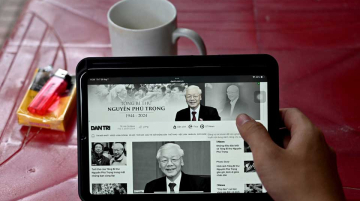
If the individual level of analysis is accurate, Vietnam should have had several foreign policy changes since 1991. However, the country has stuck firmly to its non-aligned foreign policy and its commitment to not side with an extra-regional power against China under its Three Nos. Post-1991 leaders essentially adopted the same foreign policy platform. The late General Secretary Nguyen Phu Trong also served as president for three years, from 2018 to 2021, but he did not change Vietnam’s foreign policy.
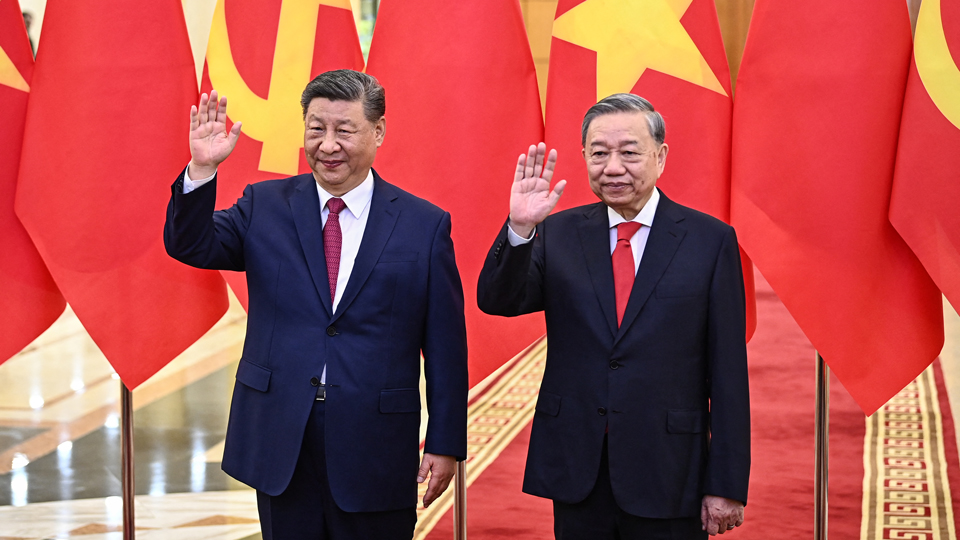
There is no reason for To Lam to change it just because he now holds the two posts. Indeed, To Lam affirmed Vietnam’s independent foreign policy during his April visit to China.
And Vietnam is not an exception. Even in the United States, bureaucratic resistance and departmental norms can resist a president’s desire to shape the country’s foreign policy to their preferences. This is not about the differences between a democracy and an autocracy but about how much agency the leader has over the system.
What Does the Finding Mean?
I am not saying that a leader doesn’t matter at all. Successful diplomacy depends much on how the person at the top communicates the message to their counterparts. To Lam delivering the keynote address at the upcoming Shangri-La Dialogue will be an occasion to showcase Vietnam’s non-aligned foreign policy.
However, claiming that an individual can change Vietnam’s China policy and broader foreign policy without systemic constraints is inaccurate. The findings suggest that Vietnam watchers should not deduct Vietnam’s foreign policy from the regional background or bureaucratic origin of its leaders.
Khang Vu is a visiting scholar at Boston College.