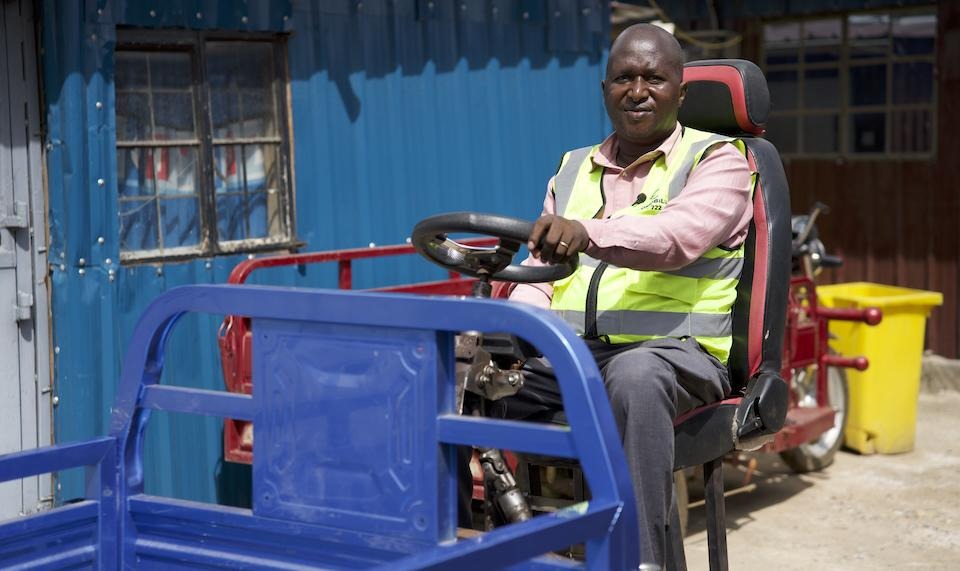
Kenyan electric vehicle innovators are harnessing Chinese EV technology to build solutions for day-to-day activities, including the country’s agriculture, the largest employer.
In a small farming village in Embu County, about 130 kilometers northeast of Nairobi, a quiet experiment in electric mobility has been unfolding. For slightly over a year, some farmers there have been using a small electric cart to move irrigation pumps, fertilizer, and harvests between their fields.
Few of them spend much time thinking about the technology behind it, or that many of the components powering the vehicle were built thousands of miles away in China.
It works, and that is all that matters.
But the idea began with a simple problem for Linda Kamau, chief executive and co-founder of SowPrecise Africa, which provides irrigation services to farmers moving pumps and pipes from one farm to another. To successfully serve the farmers, she needed a reliable way to move equipment between scattered plots of land and shift from using pickup trucks, which burned expensive fuel.
The alternative was the hand-pulled cart, known locally in Swahili as a mkokoteni. However, it was slow, heavy, and depended on men laborers who did not always show up. When this became a daily struggle, she began looking for something that could work better and cost less to run.
Kamau eventually approached Ecomobilus, a small electric mobility startup based in Nairobi that had been experimenting with electric farm vehicles. The company, led by entrepreneur and academic Geoffrey Gĩtaũ, had already drawn attention for converting gasoline-powered vehicles to electric ones.
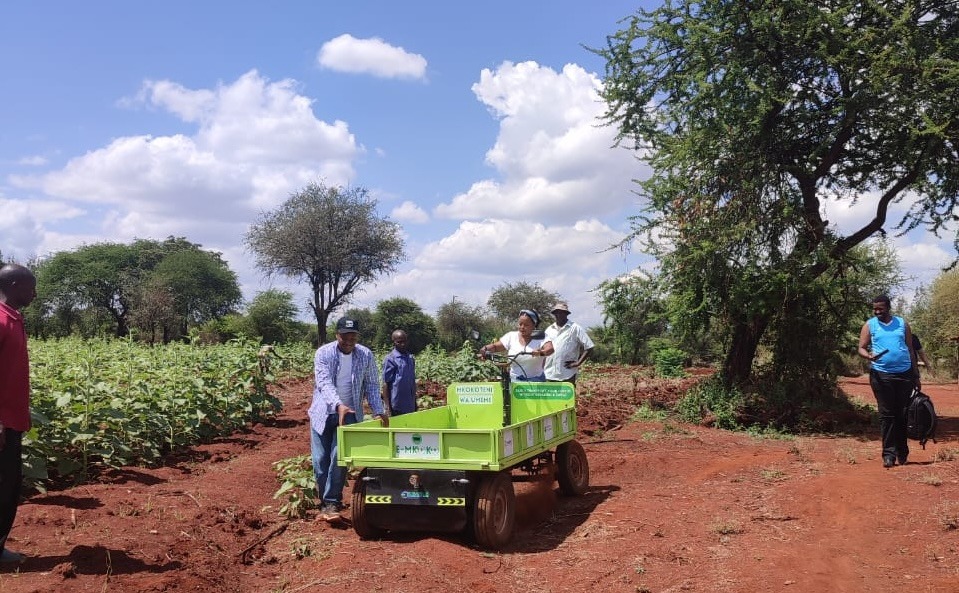
Within months, the team built a prototype: the e-mkoko, a compact electric cart designed for the realities of small-scale African farming. The machine runs on electric motors and battery systems largely sourced from China.
It can haul between 700 kilograms and a ton of cargo, enough to compete with small pickup trucks, but without the daily diesel fuel bill.
Since late last year, the cart has been moving irrigation pumps, ferrying maize and sunflower harvests, and traveling several kilometers a day across farms in Embu. Its small size allows it to squeeze through narrow farm paths and storage areas where larger vehicles cannot go.
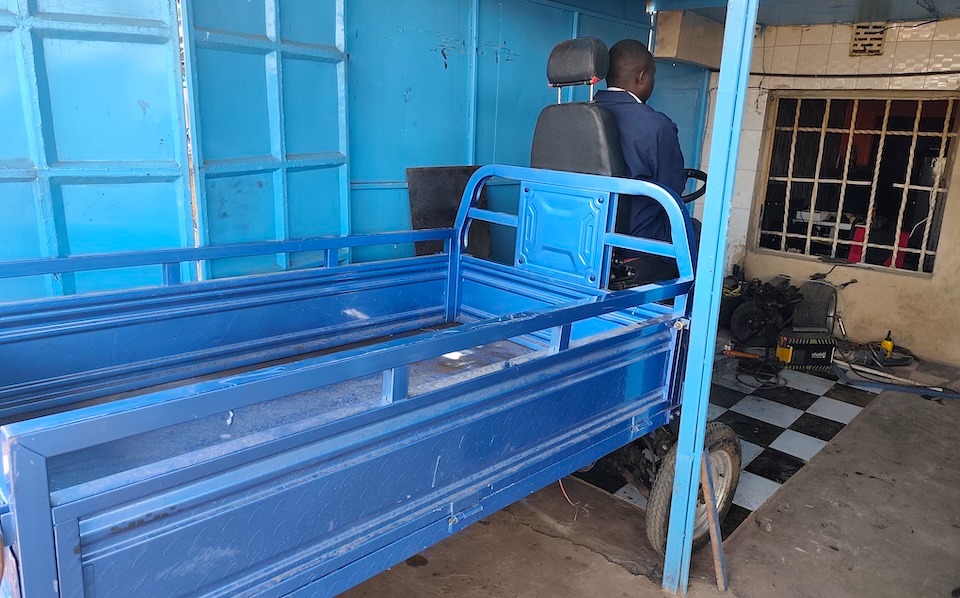
The latest e-mkoko design also solves a practical problem. It uses a swivel system that allows the driver to operate the cart with the trolley either in front or behind them without duplicating controls such as brakes, a steering wheel, or an accelerator.
To move in the opposite direction, the operator simply rotates their seat rather than reversing the vehicle. That makes it easier to maneuver in tight farmyards and warehouses.
And unlike the old mkokoteni, the electric version does not depend on hired labor to pull it. Women can operate it easily without worrying about male labor.
Why China Matters in Africa’s EV Shift
Much of the technology inside the e-mkoko comes from China, including electric motors, controllers, and the battery management systems. For startups like Ecomobilus, that supply chain is difficult to avoid.
China dominates global battery manufacturing, producing most of the world’s lithium-ion cells. The scale of its industry means suppliers can provide specialized components quickly and at prices few other countries can match.
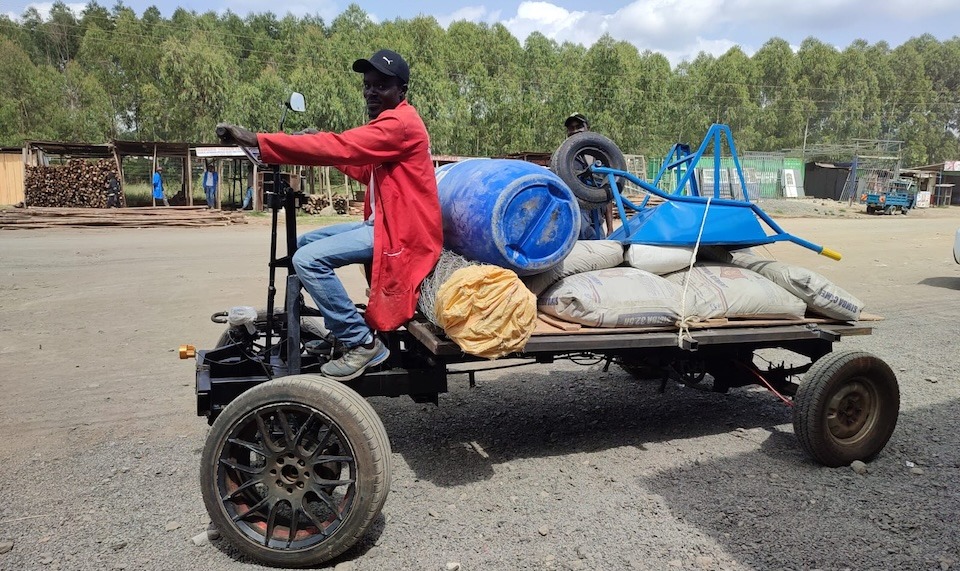
For Gĩtaũ, working with Chinese suppliers is about practicality. The components arrive faster and at a lower cost than alternatives from other markets.
But importing them is only the first step. His team tests, modifies, and adapts the parts to suit African conditions: rough roads, heavy loads, high temperatures, and unreliable electricity.
Building Batteries From E-Waste
Some of the most unusual work happens inside the vehicle’s battery pack. Instead of relying entirely on new lithium cells, engineers often repurpose cells recovered from discarded electronics, such as laptops.
According to Gĩtaũ, many laptop batteries that appear “dead” still contain usable cells. By identifying the healthy cells and pairing them with appropriate battery management systems, the team can assemble packs that power vehicles for 5 to 8 years.
The approach lowers costs and addresses another growing problem: electronic waste. By recycling cells that would otherwise be discarded, the company reduces dependence on imported new batteries while giving old electronics a second life.
Designing for Africa, Not Copying China
China’s strength in electric vehicles lies in scale. Factories there can produce large numbers of vehicles quickly and cheaply. But Gĩtaũ says that what works for the Chinese does not always work on African farms.
He says that some imported electric vehicles have struggled in Kenya. Drivers complain about limited driving range, poor durability, and battery-swap systems that erase the expected savings.
But the e-mkoko was built incorporating those lessons. Its suspension is reinforced to handle rough terrain. Charging can be done through solar power at home, and the structure is simple enough for local technicians to repair.
Rather than copying designs built for other markets, the goal is to adapt electric technology to local conditions.
Buying From China Without Ever Visiting
Despite the company’s reliance on Chinese components, Gĩtaũ has never been to China. Instead, the supply chain is built through trade fairs and exhibitions that the Ecomobilus team visits, as well as online platforms such as Alibaba.
At mobility expos in Kenya, often filled with Chinese exhibitors, the team studies new technologies and negotiates specifications. Suppliers send samples, which are tested and modified before larger orders are placed.
The process has created a network of manufacturers and engineers working across continents, even though they rarely meet in person.
Universities Behind the Innovation
When the components are shipped to Kenya, the e-mkoko is not put together by a single company. Some universities in Kenya contribute engineering expertise, testing facilities and students eager to experiment with new designs.
Government agencies also help inspect and validate the vehicles, while development partners occasionally support pilot projects. Together, they form a loose ecosystem that allows small companies to build machines that would otherwise require far greater resources than they could afford.
Vehicle manufacturing, Gĩtaũ says, is expensive and risky. Without those partnerships, the work would be nearly impossible.
The Bigger Question: Africa’s Battery Future
While electric vehicles offer African countries an opportunity to build new industries, the most valuable piece of the puzzle- the battery- remains largely outside the continent.
Africa exports minerals such as lithium, cobalt and nickel but imports finished batteries at far higher prices. That imbalance shapes the limited battery manufacturing across the continent.
In Kenya, battery production is still small and experimental. Yet projects like the e-mkoko hint at a broader question facing the continent: whether Africa will simply supply the raw materials for the world’s battery industry, or begin to capture more of that value itself.