By Julie Radomski
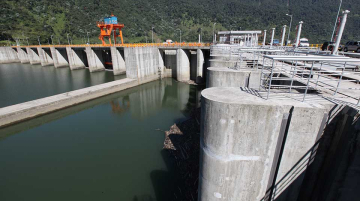
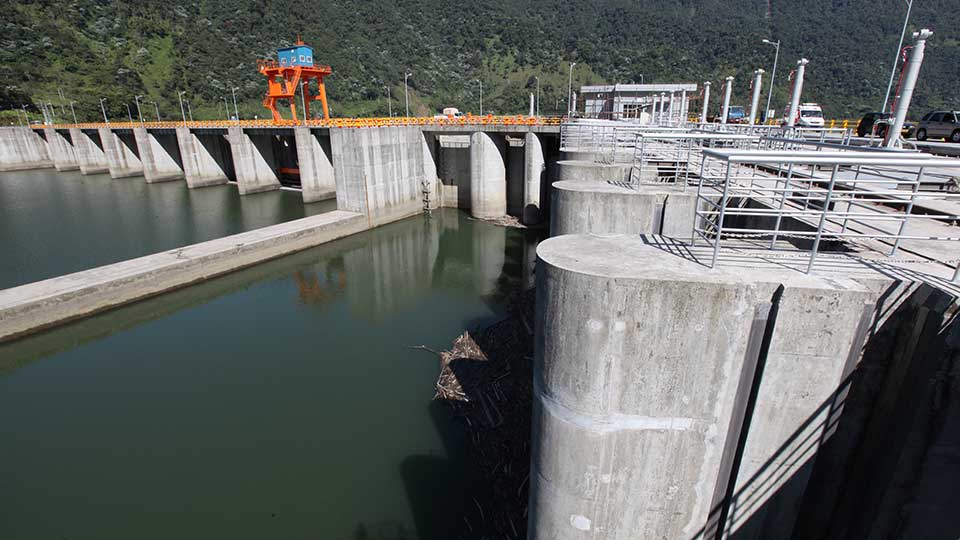
Ten years after the Coca Codo Sinclair hydroelectric dam first came online, the Chinese state-owned construction company Sinohydro Corporation finally turned the project over to the Ecuadorian state last Friday. Yet Ecuador only agreed to accept it under the condition that its operation and maintenance will soon be concessioned back.
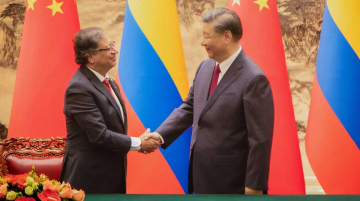
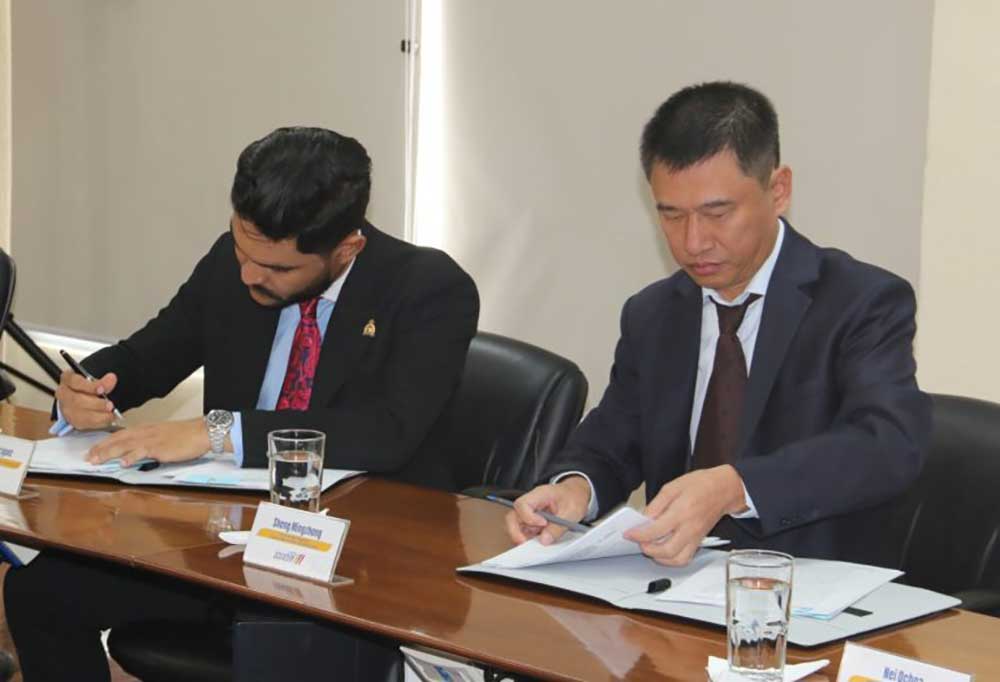
Under the new arrangement, announced last June by leaders Xi Jinping and Daniel Noboa, Ecuador will contract out the maintenance and operation of Coca Codo to PowerChina, Sinohydro’s parent company. Following nine months of closed-door negotiations hammering out the details, the presidents’ deal is now coming to fruition, including not only the recent handover but also the conclusion of an arbitration claim in exchange for $200 million in compensation from PowerChina and $200 million for “investment in renewable energy projects.”
The Coca Codo dam, long known as one of the largest Chinese-backed infrastructure projects in Latin America, is now emerging as a defining case of how China deals with the fallout from controversial projects. Even after its formal reception, critical questions about the project’s persistent technical defects and environmental risk remain up in the air.
As details about the concession deal emerge, the distribution of risks for these serious problems threatening the dam’s operations are paramount.
Hydroelectric Hot Potato
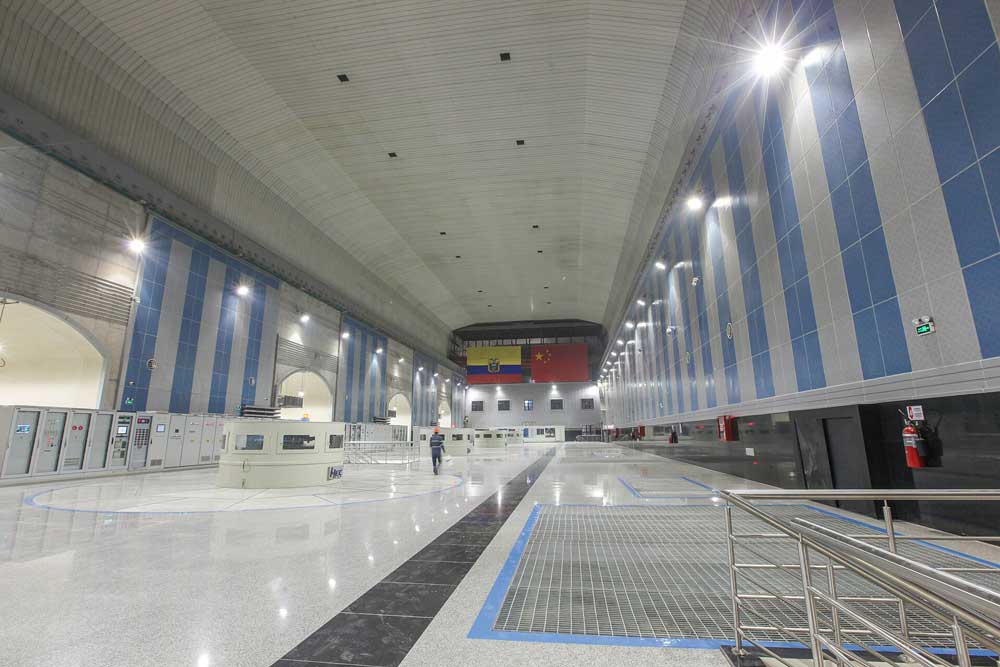
The impasse that kept the project in limbo for a decade centers around the presence of thousands of fissures in the powerhouse’s distributors—curved steel structures that direct pressurized water into its turbines. A 2018 report from Ecuador’s Comptroller General revealed the presence of over 7,500 cracks in the distributors, while later documentation turned over to the Ecuadorian legislature detailed the reemergence of thousands more cracks identified during repair processes in 2021 and 2022. It is unclear how many fissures remain in the eight distributors today, as no technical information about the defects has been made public since.
The aforementioned Comptroller General report, as well as numerous commentators over the years, raise the possibility that the fissures could trigger flooding or even the collapse of the powerhouse. Ecuador launched an arbitration case against Sinohydro over the fissures and other technical flaws in 2021, demanding $580 million in compensation.
Though Sinohydro representatives have argued that the fissures are not consequential for Coca Codo’s energy production, for years Ecuador refused to accept the project until these defects were fully resolved. The Noboa administration agreed to do so as a necessary step towards handing responsibility and risk back to PowerChina, with an agreement that the concession be finalized within one month of the handover.
In a recent interview, Ecuador’s Energy Minister Inés Manzano shared that the country expects to pay PowerChina a sum of $46 million per year to operate and maintain Coca Codo. She also insisted that Sinohydro is still responsible for repairing the fissures, as well as bearing the risk in the event that they lead to operational failure.
Previous reporting alleged that the company had offered to replace the distributors, though this has not been confirmed officially. In a brief statement on their website, Sinohydro Ecuador noted that “Ecuador retains stewardship, oversight, and the defense of its interests” over Coca Codo, but also that the warranties related to the distributors remain in force.
Environmental Risk Remains with Ecuador
Even as the 25-year concession is set to begin next month, severe regressive erosion (which may destabilize the riverbed where the dam is located) put Coca Codo in danger from another angle.
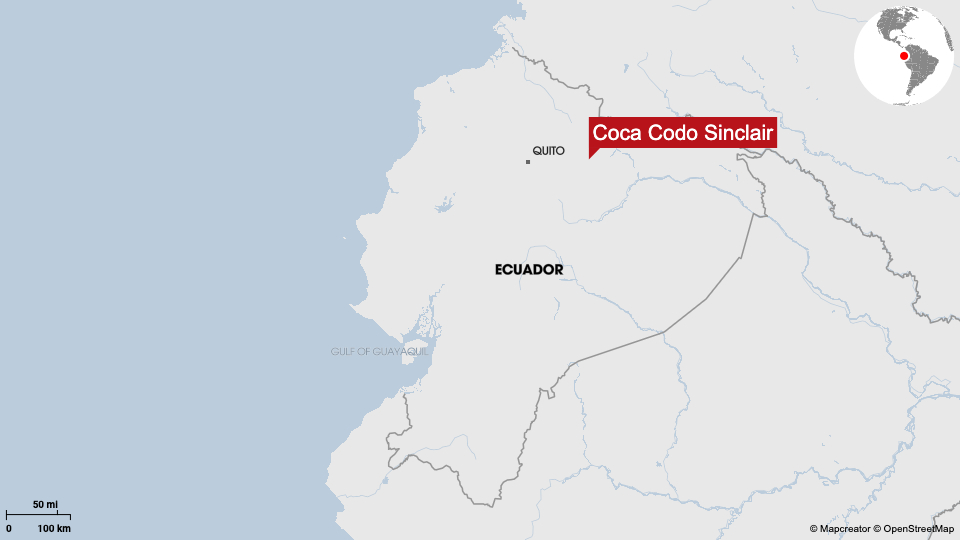
Since 2020, the Coca River has undergone a rapid transformation as its bed widens and deepens following the collapse of the San Rafael waterfall 19.2 kilometers downstream of the dam. The ‘front’ of the canyon formed by the erosion advanced 2.5 kilometers upriver towards the dam in 2025 alone—it is now located a mere 3.6 kilometers away.
If and when the erosion eventually reaches the dam, it will carve out the riverbed beneath it, rendering the dam effectively useless and vulnerable to collapse. Meanwhile, sediment accumulation near the dam’s powerhouse similarly jeopardizes its continued operation. Ecuador has collaborated extensively with the U.S. Army Corps of Engineers to attempt to halt the progression of the erosion, while Sinohydro Ecuador has not participated directly in these efforts to date.
In earlier statements, Minister Manzano clarified that PowerChina will not be made responsible for the risks posed by the regressive erosion as part of their concession, stating “no one is responsible for the regressive erosion.” Both Sinohydro Ecuador and official Ecuadorian entities insist that the erosion is a natural phenomenon.
If the erosion reaches the dam during PowerChina’s 25-year concession period, as experts have predicted, presumably their operation contract would cease and the cost of the failed project would fall on its owner, the Ecuadorian state.
Conclusion
After years of negative press and technical headaches, it would be reasonable to question why PowerChina would agree to take back the Coca Codo “hot potato.” The company may simply be betting that the fissures will not lead to major operational failures, since they are not on the hook for absorbing the separate environmental risks.
At the same time, PowerChina’s decision-making may also reflect reputational considerations, including political pressure to save face after a flagship megaproject generated repeated scandals and cast a pall on Chinese infrastructure in the region.
Yet whether the concession deal mitigates this image problem remains an open question: the stubborn threats of fissures and erosion call for coordinated Ecuadorian-Chinese responses that are transparent to external scrutiny and backed by rigorous third-party evidence. Especially in light of persistent electricity shortages, the Ecuadorian public deserves real answers regarding the severity of these risks and how they will be addressed going forward.
The next steps will determine whether the potato cools off or if Ecuadorians end up getting burnt, with the world watching to draw lessons on who ultimately pays when flagship projects falter.
Julie Radomski is a Global China Post-doctoral Research Fellow at the Boston University Global Development Policy Center (GDP Center). Follow her on X: @juradlie