Immediately after the U.S. and Israeli bombardment campaign against Iran began, some have claimed that the war was “all about China.” Others have been more cautious, arguing it shows the limits of China’s relationship with Iran and its regional diplomacy. Jonathan Fulton rightly points out that the war “is not about China, and attempts to make it so obscure more than they clarify.”
So if the Iran War is not about China, what is it about? And if Beijing doesn’t play a “pivotal” role, how can we understand the role it does play, as well as claims of greater influence?
What Did (and Did Not) Cause the Iran War?
There are some common answers to this question, most of which don’t hold water. They are united by the idea that Iran is a threat: to the U.S., to its neighbors, to its own people, or to the world.
Iran is hardly a threat to the U.S.; its missiles cannot reach the United States, its military planning is largely defensive, and it was actively negotiating due to its extremely weak position. Its network of militias and political organizations was highly degraded after October 7th and Israel’s attacks against Hezbollah and Hamas.
It was undoubtedly able to pose a threat to its neighbors,as we have now seen, but before the U.S and Israeli attack, they were improving relations with nearly all of them, including Saudi Arabia. Iranian strikes on Gulf states and Israel only began after they were attacked.
The Islamic Republic is also a threat to its own people, clearly seen in the massacres of protesters throughout its history and the brutal crackdown of the Women Life Freedom movement several years ago. Some argue that this justifies military intervention to promote freedom and democracy. But this is not the motivation for the war, which has had the exact opposite effect of creating conditions for freedom and democracy. In any case, Trump has been clear that he is not invested in the fate of the Iranian people.
The Big Lie of the Trump administration is undoubtedly the idea that, without this war, Iran would imminently acquire and use a nuclear weapon. Decades of evidence from Western intelligence agencies have been unanimous in their view that the Iranian government was “nowhere near” a nuclear weapon, if they were pursuing one at all. Logic dictates that Iran’s leadership was not suicidal, nor would it want to wipe out or make unlivable Palestine or the third-holiest city in Islam, so the very idea that they would use a nuclear weapon against Israel is absurd.
“The regime already had missiles capable of hitting Europe and our bases, both local and overseas, and would soon have had missiles capable of reaching our beautiful America.”
Donald trump, president of the United states
These causes all presume the United States’ behavior is reactive, that it is responding to Iran’s behavior, rather than proactive. This deflects blame from the United States and portrays its actions as defensive and justified. However, in my view, the root cause of the conflict lies not in Iran, but in U.S. and Israeli efforts to change the balance of power in the Middle East following the October 7th attacks.
The origins of the current war can be traced to the Israeli response to the October 7th, 2023 terrorist attacks on civilians, which killed around 1200 people. This led to a massive retaliatory war against both Hamas and the civilians and infrastructure of Gaza, killing 75,000 people at a minimum, displacing most of the population, and destroying the physical infrastructure of nearly the entirety of Gaza, including every one of its universities and hospitals. I concur with the ICC that there is strong evidence that this is a genocide and intentional war crimes against civilians.
The war enabled the Israeli government to accomplish one of its long-term plans for securing regional hegemony: the elimination of Hamas as an obstacle to territorial expansion, both in Palestine and parts of Syria and Lebanon. Israel was able to attack and thus both test and weaken Iran during the 12-Day War of June 2025 and in multiple offenses against its ally Hezbollah in neighboring Lebanon.
The lack of a serious international or regional response to the devastation of Gaza also likely emboldened the Israeli government, as it was increasingly clear that they had the freedom to act as they saw fit, especially under the Trump administration.
Iran was the last anti-Israeli government in the region. Most of the Arab states were nominally, if not formally, accepting of Israel, especially since the Abraham Accords. Netanyahu has also been pursuing a long-term plan to weaken Iran to the point that it can no longer function as a check on Israeli power since the 1990s. So, it comes as no surprise that, having largely eliminated Hamas and decapitated Hezbollah, Iran would be the next target. It seems likely that Israel took the lead, and the U.S. followed.
There’s strong evidence Israel provided intelligence to the U.S. that played up Iran’s imminent threat level; several U.S. officials, including Marco Rubio, have suggested as much, and a major U.S. intelligence officer, Joe Kent, resigned in protest, citing this fact.
China’s Reaction
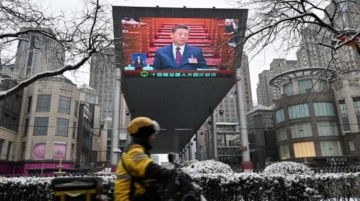
China’s immediate reaction to the war reflected its competing diplomatic and political priorities. It’s harsh criticism of the war as illegal, destabilizing, and contrary to international law reflected its support for Iran and opposition to U.S. aggression in the region. At the same time, they expressed concern about escalation, including following Iranian attacks on Israel, and have repeatedly urged Iran to respect the freedom of navigation and the “reasonable concerns” of its Gulf neighbors, all of whom have good relations with China.
The war presents a deeply worrisome situation for China. A wider regional war that threatens Chinese economic assets and energy supply chains in the region has always been a nightmare scenario. Despite being insulated somewhat due to high energy self-sufficiency and large oil reserves, China is not immune to the economic pain forever, and the impact of high oil prices is already being felt across the country, especially in industries that make heavy use of plastics.
This danger outweighs any benefits of seeing the U.S. distracted or economically damaged, but so far, China has not been able to influence the process much. From Beijing, the war likely seems like a distant but approaching hurricane: a danger which they have little ability to influence or stop, and so are simply looking to endure and rebuild in the aftermath.
China’s Limited Impact on the Ceasefire
News of a ceasefire between Iran and the United States was quickly accompanied by speculation that China had played “pivotal role” in persuading Tehran to come to the negotiating table. Much of this speculation was fueled by claims made by U.S president Donald Trump, but Chinese and Iranian officials also claimed that China urged them to “show flexibility and defuse tensions” and made its “own efforts” behind the scenes. The New York Times wrote that this demonstrated “Beijing’s influence over Tehran.”
Despite these limitations, China’s approach has been highly effective in advancing its diplomatic and economic agenda. By promoting negotiations and projecting stability, it strikes a clear contrast with the United States and sets itself up to play a more significant role post-war. China’s “quiet” diplomacy has limitations and limited returns, but is a logical course that allows Beijing to sit back and allow Washington to make the case that China is the more responsible power.
All three governments have good reason to emphasize China’s involvement in the ceasefire. Tehran ensures that China remains diplomatically invested in the outcome, while Beijing can position itself as a responsible and influential rising power. The United States has long emphasized or even exaggerated China’s ties to Iran to portray China as an irresponsible actor, by tying it to a rogue state and implying that it is unwilling to use its influence responsibly.
This dynamic could be seen when U.S. intelligence suggested China was re-arming Iran, leading Trump to threaten a new round of tariffs, then later claimed Beijing agreed not to.
Despite the claims of U.S., Iranian, and Chinese officials, there is no evidence that China applied any substantial or meaningful economic pressure, leverage, or coercion to broker the ceasefire. Chinese officials have pressed Iran to ensure freedom of navigation, negotiate, and respect the “reasonable concerns” of its neighbors, but “moderation and negotiation” has been China’s consistent message to Iran for years. This does not mean that Chinese diplomacy was ineffective, but it was unlikely to have been pivotal.
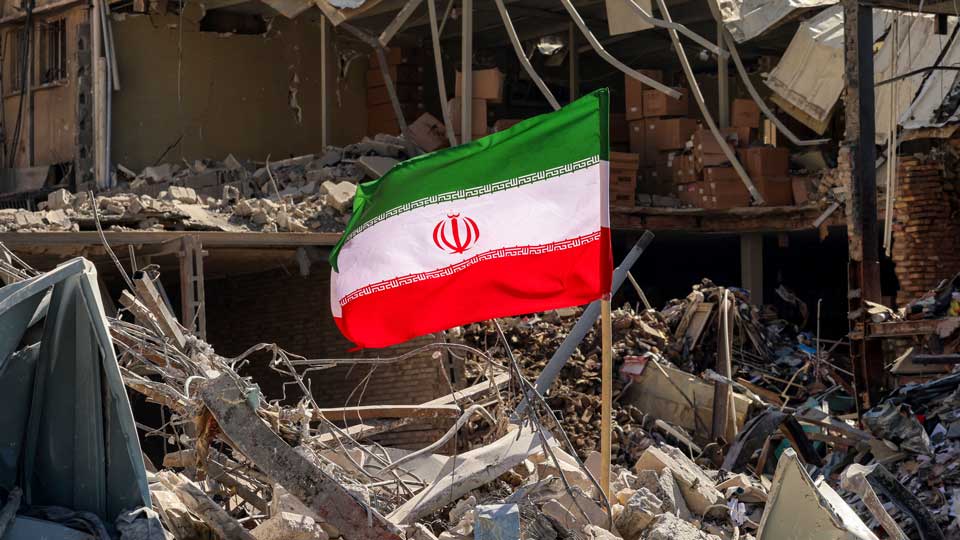
The ceasefire coincided with a high point of escalation as Trump threatened to end Iranian civilization and attack civilian infrastructure, having run out of meaningful military targets. What incentive could China offer that would be more decisive than nearly 30,000 bombs and Trump’s threat that “a whole civilization will die tonight”? What investment package would outweigh the fear of being attacked again, as they were during previous negotiations?
More likely, the cease-fire came about because U.S. and Iranian officials saw it in their interest to do so. Both Iran and the United States had run out of ways to escalate without incurring unacceptable losses. Pressure was mounting on all sides from the serious damage and loss of life inflicted on Iran and Lebanon, astronomic costs, rising energy prices and disastrous fuel shortages worldwide, and public anger in the U.S. and globally.
This does not mean that Chinese diplomacy had no impact. On the contrary, having the support of China and other regional governments gives Iran leverage in the negotiations. But even this has limits: Iranian officials have expressed the hope that China and other major powers would provide security guarantees, but this seems to be wishful thinking or posturing on Iran’s part, and Chinese experts have also expressed scepticism.
The Logic of China’s Middle East Diplomacy
Because of the material reality that China lacks the strategic incentives, political will, and military capability to oppose American policy in the Middle East, it has become common in Western media to wonder aloud why China isn’t “doing more” to help Iran or exert its influence in the region. But this framing fundamentally misses several important points.
First, it presumes that Beijing seeks to replicate American global hegemonic power, when there are strong indications that, both strategically and ideologically, this is not the case. Rather, China is pursuing its own policy of economic expansion and deliberate separation from security issues. It seeks to foster a more multipolar global world order, in which it can reap a larger share of the benefits and beless dependent on the West.
In this respect, China will not abandon Iran, but will also not endanger its global strategy, which depends on stable relations with the United States.
Second, it reads the limitations of Chinese diplomacy as indicative of poor policy, rather than the structural outcome of a U.S-dominated world order. Quite the contrary, China’s strategy has been effective at advancing its own goals. It has positioned itself as a more stable, consistent, and less coercive partner than the United States at a moment when the limitations of the American security umbrella are also being revealed. Gulf countries have faced repeated missile and drone attacks from Iran that American protection seemed unable to prevent.
Already, the Gulf states have shown signs of strengthening their ties with China, and Beijing is happy to position itself as the partner that comes to trade and build in the aftermath of yet another U.S-led bombing campaign.
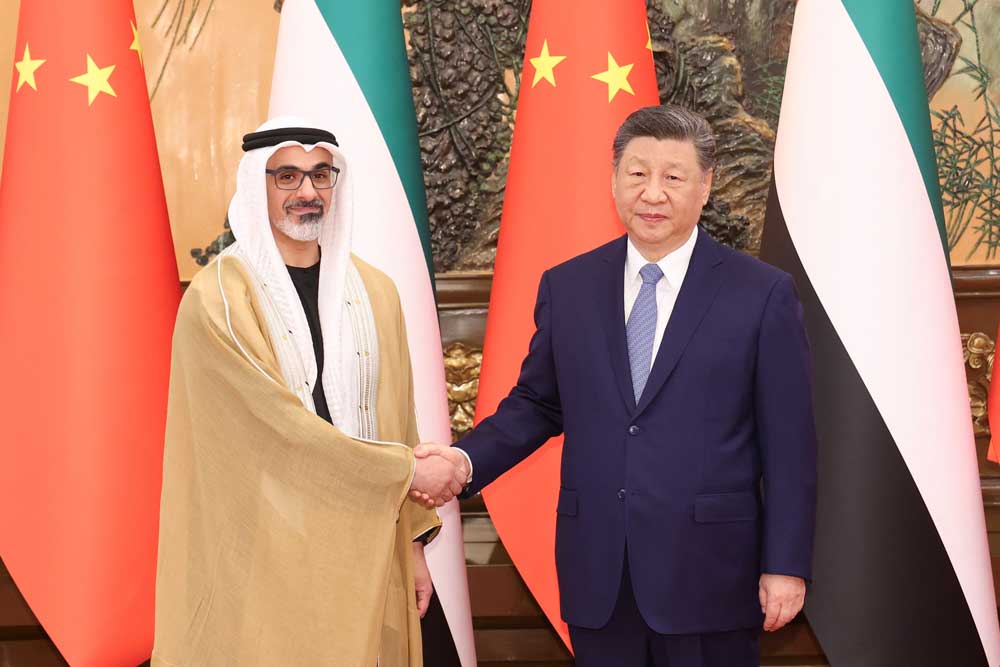
One way in which this war is relevant to China is that it reveals that the U.S. is determined to assert and maintain control in its traditional arenas of power. China represents a multipolar challenge to the current world order that is intolerable to the United States’ self-appointed position as global hegemon. However, the idea of a serious U.S.-China rivalry in the Middle East existed more in the minds of Washington planners than in reality, as a useful framing to justify hostile actions against China. The U.S. still has overwhelming superiority and freedom of action, in a way China does not have and does not seem interested in pursuing. Pursuing relations with China is a way for states in the region to, at best, increase their bargaining power with the U.S. and obtain some resources that they can’t get from the West, not a way to break with or replace the United States. In short, the idea that China poses a major existential threat to U.S. hegemony in the Middle East is seriously exaggerated.
Iranians Caught in the Middle
Whatever China’s position on the war, it is unlikely to be able to bring about it’s preferred outcome. In truth, the ceasefire remains fragile, and the fighting could restart at any time. Ultimately, if the United States and Israel resume their bombing campaign, Beijing will be just as unable to prevent it now as it was when the war began.
The most likely outcome now is not the emergence of opposition or progressive forces in the country, which are now in survival mode, but rather the continued securitization of the state. Protesters have fallen silent or rallied to the regime in the face of outside aggression, and repression has increased dramatically. This is truly a disaster for anyone who takes the principled position of opposing both imperialist wars and the theocratic regime in Iran, as well as anyone who wants to one day see a free and progressive society in Iran. Ultimately, this is of little consequence to officials in Beijing and Washington. Iranians remain squeezed between the United States, Israel, and their own government.
Still, China’s position cuts a stark contrast with the United States. Trump’s illegal war of choice has killed thousands of innocents, taken an unimaginable physical and psychological toll on Iranians at home and abroad, and led to economic disaster for some of the most vulnerable people of the world. Compared to threatening war crimes and unleashing global economic chaos, Beijing’s more cautious and diplomatic approach is likely to be welcomed by most nations.
William Figueroa is an assistant professor at the University of Groningen in the Netherlands and a prominent Iran-China scholar.