By Lukas Fiala
Lots of ink has been spilled about the war in Iran and its implications for China in the Middle East and the Global South at large. One narrative suggests that despite oil market disruptions and political instability across the region, China may well benefit on a strategic level.
With the U.S. bogged down by a conflict of its own making and even calling on Beijing to deploy military assets to the Strait of Hormuz, Xi’s bargaining power ahead of a potential U.S.-China summit has likely improved, especially after a year of tit-for-tat across tariffs and export controls.
In international relations, however, there is no free lunch. And thus, any appraisal of China’s approach must confront at least two hard truths.
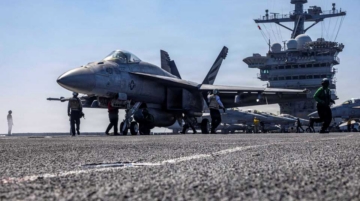
Firstly, while U.S. unilateralism may well accelerate the emergence of a multipolar order in the longer term, at least in the impending transition period, we continue to inhabit a unipolar world in the military sense. There simply isn’t much that China can or is willing to do about U.S. military preponderance outside its immediate neighborhood, at least for now.
The ensuing transition into a more multipolar world will therefore likely feature an additional sectoral division. The latter may well see China emerge as a leading techno-industrial power but will continue to be subject to U.S. rules of the game when it comes to security cooperation.
Secondly, with partners from Venezuela to Iran diminished, China will likely have to go it alone to a considerable degree in challenging U.S. security primacy.
For instance, the deterrence signal of the joint naval drill between China, Russia and Iran in February 2026 in the Strait of Hormuz rings hollow, with U.S. and Israeli strikes beginning just shortly thereafter. From BRICS to the SCO, Sinocentric international fora have amounted to little more than an alternative discourse to critique Western practices in the context of the war.
Sure, Chinese experts have pointed to the benefits of China’s flexible partnership approach that avoids alliance politics and entanglements in other countries’ conflicts. And, in the eyes developing country governments, a free-riding China may well seem less problematic when contrasted to U.S. militarism.
But with Russia bogged down in Ukraine, and Iran and Venezuela largely out of the picture, the common characterization by Western analysts of an “axis of autocracy” with China in the pole position has little resonance with the reality on the ground. China’s position is more complex, shaped by competing priorities vis-a-vis Iran, the Gulf States, and the U.S.
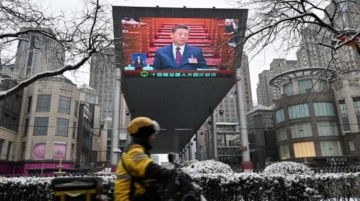
All this is not to say that China may not do more going forward. In a recently publicised speech, President Xi Jinping has pledged to strengthen the creation of an international port alliance under the Belt and Road Initiative (BRI) as China faces increasing challenges to global shipping routes, from the Strait of Hormuz to Panama.
China’s chief diplomat, Wang Yi, has also met with the UAE president’s special envoy to China in Beijing on Wednesday, reflecting China’s balancing act between its historically close relationship with Iran and the quickly expanding economic and technological links with Gulf economies.
Seen in the above context, however, these overtures come across as too little too late. Despite overseeing one of the world’s most powerful militaries and commanding the second largest economy, Beijing has so far done relatively little to keep the Strait of Hormuz open and avoid further disruption to its own oil supplies. How long Beijing will be content with “waiting and seeing” is anyone’s best guess.
Lukas Fiala is the head of China Foresight at LSE IDEAS