This is a free preview of the upcoming Africa EVs Weekly Digest, part of the new CGSP Intelligence service.
Irresistible! That was clearly the reaction from two South African politicians, whose acceptance of Chinese EV gifts has unsettled their government. The scandal raises a deeper question: how far will automakers go in using political ties to gain an edge in the market?
Meanwhile, most of their African compatriots will likely only get access to an EV via the second-hand market. This sector will continue thriving in the short term if previous trends are anything to go by.
As more Chinese EVs enter Europe, older cars will likely continue being pushed into export markets, with many of these ending up in low- and middle-income countries. Africa received nearly half of its used cars from the EU in 2022. This tends to lock importing countries into higher pollution and longer dependence on hydrocarbon fuels.
This week in Africa’s EV scene:
Chinese SUV Scandal Implicates Two South African Government Ministers
Five BAIC X55 vehicles donated by Chinese representatives in late 2023 have become the focus of controversy in South Africa, after it was found that they were never put into use by the African National Congress Women’s League (ANCWL), as originally intended.
The vehicles, which were meant to support the league’s activities, have instead drawn scrutiny over their allocation to family members, with two government ministers implicated in the unfolding dispute.
Why This Matters: BAIC and similar companies should consider how reputational spillover could affect brand trust among buyers. It will be interesting to see how other competing brands react to the political fallout and how they position themselves.
Delhi to Only Register New EVs Starting January Next Year
The Delhi government’s draft Electric Vehicle (EV) Policy 2026–2030 lays out an aggressive roadmap to accelerate the shift to electric mobility in the capital, combining incentives and restrictions to reshape the transport ecosystem. It proposes financial support, including waivers on road taxes and registration fees for electric cars, purchase subsidies for two and three-wheelers. It also includes investments in charging infrastructure, while scrapping incentives for older polluting vehicles.
Why This Matters: Delhi serves as a policy bellwether for India’s largest urban markets, meaning its decisions frequently influence or accelerate national-level transport and environmental strategies. A rapid EV transition there could significantly reduce emissions while also testing the scalability of infrastructure, grid capacity, and supply chains needed for nationwide electrification. It also signals to automakers, energy companies, and investors that India’s urban mobility market is entering a more regulated, electrification-driven phase, where compliance readiness and EV ecosystem investments will increasingly shape competitiveness and growth opportunities.
Uganda’s Kiira Motors to Supply Hundreds of EV Buses to South Africa
Golden Arrow Bus Services, a South African transport company, has signed a $150 million agreement to purchase 450 Kayoola electric buses from Uganda’s Kiira Motors Corporation, marking a significant cross-border investment in Africa’s growing electric mobility sector. The buses are locally designed and engineered, and include some parts from China.
Why This Matters: The deal could mark a significant step forward for intra-African trade once finalized. Its success would underscore the potential for African countries to deepen commercial ties and source major industrial goods from within the continent, which would help grow their economies.
Brazil’s Top Labor Inspector Fired for Adding China’s BYD to ‘Dirty List
Brazil’s secretary of labor inspection was fired for adding Chinese automaker BYD to a registry of employers accused of subjecting workers to conditions described by the government as similar to slavery. Luiz Felipe Brandao de Mello disobeyed an order from Labor Minister Luiz Marinho to leave the electric vehicle maker off Brazil’s labor abuse “dirty list”.
Why This Matters: This flashpoint is part of larger tensions between President Luiz Inacio Lula da Silva’s government and the traditionally independent inspectors who target serious labor abuses. It raises questions about the policing of labor abuses as countries race to attract more EV investment.
China’s Top-Selling EV Heads to South Africa, Challenging Toyota’s Hybrid Dominance
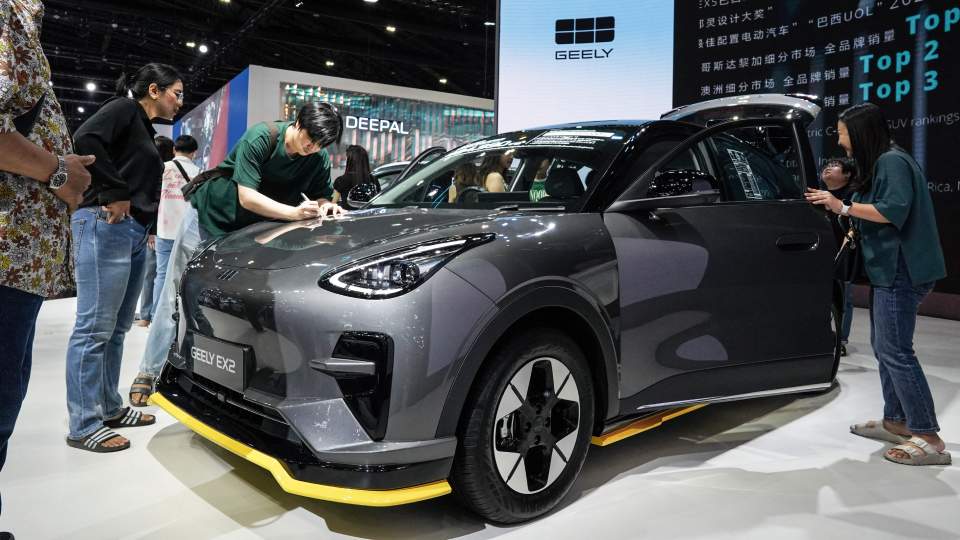
China’s best-selling car, the Geely EX2, will be available in the South African market later this month. A wave of new models is entering the country and rapidly chipping away at Toyota’s dominance of the hybrid segment, in particular.
Why This Matters: The move is likely to intensify competition and raise the standard of vehicles available in the market. Toyota, long associated with reliability, could lose its traditional market share in Africa’s most sophisticated automotive sector.
In context
This week’s developments highlight how the global expansion of Chinese electric vehicle makers is reshaping markets while exposing political, regulatory, and ethical tensions across regions. From South Africa’s donation scandal to policy shifts in Delhi, and industrial deals involving Kiira Motors Corporation and scrutiny of BYD in Brazil, it reflects both opportunity and risk in the EV transition.
The takeaway:
The continued flow of second-hand cars into Africa and other developing countries shows that many low-income markets remain tied to older, more polluting systems despite the global shift to electrification.