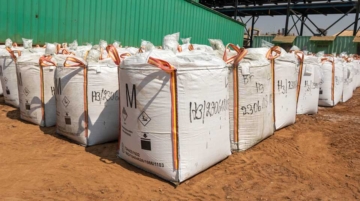
If you want to see where great-power competition is most visible today, look to the fast-growing world of critical minerals. What began as a technical supply-chain issue has become a central arena in which the United States and China are testing their industrial strength, geopolitical leverage, and long-term economic strategies.
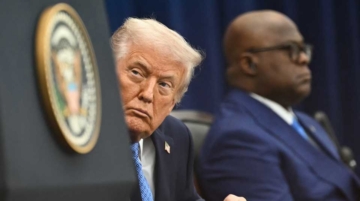
The stakes were clear in November, when U.S. President Trump and Chinese President Xi signed an agreement to suspend export controls on several key elements for one year. The deal offered Washington short-term relief because it temporarily protected access to minerals that U.S. industries still rely on China to refine. But it also underscored a shared recognition in Washington and Beijing: whoever shapes the future of mineral supply chains will hold a powerful advantage in the next global industrial and geopolitical order.
For China, this episode reaffirmed the strategic value of its dominant position across the midstream of global mineral supply chains and the importance of professionalizing its own mineral licensing system. It was also a peek into China’s much broader and more developed strategic worldview about minerals themselves. This worldview informs how China secures minerals abroad, understands its own vulnerabilities, manages its domestic mineral base, and responds to rising resource nationalism and Western efforts to diversify away from Chinese supply chains.
Understanding this worldview is essential to making sense of China’s behavior in the mineral space.
The Strategic Logic of Resource Security
The emerging global focus on mineral security has also intensified scrutiny of how Beijing conceptualizes, governs, and advances its critical mineral interests abroad. Chinese scholars increasingly describe critical mineral resources as “strategic minerals” (zhànlüèxìng kuàngchǎn), a term which elevates their salience from industrial inputs for critical technology to security assets central to national security, domestic industrial development, and China’s long-term position in the global economy.
This, by extension, also links China’s securing and accessing minerals abroad (and the diplomacy with resource-rich countries that sustains that access) to its national security interests. From China’s vantage point, this engagement with mineral-rich states in the Global South is also part of a broader reordering of the international economic system.
Collectively, this creates a logic of what Chinese scholars call “resource security” (zīyuán ānquán). This concept has evolved into an integrated framework that blends realpolitik with development narratives. In practice, it outlines the strategic use of foreign-policy tools, state-backed finance, and industrial cooperation to secure, diversify, and govern the supply chains of minerals essential to economic development, national defense, and the emerging low-carbon energy system.
China’s approach to resource security is driven by a belief that certain raw materials have become the material foundation of the current and future digital and green economy. And, controlling these resources and their production can improve resource independence amidst global competition.
Guo Chaoxian and Lü Qing contend that critical minerals—including lithium, cobalt, nickel, copper, and rare earths—are poised to become the “new petroleum” of the low-carbon society.[1] Wang Yongzhong et al argue that the resultant unbalanced supply and demand have pushed supply chain security to the frontier of geopolitical and economic competition.[2] Wang Denghong et al. highlight that these strategic critical minerals possess a potent “killer weapon” effect (shāshǒujiǎn xiàoyìng) in international competition, creating scenarios where a nation could either be “choked by others” if it was over reliant or be able to “choke others” if it controlled the resource and means of production.[3]
Unlike traditional Western definitions focusing solely on supply risk, Wang Yongzhong et al note that China commonly uses the concept of “strategic minerals” (zhànlüèxìng kuàngchǎn)[4] because this category encompasses short-supply minerals essential for strategic emerging industries (such as lithium and cobalt) and advantageous minerals where China holds rich reserves (such as rare earth and graphite).
Pinpointing China’s Strategic Vulnerabilities
China’s dominance in critical minerals carries strategic vulnerabilities of its own. Chinese scholars highlight three overlapping vulnerabilities that pose severe supply vulnerabilities to its mineral industrial base.
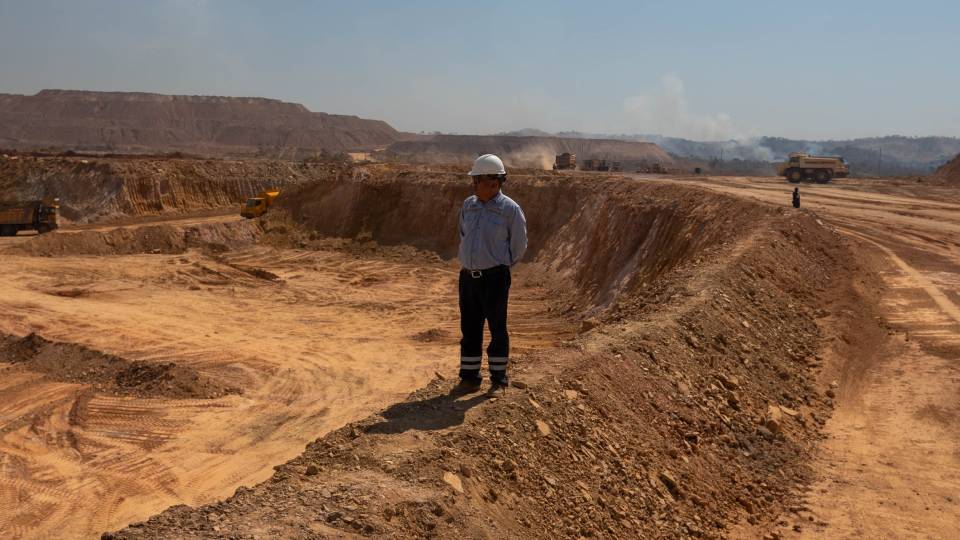
First, despite China’s competitive advantage in midstream processing and refining, the Chinese supply chain suffers from heavy dependence on imports for upstream minerals. This includes an estimated 95% for cobalt, 90% for nickel, and 78% for copper.[5] This has pushed Chinese investments outward to resource-rich countries, like the Democratic Republic of the Congo (DRC), which holds the world’s largest cobalt deposits.
China’s second critical vulnerability is its exposure to geopolitical risk. Many deposits China depends on are located in regions prone to instability and conflict—such as the Democratic Republic of the Congo and Myanmar—leaving Chinese investments and supply chains vulnerable to persistent political disruption. Securing reliable access to these strategic minerals, therefore, requires Chinese companies to operate in inherently high-risk environments.
This geopolitical challenge is compounded by a rising wave of resource nationalism across Africa, Latin America, and Asia.[6] Resource-rich nations are increasingly implementing policies designed to capture more value from their mineral wealth domestically. These measures include raising mining fees and taxes, nationalizing segments of the supply chain, imposing export bans on unprocessed ore, and mandating greater in-country processing before export.
Chinese analysts, however, do not uniformly view this trend as threatening. Zhou Yuyuan frames African, Latin American, and Southeast Asian states as co-architects with China in shaping the long-term terms of resource development.[7] Zhou characterizes “resource sovereignty” as these regions’ response to predatory international practices following decades of asymmetric relationships with Western firms.[8]
From this perspective, resource nationalism represents a legitimate assertion of post-colonial autonomy rather than an obstacle to Chinese interests. Similarly, Guo and Lü interpret new state-centered mining regulations—such as Guinea’s bauxite reforms and Chile’s lithium nationalization—as an overdue rebalancing of benefits between host countries and foreign investors.
To maintain reliable access amid rising resource sovereignty, China must align its overseas investments with host-country industrialization agendas—a strategic shift that has become a prerequisite for political sustainability. China’s response centers on what it terms “resource–industry co-development” (zīyuán-chǎnyè gòngjiàn). Chinese firms can no longer rely on volume-based extraction alone; they must now integrate downstream activities into the economies of resource-rich host countries.[9]
Indonesia’s nickel sector exemplifies this adaptation. Following Jakarta’s 2020 ban on raw nickel exports, Chinese companies such as Tsingshan and Huayou Cobalt responded by investing in smelters, cathode plants, and battery production facilities within Indonesia. Wang et al. argue that China retained supply access precisely because it simultaneously advanced Indonesia’s industrial policy objectives.
This pattern is evident across other resource-rich regions. Chinese companies in Latin America and North Africa have similarly expanded their operations to include joint development of refining and processing capacity. In most cases, these investments reflect not merely commercial strategy but adaptive responses to host nations’ evolving demands, rooted in their growing assertion of resource sovereignty.
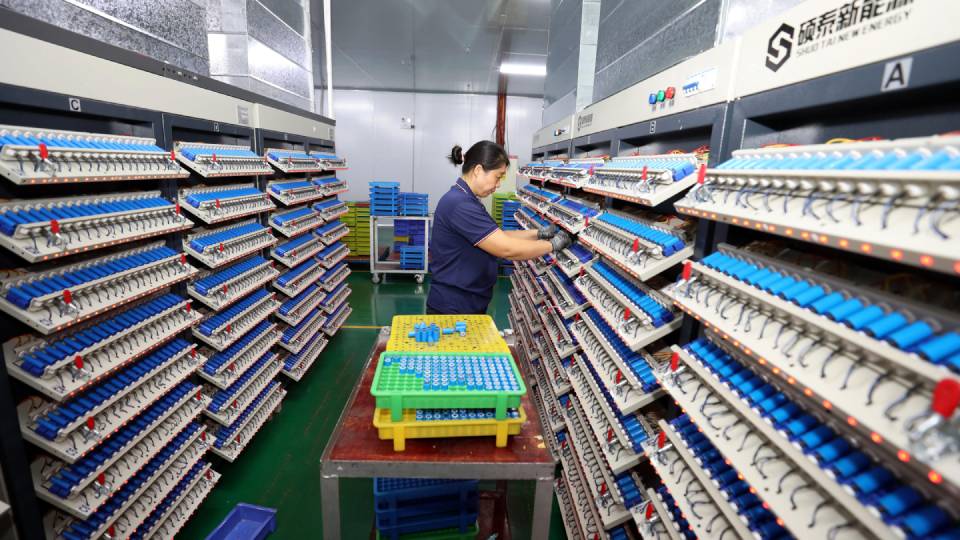
Employees work at a lithium battery factory in Huaibei City, east China’s Anhui Province, 15 November, 2025. (Photo by Li Xin / IC photo / Imaginechina via AFP)
This creates China’s third vulnerability: the increasing securitization of critical mineral supply chains by states that view China’s growing monopoly as a strategic threat to their own long-term security. Resource sovereignty, while creating space for Chinese adaptation, has simultaneously opened strategic opportunities for Western powers to challenge Chinese dominance.
Washington has begun capitalizing on Beijing’s troubled legacy in parts of Africa by leveraging narratives around “debt-trap diplomacy,” environmental degradation, and exploitative labor practices to drive wedges between Chinese firms and the mineral assets they depend on.
More broadly, Chinese scholars observe that the U.S., EU, and Japan are jointly pursuing the localization, diversification, and explicit “de-sinicization” (qù zhōngguóhuà) of critical mineral supply chains to reduce dependence on China.[10]
Some analysts argue that major powers are deploying highly competitive and structured strategies designed to exploit China’s supply chain vulnerabilities and erode its competitive advantages. Wang et al. highlight how the United States is leveraging mineral security partnerships—such as the U.S.-Australia critical minerals pact and the U.S.-Pakistan agreement—to construct resilient supply chains that bypass China entirely.
Scholars point to U.S. domestic policy mechanisms like the Inflation Reduction Act (IRA), which conditions electric vehicle tax credits on mineral content sourced from the U.S. or free trade agreement partners, effectively excluding China from subsidized markets. Shu Biquan argues that Japan’s strategy mirrors this trajectory by seeking to reduce reliance on Chinese supply chain advantages, shifting from a “China +1” diversification model toward outright “de-sinicization.”[11]
This geopolitical competition complicates China’s efforts to secure long-term stakes in critical mineral supply chains, forcing Chinese firms to continuously prove their value proposition against rivals who can leverage both financial incentives and geopolitical alignment with resource-rich governments seeking to maximize their bargaining power in an increasingly multipolar resource landscape.
Strategic Responses
These converging vulnerabilities have raised important questions about how China should respond to what it perceives as growing opposition to its resource dominance. Some Chinese policy thinkers argue that resource security now requires greater control, not only over mines, but over logistics, processing, and advanced material production.[12]
In their view, this “integrated layout” (yītǐhuà bùjú) could insulate China’s industrial base from external shocks. Key components of this would be building processing facilities in resource-rich nations across the Global South to secure refined exports to China and deeper mining cooperation with resource-rich countries through BRI. The Chinese government resorted to export restrictions on strategic minerals as tools of strategic leverage.
The prevailing view among scholars is that China’s export controls function as a reciprocal defense mechanism and a technocratic answer to U.S. and EU restrictions on advanced technology exports. In Beijing’s framing, regulating outflows of strategic minerals is both a security measure and a political signal.
If Washington and Brussels can weaponize chokepoints in semiconductors and high-tech equipment, then China is equally justified in protecting the minerals that underwrite those systems.
China’s move to control gallium and germanium, which are essential components in the semiconductor industry, directly targets the strategic vulnerability of Western industrial bases. This reflects what Wang Denghong et al write about how control of mineral resources can give a nation the ability to “choke” others.
Xi has already hinted at developing a more robust and professionalized licensing system for Chinese minerals, which would aim to prevent U.S. defense suppliers from accessing them. This would further escalate competition with the United States and accelerate U.S. efforts to build a diversified supply chain beyond China.
Where the Mineral Race Is Headed
China’s reading of the critical mineral landscape suggests that the competition unfolding in the Global South has evolved beyond simple access to resources and is now concerned with shaping the governance frameworks and industrial pathways that shape the global mineral supply chain.
Chinese scholars increasingly argue that long-term advantage will be cultivated by embedding China’s industrial footprint, standards, and financing models into the mineral economies of emerging producers, not just accumulating upstream assets.
At the same time, they recognize that rising resource sovereignty, Western de-sinicization strategies, and coordinated U.S.–allied partnerships are reshaping the political environment in which Chinese firms operate.
As a result, China sees the future contest over minerals shifting from extraction to rule-setting. Beijing seeks value in both controlling deposits and influencing the systems through which those minerals are processed, traded, and integrated into global value chains.
However, China’s own mineral vulnerabilities, both at home and abroad, are a stark reminder that while Beijing is “winning” the critical mineral race, the rest of the international community is slowly catching up while simultaneously creating conditions that aim to dismantle China’s monopoly. The strategic question for China is whether it can adapt quickly enough to remain the central node in a supply chain order that is increasingly contested, fragmented, and defined by the industrial ambitions of the Global South.
This essay was published in a partnership with Rihla Research & Advisory LLC.
End Notes
[1] Guo, Chaoxian, and Qing Lü. 2023. “深化国际合作 提升关键矿产海外供应保障能力 [Deepening International Cooperation to Enhance Overseas Supply Assurance Capacity of Critical Minerals].” Zhongguo Fazhan Guancha [China Development Observation] 2023, no. 6: 106–109.
[2] Wang Yongzhong, Wan Jun, and Chen Zhen, “能源转型背景下关键矿产博弈与中国供应安全 [Geopolitical Game and China’s Supply Security in Critical Minerals amid Energy Restructuring],” Guoji Jingji Pinglun [International Economic Review] 2023, no. 6 (2023): 147.
[3] Wang Denghong, Dai Hongzhang, Liu Shanbao, Wang Chenghui, Yu Yang, and Zhao Zhi, “中国战略性关键矿产勘查开发进展与新一轮找矿的建议 [China’s Progress in Exploration and Development of Strategic Critical Minerals and Suggestions for a New Round of Prospecting],” 科技导报 [Science and Technology Review] 2024, no. 5 (2024): 7.
[4] Wang, Wan, and Chen, 2023, 164–165
[5] Guo and Lü 2023, 107.
[6] Wang, Wan, and Chen, 2023.
[7] Zhou Yuyuan, “非洲关键矿产的大国竞争:动因、特征与影响 [Great Power Competition over Critical Minerals in Africa: Motivations, Characteristics, and Impacts].” Online contribution posted on Fujian Sheng Tushuguan [Fujian Provincial Library] website, May 13, 2024, 208.
[8] Dong Qingqing 2024, 65.
[9] Wang, Wan, and Chen, 2023.
[10] Ibid.
[11] Shu Biquan, “日本关键矿产战略及其对中国的影响 [Japan’s Critical Mineral Strategy and Its Impact on China],” Guoji Zhanwang [International Review] 2025, no. 1 (2025): 118.
[12] Wang, Wan, and Chen, 2023.