China’s clean-tech export surge has been widely documented in recent weeks. Many analysts have linked the increase to a growing push, particularly across developing economies, to reduce exposure to volatile oil and gas markets following the closure of the Strait of Hormuz.
Much of that assessment, however, was initially based on China’s March trade data, which showed exceptionally strong clean-tech exports. According to Chinese customs data, exports from the country’s “new three” sectors – electric vehicles (EVs), batteries, and solar products -reached a record $21.9 billion in March 2026, a 70% increase year-on-year.
Yet March was also an unusually distorted month for clean-tech exports. China terminated export tax rebates for solar cells and batteries at the end of March. The rebates had effectively lowered exporters’ costs by allowing companies to recover part of the taxes paid during production, helping Chinese products remain highly price-competitive overseas.
The policy change triggered a wave of front-loading and stockpiling ahead of the deadline, likely inflating March export figures. More importantly for energy and geopolitical analysts, it made it difficult to isolate how much of the export surge reflected genuine underlying demand tied to new global energy security concerns, including disruptions associated with the Strait of Hormuz, versus temporary policy-driven effects.
This analytical challenge can now be addressed more credibly as additional monthly data become available. China’s April trade data, released on May 18, provide the clearest evidence so far that global demand for Chinese solar panels, batteries, and EVs remains both strong and resilient even after the rebate changes took effect.
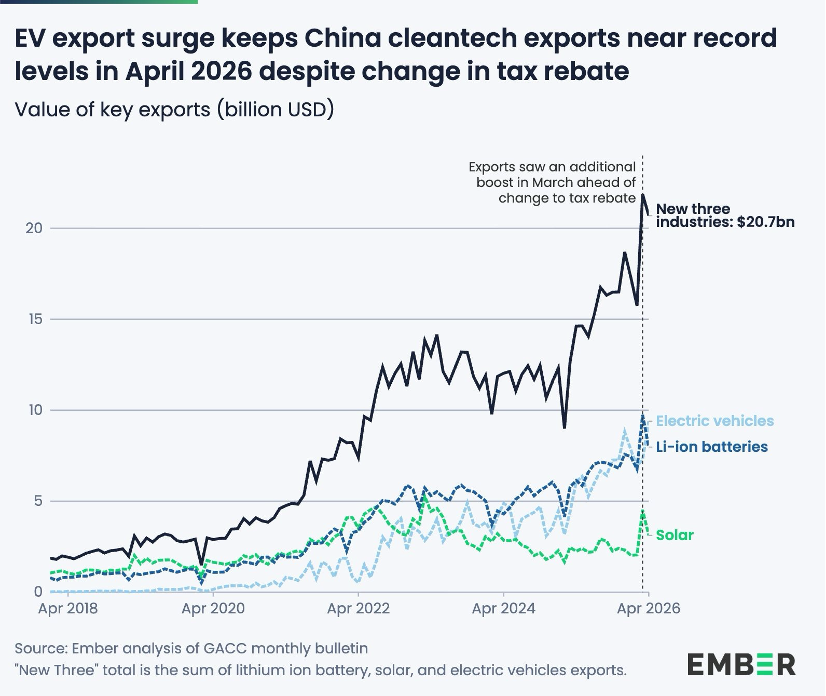
The latest data suggest that Chinese clean-energy products continue to gain traction internationally because of their cost competitiveness and scale advantages, with demand likely reinforced by a changing global energy landscape and heightened concerns over fossil fuel supply insecurity.
As shown in the graph from the China Cleantech Exports Data Explorer of Ember, an energy data outfit, although the value of solar and battery exports declined modestly from the March peak, April export levels still exceeded those recorded in any month over the previous two years. At the same time, EV exports, which were not directly affected by the recent rebate changes, continued to grow in April and more than offset the month-on-month decline in solar and battery exports. It is also important to note that the graph measures export value rather than volume. Given the continued decline in the cost of Chinese clean-tech products, rising export values likely imply even faster growth in export volumes.
Taken together, the April figures suggest that the rise in Chinese clean-tech exports is no mirage. China’s green-tech industry is becoming increasingly tied to how countries respond to a more uncertain global energy landscape.