
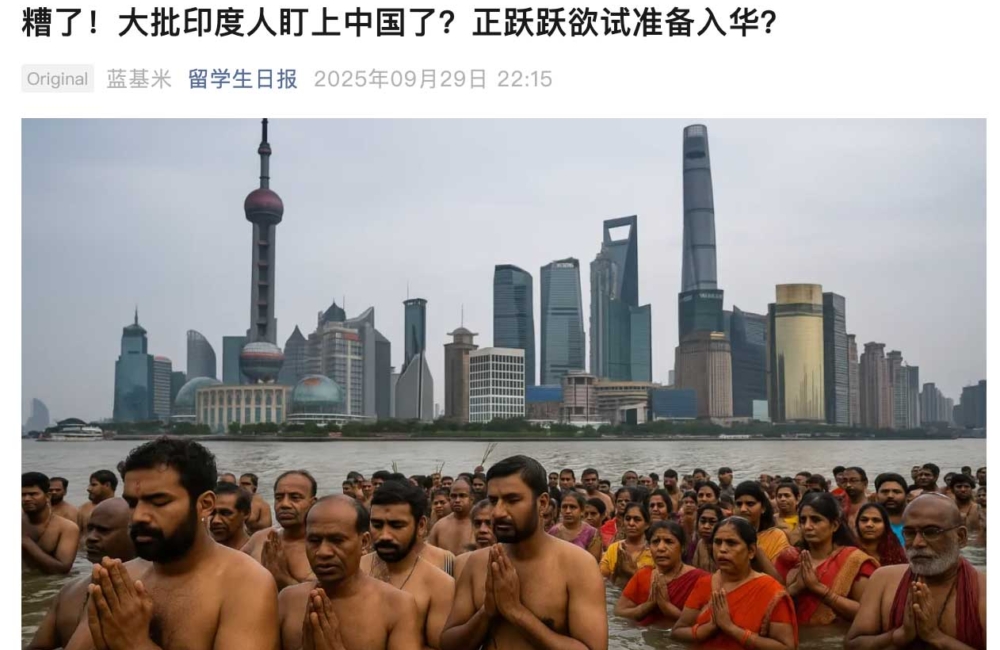
A recent commentary from College Daily, the largest media platform for Chinese students overseas, examines how China’s newly launched K visa, set to take effect on October 1, is already drawing unusual attention abroad—particularly in India. Major Indian outlets are referring to it as “China’s H-1B,” framing it as a new career pathway at a time when U.S. and other Western visa options are tightening and costs are rising. The piece also raises concerns about how the policy might affect job competition for young people in China.
The piece warns that Indian professionals, with their sheer numbers, established networks, and fast-moving responses to policy shifts, could seize on the K visa just as they have elsewhere. It cites data to show the widespread prevalence of Indians: In the United States, Indians now account for more than 70% of H-1B approvals. In Canada, they make up over 40% of Express Entry technical immigrants. In the U.K., Indian students have already surpassed those from China in number.
The impact is not only numerical but structural: Indian workers’ family members joined them on visas, forcing the British government to impose restrictions aimed directly at this group. Meanwhile, in Europe’s capitals like Paris and Rome, visible Indian migrant worker and student communities are expanding across sectors from tech to street vending.
The commentary stresses that this reflects not just population size but what it calls India’s “system utilization capacity”—a proven ability to exploit visa regimes wherever they emerge fully. While China’s K visa is not a direct immigration pathway, it could still become part of a long-term career strategy for Indian youth: a few years of research in China could boost résumés much as H-1B and Express Entry has done elsewhere.
The commentary points to three areas of concern:
- Research posts: visa-holders competing with Chinese PhDs and master’s graduates for scarce lab and project slots.
- Innovation resources: foreign talent tapping incubators and startup funding intended for domestic youth.
- Language and pay dynamics: highly educated Indian applicants with fluent English and flexible salary expectations are gaining an edge.
In short, the piece concludes that the risk is not an “immigration wave” but the dilution of career opportunities for China’s own youth in an already hyper-competitive job market. The real challenge is not whether Indians will arrive in large numbers, but whether China can establish clear standards for what constitutes “global STEM talent,” ensure strict oversight, and prevent the K visa from becoming another loophole rather than a genuine talent dividend.
Why Is This Important? China and India both produce large numbers of highly skilled STEM graduates who compete fiercely for opportunities in Western countries. At the same time, China’s domestic job market is already saturated with young talent in this field. The opening of the K visa as a direct channel for Indian professionals has amplified anxieties among Chinese youth, who fear increased competition not just abroad but also for scarce domestic research positions and innovation opportunities.