A protest that began with young Nepalis defending their online voices was recast in Chinese coverage as a story of jobs, remittances, and corruption. The tone appeared strikingly neutral, yet it was telling in what it left unsaid.
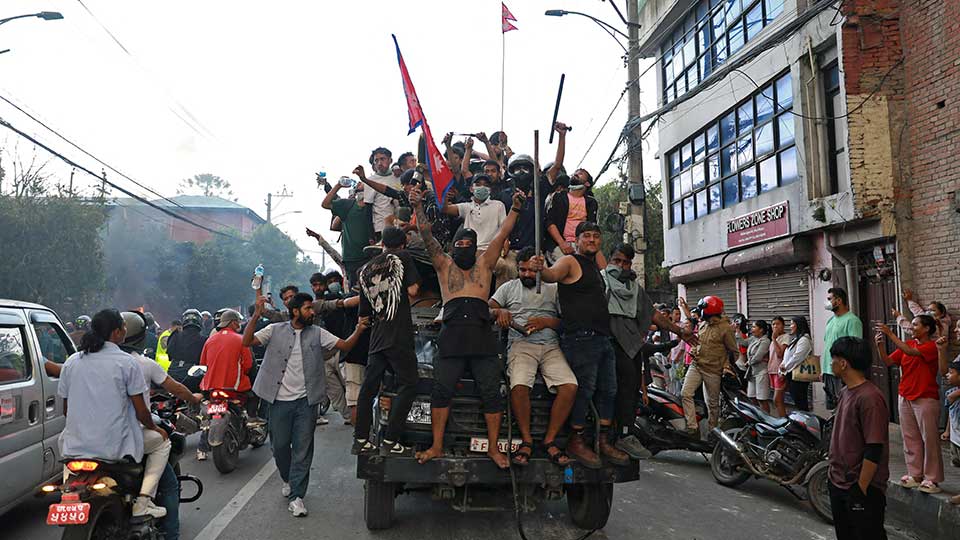
The immediate trigger was the government’s decision to ban 26 foreign social media platforms after posts exposing corruption and criticizing the regime went viral. Outraged, Gen Z protesters poured into Kathmandu’s streets in what became known as the “Gen Z Movement.” Clashes left more than 30 people dead, buildings such as the prime minister’s residence were set ablaze, and within days, Prime Minister Oli was forced to resign.
Yet in Chinese media reports and online discussions, the protests were framed less as a fight over political freedoms than as the symptom of Nepal’s unique economic fragility.
Analysts pointed to the country’s dependence on migrant labor, where remittances account for more than a quarter of GDP, and noted that foreign social media platforms are essential not only for families to stay connected but also for marketing Nepal’s tourism industry.
Many netizens mocked the Nepali government’s “short-sightedness” in treating social media purely as a political threat, ignoring its decisive role in sustaining the economy.
The angle that never appeared, however, was young Nepalis’ defense of free expression. Whereas Western outlets highlighted speech and political rights, Chinese narratives emphasized corruption, poverty, and poor governance as the true roots of youth anger.