According to a May 28 report by Vietnam News Agency, ASEAN leaders have agreed in principle to admit Timor-Leste as the bloc’s 11th member at the upcoming ASEAN Summit in October.
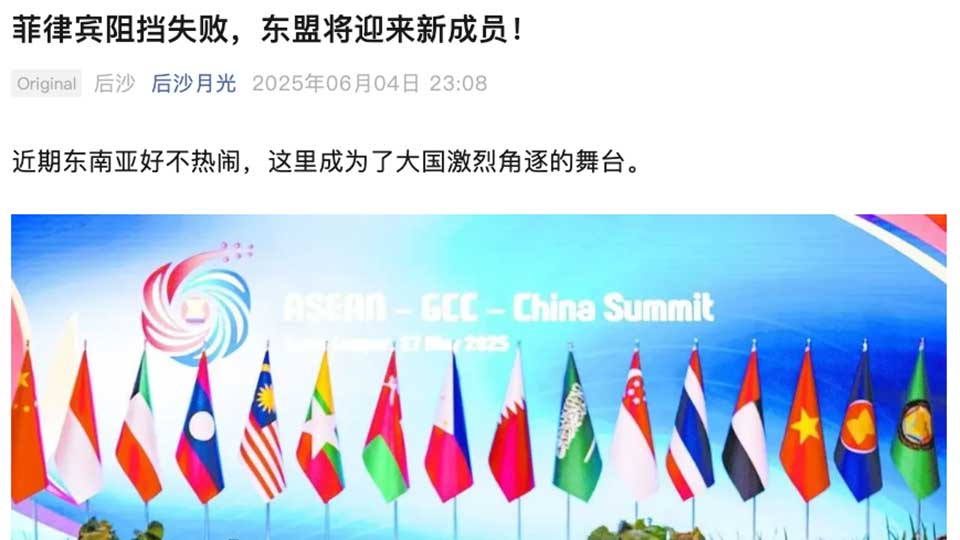
The announcement initially flew under the radar on Chinese social media, but a recent commentary by the widely followed WeChat account 后沙月光 (Moonlight After the Storm) has brought it into the spotlight. Titled “Philippine’s Blockade Fails: ASEAN Welcomes a New Member!”, the article dissects why this tiny country—Timor-Leste—matters far more than it seems in the great-power tug-of-war over Southeast Asia.
The Philippines initially argued that Timor-Leste was not economically developed enough to join ASEAN, citing its low GDP, but later shifted its justification to a criminal case involving Filipino congressman Arnolfo Teves Jr.—who was accused of orchestrating a deadly political assassination and had fled to Timor-Leste. Although Timorese authorities arrested Teves and denied his asylum request, they refused immediate extradition, insisting on due judicial process. In retaliation, the Marcos Jr. administration threatened to exploit ASEAN’s consensus-based veto system to block Timor-Leste’s membership.
While Timor-Leste may appear insignificant due to its small population and developing economy, the article argues that it holds strategic and geopolitical importance:
- It possesses significant oil and gas reserves.
- It sits along a crucial maritime route vital for the transport of lithium and other critical minerals—resources China heavily relies on for its booming electric vehicle and energy storage industries.
- It maintains a comprehensive strategic partnership with China, including growing defense cooperation.
Cambodia, Indonesia, Malaysia, and Thailand have all voiced active support for Timor-Leste’s inclusion. Even Singapore, initially hesitant over Timor-Leste’s economic readiness, shifted to a supportive stance in 2023, leaving the Philippines increasingly isolated in its opposition.