
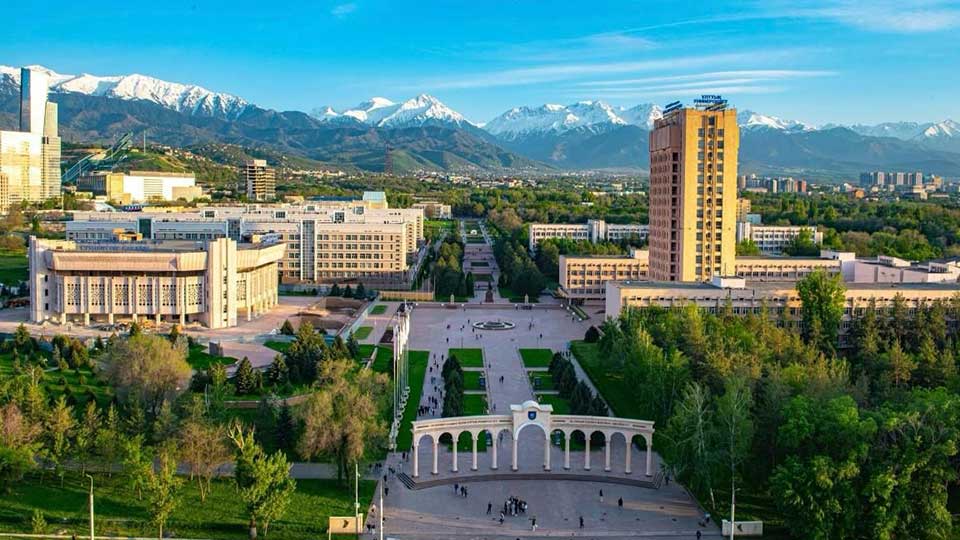
In September 2024, Peng Ran, a former employee at a state-owned enterprise in China’s Shandong province, embarked on a three-day journey by train, bus, and multiple border checks to reach Almaty, Kazakhstan’s largest city. His destination? A PhD program at Kazakhstan National University(KazNU).
Peng’s story, featured in a recent news article titled “The Top ‘Stan’ Country, Is Seeing an Influx of Chinese Students”, reflects a growing trend: Chinese students are increasingly choosing Central Asia, particularly Kazakhstan, for master’s and PhD studies.
The article explores why this under-the-radar destination is gaining traction, and what students can do in future with higher education degrees from Central Asia.
Geopolitical and Bilateral Advantages
- With tensions between China and the West (especially the U.S.), students are turning to Belt and Road Initiative (BRI)-friendly destinations.
- Kazakhstan offers stable, China-friendly policies, convenient travel (direct flights from major Chinese cities), and growing economic ties.
Cost-Effective Education
- Compared to Western countries (where annual costs can exceed 200,000–300,000 RMB), studying in Kazakhstan costs less than 50,000 RMB per year, including tuition and living expenses.
- Universities like KazNU rank higher than some Chinese 985 institutions (e.g., Tongji and Wuhan University) in the QS World Rankings (163rd in 2025).
Easier Admission & Language Flexibility
- Unlike Western universities, which require IELTS/TOEFL, some Kazakh institutions assess English proficiency through interviews.
- However, due to the increasing number of Chinese applicants, stricter language requirements may soon be introduced.
Avoiding “Diploma Mills” in Southeast Asia
- Countries like Malaysia and the Philippines, once popular for “fast-track” degrees, now face scrutiny over diploma credibility.
- Kazakhstan, with stricter graduation requirements (e.g., publishing SCI papers for PhDs), offers a more reputable alternative.
Why Kazakhstan Stands Out
- Higher GDP per capita than China (~$15,000), with a developed digital economy (90%+ internet penetration).
- Almaty, the economic hub, is a cosmopolitan city with a mix of international students.
- Strong historical ties to Soviet academia, ensuring rigorous technical and scientific programs.
Top Recommended Majors in Kazakhstan
- Energy & Mining Engineering (Kazakhstan is rich in oil, gas, and minerals, with strong Soviet-era academic foundations).
- Information Technology & Engineering (Ideal for those planning to return to China and pursue civil service exams or secure employment through talent recruitment programs).
- Russian/Kazakh Language Studies (Useful for careers in Central Asian trade and diplomacy).
- Business & Finance (For students aiming to work in China-Central Asia commerce or government jobs back home).
Career Prospects After Graduation
- University faculty in China (Many Chinese lecturers pursue PhDs in Kazakhstan for promotions).
- State-owned enterprise jobs (Especially in energy, infrastructure, and cross-border trade).
- Government/civil service roles (A master’s degree from abroad helps in China’s competitive public exams).
- Entrepreneurship in Central Asia (With Chinese exports dominating local markets, opportunities abound).


