Empowering local mechanics through hands-on training to reduce dependence on imported fuel is creating opportunities in tourism, fishing, and green innovation, demonstrating scalable solutions for Senegal’s clean energy future in e-mobility.
This week, we spotlight Jokosun Energies, a Senegalese company leading the charge in clean energy and electric mobility on West Africa’s waterways.
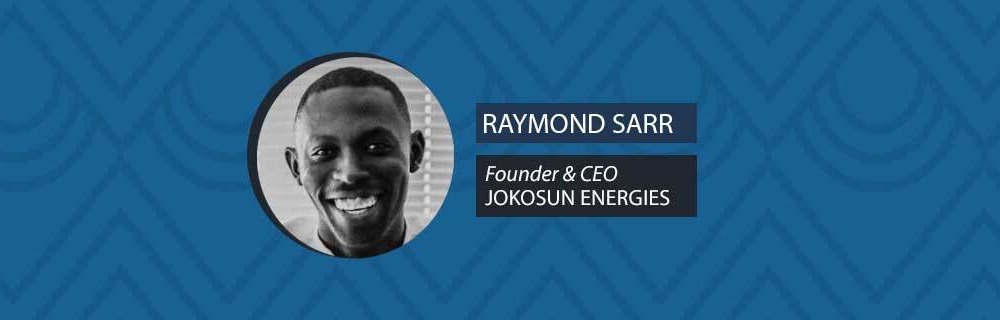
Raymond Sarr, an engineer, is the CEO of JoKoson Energies, and he helps us explore how fishermen in Senegal are converting traditional gas-powered pirogues into electric boats, reducing costs, cutting pollution, and creating local green jobs in the process.
From pioneering retrofits to building a scalable, African-led electric boat ecosystem, this episode is a deep dive into how real local solutions are emerging from the ground up.
Show Notes:
- Frontier Tech Hub: Piloting e-mobility in Casamance’s waterways by Namory Diakhate
- RFI: Transition from thermal to electric: in Senegal, canoes sail clean!
- PREO: Jokosun Energies
About Raymond Sarr:

Raymond Birame Sarr is a Senegalese entrepreneur and engineer committed to developing sustainable energy solutions throughout Africa. As the founder and CEO of Jokosun Energies, he has led initiatives to electrify thousands of homes and businesses in Senegal using solar energy. His work includes pioneering electric mobility on West African waterways, introducing retrofitted electric pirogues powered by solar-charged batteries. With a pragmatic and results-oriented approach, Sarr focuses on structuring and financing energy and industrial projects, optimizing deployment in electric mobility and renewable energies, and managing risks for investors and companies. He is open to strategic missions, collaborations, and investments in impactful projects across Africa.
Transcript
Njenga Hakeenah: When innovation meets purpose, groundbreaking solutions to everyday challenges are found. And in African countries, these solutions can be transforming gas-powered boat engines into electric ones, offering cost savings and, in the long run, environmental benefits. In this episode, we explore the inspiring story of Jocoson Energies, a Senegalese company rewriting the script on clean energy access in the West Africa region.
Founded in 2017 by engineer Raymond Sarr, Jokosun has become a force for sustainable change. It offers solar kits that light up homes, chill food in remote villages, and pump water where grids can’t reach. But that’s just the beginning.
We explore how Jocoson is now pioneering electric mobility on the rivers of Casamance with its groundbreaking ELEC TEY project. It is replacing noisy polluting outboard boat motors with clean, quiet, electric alternatives. This innovation has a profound local impact.
So plug in, this is a story not about tech and renewable energy only, but also about going local to go far, providing sustainable and affordable green energy solutions in this Western African country. The company offers solar kits for various applications including lighting, refrigeration, and water pumping, targeting individuals and producers across several sectors. And today, we are joined by the founder and the CEO of Jocoson.
Hello Sarr, and good to see you.
Raymond Sarr: Hello Njenga, good to see you too.
Njenga: Yeah, I know many people might be like, why did he just say hello Sarr? And well, your name is like S-A-R-R. So just for people who may be wondering, how does this work?
So both Sarrs are taken care of in this intro.
Sarr: Yeah, my first name is Raymond, my name is Sarr, yeah. It is a common name here in Senegal.
Njenga: Nice, it’s a common name. So today, let’s just discuss about what you are doing, which is very interesting. You introduced retrofitting boats in Senegal.
How is the boat engine retrofitting seen in Dakar, where you are, and what types of vessels are being converted from petrol to electric hybrid systems, and who are the key players?
Sarr: So today, retrofitting is still new in Senegal, but there is a very good momentum and it is growing very fast. Today, with Jocoson Energy, we focus on traditional wooden pirogues, that is a very iconic boat in Senegal, and there are very few pioneers that are testing the water. So, we are the first here in Senegal to complete every step on the water to make the pirogues run on the water.
So, we made the technical retrofit, we made the deployment, we worked a lot on the user adoption, and now we are scaling. So, going electric on waterways here in Senegal is not just a concept. It works, and it works here in Africa.
Njenga: It’s very interesting because this is a sector that many people would probably overlook, but when you look at what you guys are doing, it becomes very evident that there is no form of transport that cannot be electrified. And what was the motivation for you to start doing this?
Sarr: Yeah, let’s say that we didn’t want to wait. We wanted a real alternative now because, you know, Senegal is very specific. You have a lot of these boats that are very important for all the economy of the country, and we didn’t want to wait.
Instead of staying into that field without being electric, we looked at the market, we looked at the technologies, we worked on them to make something work which is not too much difficult to activate. So, it is very practical, it is affordable, sustainable, and for me, it’s also kind of personal. This is about building from within in line with our strengths here in Senegal and realities.
And going electric seems natural everywhere in there.
Njenga: And probably you can just tell us what retrofitting involves as a process.
Sarr: Today, we are doing all the stuff from A to Z. Retrofitting involves taking an engine, a nice engine, and transform it into an electric engine. So, basically, if we go for it technically, it is we remove the petrol engine, we reinforce the structure if needed, then we install an electric motor, battery system, and a smart dashboard.
So, today, basically, this is the work we are doing here. So, it is basically focused on boats from, let’s say, if you look at the horsepower, it is from 8 to 40 horsepower. So, we take this process, we train the mechanics, and we have now made this repeatable and with a scalable method.
Njenga: We are seeing different kind of, I don’t know if they are called boat riders, but I have seen in friends it’s pirogue air or something like that. How is the adoption coming along? Are people interested?
Are people shifting? How is it like?
Sarr: It’s a kind of new stuff. So, now, most of the pirogue air, so we say pirogue air in French, they are used to use different kind of boats, but the engine is still the same forever. So, the adoption is quite, let’s say, kind of cultural.
We have to show things to them that is working. So, it is quite slow, a kind of adoption. But today, we are changing all this because we are working on the ground.
We are assembling, retrofitting these boats with them and with their mechanics. We are training them and we are going on the boats with them to convince them. That is the only way because it is more natural to use the ice engine since dozen of years.
So, there is still a resistance to change but we are breaking all these walls today. So, it is quite exciting.
Njenga: So that we get a clearer picture of how this adoption is like, if you have a thousand boats, how many of these are electric and how many of these are ice?
Sarr: In Senegal, today, it is closer to zero than 2000. But this is what is very exciting and interesting. Today, for example, in the south of Senegal and in the center of Senegal where we are today, most of the boats are ice engines.
We have thousands of boats at this time and people are seeing it, are using it every day. They are seeing it, they use the money they can save from it, the advantages. So, you have zero fuel, you have zero oil, you have zero noise.
For example, in the tourism industry, it is kind of a game changer. So, yeah, that is the way we are doing it. So, to be honest, we are trailblazers into this industry underwater.
So, let’s say zero, but it can be 0.1 or 100 soon.
Njenga: The hardest bit in terms of getting things done is starting. And since you guys have already started, the only way to go now is to expand, it’s to grow. And congratulations on this amazing thing that you are doing in Senegal as we seek to shift to renewable energy.
Maybe something else that I would be interested to know is where do the parts come from? Like, when you’re doing the engine, where do you get your parts from? Because I see that you have a lot of interested stakeholders who are the FCDIO, I think, and then there are some French stakeholders.
So, are the components coming from Europe or do you also source from China?
Sarr: Yeah, let’s say that we work globally. At the beginning, it was a research project. So, we worked with a French battery assembler, Australian production specialist.
And now, increasingly, we are working with a Chinese manufacturer. I studied, I personally studied in Tsinghua University in China. I have graduated from there and I know how and I trust Chinese engineering.
So, that said, the vision is clear. At the beginning, we were building the solution. But solution, the main vision is that the solution must be adapted for Africa and to be taken by Africans, either with the engine, with the batteries, and eventually made in Africa also.
So, let’s say that we work globally here. We are building this stuff globally and very happy with different partners that believe that this market is the future.
Njenga: It’s ready for, you know, explosion and getting to the next step of this shift. And then, when it comes to cost, I know you have said that many of the boat riders are still using ice engines. But for those who have shifted to electric energy for their boats, what are the cost comparisons in terms of maintenance and also in terms of economic viability?
Sarr: Today, let’s say, with the small amount that we have retrofitted today into the market, let’s say that retrofitting is up to 50% cheaper to buy, to use every day. Today, we have a model of leasing and battery as a service. And this makes this concept very attractive for the boatmen and boat owners.
Even small scales, fishermen can switch. So, the number is that most can get payback within, in under 2 to 3 years.
Njenga: For whoever gets the boat to pay back the total cost. And how much does one battery cost?
Sarr: Today, the battery cost is like, if you want to rent, we are renting the battery today. So, we are renting the battery. You need a battery.
When you need petrol, you go and buy the petrol. Like here, you come and rent the battery. Let’s say, for I have to say it in dollars, it’s around $5 to $8 for renting 5 kWh per day.
Njenga: And if I am using an engine that is ice, how much does it cost me per day?
Sarr: Today, if you take the equivalent, like if you go to wide open throttle, for example, for one hour, for the equivalent, you will pay like more than $13 equivalent.
Njenga: So, you are cutting the cost by half.
Sarr: Yeah, we are cutting the cost by half. Now, to be exactly precise, this is the cost of the daily use of the engine, of the electric engine. So, yeah, you are cutting the cost by half.
And you have less pollution, you have less noise, and you are getting more money from the exploitation from the electric boat, because the customer also of your boat, either you are in the transportation sector or in the tourism sector are more happy.
Njenga: What is the range of the battery? So, like you said, it’s how many kilowatts?
Sarr: Yeah, today we use the different size of battery. We propose different size of battery. Let’s say today we are from 5 to 10 kWh battery.
So, it is lithium with cells coming from China, assembled in different… For example, we work with a French company from 5 to 10 for now. But regarding the different needs of our users, we can also adapt it directly.
Njenga: And how many kilometers does it go on? The 5 and the 10 kWh?
Sarr: Yeah, today we go to… The range we are going is between 10 and 20 kilometers.
Njenga: Ah, alright. And that’s the regular range for everyday fishermen, right?
Sarr: Yeah, for fishermen, for transport professionals, and for tourism professionals also.
Njenga: Let’s shift gears now and look at local expertise. You are an engineer from Senegal. You trained in Tsinghua in China.
And as an engineer, trying to shift Senegalese people from ice engine boats to electric engine boats, are there trained mechanics? Do you train them? Or how does it work?
Sarr: Yeah, I am an engineer in my previous life. Yeah, I was trained in France and in China also for a part. And today, we know that we are coming into a market which is quite new and the mechanics are absolutely essential to this market.
Most of the mechanics have a big experience for the ice engine. They are working on it since a lot of years and they know what they are talking about. Coming to them and bringing a new technology, a new process, is quite challenging.
That’s what we made during two years. And how does it work? It works very simply.
It’s just taking the hardware and working on it with them onto the field. So we have the teams that come here, work with them the mechanics onto the field, train them to retrofit and also from some of them, train them to be a trainer for retrofit in order to run because we have an industry vision of retrofitting and we want to train the maximum mechanics to that technology that can adapt to different uses. So we are specialized on waterways but it can be adapted to all type of e-mobility vehicles.
Njenga: And the trainers that come, are they like European, Chinese or local? Including yourself.
Sarr: At the beginning, we worked with our partners coming from France and Australia and local. Now it is local. There is no other way than being local with the retrofit.
So at the beginning, let’s say, we were when we started the pilot with Tech Hub, Frontier Tech Hub and CDO the first steps were to train the first mechanics and to make that we worked with our partners came to Senegal and to train the first mechanics. Now it is a kind of transmission between these first trained mechanics and the other coming generation of e-mechanics. So we are going as I said in the beginning, we work globally with different partners and we are still into that process to make the people and the professional adapt this technology and the use of electric vehicles.
Njenga: In terms of government policies and initiatives or incentives, are there any of these policies that are helping move or scale your idea or your transition from ICE engines to EVs?
Sarr: Let’s say that today, for example, the government there is a growing interest into the electric mobility. This is the first step because as I said, it’s a very traditional use of ICE engine into that area but the interest is very very growing. The more so as we get a lot of support from global, yeah, Frontier Tech FCDO UKAID, IKEA Foundation, Carbon Trust we get a lot of support from different partners that help us to create the focus onto that it is possible so we are in link with the government agencies we are doing big efforts to make it work.
So yeah, to conclude that, I know that if you want to go further you have to go with people, you have to work with others. Yeah, we have to work with others. Naturally, it has to go and Africa need Africa-led industrial policy.
That is what we are working on and we are ready, we are already in the conversation so it’s a continuous process but we are, let’s say, between getting aware and getting the proper support with means on the table.
Njenga: Definitely. Thank you so much Raymond Sarr. Raymond Sarr is the CEO of Jokosun Energies in Senegal and today we have been discussing retrofitting boats from ice engine to EVs and I believe that for someone like Raymond that when you start something, it’s not easy at first but like you’re saying, you’re experiencing challenges but still, you’re sticking with it because you started in 2018 and still, here you are.
Sarr: Yes.
Njenga: Yeah, it’s so very interesting and I am looking forward to speaking a lot more as we go along now that we have established contact and we have discussed this to just see how this progresses.
Outro: So for you, our fan and everyone who follows us, CGSP on YouTube, on social media we keep bringing you this because we understand that it is innovations like Jokosun that are going to help Africa transition get into a space whereby it can be able to save most of its economy by retaining most of its money within its economy because many African countries import fuel, which is like the basis of their economies and so when this money goes out, it means that the continent is left either repaying debt or having to produce anything and everything expensively because if you look at like the cost of importing all this fuel, 80% of those finances go to wherever the fuel is sourced from and only 20% is retained within country, especially coming from a country like Kenya where I am speaking based on data and information from people who are sharing this. So thank you very much to you our fan.
If there is anything like Jokosun happening in your country and you would like us to just focus and spotlight on that, please get in touch with me, njenga@chinaglobalsouth.com that is on email or on our social media platforms and we will get in touch with you and make sure that whatever is being done in your country we are going to spotlight this point.
Do have a wonderful, wonderful time. Remember we have so many other programs on YouTube and also on our website www.chinaglobalsouth.com and over there you will get analysis all the kind of news that is happening especially on China in the Global South and in this very interesting time there are also geopolitical sentiments and analysis on the website and also in our podcast that my colleagues always put out every week.
So until next time, my name is Njenga Hakeenah and I look forward to seeing you again soon.