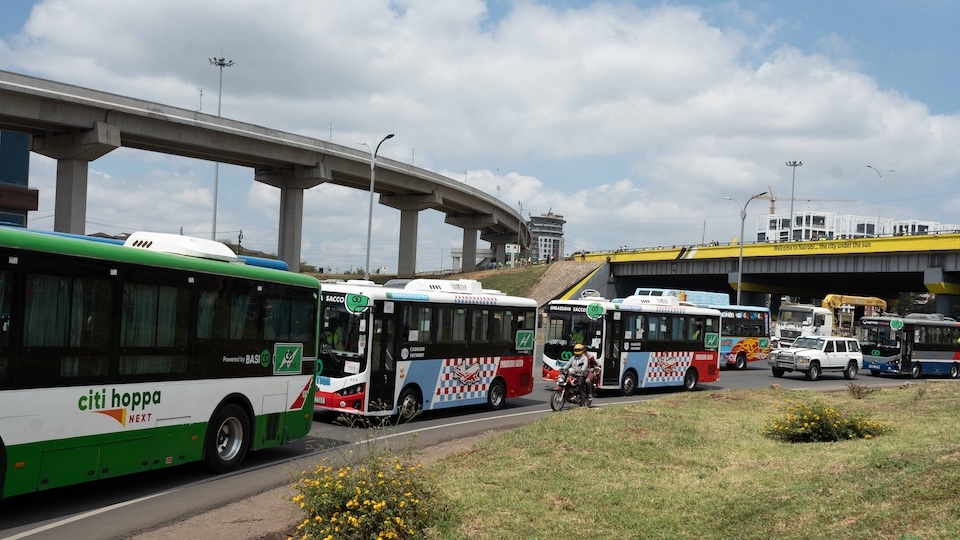

African cities are growing, increasing demand for transport, and, in the process, choking even faster from diesel-belching public transport vehicles, which remain the backbone of urban life.
In this episode of The Africa EV Show, we explore how Chinese electric buses (e-buses) are reshaping urban mobility across the continent and whether this shift represents true industrial transformation or simply a new form of dependency. Drawing lessons from China’s large-scale e-bus rollout, we examine developments in cities such as Nairobi, Addis Ababa, Cape Town, and Dakar as Chinese OEMs partner with African governments and startups.
Joining host Njenga Hakeenah is Prian Reddy, Senior Manager for Zero-Emission Buses at C40 Cities, who will help unpack the hard questions:
• Are Chinese-African e-bus partnerships building real local manufacturing capacity?
• Can African cities move beyond assembly into batteries, software, and core EV components?
• Who controls data, financing, and power grids in this new electric transit ecosystem?
• Do pay-as-you-go models empower operators — or create long-term technological lock-in?
This episode goes beyond headlines to explore policy, financing, skills, minerals, grids, and industrial value chains, offering a clear-eyed look at what it will take for Africa’s electric bus revolution to deliver jobs, cleaner air, and lasting economic value.
Show Notes:
- The China Global South Project: Chinese EV Tech in Kenya’s Mass Transport: The BasiGo Story by Njenga Hakeenah
- The China Global South Project: The Silent Crisis Killing African EV Manufacturing by Njenga Hakeenah
- The China Global South Project: Local Assembly & Chinese EVs Powering Kenya’s Electric Vehicle Shift by Njenga Hakeenah
About Prian Reddy:
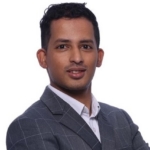
Prian Reddy is Senior Manager for Zero Emission Buses (Africa), leading C40’s electric bus work in Africa with a growing electric bus team, and spearheading the expansion of ZEBRA (Zero Emission Bus Rapid Deployment Accelerator) in the region. He is a Civil Engineer with specialized expertise in sustainable mobility and the transition to net-zero energy systems. Holding an MSc in Civil Engineering (Sustainable Mobility) from the University of KwaZulu-Natal, Prian brings a wealth of experience working at the intersection of business, government, and academia in South Africa. He has cultivated strong networks and strategic partnerships within the electric mobility industry, spanning key sectors such as public transport, passenger EVs, micro-mobility, and freight & logistics. Passionate about driving a just and inclusive electric vehicle (EV) transition, Prian is dedicated to leveraging innovative solutions to expand EV accessibility and adoption across Africa.
Transcript
NJENGA HAKEENAH: Hello and welcome to this very special episode of, you know, a podcast on The Africa EV Show where we discuss everything e-mobility across Africa in the different African countries and cities. And we just want to see how the e-mobility transition is happening. And the reality is that African cities are growing fast and choking faster.
This is from diesel-belching matatus in Nairobi to trotros in Accra and combis in Cape Town. Public transport is both the backbone of urban life and a major source of pollution, congestion and rising fuel bills. At the same time, halfway across the world, China has quietly pulled off something remarkable.
The large-scale electrification of its bus fleets is turning cities like Shenzhen into global case studies for clean, affordable mass transportation. For many African countries, replicating this would be a huge achievement. But the questions that linger when we talk about e-mobility in Africa are if when an electric bus rolls onto African streets, it is the start of an industrial revolution or just another import with a green label, and if China-Africa e-bus partnerships are really transferring technology or are they quietly transferring dependency from diesel to software, batteries and algorithms.
In this episode, we explore how the Chinese e-bus experience is beginning to reshape urban mobility across Africa. From Cape Town to Nairobi, Addis Ababa to Dakar, Chinese technology, OEM investment and new south-to-south cooperation models are accelerating the adoption of electric buses, often faster than many expected. But this is not just a story about buses.
It’s about collaboration, local assembly, financing innovation and the hard questions around power grids, minerals and value chains. We’ll go beyond the simple vendor-client narrative to ask what real win-win cooperation looks like. Are African cities merely importing vehicles or building the foundations of a local e-mobility ecosystem?
What stands in the way and what could unlock a cleaner, more resilient future for public transport on the continent? Stay with us as we unpack the promise, the pitfalls and the politics of Africa’s electric bus and electric vehicle movement. Joining me now to help us have a clearer picture of what is taking place across the continent is Prian Reddy, the senior manager for Zero Emissions Buses, where he is leading the C40 electric bus work across the continent.
Reddy is a civil engineer with specialized expertise in sustainable mobility and the transition to net-zero energy systems. So we have the right person to help us decongest our cities and eliminate emissions. Hello and welcome Prian.
And it’s very good to have you.
PRIAN REDDY: Hi there. Thank you for having me. Looking forward to participating in the show today.
NJENGA HAKEENAH: It is such a wonderful day to have you because we are talking about shifting to reliable transport in terms of, you know, not just comfort, but also in terms of maintenance. And you’re passionate about driving a just and inclusive electric vehicle transition and you’re leveraging innovative solutions to expand EV accessibility and adoption across Africa. Now, what’s the current e-mobility picture that you can draw for us regarding Africa and how it looks like?
PRIAN REDDY: So I think the African mobility market is very different to other parts of the world. So I think having a direct comparison with the global north often isn’t the same chance that we’re seeing in Africa. So the first thing is that the Africa region has lower private passenger vehicle ownership rates compared to the global north.
There’s a high dependency on public transport, both formal public transport in terms of buses. And as you mentioned, the informal paratransit sector, what we know as minibus taxis in South Africa and matatus in Kenya. So that’s the larger capacity shared mobility model share.
The other is micro mobility. So there’s a lot of two and three-wheelers on the African continent as well that makes up a large part of the model share, as well as walking. I think in the context of climate change, it’s important to know that a lot of African commuters walk the first mile and last mile because they don’t have many options.
So when we talk about the EV transition and just transition in Africa, it’s not just about your Teslas and your BYDs, although that is an important component. There’s a growing and rising affluent middle and upper middle class that’s growing in African countries. And those consumers will, as they earn more, they will be able to afford private passenger EVs.
But I think the focus of my work at C40 Cities is looking at the public transport sector. So the electric buses, and we are now looking at paratransit as well, because we feel that’s where the biggest opportunity is for EV access. So I think that’s an important theme, right?
So what does EV access mean for the average African commuter?
NJENGA HAKEENAH: All right. And you’ve just mentioned the C40, and probably you can briefly tell us about what C40 is about.
PRIAN REDDY: So C40 is a global organization. We have about 100 cities or so in our global network. What it is, is a network of mayors who are committed to climate change action.
So we work with cities to design and implement climate change action plans, and we help them to implement those targets. So part of the work is setting the decarbonization targets, achieving the net zero by 2050. But then the harder part that comes in is, how do you actually achieve that once you set those targets and those goals?
And that’s where a lot of our programs have targeted technical assistance programs for cities, whether they need funding for studies, feasibility studies, business cases, whether they are looking for DFIs to connect for funding and loans for building infrastructure and projects. Those are the kinds of things that we do.
NJENGA HAKEENAH: All right. And now we dive into this conversation proper. And when we talk about Chinese OEMs partnering with African startups for local assembly, where does real value creation begin?
And what would it take for Africa to move from assembling buses to manufacturing core components like batteries, drivetrains, and power electronics?
PRIAN REDDY: So I think with the EV transition story in Africa, there’s this narrative around green industrialization. And I think it is important in terms of a just transition lens. Creating good green jobs in the local manufacturing sector is important.
But I think timelines are also important for when should this investment come in. At which point in the transition. And I think often what we miss is that you need to import a particular technology at certain volumes at the early stages to create that traction, create the market demand.
That then creates a signal for OEMs to first identify that it’s an important market for them to supply to. And then once they have an understanding of what the annual demand could be, it will encourage them to make more investments locally in those countries. So it starts with market growth, creating traction, creating the demand.
Then OEMs will start looking, once we have significant scale, can we start with local assembly? So that will be your CKD and your SKD kits. Those are importing kits, and it’s a very simple form of localization.
And that’s always the first step. And the step that comes after that is once OEMs start assembling locally, they will then look to see are there components available in the local region that I can import, including my local assembly instead of importing. And what is the cost differential in doing that?
So it’s an economic case. So while policy and tax incentives and regulations are important, I think what we miss often is that OEMs are businesses, right? So they look at the economic case.
What does it mean for them in terms of the unit economics? Then you got to look at component supply chain. So can the industrial supply chain ecosystems in African countries support localization of components?
Do we have the minerals? Do we have the metals? Do we have the processing plants?
Are we importing those things? It’s not always a case of if we don’t have a baseline supply chain that we can’t do this. There may be opportunities in terms of regional cooperation between African countries and regions where minerals might be mined in certain areas.
They might be processed in one country and made into a component in another country. But again, the decision on where this local component manufacturing is going to land will depend on demand and that initial market traction and market signals that government is giving to OEMs in terms of the policies and the regulations that they’re putting out there.
NJENGA HAKEENAH: And so from where you sit and from your experience visiting the different African cities and seeing the kind of industries that we are having, do we or are we ending up just importing buses or industrial models?
PRIAN REDDY: I think there’s a lot of important growth happening in local assembly, including CKD and SKD kits. And I think if you look at East Africa, what’s happening in Kenya and even now in Ethiopia now that they’ve implemented the ICE vehicle import ban, it’s encouraging to see that what started as imports of CBU, electric buses, is now transitioning to local assembly and manufacturing. It’s very interesting to see that PASIGO, which is sort of a leader in the East Africa region, is putting a lot of heavy emphasis on local manufacturing, not just assembly.
So including manufacturing the local bus bodies. And so what they’re doing now is they’re importing e-bus chassis. So they started with BYD, I think it was, in the beginning.
And I saw recently last year that they’re now working with King Long. And I think that’s how things transition and how the market progresses. Once Chinese OEMs see the opportunity and they see who the market shakers are, you’ll probably see there’ll be a whole lot of other Chinese OEMs that will be lining up to work with entities like PASIGO.
Having said that, there’s also Chrome in Kenya, and they have created an entirely indigenous electric bus tech that they’ve built. So there’s the two sort of pathways of building your own tech and the growth might be slow and it takes longer for you to scale up. And then the sort of PASIGO model where you partner with existing OEMs and you focus on becoming specialized in certain aspects like bus body building.
And I think it’s important, we don’t have to do everything all at once. So even a small win like encouraging local bus body building is a big economic multiplier and the manufacturing of the local components will come.
NJENGA HAKEENAH: All right. And what I want to segue into now is, do you think that these current collaborations are genuinely building local engineering capacity as well as intellectual know-how? Or are we being locked into long-term dependence on Chinese designs, their software and spare parts?
PRIAN REDDY: So if you look at automotive manufacturing as a whole, so look at the South African automotive manufacturing industry, it’s about 100 years old. Most of those OEMs are not South African OEMs, which means there’s OEMs that came from other countries, they brought in the IP, the technology, they started with local assembly, with CKD, SKD. And then over time, as they reach market traction and government policy and export credit system created an enabling environment, they brought in tier one and tier two component suppliers.
And so we don’t just have NAMSA in South Africa, we have NARCAM, which is an entire industry body of components manufacturers. So again, what I’m saying is once OEMs build their confidence and they start reaching market tractions, they will consider bringing in tier one and tier two component suppliers like they did historically in South Africa for ICE manufacturing. And I think that’s the same trend that’s going to happen with EVs.
Already we’re seeing it in Morocco.
NJENGA HAKEENAH: And I think that we have to start somewhere. Like you’ve mentioned that the South African vehicle industry or sector is not indigenous, but there had to be BMW coming in, Toyota coming in and now creating an ecosystem that seems and feels like it is indigenous because they are pulling the pattern bits from South Africa. So I think we also have to look that we don’t have to start by building, but we can always have these collaborations and partnerships which help with technology and know-how transfer.
Now, China built its dominance in e-buses through state coordination, scale and patient capital. And we know that in African countries, capital is a very, it remains a word, you know. But you think African governments and cities have the policy muscle and regional coordination to replicate any part of the Chinese playbook.
PRIAN REDDY: So I think from an e-bus procurement perspective, so not looking at manufacturing, just in terms of cities being able to buy buses for their fleets. I think it’s quite encouraging to see that a lot of African cities are committed to climate change action. They are working towards zero emission public transport and the introduction of electric buses in the public transport fleets.
From a policy perspective, we are already seeing that being done and we’re seeing targets being set up. I think there’s two sort of barriers or challenges that cities are facing. One is technical know-how.
So this is a new technology that there’s a lot of capacity building needed within cities, especially technical capacity building amongst staff that are involved in procurement, writing up standards and specifications because they haven’t, in many cases, they haven’t even piloted electric buses before. They don’t know what they don’t know. And I think that’s where C40 is an important support mechanism because with this global network of 100 cities, we can allow cities to have peer-to-peer knowledge sharing.
So cities in the global north or even in Asia and China who have experience with rolling out fleet-scale electric bus deployments, they can share their knowledge, their learnings and help African cities to leapfrog. And the second is around financing. I think there is an opportunity for a lot of DFIs to come into the picture and to help cities and governments to finance electrification of fleets.
But while we’re saying that, I also want to say that paratransit and the informal mobility sector is the largest transport mode in many African cities. And a lot of that is private sector and privately owned independent informal operators. And it’s encouraging to see what’s happening in Kenya with the Matatu sector, that they are not just undergoing a modal shift.
Because if you remember that Matatus were initially minibus taxis, as it is in many other parts of Africa, and they’ve transitioned to larger buses. So there’s this modal shift from minibus to bus and there’s an energy shift from ICE to electric. And stakeholders or ecosystem builders, because I think that’s what Busigo is, they are an ecosystem builder that kind of plugs the gap between all these stakeholders and creates an enabling environment for the informal sector to transition.
And it’s happening at scale. I think last year, Busigo announced that across Rwanda and Kenya, they had about 100 electric buses deployed with the APS-E drive model. So that’s also something interesting.
This new pay-as-you-drive subscription-based model is helping to leapfrog and scale eBus deployment in the informal paratransit sector, often because informal operators, they don’t operate as formal businesses. It’s difficult for them to access finance and loans from commercial banks, often because their revenue is cash-based, there’s not a lot of revenue transparency in terms of their business model. So those are some of the challenges that the informal sector is facing.
But even with that, they’re still able to transition at quite a fast rate.
NJENGA HAKEENAH: All right. And I don’t know if, probably I have picked something about C40. Is there like a direct role that you play in probably thinking or discussing capital with the financiers, with everyone that is innovating and building solutions like Busigo?
Or do you just deal with the city governments like, you know, the Nairobi, you know, Shenzhen and wherever else that you are in with these mayors?
PRIAN REDDY: So from our city finance program, it is largely around helping governments.
NJENGA HAKEENAH: So that is our primary focus. All right. So it’s not like the builders, the vehicle builders?
PRIAN REDDY: No, but we do work with, so for example, in South Africa, there’s the IDC, the Industrial Development Corporation. So that’s a kind of institution that is sort of focused on financing, manufacturing and industrialization. And I think in other parts of Africa, there are DFIs that focus on that in particular.
And while our focus is on assisting governments, there’s also this ecosystem building that’s required. So maybe that’s a bit of future work looking at supply chain.
NJENGA HAKEENAH: All right. And do you think African countries can leapfrog into EV manufacturing the way China once did? Or is the window already closing?
PRIAN REDDY: I think the window is actually opening because if I look at the number of small scale batch manufacturing projects that are popping up all over Africa, it’s quite heartening to see. And I think that growth is going to continue to happen. And I think it’s the role of government should be to create this enabling policy and regulatory environment.
We know that many African countries are fiscally constrained. So they don’t have the budget to put in competitive manufacturing incentives that other countries might have in place. But I think, yeah, there’s a real opportunity.
In the bus sector in particular, regulation plays an important role in localization. South Africa had, for many years, bus body building had a designated status from the TTIC, the Department of Trade, Industry and Competition. And it regulated at a national level that all public procurement of buses had to have 80% local content inclusion.
And for many years, that policy sustained bus body building in South Africa. That’s why we historically have many companies that have been building bus bodies. A couple of years ago, that regulation was waived.
And the new regulation was that a local content designation would be devolved to the individual procurement departments. It wouldn’t be implemented or enforced at a national level. But it rather became a voluntary action that cities or government departments could put into their tender.
And I think for the EV transition, it’s sometimes problematic because when it comes to cities and government departments, their mandate is to effectively spend their budget on service delivery. So their mandate is not always directly local content inclusion and manufacturing and industrialization, although those are ideals that they aspire to. In terms of cities, their day-to-day mandate is, I need to utilize this budget and put as many buses as I can on the road.
And often, because electric buses are so expensive, it may be, in the short term, more affordable to import CBUs, which is probably what we’re seeing in Cape Town with cabs and Golden Arrow, right? So they are importing those PYD buses in CBUs. So part of it is a cost concern.
Part of it is a supply chain. And part of it is also scale. So like PYD has said that for them to put in an assembly factory in South Africa, they’d need an annual demand of 200 electric buses per year.
So to give you an example, Golden Arrow is about 60 electric buses a year. So that would be the demand. So I think we’re not quite there yet.
And again, I’m going to reiterate, we need to create traction and build momentum in the market before the OEMs can see Africa as an opportunity for large-scale assembly.
NJENGA HAKEENAH: And it does make sense because really, and I keep saying this to people and to even the guests that I keep hosting, that I cannot invest in a market whereby I am putting in a billion shillings or a billion dollars or whatever amount, and then at the end of it all, I am ending up sending two cars in a year. So it does make sense that capital would have to behave that way. But then let’s shift gears a bit and look at batteries.
And with battery leasing models, proprietary software and Chinese-backed financing, where does power sit in this new transit ecosystem? And how can African cities negotiate more balanced long-term partnerships?
PRIAN REDDY: So I think what’s strategically important, and I think the world is kind of waking up to this now, is that Africa has all of the critical minerals required for battery cell, manufacturing. But I think we also have to be realistic about what it takes to do local battery cell manufacturing. It’s a very specialized, very high-tech industry, very capital-intensive, and it takes a long time to be profitable.
So remember in China, they have government-backed guarantees that sort of have been helping cell manufacturers to industrialize and scale up. So even if they haven’t been profitable for the first couple of years, that sort of government-backed guarantees helps to sustain them until they reach market scale and profitability. I think we need to look at case studies of British Volt and other battery cell startups that have attempted to pop up in Europe and see how they have fared, right?
Because those are case studies where the policy and the regulation and the enabling environment was there, the money and the funding was there, the skills were there, but British Volt still wasn’t able to commercialize. And I think that’s an important lesson because Africa doesn’t have the capital to gamble on something that might fail on a scale like that. But it’s not to say that we are never going to have battery cell manufacturing.
I think it’s an opportunity. I think we can work with partners in Asia, China, Japan, Korea. I think there’s an opportunity for technology licensing and to manufacture under license.
But I think realistically, how do we get our foot in the game? What’s the first step? I think we need to start with local processing of minerals.
So we’ve seen that already the African Union has set up the Critical Minerals Observatory. It’s basically a website that shows the countries in Africa and the critical minerals for the green transition, where the ores are located, where the mining activity is being located. I think the next step is looking at how do we industrialize that part of the supply chain?
So which countries are exporting raw ore, for example? And as a first step, how can we enable basic processing of mineral ores as a start and start mapping out that value chain, that supply chain and working upstream? The other angle, as you said, is end-of-life batteries and recycling.
I think it’s a major opportunity for a centralized lithium-ion cell recycling plant on the continent. I think we need coordinated regulation across the continent in terms of who’s responsible for end-of-life batteries. So EPRs, extended producer responsibility regulations.
We need to map the ecosystems, what needs to happen to create a battery recycling industry. We need someone to collect the batteries. We need someone to store the batteries.
We need someone to process the batteries and strip it into its components. The production of the black mass, that’s an output of recycling lithium-ion cells and then extracting minerals from that. And again, we need scale.
So currently, a lot of end-of-life batteries from Africa, it’s transported to processing plants in China and in France. And that’s because those are hubs that are collecting end-of-life batteries from supply chains across the world. And because they are hubs, they have the scale to run a plant.
And again, if we need to build a plant in Africa, we need to consolidate that supply of end-of-life batteries.
NJENGA HAKEENAH: All right. And you’ve mentioned a few things about my next question, which was on countries like the DRC and Zimbabwe supplying critical battery minerals. What would it take for China-Africa cooperation to shift from extraction to local battery processing, cell manufacturing or recycling on the continent?
You’ve touched on some bits, but what would need to shift in terms of extraction?
PRIAN REDDY: Yeah, so I think, again, the point about starting with basic local processing and then scaling that up. Obviously, what we’d like to see is local refineries being built. So, for example, why doesn’t Zimbabwe have a lithium refinery?
Why doesn’t the DRC have refineries for rare earth minerals and other important components in the supply chain? But yeah, I think we need to start with the basic processing and kind of scale that up and build that up. It will create confidence amongst global manufacturers once they see that this can be done in Africa.
And I think there’s nice case studies from South Africa, for example, the manganese metal company based in Lange in South Africa and Pombela, they’ve been producing manganese metal for a long time. So that’s an example of a beneficiation process. And they actually export a lot of their product into Japan.
It goes into the battery manufacturing industry there. So already, that’s an example of Africa that is, as of now, supplying the lithium ion cell value chain globally. So if the manganese metal company can do it, why can’t other regions also do that?
NJENGA HAKEENAH: All right, so others can do as well. We are towards the end of our conversation, but pay as you go batteries and Chinese development finance are making e-buses affordable. But do they empower African operators or create new forms of financial and technological lock-in?
PRIAN REDDY: I would say that the African region should leverage whatever support it can get. So I think if Chinese financial institutions and companies are offering these sort of financing products for electric buses or electric vehicles, I think Africa should leverage it. One thing that we haven’t touched on is that as much as EV manufacturing is important, we also need to talk about the localization of energy generation.
So many African countries are net fuel importers. Even a country like Nigeria, which is a major exporter of crude oil, is a major importer of refined petroleum products. So we need to talk about what is the economic benefit of transitioning to EVs and localizing that energy generation by switching from fuel to locally generated electricity and leveraging opportunities for green renewable energy and wind and solar and geothermal, we’re seeing in East Africa.
So that’s also a major value chain. And I think not enough attention is being paid to that.
NJENGA HAKEENAH: Right. And there are people who are thinking that we are just repackaging old dependencies with this pay as you go, whatever, whatever, South to South cooperation. Is it?
PRIAN REDDY: I think we need to make use of whatever resources that we have available to us. Right. We want Africa to leapfrog to this EV net zero future.
And I think if we try and do everything on our own, I think it’s going to take us a longer time to do that. And rather than reinventing the wheel, I think we should leverage the resources and the supply chain and the finance arrangements that exist, do what we can while we build local capacity. Let’s start to say that we shouldn’t be developing ourselves.
I think we should be investing in skills. We should be working with universities and research programs, creating new degrees and qualifications that we upskilling the African engineer of the future. So from a skill side that needs to be done, I think from a finance side, a lot of African countries, as I mentioned, are fiscally constrained.
So I think whatever development assistance we can leverage, I think we should make use of it. Yeah, it’s, it’s, it’s, it’s interesting this on the case study of indigenous EV technology, you would have heard about the jewel, right? So South Africa had a, an EV company called the Jewel and they created their own indigenous EV tech back in 2012.
And the car worked perfectly. The tech worked perfectly. There was skills, there was supply chain, everything was how it should have been implemented.
But in terms of scaling in industrialization and funding it, that was the flaw in that. So, so I think when other African countries are looking at indigenous EV technology, I think pay attention to what happened with the Jewel and some of the challenges that they face with scaling that up. So, so that’s a good example of how you would do it on your own.
So a bottom up approach rather than the top down, working with outside investors, supply chain and financiers. Maybe an opportunity is in the two and three wheeler sector because two and three wheelers are smaller, it’s easier to localize. If you really wanted to push as a start, just for some sort of indigenous tech, indigenous supply chains and testing out what local battery pack manufacturing would look like, test it out on two and three wheelers.
If it works, make a bigger vehicle.
NJENGA HAKEENAH: I think scale, scale is like where this sector fails or rises, you know, falls or rises on scale, right? Because local content is possible. But if we look at the case of Jewel, then scaling is where it’s at.
We have to crack that and then find out how do we manage to get bigger. But from local content regulations and skills training to grid planning and procurement policies, what are the non-negotiables African governments should demand if e-mobility is to drive industrialization and not just a cleaner commute, you know?
PRIAN REDDY: So I think green industrialization should be a cornerstone of policy for all African countries and cities. So I think looking at public procurement and where local content regulations can be implemented in tenders and procurement for electric buses, I think the case study of South Africa and how the local content requirements for bus body building has historically helped to stimulate industry. I think that’s a good case study.
I think in the private sector, we need to look at, because often you can’t regulate private purchases in the way that you regulate public purchases. So looking at from a supply side, incentive, what can governments do to incentivize localization of those value chains? Again, it’s going to be about scale.
So all these OEMs, BYD and others, Tesla, they’re going to look at how many vehicles per year can they sell in a market? And does it make sense to localize or is the demand so small that importing those small volumes might make more economic sense in the short term?
NJENGA HAKEENAH: Thank you so much, Priyan. It’s always a pleasure having these conversations and looking forward to what C40 does for our cities. Nairobi is a member or a party, right?
Yes, it is. Nice. And you’ll be in Nairobi soon.
So when you’re here, let’s take some rides and compare notes.
PRIAN REDDY: I will do that.
OUTRO: So in this new electric transit system, we have seen who actually holds the keys and that it will take time before African city governments and local operators start controlling batteries, data and financing.
In the foreseeable future, Chinese manufacturers will be calling the shots. In regard to Africa supplying the lithium, cobalt and nickel, batteries will still continue being made everywhere except here until the systems change to lock in to the EV battery value chain. We’ve also seen that pay-as-you-go batteries and Chinese-backed financing may liberate African transport operators.
And if they fail, then they will create a new kind of long-term technological debt, which could layer to the challenges that African countries are already experiencing when it comes to e-mobility and cleaner air in our cities.
My name is Njenga Hakeenah and thank you for watching. To keep these conversations going, remember to like, subscribe and share so that we continue learning from each other on how best to create reliable transport systems for our African countries.
I hope to see you again soon.