This is a free preview of the upcoming Chinese E-Mobility Weekly Digest, part of the new CGSP Intelligence service launching in Summer 2025.
China’s electric mobility push is gaining traction across Africa — on roads, in factories, and through battery value chains. This week’s developments show Chinese firms and partners advancing EV strategies tailored to local realities: from REEVs that work around load-shedding in South Africa, to battery production in Morocco, to swappable motorbikes in Kenya and Ethiopia. As Chinese innovation adapts to African markets, the continent is emerging as both a testbed and a new frontier in the global e-mobility transition.
Leapmotor’s EVs Debut in South Africa
This latest entrant into South Africa is a Range Extended Electric Vehicle (REEV) C10, which uses a petrol engine to generate electricity to charge the battery. The engine extends the vehicle’s range by recharging the battery, unlike fully battery electric vehicles (BEVs), which cannot offer this capability.
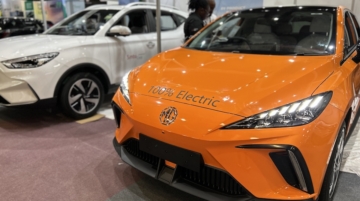
This week, Leapmotor, through its partner Stellantis, announced plans to sell its C10 electric SUV starting in September, with more models expected next year.
Leapmotor’s partner, Stellantis, entered the South African market four years ago and is now building a new plant targeting 100,000 vehicles by 2030. The C10 is a good fit for the South African market, which has embraced hybrids more than full BEVs.
Why This Matters: The introduction of a REEV reflects how Chinese automakers are adapting to the infrastructure realities of African markets. South Africa’s frequent power outages and limited charging infrastructure have slowed the adoption of fully battery electric vehicles (BEVs). By offering a hybrid solution through a Chinese-European partnership, this move positions Leapmotor and Stellantis to gain early market share while shaping consumer expectations and local policy discussions around transitional EV technologies. It also signals how EV deployment in Africa may follow a different trajectory than in mature markets, emphasizing resilience over full electrification.
China-Morocco EV Battery Factory Starts Production
A Chinese-Moroccan joint venture between CNGR Advanced Materials and Morocco’s royal holding company Al Mada has inaugurated a new electric vehicle battery components factory. Operated by Cobco, the facility will produce nickel-manganese-cobalt precursor cathodes—critical materials used in EV batteries and energy storage systems—with a planned capacity to equip nearly one million EVs annually. The project is the first of its kind in Morocco and is supported by the country’s expanding renewable energy sector, which now accounts for 38% of national electricity production.
Why This Matters: The plant’s launch marks a strategic shift: Morocco is not just assembling EVs—it is embedding itself into upstream battery value chains. The investment reflects how China is securing processing capacity outside its borders while leveraging friendly markets. For Morocco, it demonstrates the power of energy policy as industrial strategy—using clean energy capacity to attract energy-intensive industries. This model stands in contrast to many African countries still hampered by energy constraints, and underscores how infrastructure readiness shapes the continent’s role in the global EV ecosystem.
Former Tesla Executive Introduces E-Motorbikes in Kenya
Zeno, a company led by a former Tesla executive, has launched a new line of electric motorcycles targeted at reducing transportation costs and accelerating the shift toward sustainable mobility. The company’s Emara model is designed for urban and commercial use, with a 250-kilogram load capacity and a 90-kilometer range on a single charge.
Why This Matters: The launch comes even as Kenya lags in regulatory frameworks and charging infrastructure, showing that innovation will not wait for policy formulation, and that African countries will have to find ways to catch up. This is the case in many African countries, which are hindering the shift to e-mobility due to rigid policy environments.
U.S. Company to Recycle Spiro’s E-Motorcycle Batteries
Spiro, which manufactures and sells electric motorcycles with swappable batteries in eight African countries, has partnered with US company ACE to recycle its lithium-ion battery material. Spiro is seeking to extend the battery life of its bikes through advanced battery management systems (BMS) while also reusing batteries for second-life applications, such as energy storage in infrastructure projects.
Why This Matters: There are concerns that African countries will face a significant amount of e-waste due to the growing number of electric vehicles entering the continent. Spiro’s move is a step towards mitigating this while also creating jobs in a circular economy.
In Context
Africa is becoming an increasingly important testing ground for global e-mobility models, shaped not by cutting-edge tech but by infrastructure limitations, energy access, and affordability. Chinese and other Asian firms are adapting their offerings accordingly—whether through REEVs that mitigate unreliable power grids, local battery production aligned with renewable energy, or swappable motorbikes tailored to congested urban markets. Meanwhile, the role of policy remains uneven: some governments are crafting long-term incentives, others are still reacting to market innovation rather than guiding it.
The takeaway: The e-mobility transition in Africa will not follow a linear path. Instead, it will be shaped by strategic energy investments, pragmatic vehicle design, and the ability of governments to align industrial, fiscal, and climate policies. For external players like China, Africa represents both a market and a proving ground.