This is a free preview of the upcoming Africa EVs Weekly Digest, part of the new CGSP Intelligence service.
China’s overcrowded domestic market has led to a bruising price war. By contrast, overseas markets offer room for growth – and more profits – if Chinese brands can persuade consumers they understand local tastes.
Now, wealthier economies in Europe remain the preferred target for many of these Chinese firms. This means it will take slightly longer for their vehicles to reach countries in Africa and the wider Global South. But analysts say matching regional preferences will increasingly determine success as European rivals respond to Chinese competition.
External disruptions like the war in the Middle East will likely accelerate these changes, particularly in African countries that are net importers of basic commodities.
This reality is shaping how African countries transition from heavy fuel importation to energy independence and efficiency. Countries like Ethiopia and Rwanda have led the way in showing that weaning economies off oil is possible, but it requires a resolute approach. Elsewhere, the EV market is booming with Chinese automakers reaping the most from the current oil crisis, which threatens the world economy.
This week in Africa’s EV scene:
Nepali Motorists Evading Fuel Shocks Strain Chinese EV Dealerships
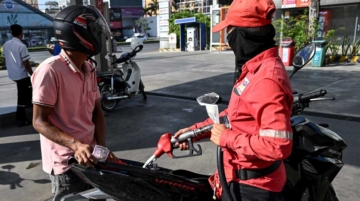
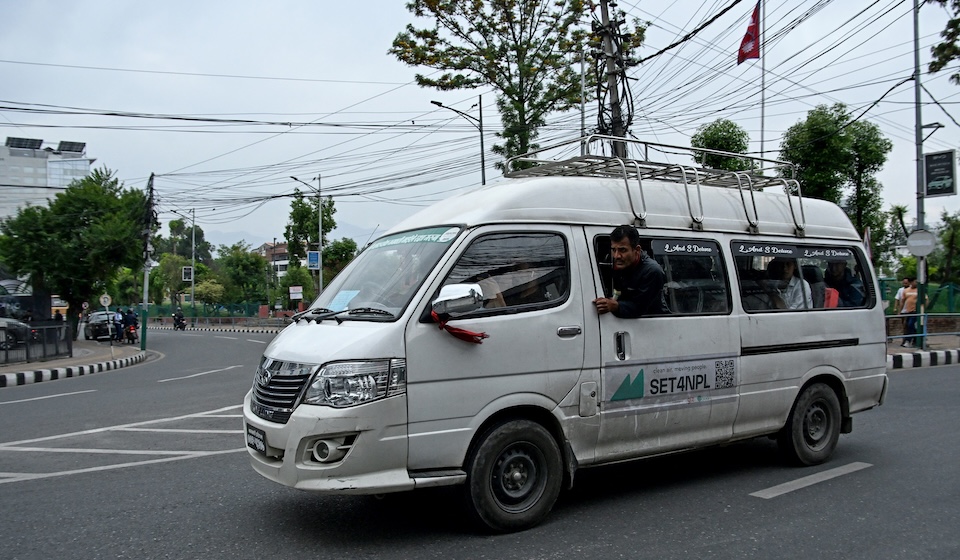
Motorists in Nepal are increasingly turning to EVs amid the oil shock. This adds strain on dealerships due to the high demand. With soaring global oil prices and fuel supply disruptions since the U.S.-Israeli attacks on Iran, long fuel queues are forcing people towards other alternatives, especially EVs.
Why This Matters: The logistical disruption to the oil economy is forcing many regular commuters to rethink their options. The local demand created by the crisis arguably opens opportunities for Chinese EV manufacturers struggling at home.
Chery to Manufacture T1 and T2 models in South Africa
The Chinese automaker Jetour plans to build its T1 and T2 models at a former Nissan plant in Pretoria, South Africa. The company expects to create at least 3,000 jobs and produce up to 50,000 vehicles a year. It has quickly climbed the ranks of South Africa’s top-selling brands, overtaking Nissan, Kia, and Mercedes-Benz.
Why This Matters: With increasing market segment acquisitions, manufacturing in South Africa allows the company to benefit from local subsidies, which could help further reduce prices. It could also lead to the launch of brands more suited to the larger Southern African market.
Benin’s ZED-Motors to Launch in Kenya, Rwanda, Uganda
Contonou-based ZED Motors, which builds and deploys electric motorcycles, scooters, and tricycles, is launching in Kenya at the end of this year. The company will reportedly offer Pay As You Go (PayGo) technology embedded in their two and three-wheeled vehicles.
Why This Matters: East Africa’s e-mobility ecosystem is dominated by two and three-wheelers. It will be interesting to see how ZED penetrates and sustains this market. Their entry may force down prices in a market that has excluded the majority of targeted buyers.
Major Chinese Carmakers Target Brazil and Mexico With New Models
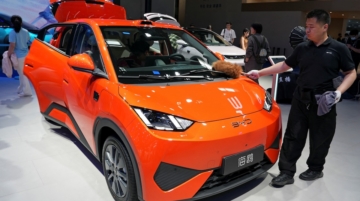
BYD, Chery, Changan, SAIC’s MG brand, and FAW are some of the Chinese automakers planning to launch models ranging from small hatchbacks to pickup trucks in Brazil and Mexico.
Why This Matters: The Chinese EV market is nearing saturation, and automakers have to look beyond the local market to survive. Countries in Africa, Asia, and South America remain some of the most readily available markets. Investment trends suggest that they are likely to see increased growth in the automotive sector.
BYD Among Chinese Brands Aggressively Cutting Prices in Indonesia
BYD is shaking up Indonesia’s car market again by implementing significant price cuts across its lineup starting this May. The move signals a more aggressive push by Chinese automakers, using lower prices and new models to take on gasoline cars. The new approach comes just as the government ends an EV tax break, a change that could dampen demand in Southeast Asia’s largest auto market.
Why This Matters: The price cuts could increase BYD’s appeal in the market even as it plans local production after investing $1 billion in a plant in Subang, West Java. Japanese vehicles are popular in Indonesia, and this could also be a move towards displacing the likes of Toyota from the top spot.
In context
Chinese automakers are no longer expanding globally by choice. Rather, they are doing so out of economic necessity. What is becoming evident is that the Global South could absorb China’s high EV capacity.
The takeaway:
As China deals with dog-eat-dog competition in its EV sector, African countries are emerging as a testing ground for new business models, including PayGo and battery swapping. By and large, Africa is not just a passive market. It is adapting EV models to its own economic realities, especially in mobility and energy access.