
This is a free preview of the upcoming Africa EVs Weekly Digest, part of the new CGSP Intelligence service.
Chinese firms are expanding their share of Africa’s electric mobility future, moving beyond car sales into the systems that power them.
It is adding momentum to a young but increasingly competitive market. Chinese automakers and industrial firms are positioning themselves early, pairing vehicles with infrastructure and after-sales networks in markets that are only just beginning to electrify.
At the same time, global shocks are accelerating the case for that transition. The fallout from the U.S.-Israel war against Iran is already pushing up fuel prices and exposing the risks of import dependence.
This week, we look at how African countries can achieve independence by creating their own solutions in partnership with stakeholders or by implementing progressive policies.
This week in Africa’s EV scene:
Geely SA, CNBM SA to Develop South African EV Ecosystem
China National Building Materials South Africa (CNBM SA) and Geely Auto South Africa will work together to expand electric-vehicle ownership and the infrastructure to support it. The partnership will focus on combining solar power, battery storage, and charging systems, while also building local supply chains to support the industry.
Why This Matters: CNBM SA is a subsidiary of the world’s largest manufacturer of building materials. Its partnership with Geely shows how Chinese entities collaborate to increase sustainability across sectors. The partnership could serve as a template for Chinese companies seeking to expand beyond China’s saturated EV market.
Chinese Auto Group GAC Opens Addis Showroom as It Rolls Out Four EVs
One of China’s top five auto manufacturers, Guangzhou Automobile Group Co., Ltd (GAC), has opened a flagship showroom in Addis Ababa, rolling out four EV models. The GAC JUNTU facility is a 2,300-square-metre site that will handle vehicle sales and servicing.
Why This Matters: GAC’s entry increases competition in Ethiopia’s nascent EV sector. It would be notable to see how the vehicles compare with their locally assembled counterparts, as well as how they address mobility challenges caused by fuel shortages.
African Vehicle Buyers Hit by Iran War
The impacts of the ongoing war will be felt acutely by motor vehicle buyers in Africa. The impacts became evident early in Egypt, with global vehicle manufacturers notifying distributors of a price increase of up to $2,700 per vehicle.
Why This Matters: With ships rerouting, freight rates increase. However, this creates an opportunity for African countries to realign, reduce reliance on imports, and develop solutions locally. For example, increasing energy capacity will make local manufacturing more competitive.
EV Fleets Spared as Fuel Shortage Hits Africa
EV fleet operators in different countries are seeing increased demand for electric rides. eDryv, a Nigerian EV ride-hailing company, says it is not increasing prices as the cost of electricity has not changed.
Why This Matters: As a fuel shortage in Nigeria pushes prices up by 40%, early EV adopters have largely avoided business disruption. This is proof that e-mobility could make Africa more resilient than relying on imported fuel.
African Countries Restrategizing to Keep the Oil Coming
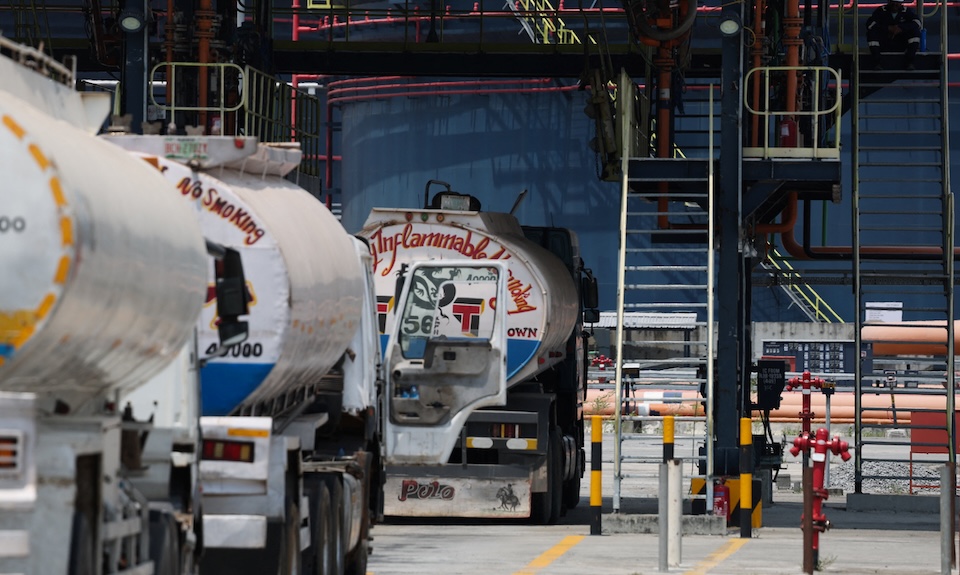
Fuel supply disruptions are forcing African countries to re-strategize to keep their economies running. Ghana, South Africa, and Kenya have turned to Nigeria for relief as oil shipments from the Middle East dwindle.
Why This Matters: Intra-African trade could increase due to the Strait of Hormuz debacle. This could finally spur the implementation of economic integration policies that have languished. If so, it could lay the foundation for increased trade in other goods and services, including collaboration on building electric vehicles and other mobility solutions.
In context
Africa is rich in natural resources, both hydrocarbons and those used in renewable energy technology. The Strait’s blockade could end up integrating the continent’s economies faster than in previous decades. Energy, mobility, and mineral processing are some of the industries that could, in turn, accelerate industrialization across other sectors.
The takeaway:
From decades of limited manufacturing activity to growing calls for greater independence, African countries have a golden opportunity to make right what has stagnated under the old “rules-based order”. E-mobility would be one of the biggest beneficiaries of this shift.


