In this edition of M&M, I want to investigate one of the biggest myths in Vietnam-China relations – historical animosity. Many Vietnam watchers based in Vietnam and abroad often argue that because of the complicated history of China’s occupation and invasion of Vietnam, Vietnam will be deeply skeptical of Chinese intention and will side with another great power to protect itself from future Chinese bullying.
Unpacking this myth matters not only to comprehending Vietnam’s China policy but also to other great powers’ policies toward Vietnam.
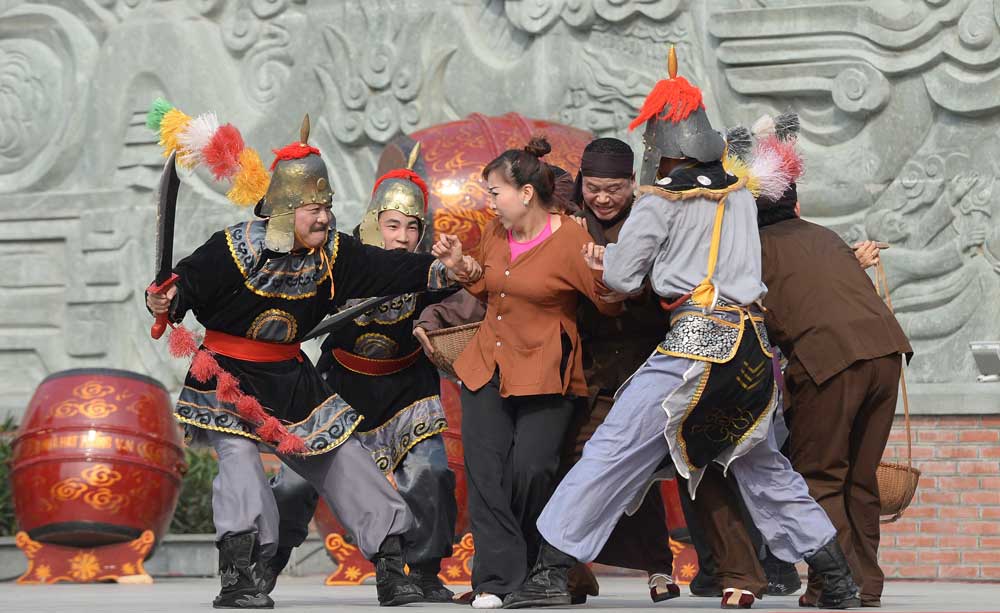
The baseline for this myth stems from a simple proposition that “Those that fail to learn from history are doomed to repeat it.” From Vietnam’s perspective, its history of being occupied and invaded by China, the earliest recorded in 179 BCE, represents past failures of statecraft vis-à-vis China. The most famous story of the danger of Vietnam trusting China is one of a Vietnamese princess who loved her Chinese husband, the son of Emperor of Nanyue Zhao Tuo, so much that she handed over Vietnam’s military secrets to him thinking that her loving husband would not betray her.
He later turned over the secrets to his father and Zhao Tuo successfully conquered Vietnam. China’s efforts to eradicate native Vietnamese cultures and suppress uprisings during the one thousand years of occupation beginning with Zhao Tuo’s conquest have shaped Vietnam’s identity centered on opposing Chinese influence.
The lesson here is that to avoid repeating its past mistakes, Vietnam must always be skeptical of everything Chinese because the moment Vietnam drops its guard, China will invade it again.
Why Do People Believe It?
There is no question that anti-China sentiment in Vietnam exists because of historical animosity. Foreign watchers have noted with interest that many streets in Vietnam are named after anti-China heroes and heroines of the past two thousand years, namely Tran Hung Dao, Ly Thuong Kiet, Hai Ba Trung, Ngo Quyen, Ba Trieu, Le Loi, Quang Trung, etc. Children learn about the history of Vietnam’s resistance against China as early as in kindergarten.
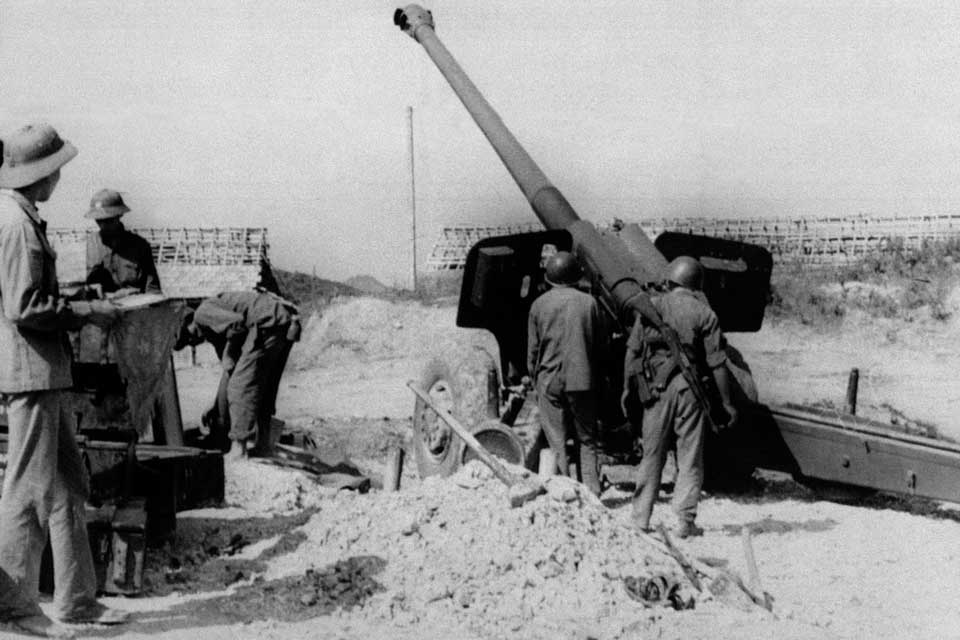
The most recent war that Vietnam fought was against China in 1979, and Hanoi lost control of the Johnson South Reef to China in 1988. To many Vietnamese, the shared communist ideology does not prevent China from bullying Vietnam.
Others doubted the sincerity of China’s help during the Vietnam War, and some even claimed that China’s military presence on North Vietnam’s soil during the War allowed China to map every corner of Vietnam’s geography and spy on its defense infrastructure for a future invasion. In short, both historical facts and urban myths point to China being an aggressor and must be resisted at all costs. This explains why some Western observers concluded that Vietnam would side with the United States in a great-power war because China is Vietnam’s historical enemy.
What Does the Data Say?
The history of China-Vietnam relations is much more nuanced than occupation and invasion. Scholars note that despite having defeated China on the battlefield, many Vietnamese emperors still sent envoys to make peace with China and submit to its hegemony. In exchange for Vietnam’s deference, Chinese emperors typically sent the Vietnamese delegation home with lavish gifts plus political recognition. These emperors were also willing to emulate China’s model of governance, including the civil service examination and Confucian bureaucratic practices.
Vietnamese emperors perceived China-Vietnam relations not in terms of historical animosity but of cold power politics. China is Vietnam’s historical enemy, but Vietnam cannot afford permanently antagonizing its northern neighbor because of the significant power disparity. And if China’s model suits Vietnam’s needs, Vietnam will learn from China.
Perhaps the most telling example of this logic of strategic deference is the across-the-board adoption of a Chinese-style administration system under Emperor Le Thanh Tong (1442-1497) after Vietnam defeated the Ming occupation in 1427, which led to the most successful dynasty in Vietnam’s history. By stabilizing Vietnam’s relations with China, the Le dynasty could expand southward and permanently subjugated Vietnam’s other historical enemy Champa.
In the current era, Vietnamese leaders learned from the same playbook. China remains Vietnam’s historical enemy, but China can offer answers to many problems Vietnam faces. Vietnamese communists learned from Chinese communists’ experience of party building, army building, and war fighting, which they used to fight against France, the United States, and later China itself. After the Third Indochina War, Vietnam and China strengthened political cooperation to guard themselves against domestic and foreign subversion against the ruling communist parties.
The two agreed to settle all disputes peacefully, which included territorial compromises over the land and Gulf of Tonkin disputes on an equal basis. China and Vietnam did not let differences over the South China Sea derail the upward trajectory of their bilateral ties.
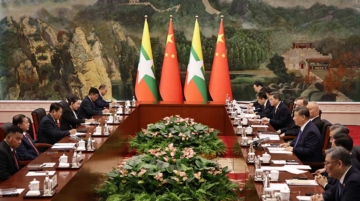
General Secretary and President To Lam’s recent visit to China yielded agreements on railway, technology, and supply chains. They should not be interpreted as Vietnam becoming more dependent on China, but that Vietnam sees its future lies in stronger bilateral cooperation based on mutual gains. The number of Vietnamese students in China having doubled to 23,500 in 2023 compared to 2020 indicates that the Vietnamese public believes that a Chinese education can solve their problems as efficiently as one from other countries.
What Does the Finding Mean?
Historical animosity doesn’t preclude cooperation. The United States naming its capital after the anti-Britain George Washington didn’t prevent them from becoming allies. The same should be said of Vietnam’s China policy. Vietnam watchers should not hastily conclude that Vietnam will side with another great power against China just because China is Vietnam’s historical enemy. Vietnam cannot change its history with China, but it can define the future of the relationship to maximize its gains.
Khang Vu is a visiting scholar at Boston College.