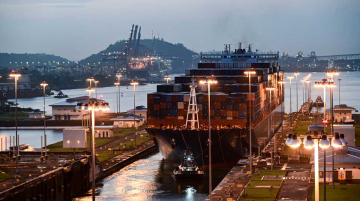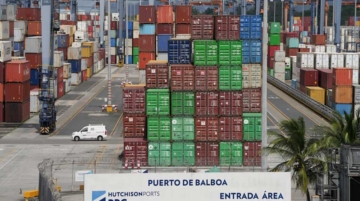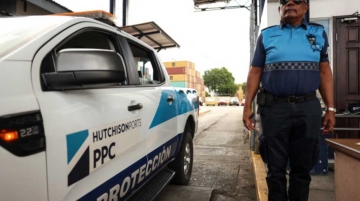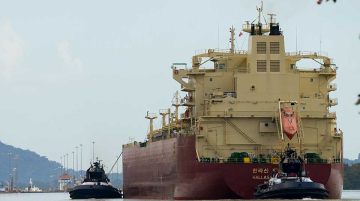
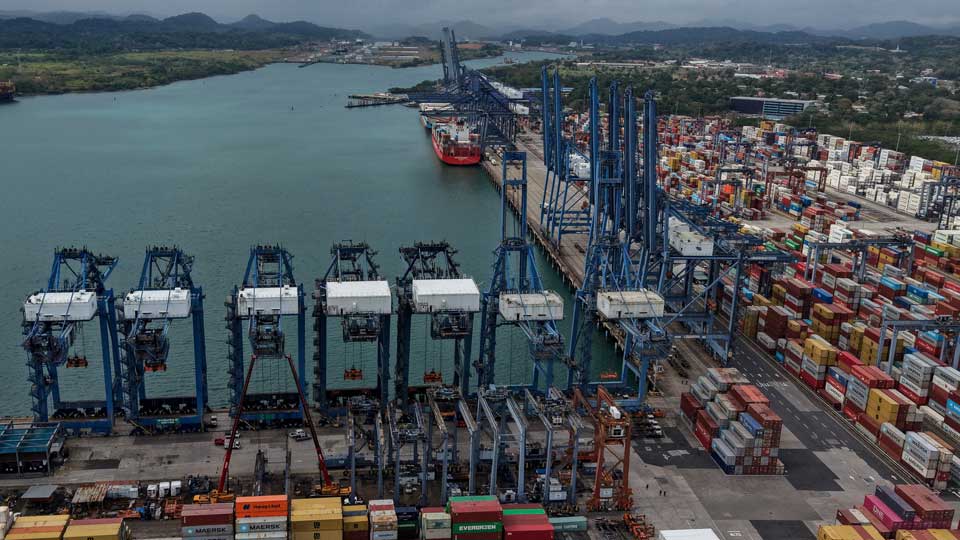
The Panama Supreme Court’s ruling against Hutchison Ports in late January was not merely an isolated legal event; it was the successful proof-of-concept for a new geopolitical weapon.
What appears on the surface to be a dispute over contracts from the 1990s is actually the crystallization of a U.S. strategy designed to maximize national “Return on Investment” (ROI): the displacement of Chinese strategic interests through the use of national legal frameworks and hemispheric security pressures. This is what is already emerging as the “Panama Model.”
The American thesis is clear: utilize local legal architecture to dismantle Chinese infrastructure. This phenomenon is linked to what has been known for years in the world of commercial strategy and risk management as creeping expropriation (de facto or gradual expropriation).
De facto expropriation is disguised as legal and regulatory requirements; it requires no tanks or aggressive nationalization decrees. It is executed through constitutional rulings, environmental reviews, and political pressure.
In analyzing the regional chessboard, the Panamanian case provides a glimpse into the risk landscape. Looking south, three key logistical nodes—Chancay, Lázaro Cárdenas, and Paranaguá—show the same “red flags” that blinked in Panama before the collapse of the Hutchison concession.
The Next Dominoes: Three Ports in the Crosshairs
Washington’s strategy, which seeks to dominate logistical nodes and key routes, is fueled by the recently launched “Project Vault” (a USD 12 billion fund to secure supply chains), aiming to replace Chinese capital with Western credit under the premise of national security. These are the critical nodes where a Chinese presence is viewed as a strategic vulnerability and where Washington may seek to replicate the “success” of Panama:
- Mexico (Port of Lázaro Cárdenas): Hutchison operates the container terminal (TEC I) at the port. With the USMCA (United States-Mexico-Canada Agreement) review scheduled for July 2026, Washington is applying pressure and demanding a purge of “unreliable actors” from North American logistics. Any Chinese control over semiconductor or automotive logistics will be the first point of friction at the negotiating table.
- Peru (Port of Chancay): The Chancay megaport is facing its own perfect storm. Just as in Panama, where the Court attacked the “automatic extension” due to a lack of bidding, the conflict in Peru revolves around the exclusivity of services granted to COSCO. Although Congress attempted to shield the port with Law 32048, the “Panama Precedent” suggests that any monopoly granted without competitive bidding is vulnerable to the application of the “Panama Model.”
- Brazil (Port of Paranaguá): While Lula attempts to maintain a balance in the geopolitical conflict, the alliance with the U.S. for the exploitation of rare earths (the Serra Verde project) has created a logical incompatibility: Washington will not want to finance the extraction of strategic minerals if they exit through a port controlled by a Chinese state-owned enterprise.
Based on the success of the operation in Panama, the possibility of exporting the “Panama Model” looms—geopolitical pressure aimed at displacing geostatestegic rivals through lawfare. However, both superpowers possess levers of influence over the countries in the region.
Washington’s Levers:
- Legal-Diplomatic: The use of treaties (e.g., the Neutrality Treaty in Panama, USMCA in Mexico) as weapons of pressure.
- Interventionist Rhetoric: Rhetoric regarding the “recovery” of the Panama Canal by the Trump Administration has gained new strength following the current U.S. government’s first military intervention in the region in Caracas last month.
- Financial (Project Vault): The masterpiece and the U.S. answer to Beijing’s Belt and Road Initiative. Launched in February 2026, this $12 billion strategic fund backed by the US EXIM Bank allows for the financing of “recovered” infrastructure transitions. It is no longer just about blocking China, but about having capital ready to replace it under Western standards and securing supply chains under U.S. influence.
Beijing’s Levers:
- International Arbitration: Lawsuits before ICSID or the ICC for billions of dollars, as CK Hutchison has already initiated and COSCO threatens in Peru.
- Asymmetric Trade War: Reminding countries like Brazil and Peru of their dependence on soy and copper exports to China.
- Legal Certainty Narrative: Appealing to local business elites by arguing that if Chinese contracts are violated, no private property is safe.
Now Everything is Negotiable
The lesson of 2026 is that legal certainty in Latin America has ceased to be a static concept and has become a variable dependent on geopolitical alignment. The U.S. has decided that control over logistical nodes and critical minerals is a national security imperative, and to achieve this, it is willing to use every possible negotiating lever.
The “Panama Model” teaches us that expropriation no longer needs to be announced from a presidential balcony with a machete in hand; it can be instrumentalized in a judicial ruling, citing environmental protection and sovereignty, while the replacement funds are already deposited in Washington awaiting the transfer.
Pedro Armada is the Managing Partner of Armada Risk Consulting, a boutique firm in Panama specializing in strategic intelligence, forecasting, and capital protection.