By Andrea Ghiselli
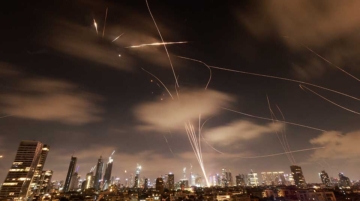
More than a hundred children at a girls’ primary school in Minab, in southern Iran, are reported dead. Missiles and drones are striking targets across Israel as well as the Gulf, from Kuwait to Oman, with the barrage not limited to military assets – such as U.S. bases and, allegedly, the USS Abraham Lincoln – but also civilian landmarks, including Dubai’s Burj Al Arab. And by the close of February 28, 2026, the first day of this sudden “Iran-United States war,” news broke that Ali Khamenei, Iran’s Supreme Leader, was dead.
China’s official response was swift. Foreign Minister Wang Yi condemned U.S. and Israeli strikes, denouncing the decision to “blatantly assassinate a leader of a sovereign country and instigate regime change.” Yet, even as China called for an immediate ceasefire and a return to diplomacy, it found itself struggling to square an increasingly fraught circle. China must denounce the attack on Iran without, however, appearing indifferent to Iranian missiles falling on its major economic partners in the Gulf Cooperation Council. Toeing this ever-thinner line, Fu Cong, China’s Permanent Representative to the United Nations, declared that “China stresses that the sovereignty, security, and territorial integrity of Iran and other regional countries must be respected.”
Against this background, this issue of the ChinaMed Observer surveys the first wave of reactions from Chinese academic and private-sector experts. Although the situation remains fluid and opaque, one point of consensus stands out: for many Chinese analysts, this conflict is an inflection point, one that may mark the end of the Islamic Republic itself.
Operational Logic: Coordination, Timing, and Strategic Signaling
For Chinese commentators, the strike was, first and foremost, a tightly coordinated and deliberate military operation. In an article published by Xinhua, Bao Chengzhang of Shanghai International Studies University (SISU) and Wu Bingbing, Director of the Middle East Research Center at Peking University, converge on this assessment while emphasizing different dimensions of the campaign.
Bao emphasizes the depth of U.S.–Israeli coordination. The two ‘fully coordinated’ their actions, maximizing intelligence sharing, air defense integration, and missile interception capabilities. He situates the strike in the context of stalled U.S.–Iran negotiations (though Oman, which was mediating, claims that the two sides were on the verge of a diplomatic “breakthrough”) and the completion of a dual-carrier U.S. deployment to the region. To him, the sequence indicates meticulous planning, rather than impulsive escalation.
Wu, instead, zeroes in on timing. He notes how the decision to strike during daylight hours served three purposes: breaking the established pattern of nighttime attacks to achieve tactical surprise; meeting the technological requirements for precision-guided systems that perform better in daylight; and projecting a powerful deterrent signal by openly demonstrating force – “showing their cards” (亮出明牌) rather than operating covertly. In this reading, the operation was as much strategic communication as kinetic action.
Strategic Intent: Regime Change or Coercive Diplomacy?
Liu Chang of the China Institute of International Studies, the official think tank of China’s Ministry of Foreign Affairs, characterizes the operation as strongly “preemptive” – a label Israel has also applied to its attack, though one that many legal scholars and legal experts vigorously contest. He also suggests the strike could mark the opening phase of a longer campaign designed to paralyze Iran’s senior command structure and erode domestic resistance. At the same time, he acknowledges a different reading: that this may represent an attempt at “using force to promote negotiations” (以打促谈), coercing Iran into concessions.
In an interview with Shanghai Observer, Zhou Yiqi of the Shanghai Institute for International Studies suggests that the scale and declared objectives push the episode far closer to war than to a limited strike. For Iran, he argues, the missile issue is existential; any concessions on missile capabilities would effectively equate to regime overthrow. Under these conditions, even negotiations framed as coercive diplomacy are likely to blur into the logic of structural regime change.
Escalation Dynamics: Asymmetric Retaliation and Regional Spillover
Chen Long, a research assistant at Renmin University, argues that Iran’s retaliation is likely to remain asymmetric, relying on waves of ballistic missiles and drones. Such a posture, he suggests, could produce a dual, uneven confrontation: indirect U.S.–Iran clashes alongside direct Iranian–Israeli exchanges, with spillover risks stretching from the Gulf to the eastern Mediterranean and even the Red Sea.
Zhou Yiqi notes that Iran’s counterattack has already been more rapid and multi-pronged than during previous crises, striking not only Israel but also U.S.-linked regional bases, a sign of Tehran’s preparedness for a wider confrontation. In an interview with The Observer, SISU’s Ding Long similarly describes the initial U.S.-Israeli strikes as a textbook “decapitation” operation aimed at leadership infrastructure rather than nuclear facilities alone. He anticipates a conflict that could exceed last year’s “Twelve-Day War” in both duration and scale.
That said, Chen Long also points out an opening, however narrow, for de-escalation
“Against the backdrop of a U.S. national security strategy under Trump in which ‘retrenchment’ is the key word, if the United States becomes deeply entangled in a prolonged war of attrition in the Middle East, it will inevitably weaken the strategic resources it can devote to other regions. This, too, is where the hope lies that Iran–U.S. negotiations may still see a turning point.”
Regime Stability: Institutional Resilience or Systemic Fragility?
A key fault line among Chinese analysts concerns Iran’s internal stability. In an article published by Shanghai Observer, three experts debate the extent to which the Islamic Republic can weather such an unprecedented shock.
Li Shaoxian of the China–Arab States Research Institute underscores how Iran’s political system has institutionalized succession mechanisms. In his view, contingency planning and structured power-transfer procedures mitigate systemic vulnerabilities. Absent a ground invasion, he argues, airstrikes alone are unlikely to topple the regime. According to Li:
“Iran and Venezuela have vastly different national circumstances. This operation will not be able to overthrow the Iranian regime; on the contrary, it will instead stimulate even stronger impulses of revenge and retaliation within Iran’s political system.”
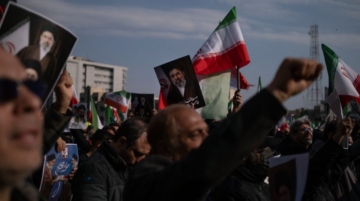
SISU’s Liu Zhongmin contends that while the assassination of the Supreme Leader constitutes a severe symbolic and institutional shock, it does not automatically imply regime collapse. He points to the absence of a strong, organized opposition and the limited domestic traction of diaspora-based alternatives.
However, Liu adds that Khamenei’s assassination, along with the elimination of Hamas leaders in Iran and several high-ranking Iranian military officials and scientists, reflects the extremely serious extent of U.S. and Israeli infiltration of Iran. This raises the prospect that Washington and Tel Aviv have cultivated potential power-seizing forces within the country. The existence of this “political black hole” (政治黑洞), he warns, further exacerbates Iran’s domestic situation.
By contrast, Ding Long raises the possibility that sustained decapitation pressure could induce command paralysis or a cascading breakdown within Iran’s political–military leadership. Under prolonged stress, he suggests, regime collapse could become conceivable. As he stated:
“Regardless of who succeeds, Iran lacks the military resources to wage a protracted war against the United States and Israel, and its ability to survive is questionable.”
Energy Security and the Strait of Hormuz: The Systemic Risk Variable
Across the sources surveyed, the Strait of Hormuz is treated as the central systemic risk.
Wan Zhe of Beijing Normal University argues that short-term oil pricing is now driven less by supply–demand fundamentals and more by geopolitical risk premiums. She stresses the Strait’s role as a critical global energy artery and highlights its broader implications for the energy transition and supply-chain resilience.
In the same article, Wang Lei of the Chinese Academy of Social Sciences notes that while Iran could, in theory, wield significant leverage through a sustained blockade of Hormuz, such a move would also be highly self-destructive and would almost certainly trigger countermeasures, suggesting practical limits to Tehran’s escalation choices.
Interviewed by the 21st Century Business Herald, He Ning of Kaiyuan Securities emphasizes that Iran’s strategic influence over the strait gives it disproportionate impact relative to its modest production share, particularly given Asia’s heavy reliance on energy flows through Hormuz.
Financial Markets: Risk Aversion and Commodity Strength
Due to the war, Chinese financial analysts anticipate heightened volatility and a classic risk-off pattern across global markets.
Speaking to China News Service, Tian Lihui of Nankai University identifies three main transmission mechanisms: the repricing of risk premiums, energy cost pressures on corporate profits, and constraints on monetary easing as higher oil prices complicate rate cuts. Wang Lei further highlights Asia’s vulnerability through imported inflation and shipping disruptions that amplify the energy shock.
In the aforementioned 21st Century Business Herald article, three other experts discussed longer-term economic implications. Tao Chuan of Guolian Minsheng Bank predicts that gold and oil prices will climb in tandem while risk assets face downward pressure, reflecting historical patterns during Middle East crises. Xu Chi of Zhongtai Securities argues that this episode differs structurally from last year’s confrontation and may sustain commodity strength, while also shaping expectations regarding the accelerated weaponization and informatization of AI in defense. Liao Bo of the China Chief Economist Forum contends that deep structural differences between U.S. and Iranian negotiating positions make compromise unlikely and increase the probability that escalation becomes recurrent rather than episodic.
Conclusion: Where is China?
Unsurprisingly, none of the experts cited here directly addressed the implications for China. Like everyone else, Chinese diplomats and policymakers are surely monitoring the evolving situation closely, but they have so far avoided public commentary. One of the few exceptions is a former Chinese diplomat who argued, in an anonymous comment to the South China Morning Post, that the China-Iran economic relationship is resilient enough to withstand ongoing political upheaval.
In the same article, Wen Shaobiao of SISU’s Middle East Studies Institute similarly suggests that Khamenei’s death will not significantly disrupt bilateral economic ties. On the contrary, he argues that:
“if a pro‑Western government is established [in Iran] and the U.S. sanctions are subsequently lifted, it would actually boost Chinese investment in the country.”
Previous ChinaMed Project analyses have already brought to light a certain pessimism among Chinese observers regarding the trajectory of the Islamic Republic’s foreign policy and domestic situation. Beijing has likely already made some kind of preparation for the possibility of regime change in Tehran – one that would probably produce a military‑led, rather than clerical‑led, government.
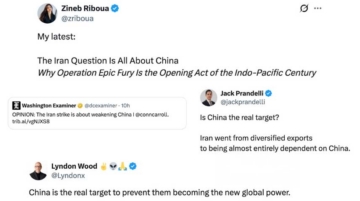
As written elsewhere, this war presents some problems for Chinese diplomacy. However, at the overall strategic level, it may also offer Beijing notable advantages: complicating U.S. planning for contingencies in East Asia and creating new openings for China to promote its initiatives and to shape the global discourse and norms on international security.
Dr. Andrea GHISELLI is Head of Research of the ChinaMed Project. He is also a Lecturer in International Politics in the Department of Social and Political Sciences, Philosophy, and Anthropology of the University of Exeter. His research focuses on Chinese foreign and security policy-making and China’s policy toward the Middle East and North Africa.