By Felix Brender 王哲謙
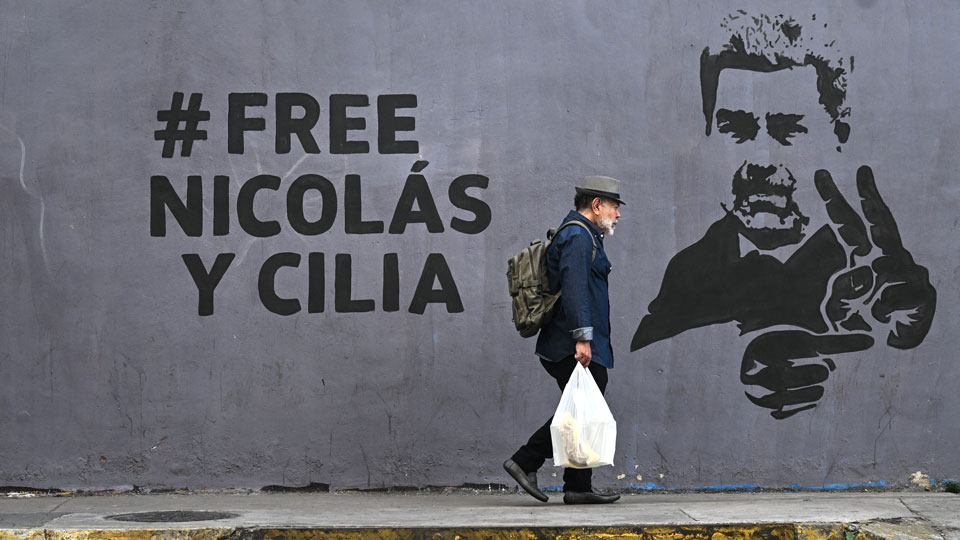
On January 3, 2026, U.S. forces executed a dramatic operation to capture Venezuelan President Nicolás Maduro, abruptly removing the central figure of a regime that had been one of Beijing’s most emblematic strategic partners in Latin America. This was not, at least not yet, a clean regime change.
But the forced removal of Maduro and the uncertainty surrounding his succession underscore a blunt reality: even in a country widely treated as a China-aligned outpost, it is Washington that still determines the ultimate balance of power.
Almost simultaneously, Iran, another key partner in China’s informal, anti-Western alignment, has been rocked by widespread protests triggered by economic collapse and deepening political discontent. The regime’s response, including internet blackouts and lethal force, recalls the nationwide protests of 2022/23 surrounding the death of Mahsa Amini and underscores a familiar pattern: authoritarian systems can appear stable until legitimacy fractures, at which point outside patrons have little ability to restore control.
These back-to-back crises reflect more than regional instabilities. They expose a structural weakness in the political coalitions China has tacitly supported as a counterweight to U.S. power.
For all the official storytelling around shared destinies and long-standing friendships, these coalitions are transactional rather than ideological, held together less by a shared positive vision than by common opposition to American pressure. That makes them inherently fragile. When pressure intensifies or internal crises erupt, the absence of a unifying narrative quickly becomes a liability.
China excels at accumulating economic leverage, but its political partnerships lack the shared story and legitimacy required to endure stress.
China’s global economic influence, by contrast, remains formidable precisely because it is structural rather than ideological. Beijing sits at the centre of global manufacturing and supply chains and is a pivotal trading partner for states across Europe, Africa, Asia, and the Middle East. These relationships are driven by material interests rather than political alignment, and they have proven remarkably resilient even amid geopolitical tension.
This economic gravity is China’s real and enduring power. But economic gravitas alone does not create a durable political order. Regimes can wobble or fracture overnight; networks of trade and production do not.
What China offers its partners is clear. Its model promises prosperity, infrastructure, and sovereignty: insulation from external interference and freedom from Western conditionality. What it does not offer is equally important: a moral story, a political identity, or a vision of shared purpose beyond non-interference. The result is a set of relationships that are elite-driven, crisis-fragile, and difficult to defend when challenged.
Venezuela illustrates this constraint starkly. Maduro, once a symbol of an emerging anti-U.S. bloc, is now in U.S. custody, and his government is in flux. Beijing’s diplomatic protests have had little effect on events on the ground, contrary to Venezuelan and global expectations (or rather, projections).
This is not a failure of will, nor an argument that China should intervene militarily. It is a reminder that a power unwilling, and, pivotally, most likely unable, to shape outcomes in moments of crisis cannot anchor a political order capable of withstanding pressure.
The broader conclusion is not that China is economically declining. Far from it. Rather, power without narrative cannot sustain an order. China excels at accumulating economic leverage, but its political partnerships lack the shared story and legitimacy required to endure stress. What is unravelling, then, is not China’s influence per se, but the idea that a cohesive China-led alternative world order was ever fully taking shape.
What remains is a fragmented multipolar landscape in which China’s economic weight persists, while the United States, for now, still retains the ability to decide outcomes when they are truly contested.
Felix Brender is a project associate at LSE IDEAS