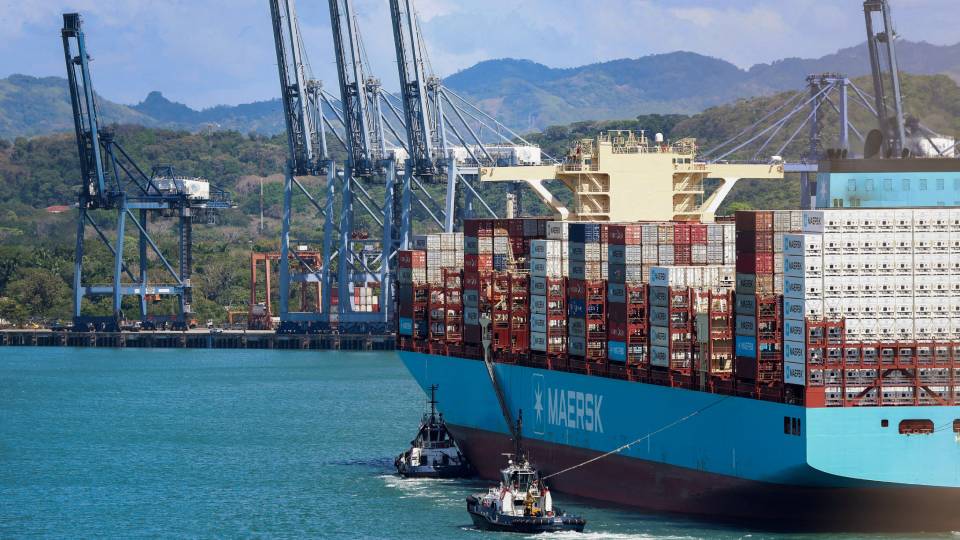
On Thursday last week, Panama’s Supreme Court delivered a ruling that was felt in some of the highest offices in both Beijing and Washington. The court declared that the concession granting control of the Balboa and Cristobal ports to Panama Ports Company, a subsidiary of Hong Kong-based giant CK Hutchison Holdings, was unconstitutional.
The court case landed on one of the most sensitive fault lines in U.S.-China strategic competition in Latin America. For Washington, the ports have become symbols of an effort to reassert military and commercial primacy in the Western Hemisphere. For Beijing, the ruling represents a rare and consequential setback for its interests in a region where its footprint has been steadily growing.
The saga behind the ownership of these ports began long before the Supreme Court case. The Balboa and Cristobal ports are at the center of a larger story about how infrastructure is used as a tool of strategic competition in Latin America and the Caribbean.
A Tale of Three Cities
When President Trump began his second term in January 2025, his administration quickly zeroed in on the Panama Canal as a national security concern. Trump repeatedly claimed that China controlled the canal, triggering a crisis in U.S.-Panama relations, with the Balboa and Cristobal ports (which sit at either end of the canal) becoming the focal point of the dispute.
On March 4, 2025, a Hong Kong-based company called CK Hutchison Holdings agreed in principle to sell a controlling stake in 43 ports across 23 countries to a group of investors led by U.S. company BlackRock. The deal would have included a 90% stake in the Panama Ports Company, which operated the ports of Balboa and Cristobal.
In China, the sale was seen as detrimental to national interests and as part of a coercion campaign from the U.S. (see here, here and here). Beijing tried to stop the sale using regulatory frameworks in order to preserve the strategic assets that CK Hutchison was trying to sell off. Beijing pledged to block the sale unless state-owned company COSCO was granted a major stake and veto rights in the consortium. The interference from Beijing was met with friction in Washington, further complicating an already politically sensitive deal.
Amid mounting U.S. pressure over China’s alleged control over the ports, Panama’s Comptroller General launched an audit over the Balboa and Cristobal ports, focusing especially on the 25-year contract extension granted in 2021. By mid-2025, his office filed a lawsuit against the concession before Panama’s Supreme Court, alleging that the ownership was unconstitutional.
Once the case reached the court, the situation in Panama effectively froze. Until a ruling was issued, neither the sale nor the future of the ports could move forward.
A Consequential Decision
The Supreme Court decision does not directly address the elephant in the room: China’s alleged control of the ports through CK Hutchison. The Court’s rationale for annulling CK Hutchison’s contract was rather based on the unconstitutionality of the original concession, which dates back to 1997, and its 2021 extension for an additional period of 25 years.
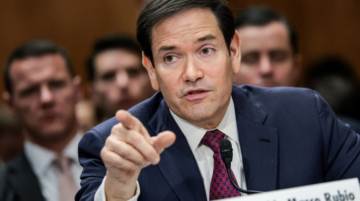
In Washington, Panama’s Supreme Court decision was framed as a major blow to China. U.S. Secretary of State Marco Rubio posted on X that “The United States is encouraged by the recent Panamanian Supreme Court’s decision to rule port concessions to China unconstitutional.” Similar remarks were also issued by members of the U.S. Congress, including representatives María Elvira Salazar and Carlos Gimenez.
In Beijing, the mood was rather different. Chinese Foreign Ministry spokesperson said that “China will take all necessary measures to resolutely safeguard the just and legitimate rights and interests of the Chinese companies.”
For its part, CK Hutchison’s subsidiary Panama Ports Company, put out a statement stressing that the concession annulled by Panama’s Supreme Court was “the result of a transparent international bidding process” held almost 30 years ago and that it had “complied with its contractual and legal obligations…always acting with complete transparency and a full willingness to cooperate.”
It also referred to the decision as inconsistent with the relevant legal framework and as part of a campaign by the Panamanian State to jeopardize the company’s interests. Finally, it warned that such a campaign continues to “undermine the reputation of Panama as a reliable jurisdiction and its position as a globally competitive logistics center” and that it permanently reserves “all rights, including recourse to national and international legal proceedings”.
In Panama, the decision has been met with a certain degree of indifference. Panama Ports’ reputation was not the best among the general public, and many saw the conditions in the original contract and its extension as unfavorable to national interests.
Others feel that this was a missed opportunity for the Panama Canal Authority (ACP) to take over the ports directly. This argument gains weight in light of the ACP’s recently announced 2025-2035 strategic vision, which includes $8.5 billion in planned investments aimed at strengthening Panama’s control over the canal and its surrounding logistics network.
Instead, the government opted for an interim arrangement under which the Danish shipping giant Maersk, through its subsidiary APM Terminals, will temporarily operate the ports. Because Maersk also controls the railway linking the Atlantic and Pacific terminals, this move effectively positions it as a front-runner once a permanent tender process begins.
Finally, there is a broader expectation that the Supreme Court decision will help stabilize and improve U.S.-Panama relations, which had come under strain due to the controversy over the ports.
What Comes Next?
This decision represents an important blow to China’s position in Latin America and the Caribbean. When taken together with developments in other key logistics routes Beijing is dependent on, the ruling significantly limits China’s strategic posture in the region.
It also leads Beijing to consider, yet again, the prospects of the Panamanian ports and eventually the Canal being closed to China. The Canal’s own neutrality regime as an international waterway, as established in the 1977 Permanent Neutrality Treaty and its protocol, clearly establishes that “access to the Canal by vessels of all nations on the basis of entire equality” shall be maintained in times of peace or war by both Panama and the U.S. But in the era of great power politics and strategic competition, all options seem to be on the table.
While 40 States have adhered to this neutrality regime, China has notably failed to do so, arguing that it won’t formally accede as long as Taiwan remains a party. While Beijing has publicly stated that it will respect the neutrality regime, its lack of formal adherence has drawn criticism, particularly from those already suspicious of China.
Amid its strategic competition with the U.S. and the rapidly shifting international order, China would be well advised to avoid further escalation with Panama. International proceedings against Panama for its Supreme Court decision should be on the table, but if China takes unconventional action like not cooperating with Panamanian authorities, or removing cranes, terminal operating systems, or other equipment, it would surely invite more scorn for Beijing in an area that is becoming an emblem of a geopolitical contest.
In the end, China’s broader claim to uphold a rules-based international order, as articulated through its Global Governance Initiative, is being put to the test. The U.S. renewed focus on the Western Hemisphere and the Panamanian Supreme Court decision have put China in a difficult position. If Beijing retaliates against Panama through extralegal means, it will affect its image as a rule-abiding partner, similar to how its reputation has taken a hit due to its actions in the South China Sea.
Accepting the setback, though, risks signaling acceptance of U.S. dominance in the Western Hemisphere, and particularly in Latin America and the Caribbean. How Beijing navigates this situation will be closely watched in the months ahead.
Alonso Illueca is CGSP’s Non-Resident Fellow for Latin America and the Caribbean.