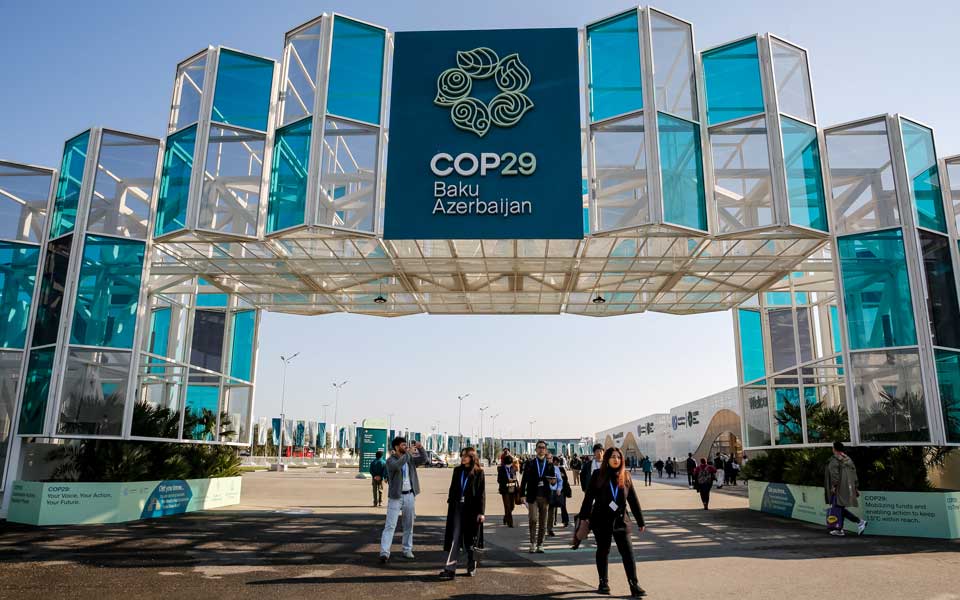
As global leaders gather for COP29, China has made clear its opposition to introducing debt discussions into the climate agenda while also showcasing the successes of its small and beautiful projects in African countries.
In “China’s Policies and Actions to Address Climate Change 2024 Annual Report,” released on Wednesday last week, Beijing insists that debt-related issues are better addressed through existing platforms and bilateral arrangements, warning that incorporating them into COP29 would only create unnecessary complications.
Instead, China is emphasizing international solidarity, criticizing what it describes as unilateral and protectionist measures—mainly from the U.S. and Europe—that obstruct global cooperation on climate change.
To demonstrate how China is taking the lead in this transition, the report highlights climate mitigation efforts, where 17 African nations are among 42 developing countries that have signed 52 climate cooperation agreements that include supporting resilience and adaptation efforts.

The “African Light Belt” Initiative Connecting 50,000 Off-grid Households
Under the “African Light Belt” Initiative, for instance, approximately 50,000 off-grid households across Africa will be connected to electricity through solar power grids to increase access to lighting.
According to Xia Yingxian, director of China’s Ministry of Ecology and Environment’s Department of Climate Change, the program aims to advance $14 million for solar projects in regions not served by main power grids.
So far, five African nations have started implementing the agreements to connect nearly 30,000 households to electricity, according to the report.
The plan aims to deliver 4,300 solar systems in Chad and 3,100 similar projects in São Tomé and Príncipe by the end of 2024.
While China’s stance on debt highlights the importance of respecting countries’ varying capabilities and development stages, it advocates for a pragmatic approach to climate action. The report calls on developed nations to fulfill their responsibilities by reducing emissions and supporting global climate finance while promoting a just and equitable green transition worldwide.
The report also calls on international financial bodies, such as the Green Climate Fund and the Asian Infrastructure Investment Bank, to increase funding for green projects in Africa. Already, through initiatives like the China-Indian Ocean Development Cooperation Forum, China facilitates African participation in global climate dialogues, focusing on disaster resilience, low-carbon infrastructure, and knowledge exchange.
COP29 Exec Fossil Fuel Controversy, Trump’s Rollbacks on Climate Commitments
In Baku, a secret recording showing Azerbaijan’s COP29 team chief executive promoting fossil fuel deals stirred controversy for using his role to discuss potential fossil fuel deals.
Elnur Soltanov was discussing “investment opportunities” in the state oil and gas company with a man posing as a potential investor.
In addition, the event comes after the re-election of Donald Trump, who has pledged to row back on carbon-cutting commitments, starting with the national climate policies that are most reducing planet-warming greenhouse gas emissions, according to climate solutions experts.
The listed measures align with the policies that Trump has said he’ll target.
The rollbacks will come as heat waves and climate pollution increase not only in the Global South but also in the U.S., which is being hit by two of its most expensive hurricanes.
Countries meeting in Azerbaijan in the next two weeks for climate negotiations have failed to take strong action to change these realities. As solutions are delayed, African countries and several others in the Global South will continue suffering from the effects of climate change, making it even harder for them to recover from the recurrent crises.
CGSP China Editor Han Zhen also contributed to this report.