By Duncan Mboyah
Many Kenyan farmers work fertile land close to fast-growing urban markets. But they are struggling as rainfall gets less predictable, heat stress rises and pests and diseases spread.
For smallholders, a single outbreak can wipe out years of savings. While for policymakers, each failed harvest carries reputational consequences.
Into this uncertainty has stepped a growing number of external partners offering technical fixes, with China now among the most visible. Across Kenya, Chinese companies, universities and development partners are backing projects that promise climate-resilient crops, reduced losses and steadier incomes.
Some farmers say the resulting improvements are tangible. The wider implications, however, are more complex. Bringing in new technology can strengthen local capacity but also entrench reliance. And for countries trying to build their own agri-tech ecosystems, important questions shadow the success stories: is progress sustainable and will the benefits be fairly shared?
A Greenhouse Bet in the Rift Valley
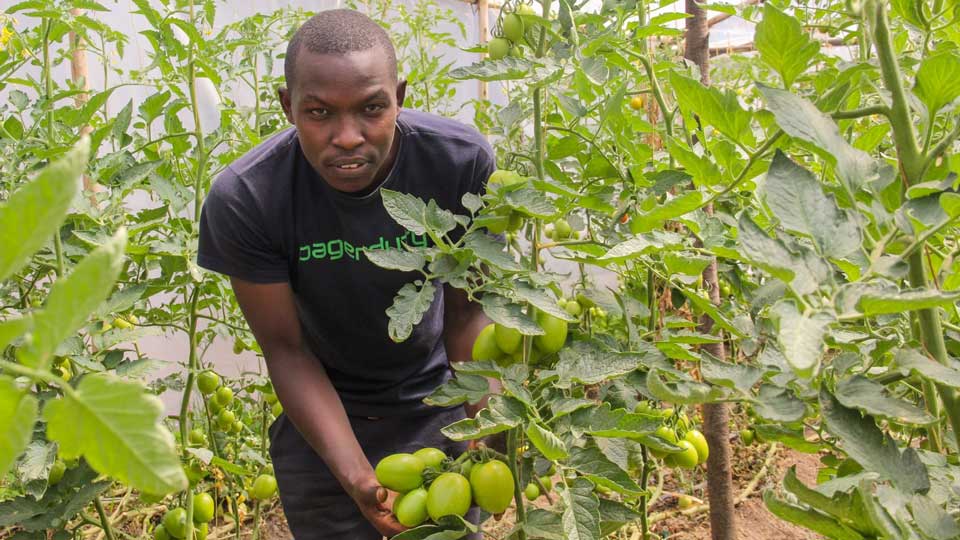
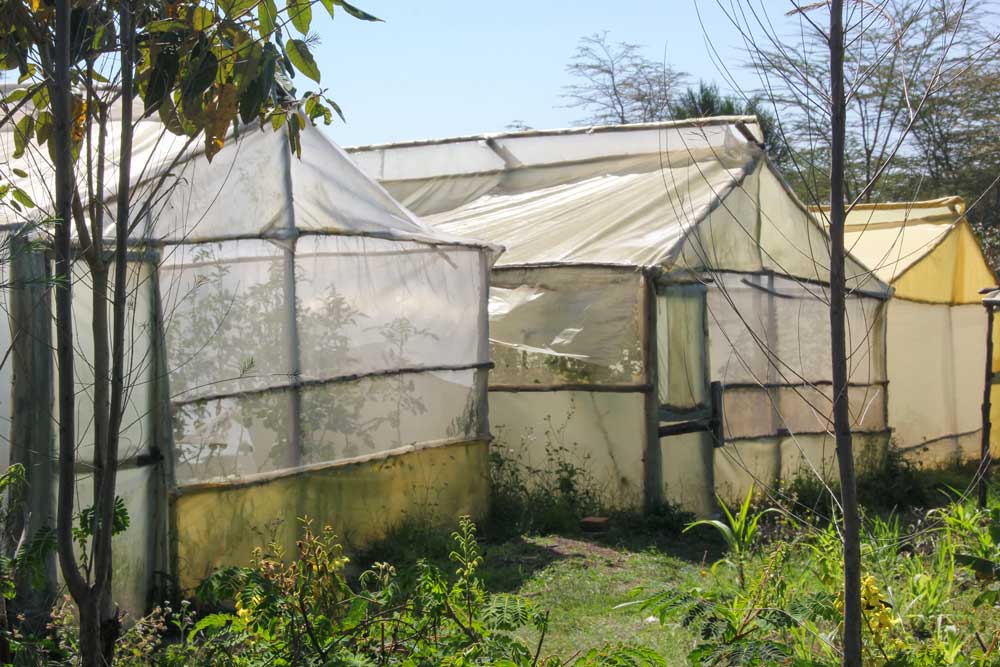
Benard Koech’s greenhouses sit on a small plot in Keberesit village, south-western Kenya. Inside, rows of tomato plants climb neatly toward the light. The setup looks relatively modern with plastic sheeting, drip irrigation lines, careful spacing. But the core innovation is less visible: each plant is built from two Chinese varieties joined by hand.
Koech, 28, tells Dialogue Earth he began growing tomatoes outdoors in 2020 as a pastime, after graduating in agribusiness management from Kenya’s Machakos University. About 95% of Kenya’s tomatoes are grown in open fields.
He has benefitted from a pilot programme to support rural youth to grow grafted tomatoes around Nakuru county, about 160 km north-west of Nairobi. The programme, a collaboration between China’s Nanjing Agricultural University and Kenya’s Egerton University, is about improving responses to disease and climate stress.
Stories like Koech’s are often presented as evidence that “South-South” cooperation between Global South nations can deliver practical solutions where traditional aid models have struggled. In Kenya’s case, the claim is that farmers are not only receiving inputs, but also learning techniques to manage climate shocks more effectively.
In this instance the technique involves joining the shoot, or scion, of a high-yielding but disease-prone tomato variety with the rootstock of a more resilient one. The aim is to keep producing desirable fruit while strengthening resistance to pathogens and water stress.
Joshua Ogweno, an associate professor of horticulture at Egerton University, says the tomato-grafting project emerged after bacterial wilt devastated tomato production in parts of the Rift Valley.
The wilt “spread like bush fire in the region as a result of climate change”, he says, adding that the grafted tomatoes have reduced crop losses by 80%.
The grafting is done at Egerton University and seedlings are then sold in agricultural supply shops. The plants can be harvested continuously for up to eight months, Ogweno says, compared to a roughly two-month harvesting window for ordinary plants grown in open fields.
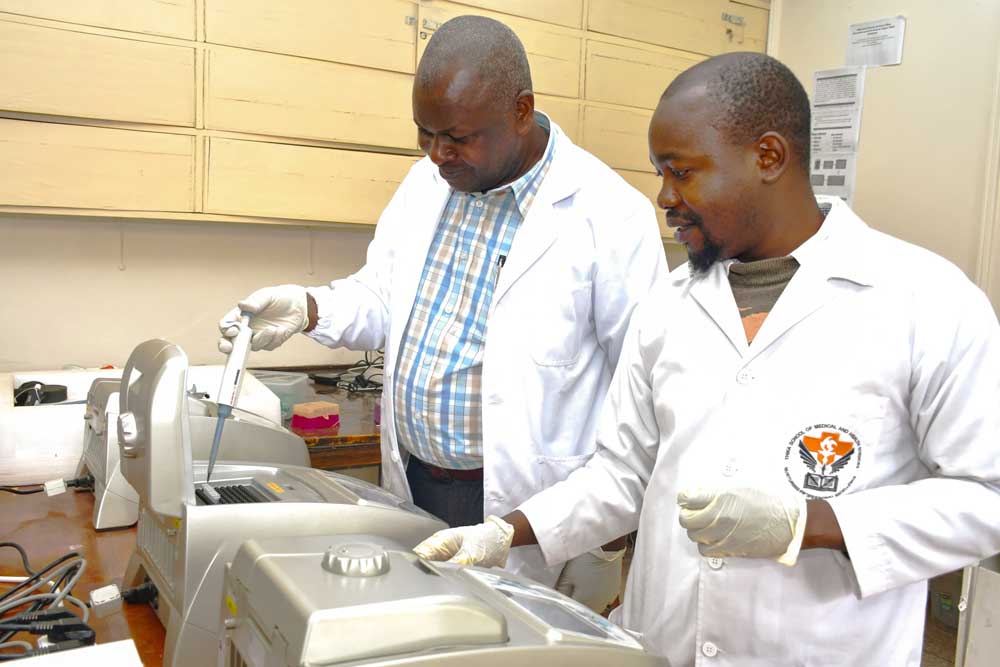
Ogweno points to broader capacity-building outcomes. Since 2018, more than 1,100 “agricultural extension officers” – who teach farmers modern techniques – have received training on managing bacterial wilt and related threats, he says.
If these gains hold at scale, the implications are significant: fewer crop failures, less pesticide use and more predictable incomes. But success at pilot level does not automatically translate into long-term resilience. Greenhouses depend on imported plastic, fittings, irrigation systems and technical know-how, all of which carry costs, potential environmental risks, and risks if supply chains falter or funding ends.
Hybrid Fodder Grass and Seedlings Gain Traction
Chinese involvement in Kenya’s agri-tech space is not confined to public-research partnerships. Private companies are also expanding their footprint.
Juncao grass is a hybrid fodder crop introduced in 2021 by Chinese entrepreneur Jack Liu. Grown in Kenya, it is resilient to drought and grows faster than normal Napier grass. Mwangi Kinyanjui, a lecturer in natural resource management at Kenya’s Karatina University, says the grass “has double protein”. He calls it “a saviour for livestock farmers who are witnessing low production of milk.”

However, juncao is grown on some of the most fertile arable land in Kenya, in Nakuru county, putting it in potential competition with staple food production.
Juncao has not solved Kenya’s persistent livestock feed shortages, since the majority of livestock farmers today import feeds from neighbouring Uganda.
“Technology transfer in agriculture can offset many problems that are affecting farmers, but the knowledge of the technology is still low,” Kinyanjui adds.
For farmers facing climate stress, speed matters. New varieties that establish quickly can mean the difference between survival and collapse. But rapid uptake also raises ecological questions about introducing new crops at scale, and whether local plants and seed systems are being strengthened or sidelined.
Boson Agri Ltd, which operates farms in Kenya, Zambia and Tanzania, supplies hybrid seedlings across the region. Leon Qu, the company’s chief executive, says: “We produce virus-free seedlings that reduce diseases and make seedlings and crops stable during dry seasons.”
For farmers, hybrid seedlings can sharply reduce risk. For policymakers, they raise familiar development questions: who controls seed systems, who captures value along the chain, and can domestic breeding and manufacturing capacity keep pace?
John Macharia, Kenya country director for the Alliance for a Green Revolution in Africa (AGRA), says partnerships that expand access to technology are urgently needed.
“Kenya has limited and unaffordable technology while climate change continues to affect farm production in the country,” he tells Dialogue Earth.
That reality explains the appeal of Chinese collaboration. But reliance on external solutions can deepen vulnerabilities if local institutions are not strengthened alongside them.
The Trade Imbalance Behind the Rhetoric
Kenya-China agricultural cooperation is unfolding against a starkly uneven trade relationship. In the first half of 2025, Kenya imported goods worth about KES 500 billion (USD 3.9 billion) from China, while exporting just KES 4.5 billion (USD 34.9 million), according to Guo Haiya, China’s ambassador to Kenya.
Guo argues however that, thanks to recent policy changes, African agricultural products are gaining better access to Chinese markets.
China has stated it will expand its tariff-free trade arrangements so all products from all 53 African countries it has diplomatic relations with can enter China without tariffs. This would make African products more competitive on the Chinese market.
“With the new zero-tariff arrangements, products such as Kenyan avocados, Zimbabwean blueberries, Ethiopian coffee, Ghanaian cocoa, and Tanzanian cashew nuts will enjoy easier and more competitive access to the Chinese market,” she told Dialogue Earth during the Africa International Agricultural Expo held in Nairobi in October 2025.
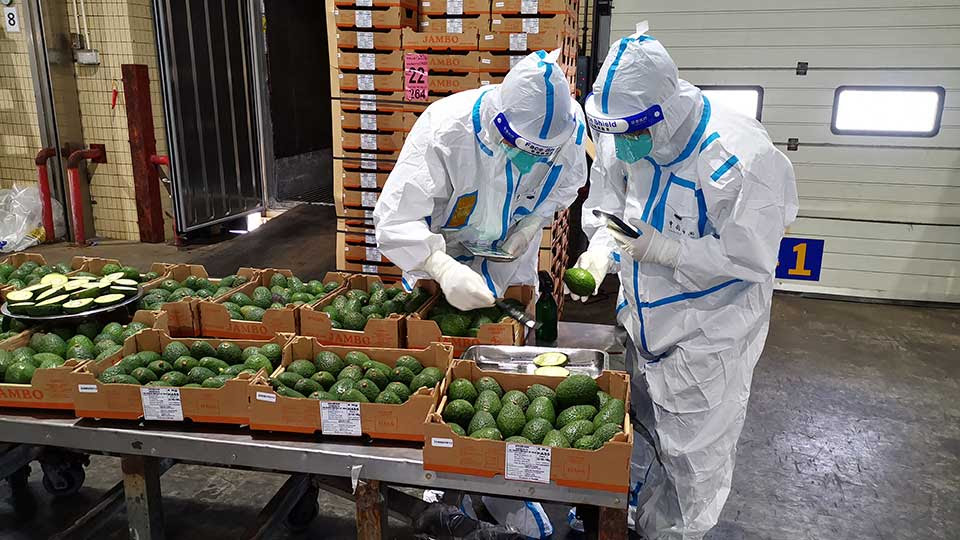
But market access alone does not guarantee exports. Cold storage, logistics, quality standards, financing and reliable production remain major barriers. These constraints have long limited African agricultural trade.
African countries can learn from China’s experience but only by adapting it, says Bob Wekesa, director of the African Center for the Study of the United States, at the University of the Witwatersrand in Johannesburg.
“China has done well in transforming production of tea and bamboo through the use of agricultural technology, something that African farmers can also borrow to benefit fully in balancing its trade with the Chinese,” he says.
He adds that persistent policy and implementation failures have constrained Africa’s agricultural potential. Progress requires planning across the entire value chain, from land preparation to storage and market access, he says.
No Silver Bullets
For Gordon K’achola, founder of the Africa Center for Diplomatic Affairs, the risk lies in overselling technology as a cure-all. Chinese partnerships, he says, are often framed as solutions to food insecurity while ignoring deeper structural issues in host countries.
He argues that China, like any external partner, benefits primarily through trade, while outcomes for smallholders depend on how African governments integrate new technologies into local value chains.
Without supportive credit systems, extension services and accountability mechanisms, he adds, technology transfer alone will not correct trade imbalances or transform rural livelihoods.
China, K’achola notes, provides financing, equipment and training as part of its broader cooperation agenda. Whether those inputs translate into durable benefits ultimately depends on domestic governance.
Duncan Mboyah is a journalist based in Nairobi, Kenya, who specialises in science writing. This article was originally published on Dialogue Earth under the Creative Commons BY NC ND license.