2025 was a rather tumultuous year for Latin America and the Caribbean (LAC). Donald Trump’s return to the White House exacerbated geopolitical dynamics in the region, particularly in the realm of the U.S.-China strategic competition.
From tariffs to claims that China exerted influence over key Panama Canal port operations, which helped trigger negotiations over the potential sale of CK Hutchison’s port assets to a BlackRock-led consortium, the U.S. sought to confront China in the region and counter its perceived growing influence.
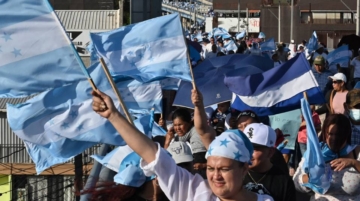
We also witnessed the emergence of a ‘China trend’ in the 2025-2026 electoral cycle, with relations with Beijing becoming a salient issue in elections in Bolivia, Argentina, Honduras, and Chile. The 2026 presidential elections in Costa Rica, Peru, Colombia, Haiti, and later, Brazil, could see a continuation of this trend.
With Washington’s renewed focus on countering Beijing’s well-established presence, it is increasingly clear that Latin America and the Caribbean have become a central theater to watch. The United States’ recent National Security Strategy is clear on Washington’s self-assigned role in ‘stabilizing’ the Western Hemisphere, with not-so-subtle references to keeping Latin America aligned with the Trump Administration’s vision of the region.
If any doubt remained, it was dispelled on January 3, 2026, when U.S. forces carried out an operation to capture Venezuela’s strongman Nicolás Maduro. The move demonstrated the Trump administration’s willingness to assert its presence forcefully in the region, including through the use of military action that many view as illegal under international law. In doing so, Washington effectively sidelined China and signaled that it is prepared to translate strategic rhetoric into action.
The resulting dynamics of U.S.-China strategic competition, combined with the U.S. display of hegemony and military dominance in the Western Hemisphere, have left many LAC nations as passive players caught between rival powers.
Venezuela’s acting president’s almost immediate compliance with most of the U.S. requests is indicative of this. Regional middle powers like Brazil and Mexico are finding it increasingly difficult to navigate this complex geopolitical landscape and craft strategies for engaging with both the U.S. and China without fully aligning. Balancing economic dependence on China with political alliance with the U.S. is becoming increasingly unfeasible.
From Theory to Practice
Since the publication of the U.S. National Security Strategy, Washington’s position has been clearly framed. The U.S. perceives the Western Hemisphere as its own sphere of influence; therefore, it seeks to limit and expel Chinese influence.
Coined as the “Trump Corollary to the Monroe Doctrine,” the U.S. strategic objective consists of “deny[ing] non-Hemispheric competitors the ability to position forces or other threatening capabilities, or to own or control strategically vital assets, in our Hemisphere.”
Beijing’s response to Washington was mapped out in its third policy paper on LAC. The document emphasizes “unilateral bullying,” without explicitly attributing it to the U.S. It also reasserts the importance of equality and an orderly multipolarity.
The policy paper set the tone for Beijing’s expectations for its engagement with LAC in 2026 while clearly acknowledging the region’s centrality in its strategic competition with Washington.
However, the strategic calculus changed dramatically for China after Maduro’s capture. The active implementation of the Trump Corollary in hemispheric relations is set to fundamentally alter China-LAC dynamics in the short run, particularly in the political and military realms. It remains to be seen if China will seek to assert some sort of political leverage in what could be perceived as an increasingly China-skeptical neighborhood.
Beijing’s Engagement with LAC
The policy paper emphasizes the Global South’s importance to China, with LAC emerging as a key zone of engagement. The policy paper is the third that China has issued, following those issued in 2008 and 2016.
It places China’s four global initiatives (4GI) — the Global Governance Initiative, Global Security Initiative, Global Development Initiative, and Global Civilization Initiative — alongside the Belt and Road Initiative (BRI) at the core of its engagement strategy. The paper also introduced five broad programs on solidarity, development, civilization, peace, and people-to-people connectivity, which are intended to integrate the 4GI and the BRI.
As with the four global initiatives, the document remains vague on substance. This ambiguity allows LAC countries to interpret China’s engagement in multiple ways. Much like the BRI, the policy paper is flexible—arguably, whatever LAC countries want it to be.
Despite recent shocks, the paper’s core objective is clear: continuity in China’s engagement with the region. The situation in Venezuela has forced China to recalibrate its strategy, but its broader objective remains the same.
In the short run, its engagement with the region may cool off, but Beijing aspires to offer itself as an alternative model of engagement to Washington’s approach. This, together with its discursive emphasis on diplomacy, multilateralism, and international law, would allow Beijing — in the long run — to position itself as a leader of the Global South and an important partner for the region.
The Prospects for China-LAC Engagement in 2026
Given the developments in the region and the priorities outlined in Beijing’s policy paper, several trends are likely to shape China’s LAC engagement in 2026.
The One China Principle will remain Beijing’s core political priority, with Honduras closely watched as a potential test case, since there are whispers that Honduras could be facing a reversal back to Taiwan.
Political and institutional engagement is set to deepen through exchanges with national legislatures, and regional (i.e., the Latin American Parliament) and sub-regional bodies (i.e., the Central American Parliament and the Andean Parliament), alongside continued people-to-people initiatives such as Confucius Institutes and expanded think tank cooperation.
At the multilateral level, Beijing will continue promoting China-centric forums like the Xiangshan Forum. This line of effort may be met with skepticism, given the tense geopolitical conditions in the region.
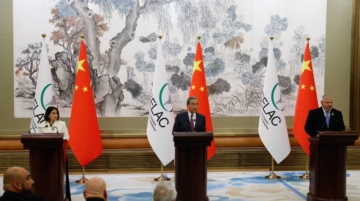
Efforts to institutionalize the Community of Latin American and Caribbean States (CELAC) will move forward, and with that, the China-CELAC Forum will maintain its usual importance. With a regional reconfiguration taking place through electoral and geopolitical dynamics, it remains to be seen if CELAC will continue to be a viable forum for China-LAC relations or if it will shift to sub-regional engagements (like through the South American Common Market, the Andean Community, and the Community of Caribbean States).
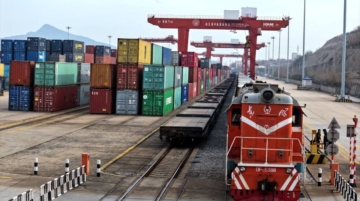
BRI cooperation will continue to expand, notwithstanding its economic and logistical hurdles in LAC. Beijing’s intent is to keep up with its infrastructure planning and construction plans with the intent of enhancing connectivity, regional growth, and development. Here, China is set to meet with the U.S. fierce opposition.
In this particular regard, the future of the CK Hutchison-BlackRock deal hinges on the balance, with Beijing continuing to halt the sale of the ports and Panama’s Supreme Court about to issue a decision that could take away the concession from the Hong Kong-based company. The future of that transaction could reconfigure the balance of power and inner workings of maritime routes throughout the region.
On trade, state-to-state engagement will remain Beijing’s go-to strategy, leaving no room for collective free-trade agreements between China and the multiple trading blocs of the region. With political pressure emanating from Washington, some countries will think twice before signing or even negotiating a free trade agreement.
China will also seek to promote the so-called “Beijing consensus” in the region through panda bonds, loans, and currency swaps. In this regard, LAC countries will need to weigh debt risks, asymmetrical dependencies, and potential domestic backlash, particularly as renewed U.S. engagement offers alternative options to economies that have grown increasingly dependent on Beijing.
The Outlook
2026 points to a complex environment for China in LAC, shaped by geopolitical shifts, force projection, and a slew of upcoming elections. China’s continued engagement, particularly through the 4GI and the BRI, will face significant resistance from the U.S., which is actively invested in curbing Beijing’s influence and presence in the hemisphere.
With the prospects of strategic autonomy decreasing day by day, avoiding full alignment will become a very difficult but necessary task for LAC countries hoping to safeguard the region’s long-term political and economic interests.
Alonso Illueca is CGSP’s Non-Resident Fellow for Latin America and the Caribbean.