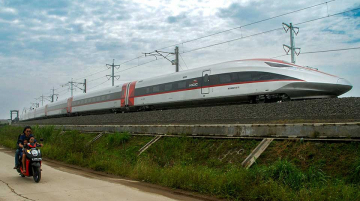
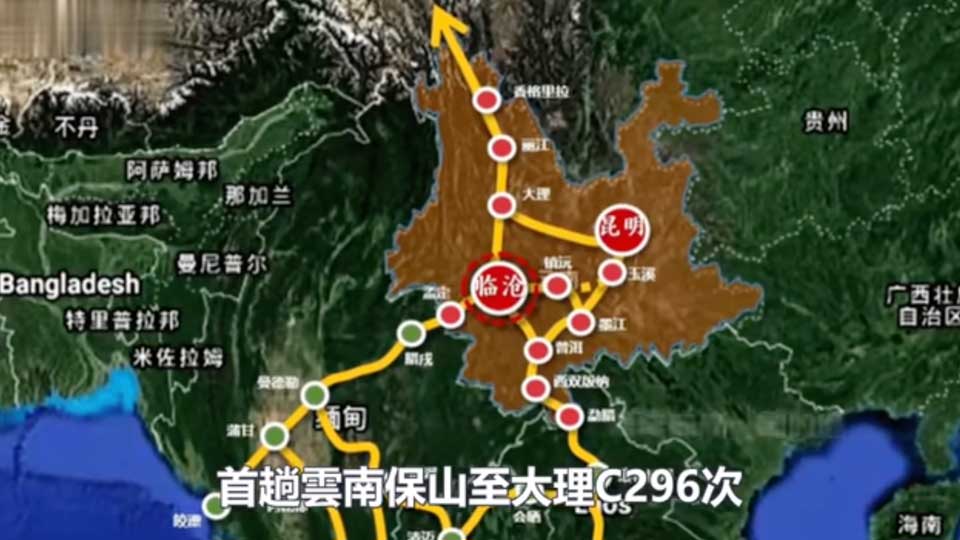
In 2022, China opened a new railway between Dali and Baoshan in Yunnan. It was meant to be the first step of a much bigger vision: a rail line running across Myanmar to the deep-sea port of Kyaukpyu, giving China’s southwest a direct outlet to the Indian Ocean.
But on the Myanmar side, construction has never even begun.
A recent Bilibili video explains how domestic politics, public distrust, and competing foreign interests in Myanmar have brought the project to a halt.
The China–Myanmar Railway was designed to run parallel to the existing China–Myanmar oil and gas pipelines, together forming a “Southwest Strategic Corridor” that would let China bypass the U.S.-patrolled Strait of Malacca. Freight from Yunnan and Guizhou could sail straight to South Asia, the Middle East, and Africa, while Persian Gulf oil could flow into China more safely and cheaply.
Yet in Myanmar, the project met immediate skepticism. Though Beijing describes it as development assistance, deals were made only with the central government, leaving local communities, who would bear environmental costs, with few direct benefits, deeply distrustful. Myanmar’s media warned of Chinese influence over domestic politics, while lawmakers never reached a consensus.
Ethnic politics further complicate everything. Many Chinese-backed projects lie in northern regions controlled by minority armed groups that distrust Myanmar’s central government. When Beijing negotiates with one side, the other resists.
Japan adds another layer of competition: it is upgrading the key Yangon–Mandalay railway through an aid package and Mitsubishi, providing Myanmar an alternative partner and diluting China’s leverage.
And political turmoil has frozen the most sensitive segment, the Mandalay–Kyaukpyu stretch. It crosses regions tied to the Rohingya crisis, where state control is fragile and nationalist sentiment runs high. Any foreign project risks sparking local protests unless it navigates village networks, religious groups, and clan-based authority structures – something Chinese firms have repeatedly underestimated.
WHY IS THIS IMPORTANT? The stalled railway is not an isolated case. The Myitsone Dam and Letpadaung Copper Mine were also halted or slowed by local resistance. Still, China keeps pushing. Strategically, the line is central to the western route of the planned Pan-Asia Railway from Singapore to Kunming. And Kyaukpyu remains one of China’s most important overseas footholds: a rare deep-water port on the Indian Ocean that could reduce China’s dependence on the Malacca Strait.