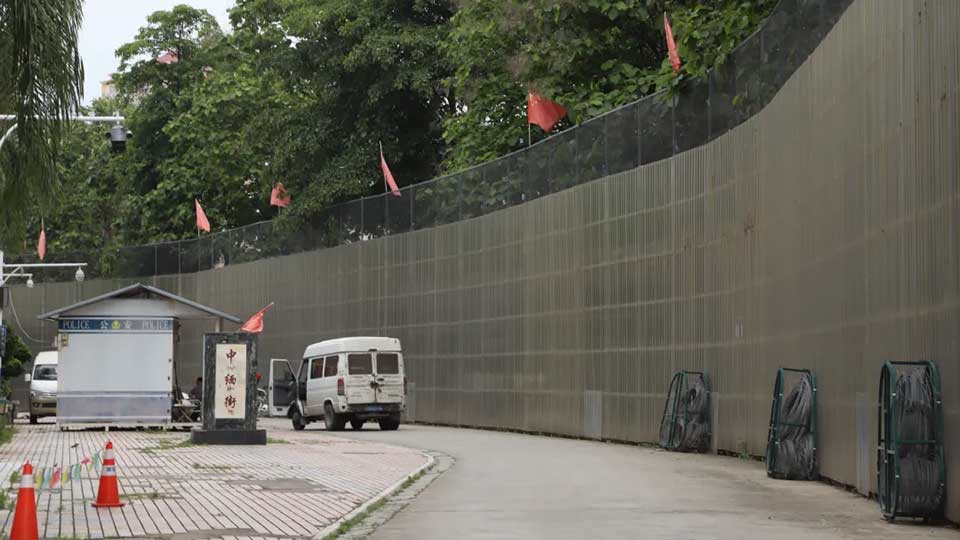
A deeply reported story published on a WeChat public account specializing in literary reporting examines how pandemic-era border control policies in Ruili, once China’s busiest land port with Myanmar, have outlasted COVID-19 and devastated the city’s once-thriving jade trade while restricting the movement of cross-border migrant communities.
Even after the official end of “zero-COVID,” Ruili has continued to enforce the high-security measures introduced during the pandemic. These include tall border walls, round-the-clock patrols, and strict document checks. The result has been a sharp drop in both trade and people-to-people exchange.

In 2019, Ruili recorded more than 20.63 million border crossings and handled over 17.45 million tons of imports and exports, representing the vast majority of Yunnan’s trade with Myanmar. By 2024, crossings had fallen to just one quarter of that figure.
Through accounts from traders, migrant workers, and minority communities, the story shows the human toll behind the statistics. Veteran jade dealer Zhang Congsheng remembers when the city’s border fence was little more than a waist-high barrier with gaps wide enough for goods to be passed through by hand without paperwork.
That fence has now been replaced by a 170-kilometer wall, ten meters high, topped with surveillance cameras spaced every 50 meters and patrolled by armed guards on motorbikes. Jade imports face higher transportation costs and tighter inspections, dealing a heavy blow to the industry.
The burden is even greater for stateless border communities such as the Rohingya, long marginalized in Myanmar and once able to settle in Ruili. They have become a highly regulated population, with family reunification now nearly impossible.
One Rohingya jade trader, known as Xiaoxing, has spent more than two decades in Ruili but remains unable to leave the prefecture due to pandemic-era residence codes that are still in force. His wife and children returned to Myanmar for a family visit during the pandemic and lost their permission to re-enter China. Others who stayed in Ruili to work have been separated from relatives for years, with little hope of reunion.
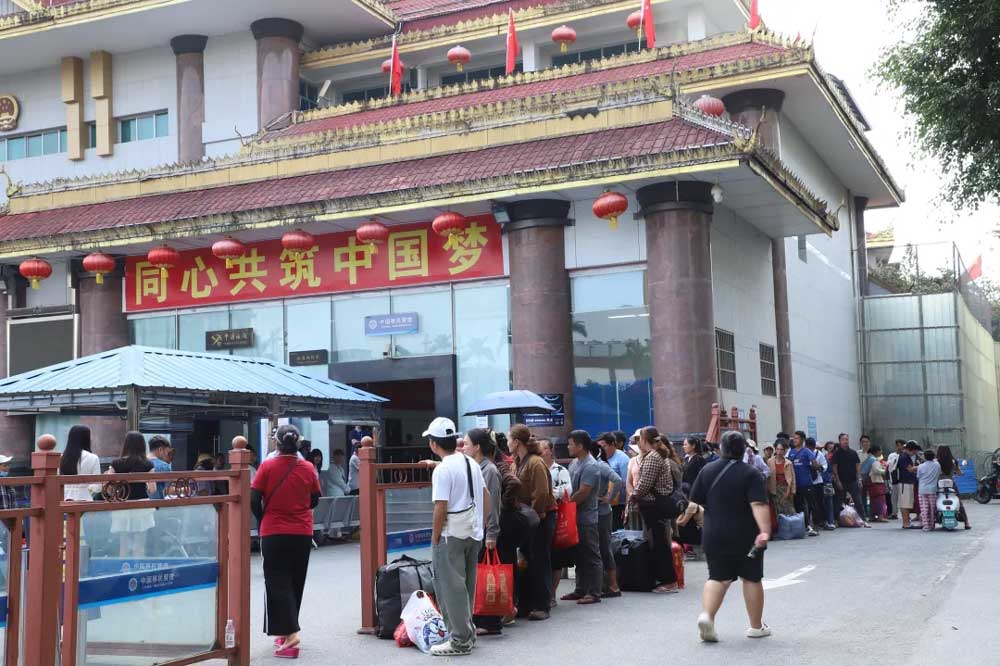
For migrant laborers, the barriers are bureaucratic. Passes that once took a day to obtain can now require weeks or months, often with informal payments to avoid constant renewals. Quotas on short-term “blue card” permits have left hundreds stranded in the Myanmar border town of Muse.
Inside Ruili, Myanmar neighborhoods have emptied out. In one of the largest, the population has fallen by half since 2019. Police checks for identification remain more frequent than before, prompting some to move repeatedly to avoid inspection.
Why Is This Important?
Ruili’s post-pandemic decline is more than a local setback. It offers a lens into the shifting dynamics of economic and human interaction along the China–Myanmar frontier. The city’s trajectory reflects how public health measures have evolved into lasting security policies, reshaping trade flows, labor migration, and the social fabric of a once-vibrant hub.
For decades, Ruili embodied grassroots globalization: jade from Myanmar’s Kachin state could reach Chinese workshops in hours; workers, traders, and families crossed the border freely.
Now, China’s tightened controls meet Myanmar’s political instability since the 2021 military coup, constricting both commerce and human movement. The story shows how a border that once fostered deep mutual dependence is becoming a hardened barrier, with long-term consequences for livelihoods, demographics, and regional stability.