
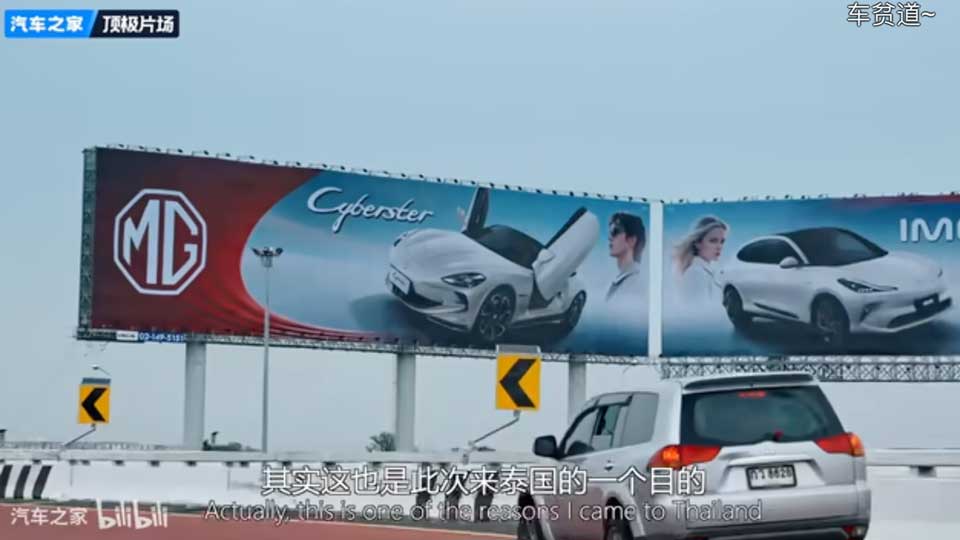
Framed like a hopeful road trip into Thailand’s EV future, Auto Roam is a glossy branded documentary by Chinese automotive media Autohome, following a diverse cast of local EV adopters to portray how Chinese electric vehicles are reshaping everyday life in Thailand. Slick, upbeat, and unmistakably promotional, the film portrayed EVs from China as affordable, practical, and life-changing.
The film follows a banana farmer who relies on a Chinese-made Riddara electric pickup truck to traverse long rural routes. For him, switching to electric meant relief from soaring fuel costs and a vehicle sturdy enough to manage the mountainous terrain. It also features a couple working as Muay Thai fighters sharing their aspiration to buy a DEEPAL EV to become ride-hailing drivers. With only 10% down (around 40,000–60,000 baht), they hope to save for a safer future after years of risking severe injury for just 3,000 baht per match.
The documentary also interviews a new EV driver who purchased his Chinese car from Age Venture, a local dealership specializing in new energy vehicles. He shares a detailed look at the economics of his daily routine: earning 2,500–2,600 baht per day, with 500–600 baht spent on charging, leaving a net income of roughly 2,000 baht.
To ground the story in local culture, Auto Roam includes a visually striking sequence at a Buddhist temple, where a monk performs a traditional vehicle blessing ceremony. A newly purchased Neta EV is ritually consecrated with incense, holy water, protective symbols written in paint on the headlights, engine cover, and windows, and gold leaf applied inside the cabin. The steering wheel is wrapped in a sacred tri-colored cloth, a Thai tradition meant to ensure safety before a new car hits the road.
Why Is This Important?
But this polished narrative arrives just as the reality of China’s EV push abroad grows more complicated. With domestic makers like Neta Auto under financial strain amid a brutal price war at home, Chinese EV brands are rushing into Southeast Asian markets, sometimes before they’re ready. Reports of closed service centers and unavailable spare parts have surfaced in Thailand, Neta’s largest overseas market. Auto Roam captures a moment of excitement, but also glosses over the fragility of the very industry it celebrates.

