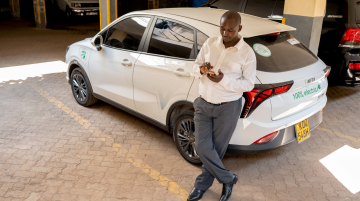
While most Kenyans, and most people across Africa for that matter, are unable to afford their own electric vehicles, that doesn’t mean they’re missing out on the e-mobility revolution.
A growing number of start-ups are launching across Africa, leveraging Chinese-made battery technology to power buses and other mass transit solutions.
In 2022, BasiGo, an early-stage e-mobility start-up, imported two electric buses from BYD, a Chinese conglomerate and the world’s largest EV company. The plan was to address the mass transport needs by providing these buses to enable the country’s shift to clean transport. The idea was to study the BYD technology and then replicate it in Kenya by locally assembling bus parts sourced from the giant Chinese EV manufacturer.
Since then, BasiGo has been using Chinese technology as the foundation to build e-buses for Kenya. As one of the only two electric bus manufacturers in Kenya, the company is working with various mass transport companies interested in a shift to e-mobility.
According to Samuel Kamunya, the head of business development at BasiGo, BYD provided the company with the foundational tech that they studied to assemble their buses locally. However, due to increased demand for e-buses in Kenya, the company has now expanded to include other Chinese bus suppliers like BLK, Zhongtong, and Higer. They also plan to bring on board other companies.
“We are looking at major cities in the world with no noise pollution, no air pollution and trying to replicate as a clean environment as possible through the use of electric buses. We’re trying to give the people who have invested in public transport and any other kind of mass transit an alternative from buying an internal combustion engine bus to having an electric bus as an option for their fleets,” Kamunya said.
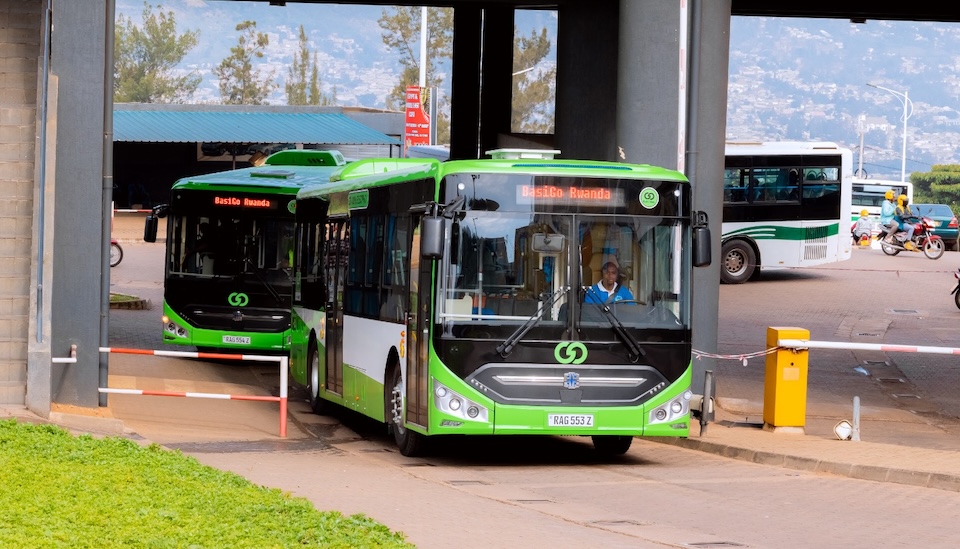
Currently, BasiGo has 17 BYD and four CHTC buses on the road in Kenya, while two more are undergoing tests before they are deployed in the next few weeks. The company also has three locally assembled buses awaiting registration and another seven undergoing final touches in the assembly line. In Rwanda, the buses are two each from Zhongtong and Higer.
The expansion of the supplier pool from China was to ensure that BasiGo did not rely solely on BYD, which could slow down the deployment of e-buses.
Kamunya added that by partnering with a pool of competent manufacturers, they can achieve quality for the market and make the e-bus as accessible as possible.
But the journey to a thousand BasiGo e-buses by 2025 in Kenya is not without challenges. High taxation and production costs threaten the sector. While the company has also exported four buses to Rwanda, it cannot produce them fast enough to meet the demand. To increase output, the company launched the country’s first dedicated e-bus assembly line last month.
Even with the improved assembly line, the charging infrastructure also presents a challenge. The buses have to go to very specific points to recharge, which means that the vehicles have to operate within a certain radius since there are no long-range buses at the time. To save time, buses are charged overnight for morning rush hours and in the afternoon in readiness to move people in the evening.
“For EVs, we have three major barriers. The first is the upfront cost, the second is around charging infrastructure, and the third is technical expertise. In our business model, when we make the upfront cost the same price as a diesel bus and then focus on doing as much local assembly as possible to bring the cost down, then we have a sustainable business model,” added Kamunya.
For Kenya, Chinese tech is crucial for the EV shift, especially in mass mobility. Kamunya added that working with Chinese suppliers makes a lot of business sense. The lead times when they buy goods there, and the travel time from China to Africa is shorter.
In addition, BasiGo receives local support from its Chinese suppliers, especially when it buys fully built units. They also provide ground support when piloting and testing these buses, which contributes to skills transfer.
Kamunya added, “We have Chinese engineers coming to train our engineers locally and we can always refer to them on any technical hitches and mechanical problems that are beyond us in Kenya. At the same time, we’re locally assembling BLK and CHTC units. We have the Chinese engineers and technicians with us on the ground, helping us build these units.”

BasiGo has also secured several million dollars in funding to bolster its e-mobility uptake efforts in Kenya and Rwanda. Interestingly, the funding is from non-Chinese entities with American investors and capital dominating.
Kamunya acknowledges that while BYD and access to Chinese technology have been critical, the founders’ backgrounds in e-mobility and finance models have propelled the company’s success.
With Chinese technology as the anchor, Kamunya said that EV manufacturing in Kenya and Africa is now possible since there is increased output not only for e-buses but also for two and three-wheelers. While most of these are based on assembling parts from China, Kamunya added that with every build, there is room to improve and add local content.
Ultimately, the integration of Chinese technology into Kenya’s e-mobility sector exemplifies a model of international collaboration that can drive sustainable transportation solutions across Africa. As BasiGo and similar start-ups continue to innovate and expand, they pave the way for a cleaner, greener future, making e-mobility accessible and impactful for millions of people.