Kenya’s electric vehicle innovations and adoptions are well documented but beneath the veneer lies a challenge that many do not speak of loudly- the capacity for local production of basic components. This is an issue that slows down growth not only of the sector but the larger economy that relies on imported components, some of which can be locally produced.
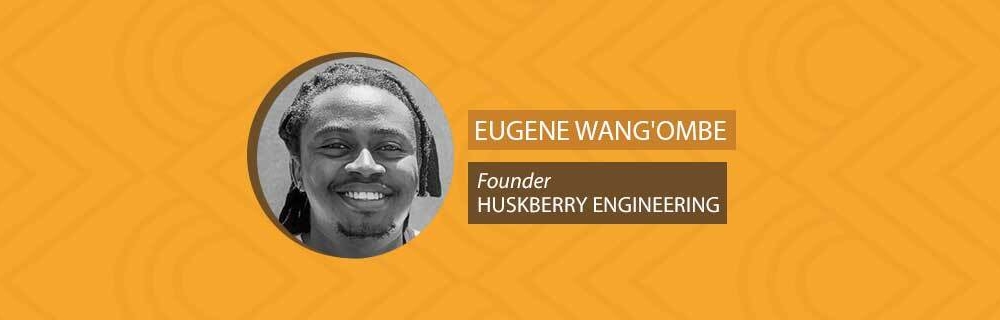
In this episode of The Africa EV Show, we go behind the scenes of African hardware innovation with Eugene Wang’ombe, founder of Husksberry Engineering where we explore the real challenges and strategic choices facing local manufacturers who are building advanced products like electric go-karts from the ground up.
Wang’ombe reveals why China remains the go-to source for critical components—from electric motors and batteries to specialized tooling—and the trade-offs between cost, customizability, and local knowledge transfer.
We also tackle the big questions: Can Kenya ever manufacture a fully local EV? What’s stopping billionaires from investing in local factories? And why is it so hard to find like-minded engineers to build an industrial ecosystem?
If you’re interested in the future of African manufacturing, EV supply chains, and the journey from imported parts to indigenous innovation, this is a conversation you don’t want to miss.
Show Notes:
- The China-Global South Project (CGSP): The Silent Crisis Killing African EV Manufacturing by Njenga Hakeenah
- The China-Global South Project (CGSP): How Chinese EV Makers Are Building a Lead in African Countries by Njenga Hakeenah
- The China-Global South Project: Training Africa’s EV Technicians: How Kenya is Preparing For E-Mobility Future by Njenga Hakeenah
About Eugene Wang’ombe

Eugene Wang’ombe is a motorsport enthusiast and founder of Huskberry Engineering, where he has led efforts to advance high-performance electric powertrain systems in Africa. He designed and built Kenya’s first electric go-kart, a milestone that demonstrated the potential to introduce locally designed electric mobility technologies to wider markets. Over the past four years, he has overseen the development of axial flux electric motors with power densities of up to 10 kW per kilogram, torque multiplication gear units, custom three-phase silicon carbide inverters and lithium-ion battery systems with power densities reaching 2 kW per kilogram. His work has focused on refining components for streamlined manufacturing and scalable deployment. Entirely self-taught in electromagnetics, electronics, and hardware and software engineering, he has applied a hands-on approach to innovation with the goal of building industrial capacity for African manufacturing. His mission is to create an environment where young engineers across the continent can develop and realize new technologies rather than see their ideas constrained by limited domestic production. He also serves as a technical adviser to the University of Nairobi’s first Formula Student team, supporting the design of the group’s electric powertrain system.
Transcript:
NJENGA HAKEENAH: On the Africa EV show, we unpack the real stories behind Africa’s engineering breakthroughs, manufacturing challenges and the global supply chains shaping the continent’s industrial future.
Today’s episode is a unique one because it not only dives into a topic that sits at the heart of modern production, China’s role in African manufacturing, but also gives a preview of how innovators are building solutions in an environment that is difficult to navigate. We will discuss how companies on the continent are navigating the opportunities and trade-offs of sourcing components from the world’s most powerful industrial ecosystem.
Our guest is Eugene Wang’ombe, the founder of Huskberry Engineering, a firm building advanced products by blending local expertise with globally sourced technology here in Kenya. We’ll explore what motivated them to tap into China’s manufacturing might, how they weighed alternatives and why China ultimately stood out. We’ll also look at the supply chain from placing an order to navigating shipping and customs to final assembly on the shop floor back home.
And we’ll ask the questions, the tough ones. What percentage of the final product is really local? What’s the plan to increase domestic content?
And what does that mean for jobs, skills and economic value? For businesses such as Huskberry Engineering, sourcing components locally or from China reshapes cost structures, pricing and competitiveness. And so what are the trade-offs involved?
And finally, we’ll zoom out to the big vision. What would a fully local Huskberry product look like? What milestones need to be hit in tooling, suppliers and workforce training?
And how long until a truly indigenous product becomes a reality? So stay tuned. This conversation isn’t just about components and supply chains.
It’s about strategy, sovereignty and the future of African manufacturing in a world where China still sets the industrial pace. Hello Wangombe and welcome to the Africa EV show.
EUGENE WANG’OMBE: Thank you Njenga Hakeenah.
NJENGA HAKEENAH: You are the founder and an engineer at Huskberry Engineering. Interestingly, not automotive, but software. How did you decide I am going to build this go-kart in Kenya and make it electric actually?
EUGENE WANG’OMBE:How did I decide? It’s purely out of interest. I have a very, very strong interest in electric vehicles, especially for use for sporting purposes. So just as you mentioned, it’s a go-kart. It’s supposed to be used on a track.
It’s supposed to give you excitement. It’s supposed to make your heart pound. And that’s my sole focus when I say that I am actually a powertrain manufacturer, an electric powertrain manufacturer.
So the software bit, I say that’s usually what pays the bills. But on the hardware side of things, in terms of building the go-kart, that’s what keeps my heart pumping.
NJENGA HAKEENAH: Right. It’s a passion project.
EUGENE WANG’OMBE: Yes, it’s a passion project. Hopefully that will be in the hands of everyone in the near future.
NJENGA HAKEENAH: All right. So when it comes to the stuff that you do and it comes to sourcing components from all over the world, we have had this conversation before. And what motivated you to source key components from China for your engineering and manufacturing processes at Huskberry?
EUGENE WANG’OMBE: China is the go-to place. It’s the open market of the world where they display very well-manufactured products for anyone to come and access and purchase them and use them however they want. The pricing is good compared to Europe or America.
And the supplier is always ready and willing to work with you even if you need a custom order, which sometimes is something that I require. Things that I buy off the shelf, such as the electric motor or the battery and the controller that I use for the go-kart, like I said, those are just off the shelf. But if I wanted to develop something custom, I would actually have to speak to a supplier who has the machine that would make the machine for me.
NJENGA HAKEENAH: And I think China is the best place to be for sure. And I have heard that statement from several people who are sourcing from China that I’ve spoken with. And they say that a kind of accessibility, like you can get whoever is applying new stuff on the phone whatever time of the day or night.
Because I think for you as an innovator, lead times are important, right?
EUGENE WANG’OMBE: Yes and no. Sometimes they are, sometimes they’re not. So it really depends on what I am actually looking for.
I spend maybe two months in between purchasing and the product actually arriving to me. So the lead times are not that important for me because the type of technologies that I’m developing are a bit on the edge of the technology. So it doesn’t really matter how long it takes.
It’s more of a learning process for me to be able to gauge this supplier from China or this supplier from Europe will be able to get me my products at a very specific timeframe. And then it also depends on the weight, right? So if you’re shipping heavy things from abroad, it makes more sense to ship them by sea.
Now, if you bring any in by sea, it takes a longer time to arrive to Kenya compared to by air. But you pay a premium if you’re shipping by air and the object that you require is quite heavy. So it really depends, really depends.
NJENGA HAKEENAH: All right. And I think shipping by sea bulk is an advantage. By air, then it becomes a problem because by sea, the more you ship, the cheaper it becomes per component.
By air, it’s weight and then it doesn’t matter.
EUGENE WANG’OMBE: And then it also depends on the key requirement that I’m, or the key problem that I’m trying to solve at the moment. So I could ship something heavy by air just because I need it immediately, right? I need it in two weeks as opposed to two months.
So it’s more of a balance of, whenever I’m thinking about the logistics, it’s more of a balance of how fast do I need it? Or it could be like if I’m putting together a go-kart, I need parts from different suppliers, right? Which means that this supplier will ship in two weeks, this supplier will ship in two months.
So I’m not really in a rush to choose whatever shipping option I have, so.
NJENGA HAKEENAH: All right, that makes a lot of sense. And then what are the most significant logistical or regulatory hurdles you face when you bring components from China into the Kenyan market?
EUGENE WANG’OMBE: I don’t think I face any, surprisingly.
NJENGA HAKEENAH: That is interesting to hear because I just spoke last week with someone and they’re like, my consignment is at the port for like a month and still no hope of getting it released.
EUGENE WANG’OMBE: I think it also has to do with the bulk that I’m bringing in, right? So I also happen to have the skill to manufacture battery packs, for instance. At a time, if I’m bringing batteries, it would be like a two kilowatt equivalent cell or rather two kilowatt total number of cells.
So that would make maybe something like 120 or 260 cells, right? So it’s usually a small amount. So I’m not yet at a point where I’m actually in a commercial space to be bringing in tons and tons of material or components and stuff like that.
So I wouldn’t really get to experience the regulatory or the import or the duty hurdles that anyone else would experience.
NJENGA HAKEENAH: All right. Oh, that is nice. For once, I hear someone who’s like, okay, I’m good in the space that I am in.
But I think such challenges will come when you start scaling, right?
EUGENE WANG’OMBE: Yes, I’m definitely expecting them. And that’s the reason I’m actually mapping out my logistical supply chain map, just to know where to get things, which is very important when you’re manufacturing, how long they’ll take to get to you and how much they cost. Of course, cost is a very huge factor in the decision-making process.
NJENGA HAKEENAH: Absolutely. And when you bring in components from China or Europe, what percentage of final product content, that is parts, modules, assembly remains overseas versus what you do locally? I know you’ve said you also do batteries because that’s a conversation that is really interesting.
But what is done overseas and what is done locally?
EUGENE WANG’OMBE: Initially, I wanted to do a lot of things at home, right here in Kenya. There’s a limit to that dream because a place like China or Russia control vast amounts of neodymium deposits, right? So we can’t make magnets here.
And I wouldn’t even dream of making magnets here because there’s already someone in the East doing that so professionally and doing that so well. So I could order something like custom magnets, for instance, right? That’s a service that would have to be relegated to a Chinese supplier.
There’s a lot of assembly that happens here as opposed to actually making, which is kind of the flip side. One of the questions I’m sure I’m expecting is how much of the product, how much time would it take for the product to actually be completely locally made? I think that’s impossible because these key industry players are countries that have very good expertise in the manufacturing that we don’t have here.
NJENGA HAKEENAH: Is it that we can’t? Because I know many of us are like, why can’t we just do this? I remember growing up and in my childhood for as long as I could perceive things, we used to have buses made here.
We used to have Isuzu’s, I think Mitsubishi, then we have whatever it was, maybe assembly, maybe. But some of that stuff was being done heavily here. Is it that we cannot manufacture?
EUGENE WANG’OMBE: I think there’s a lot of regulatory or political influence on how the manufacturing industry works. Kenya tends to favor imports more than local manufacturing. I have no idea why that is the case.
I’m hoping to change that with hospital engineering, especially on the automotive side. But it’s not like you can’t manufacture. The skill is there.
Every year, thousands of graduates, mechanical, electrical, software, graduate from universities. Some have advanced PhDs or masters and stuff. But where do they actually end up?
Have you ever asked yourself that question? They end up in factories maintaining conveyor belts, for instance, or they may end up maintaining bugs, code to solve for bugs and things like that. Not really building, but just maintaining.
And then the question becomes, what are you really maintaining? It’s mostly old technology, right? Not really building anything.
So I hope to change that with hospital engineering.
NJENGA HAKEENAH: And I think- It’s not that we can’t, we can.
EUGENE WANG’OMBE: We can.
NJENGA HAKEENAH: But I think- Yeah, we can. I think that for every challenge, for every problem that we see, there is somebody who is benefiting from it. Because if we can, then it means that somebody is deliberately holding that down, that we cannot get there yet, right?
That’s my thinking.
EUGENE WANG’OMBE: Yes, I think it makes sense. There’s always a beneficiary to an atrocious situation such as that, because the population in the country is definitely very, very young. So you can imagine these people walking around with ideas that could be potentially in manufacturing, in gaming, in software, in design, all these other very lucrative fields, but they can’t.
They’re stuck dancing on TikTok. Yeah, it’s unfortunate.
NJENGA HAKEENAH: And I know you have mentioned earlier about assembling an authentic and local product, but do you have a timeline or target for increasing local content by shifting production here, which of course, most of it is almost impossible currently. And what do you think would be required to achieve that? I know I have mentioned about somebody benefiting from the inefficiencies.
Do we need to change policy? Do we need to change the politicians? What do we need to achieve that?
EUGENE WANG’OMBE: The second one, definitely, yes. But going back to the first question, tooling is very, very important. In fact, I would say most of the things that I get from China or Europe or America is mostly the tools, not really the final product.
So things like a battery spot welder. For me, I didn’t want to skimp on that process because batteries tend to be very, very sensitive to application of heat during the assembly process. So I went for the best high-end, hobby-grade battery spot welder that I could possibly find.
If I was to tool my factory workshop floor with a spot welder, that’s what I would actually go for. So for local content, I can’t really say there’s a timeline. It really depends on the tools that we have.
You know, we either rise or fall to the level of our tools. If we have less tools locally of course we won’t produce as much. But if we are focusing our engineering efforts on the tools, building the tools, like you asked about building buses like Isuzu and the like, those tend to require huge metal stamping tools, right?
And they’re not cheap. They cost in the order of millions of dollars. Those kinds of investments tend to either be backed by very wealthy people or governments or huge loans, none of which seem to be of interest to a lot of people who have the money in Kenya, which I find very surprising because it’s a very huge gap to actually make more money.
NJENGA HAKEENAH: Yeah.
EUGENE WANG’OMBE: And that’s why I’m actually entering into this endeavor.
NJENGA HAKEENAH: Let’s come back to the cost aspect because when you source from China, of course that affects your cost structure, the product pricing and the competitiveness. Two, if you source locally. So how do you experience challenges in terms of finances or funding when you have to get something from outside of Kenya and comparing the prices if this was available locally?
Like you have spoken about the spot welding machine. If you were to get it locally, what would be the price difference? And how does that force you to restructure your finances?
EUGENE WANG’OMBE: Okay, let’s go back to the example of the spot welder. This is something that full disclosure costs something like $500 landed, meaning the cost of the machine plus the shipping cost, right? And looking at it, it’s a fairly simple device.
It’s just a circuit board with a couple of high current wires and very huge capacitors, all of which can be found, can be locally assembled. If I was to estimate the cost of that, if it were fully locally made, maybe I would say 250, 100, between 150 and $250, which is not so bad for the quality that it gives plus the lifetime of the product, right? So the fact that we’re relying on engineering from different countries, because at the end of the day, when you’re selling a product, the cost of, part of that cost comes to the engineering, the thinking behind actually building it.
It’s not really the manufacturing and the tooling. You know, it’s more of like a lifetime supply, a lifetime guarantee that you can earn from your work, right? So now the cost of labor changes depending on the region, definitely.
So if you’re buying technology from Europe or America, of course it’s gonna be expensive. If you’re buying from China because of their expertise in manufacturing, it’s gonna be a bit cheaper. So China definitely wins in terms of cost and customizability, which is very important, especially if you’re doing prototypes, many, many prototypes.
The cost definitely changes a lot depending on who you’re buying from, right? If you’re going to buy a TV at a mall versus if you’re going to buy a TV on Lutuli Avenue in Nairobi, that’s two very different things. You might get a cost price versus a heavily marked up price by like maybe 20 or 30%, you know?
That’s true.
NJENGA HAKEENAH: And when you look at that aspect and because you’re heavily in R&D as well, are you designing any stuff that you’re telling the Chinese, can you make a prototype for me?
EUGENE WANG’OMBE: Yes, but just the parts, not the entire thing. And the reason for that is because I do want to control how the thing is built and understand how the thing is built before I actually decide, okay, maybe I can send it out to be built or have it manufactured here locally, what kind of machines that I need, for instance. So something like this.
That’s a magnet.
NJENGA HAKEENAH: I was just about to ask about it.
EUGENE WANG’OMBE: This is actually a stator for an electric motor. Yes, the one with the copper coils, right? So, and then the center section, of course, is the bearing spins.
There’s supposed to be a rotor attached over here now with the magnets, right? So for those of your viewers who are astute will notice that this is actually an axial flux topology. Wow.
A radial flux. Please speak English. Axial flux.
So axial flux motors have their magnetic flux running parallel to how the coils are wound, right? And then radial flux basically means it’s a tube inside a tube, right? So the outer tube or the inner tube is the one holding the magnets or is holding the stator.
So it depends on the configuration of the manufacturer and the requirements. Now, something like this is hand-wound, right? So it’s a painstaking process.
Yes, it’s a very painstaking process, but it can be automated. The machine to do some of the automation costs something like $20,000. Like you say, going back to your initial question about can we do the manufacturing here?
Of course, if you have the machines. And if you have the machines, we can also reverse engineer them to figure out how they work and build our own. It’s the same thing Chinese did when they invited Tesla to their market.
Now, Tesla doesn’t have a control that can go to the Chinese manufacturer. Yeah, that’s true.
NJENGA HAKEENAH: So I think what I am getting from that example that you just shared of the motor is that better together. You know, like if guys would come together and say we are investing in these machines or machining complexes whereby we would be building like whatever you had because they are needed. Then it means that beyond looking at what government can do, the private sector can also look at this is what we can do together.
And I think this is where we are failing as a continent, as innovators because everyone is working in a silo.
EUGENE WANG’OMBE: That’s a very huge problem. My peers, I’m sure some of them are watching. This is a special message to you.
There is the tradition to purchase or place your quote unquote investment in land. Very important. If you have a parcel of land, if you’re building it, very important, yes.
It’s very important to have your piece of land. But you can’t all have pieces of land. You might have some 90,000 sitting somewhere that could help me.
This is a selfish request, by the way. That could help me do something very special about advancing the manufacture of something like this, right? Come through.
Let’s bring our heads together. Let’s bring resources together. Let’s sit together in a room for a whole year, two years, three years, thinking long term and come up with something that we can actually bring to market and say it is proudly Kenyan engineered.
It is probably manufactured locally. Even if we’re getting parts from abroad, that doesn’t matter. A market is a market.
You can get tomatoes from Marikiti in Mombasa or you can get tomatoes in the other Marikiti in Nairobi. You know, a market is a market. Yeah, so coming together is very, very, very important.
So as we speak, like I said, I am the engineer of working on the electric motors. I’m the engineer working on the chassis of the vehicle. I’m the engineer working on the suspension side of things.
I’m working on the electronics. I’m working on editing. I’m working on sound.
I’m working on everything. That shouldn’t be our role. That’s the work of like 20 people.
It shouldn’t be the role of one person. And I found it ridiculously and surprisingly hard to actually get people on board to this manufacturing idea because people tend to lean more towards software engineering, which is a very saturated market in Kenya. As much as I am a software engineer and have been for like the last 13 years or so, 13 years or so, there’s a glass ceiling to how far you can get with this, beyond which you’re just earning money, but you’re not really doing much for the economy, apart from injecting more money into it.
But with mechanical engineering, you always have to strive to be better, better than the competitor. You always have to find the cheaper way to do something. And the biggest part is you can hold your product.
You can’t hold a software product.
NJENGA HAKEENAH: No, you can’t. And I think actually this also, like you have challenged everyone. I think for you who is watching and you are in this EV space, remember every time we import, we lose our value.
Our money loses value because it is no longer in our economy. Yes, we have brought in that product, but for as long as you’re paying for it, because even when you bring a car into Kenya, for instance, before you pay back for that car, you already paid whoever gave you the car or sold you the car. But locally, before you get back, before you recoup, it’ll take time.
But imagine if most of that was being done locally. We’d still have an economy that works for us. Again, we go back to governance and leadership.
Now, Eugene Wangombe, are there any trade-offs you’ve accepted such as longer lead times, dependency risks, quality control variations in order to benefit from lower cost?
EUGENE WANG’OMBE: Very, very many. Because it’s not just the physical products that I’ll be working with in terms of importing it, for instance. There’s also the knowledge aspect of it, which is most quite frankly overlooked.
Like when I talk about the knowledge aspect, I mean, if I could walk from, okay, not walk, but get from Kilifi to Nairobi industrial area and find someone who manufactures magnets, I could talk more to them about magnets compared to actually the manufacturing process and learn all these things. So also the knowledge economy is missing. It’s not just, there’s a huge compromise here to importing because you have a finished product and then like it was made by someone.
They might have shown you a video about how it’s made, but they didn’t show you about things, tiny, tiny things like the tolerance you have to consider when, for instance, when you’re bending a wire in a certain way so that it doesn’t crack or introduce fissures into the working of the model. Things like bearing manufacturers, for instance, these bearings, they come from a company called SKF. We don’t, not that I know of, but we don’t have bearing manufacturers here.
You know, something like a bearing means that we have the knowledge on, and we can actually pass it down. We have the knowledge to manufacture these things, how to smooth the balls in a correct way, how to make the grooves, how to seal them, so against dirt and dust and water and things like those. That’s the compromise we make when we import.
We miss out on the knowledge to actually be able to build these things. So even for me, like you said, I’m heavily into R&D, and the reason I’m choosing the longer route to getting something manufactured specifically to my specific needs is so that I can also understand the process to actually make them. I might be able to rely on things like YouTube videos to see how things are made, things like that, but, you know, it beats, that doesn’t, it fades in comparison when you, as compared to like walking into a factory and seeing this thing coming together.
That’s totally different, and that’s the compromise we are making by heavy imports.
NJENGA HAKEENAH: Okay, so because now I’m connecting what you just said to job creation, because if we could do bearings locally, then it means local jobs. It doesn’t matter if it’s 10 or 15 or three. The fact is, it’s benefiting from, you know, that vanishing.
But from this perspective and skills development, how has your sourcing strategy influenced employment in your region? You know, mechanics, assemblers, technicians, logistics, you said you’re handling everything.
EUGENE WANG’OMBE: Yeah, of course.
NJENGA HAKEENAH: You know, funding also plays a huge role in that, right?
EUGENE WANG’OMBE: Yes, yes, funding. Let me start with that question. Funding plays a huge role because at the end of the day, people work for wages.
Some people work for wages, and along this journey, those are the kind of people that I’ve found. I haven’t really found many people who want to learn and actually contribute to building of the industry as opposed to benefiting from an industry that technically doesn’t exist, you know? So if I’m doing everything myself, it means that, first of all, there’s a Kenyan somewhere who’s not learning how to do what I’m doing because they are genuinely depending on me being able to pay them.
Brother, sister, I can’t pay you. I’m also in the R&D phase, and a lot of my money goes into making sure this thing actually comes about. So something like this electric motor I’ve been working on for like three and a half years, right?
It’s just now getting to a place where if I had the funds, I could put this in a car and run. We’re talking about this is a 3D printed model, but on the production level side, we are talking about 100 kilowatts of power in something that weighs 10 kilograms, you know? Now we move from manufacturing the motor, we can go into the power electronics.
There’s a lot of electronics engineers. I have no idea what they are doing, to be honest. I’ve seen some of them flaunting that they can make circuits on TikTok, for instance.
But what do the circuits really do for the economy? We need to be able to think bigger. What’s really buzzing right now?
Of course, it’s in terms of the industry. Of course, it’s the EV market. How can we benefit from learning these things?
So even as we speak, I’ve just started learning to do electronics.
NJENGA HAKEENAH: Ah, nice.
EUGENE WANG’OMBE: I wish I could find someone to actually help me do this, but people say that they wanna get paid. I can’t pay you right now. If you really understand the vision, I can’t really pay you right now.
So I don’t know whether I’ve answered the question. You have.
NJENGA HAKEENAH: Because these perspectives really are wholly dependent on the availability of funds, meaning you can have someone in R&D, you can have an assembler, you can have a technician, you can have a logistician, and all that. But even as you’re trying to work with people, what else are you doing to train local technicians and ensure that they have the skills to support products built from all these components that you’re bringing in?
EUGENE WANG’OMBE: Not much, to be honest. Yes, I do have the skill, and it’s unfortunate that it’s only with me. But I am willing to share it to whoever shows genuine interest in the long-term growth of themselves, of course, first of all, the industry, and the company.
So my company, I’ve put it last on that list because most of the time it starts with self. It starts with, do I have the motivation to want to know what gauge thickness of wire I need to put in an electric motor, or do I just want to do something and call it a day and the next day I do the same thing, call it a day and get paid? There’s a difference between those kind of people.
So I haven’t really found an opportunity to actually sit down with someone, especially on the technical side, because right now I’m in a very technical phase. I haven’t found an opportunity to sit down with someone else who is maybe in the financial engineering side of things, or someone else who’s doing administrative work, right? Come together, because I can train someone to do what I do, for sure.
My skills are very, very, very transferable. But that doesn’t matter if I can’t actually build a company from it. No, it’s very difficult to do this without help.
So like I said, three years plus, four years plus, I’ve been working on an electric motor, working on batteries. Now I’m working on the inverter to actually try and do inverters locally. I’m working on chassis, I’m working on all these things.
But for someone to actually come with me on this journey, that’s the hard part. Because I can assure you, before we get to a point where maybe in two years or one year, I don’t know, luck might change, where we actually have a factory floor as big as like Uchumi Hyper on Gong Road, for instance. Back then, that’s a very, like where were you when all of this was coming up?
Were you just on the sidelines or were you participating in making the thing? So I’m ready to do that work of actually trading. At the moment, I can’t say I’m doing anything to do the training.
I’m just looking for like-minded people at the moment to bring this up together.
NJENGA HAKEENAH: Okay. And I think it all rises and falls on funding. Because again, if you cannot retain someone, they are coming to your office every single day, but basically you cannot pay them, then it means that those limitations also.
Because we also need motivation in terms of it has to pay. China has a unique ecosystem for manufacturing, which they have perfected large scale. There is a mature supplier base.
There is high automation. And all these come with advantages. But on the flip side, what are the risks or limitations of relying on Chinese component suppliers?
EUGENE WANG’OMBE: Wow! It’s a hard question.
NJENGA HAKEENAH: We said we would have hard questions.
EUGENE WANG’OMBE: I think my biggest issue is, as much as I said earlier on that I don’t have any logistical issues, it’s just the time. Time it takes to actually get something to my hands and actually play around with it. What that primarily affects, as I’m in a unique position for the R&D, is the time it takes between ordering a component and actually getting it, I have different ideas in between.
So the part that I ordered becomes obsolete before it even gets to me. Wow. I have so many examples of that inside the room that I’m sitting inside.
Because I may have ordered something out of interest and then learned something about it once I’ve already ordered it and realized that it will not fit my needs. So now about the supply, I don’t have a real problem with reliance on Chinese suppliers. There’s so many who do the same thing, which basically means that there is constant supply.
Maybe the demand is more of the issue at this point. What do you want to build? That’s the question that Chinese will definitely ask you.
What do you want to build? And then once you answer that question, they’ll take you to the right person. I don’t think there will ever be a supply issue with China.
They manufacture chips, they manufacture magnets, copper, they refine lithium, they refine cobalt, anything, anything. So it’s more if you’re feeling some type of way geopolitically about the influence China has on the world, that’s just on you. But if you can benefit from what their expertise, why not take it?
There’s no pride in having a more expensive product that you cannot sell. That makes zero sense. Might as well just go to the person who will make it cheap for you to actually be in the market and exist.
NJENGA HAKEENAH: And it’s interesting because even in our kitchens today, we used to have a lot of British, American branded pressure cookers and things like that. But today you have a Chinese pressure cooker that is outlasting your entire generation. You have used it this year, next year, 10 years down the line, you’re still using it.
And you’re like, wow, okay, so things can happen. But looking ahead, what is your vision for a fully local or fully indigenous product of engineering?
EUGENE WANG’OMBE: Wow. Riskers. I’m into riskers.
To be honest, I’ve never driven one. And the irony is actually the only real risk I’ve driven is the one that I built, which is the electric go-kart. I have built videos of it on my YouTube channel, which is Huskberry Engineering.
You guys can go and check it out as well. But a fully local product would have to have different components from around the world It’s just the idea that comes together locally. Let me tell you something very interesting.
Even the tubes for the steel tubes for the chassis, I can’t get them locally. Because for automotive grade, you actually have to have a very specific composition, chemical composition of the metal for it to be able to bend properly in a crash. Or there’s some other metal that allows the tube to sort of shatter or crack.
But the force that requires to actually deform that tube is actually very high, which basically translates to driver safety. Now, if I went to a company like Doshi or all these steel mills, I forget the other names. They are primarily manufacturing steels for the construction industry, not the automotive industry.
Why? Because you don’t have an automotive industry that requires a certain specific chemical composition of steel. So even that I would have to import from China, which is a shame, to be honest.
So for me, a fully locally realized product would have to come from different parts of the world for it to exist. And for me, that’s a race car, a full on huge race car. We are talking about something that looks the size of a Formula One, for instance.
A Formula One vehicle, but purely electric. It sits on an EV channel. If anyone who is watching by there, if you have good float in your pocket, build a racetrack.
People will come. There’s places like the Rift Valley Circuit. There’s Whistling Morants.
But these are very small circuits. These are like 1.2 kilometers, maybe maximum two kilometers. If you want to build a proper racetrack, go for something like eight plus kilometers, right?
Where people can actually come and test their vehicles, because I would be your number one customer. Where else would I want to push my vehicle? That would allow me in a free manner, you know?
So for the ecosystem to exist, different players have to exist. So if you have the money for the infrastructure for a racetrack, build a racetrack. Because you’re not just gonna build a racetrack.
You’re going to be building a place for vendors to be coming to sell their products when you have racing events. You are going to build a hospital because of course you need an emergency center in case something happens on the racetrack. You’re going to build a lot of intellectual property when it comes to managing disasters, especially around vehicles and EVs.
Because things like, just I digress a bit, but things like battery packs, when they catch fires, they require very special chemicals to put them out. You can’t just pour water on them. You just evaporate.
You can’t pour carbon dioxide. The internal chemical composition is a self-oxidizing reaction. So you can’t pour water on it, it won’t go out.
So being able to map out the technology or the process to deal with such things will come from someone who actually builds the racetrack or someone who actually builds the automotive company. All these things come together. There’s so many industries to be affected by an EV startup.
And I’m talking about a startup that is actually developing its own technology. It’s not like people who are importing, I’m gonna put Rome Electric on the spot here because they say they’re an EV manufacturer, but they’re not. I actually think they’re a financial, they’re a FinTech company.
They’re not even assemblers. They’re a FinTech company. Think about it.
They’re a FinTech company. But what happens when they have an EV fire in the factory? Do they have the necessary processes and who would they talk to?
They’ll talk to the guy who is actually building the car, who is actually building the cars from scratch or the guy who actually knows how to deal with emergencies on a racetrack. So if you have the money, build a racetrack. People will come.
People are always looking for excitement. They travel for miles and miles and kilometers to go for Safari Rally, for instance. Why?
I mean, it’s an entertaining thing. The customer base already exists. So it’s just a matter of you creating more opportunities for them to come to you.
Right? That’s interesting. So all the EV, quote unquote, EV manufacturers, like you at KICC last year, what did you notice?
All of them come from China. No one, there’s nothing locally made. And that’s what I’m trying to change.
Even if it’s relying on the Chinese expertise, I don’t mind that. I don’t mind that at all. But the fact that we have the pride of actually building these things locally and having the knowledge to do that, that’s the pride point.
And of course, that’s the moneymaker. Because understanding the manufacturing process is just as important as selling the product. Right?
You gotta keep your costs as low as possible. And because if I’m thinking about designing an electric motor from scratch, doing the electromagnetic simulations, doing the jaw heating simulations and all that, all those things, it basically means I understand what I’m bringing to the market. So on my TikTok profile, it actually turns out that a lot of border riders are actually suffering because these companies like Roam or I forget the names of the others, ArcRide and yeah, the Spiro, they bring in a vehicle into the market.
They give the riders swapping capabilities. The unfortunate bit is that those batches are not inter-swappable. So you can’t take an ArcRide and put it in a Roam or vice versa.
So they just lock you into their ecosystem, which means that if a battery has been in circulation for a very long time and it is degraded, you will still pay what? 250 shillings for the swap as compared to a brand new battery. Now, if you’re talking about something like regulatory hurdles, that’s the one hurdle that these companies should be able to jump through.
Meaning that all the connectors for the batteries need to be the same. You’re not allowed to have a monopoly on the battery technology. It’s the same way no one has a monopoly on the fuel.
You can go to Rubies, you can go to Total, you can go to, but still get exactly. So that’s the regulatory hurdle.
NJENGA HAKEENAH: Yeah, and I think that actually it’s a road deal for many bike buyers because you never really get to own the battery. Basically, the price you pay for the bike and the battery takes the most of that. Ironically, you never get to own the battery.
And guys, that brings us to the end of today’s conversation, which was an engineering masterclass, you know, spiced up with challenges local companies face in their quest to provide reliable e-mobility. What you’ve just had offers a rare inside look at how engineering firms like Huskberry Engineering navigate the increasingly globalized world of manufacturing and why China continues to play such a defining role in that equation. From sourcing decisions shaped by cost, scale and technical maturity to the complexities of moving parts across borders to the balance between foreign components and local assembly.
Our discussion shows just how deeply strategy and logistics intertwine. We also explored the trade-offs, the hard choices around cost versus dependency, efficiency versus resilience and global reach versus domestic capabilities. And importantly, we heard how sourcing from China isn’t just about importing components.
It’s about influencing job creation, skills development and the long-term vision for building fully local products. As companies like Huskberry Engineering map out their path from reliance to self-reliance, from foreign supply chains to homegrown manufacturing ecosystems, the big question becomes, what does the future of indigenous industry look like in e-mobility? And what milestones must be met to get there?
If today’s episode made you think differently about global supply chains, African industrial capability or the journey from imported innovation to local production, then be sure to share this with someone who might benefit. As always, I am Jenga Hakkina. Thanks for listening.
Don’t forget to subscribe, leave a review and join us next time. Have a nice one.