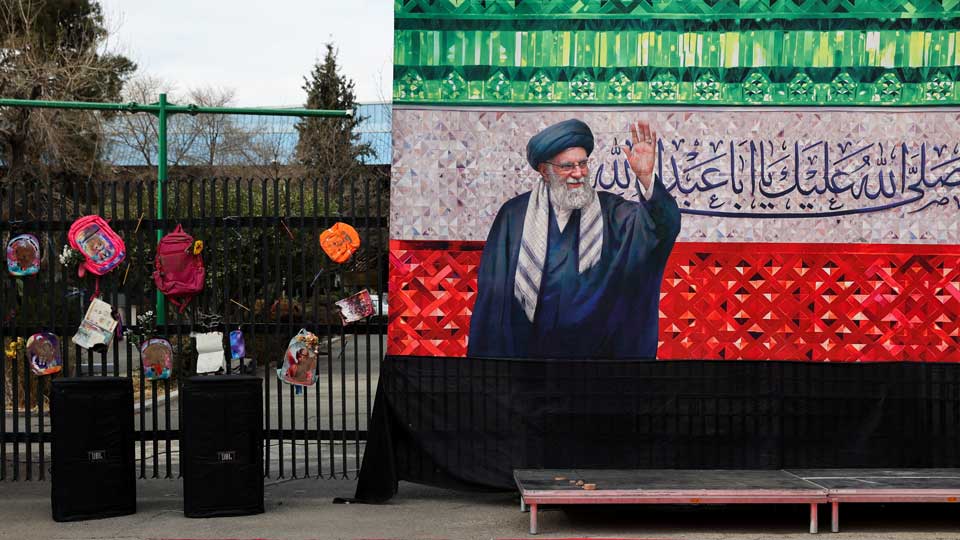
Conservative media outlets and think tank analysts in the United States have sharply criticized China for what they say is Beijing’s failure to support its supposed “allies” in Venezuela and Iran. Their arguments have gained traction on X and other social media platforms, where critics portray China as an unreliable partner that avoids confrontation, especially with the United States.
Other analysts dispute that interpretation. Scholars such as Evan Feigenbaum of the Carnegie Endowment for International Peace argue the criticism rests on a flawed assumption: that China’s relationships with countries like Iran resemble the formal alliance commitments the United States maintains with its partners. In reality, Beijing’s partnerships carry no comparable security guarantees.
In a recent Foreign Policy article, Wang Zichen, deputy secretary-general of the Beijing-based Center for China and Globalization, pushes back against these critiques. He outlines China’s strategic priorities and explains why Beijing is unlikely to offer the kind of security commitments that define U.S. alliances.
Zichen joins Eric to discuss why China structures its global relationships differently—and why Beijing has little intention of acting as a security patron for partners like Iran.
📌 Topics Covered in this Episode
- Why U.S. critics say China is abandoning its partners
- Why China does not treat Iran or Venezuela as formal allies
- The difference between U.S. alliances and Chinese partnerships
- How China’s domestic priorities shape its foreign policy
- Why Beijing avoids acting as a global security guarantor
- What this debate reveals about U.S. and Chinese strategic thinking
Show Notes:
- Foreign Policy: China Won’t Play Security Patron for Iran by Wang Zichen
- Beyond the Ideological: The Iran Question Is All About China by Zineb Riboua
- Foundation for Defense of Democracies: Beijing Offers Tehran Lukewarm Rhetorical Support as Iranian Actions Threaten China’s Oil, Trade Flows by Jack Burnham and Max Meizlish
About Wang Zichen:

Wang Zichen is the Deputy Secretary-General of the Center for China and Globalization (CCG), a non-governmental think tank in Beijing, since October 2022. Before that, he was a senior journalist for over 11 years at China’s state news agency, in China and Europe. Zichen earned a Master’s in Public Policy from the School of Public and International Affairs at Princeton University. He is the founder and editor of the most influential English-language newsletters on current events in China from within China, including Pekingnology and The East is Read.
Transcript:
ERIC OLANDER: Hello, and welcome to another edition of the China Global South podcast, a proud member of the Sinica Podcast Network. I’m Eric Olander. Today, we’re going to come back to the question of the war in the Middle East, and more broadly, China’s reaction not only to the war in Iran, but also to the events that have happened in Venezuela.
And there’s been a lot of discussion in the China-watching space over China’s reaction to it. Now, it’s largely divided into two sides of this, where you’ve got a whole group of people, largely from the United States, that contend that, say, see when China’s, quote-unquote, allies are under attack in Venezuela and Iran, China has failed to come through. There’s also another line that has come up saying that the war in Iran is all about China.
It has nothing to do with Iran, in fact. And then finally, a lot of people are saying, well, this is all about oil, and this has nothing to do with geopolitics. I’m going to run through a little bit of these narratives that we’re having.
And then today, we’re going to be talking with a very prominent Chinese stakeholder who’s going to challenge some of those and give us an alternative view on this. Let’s first start with this idea that the Chinese are not standing up for their allies and their partners, and that they really should be doing more to protect. And the expectation is that the alliances that the United States has with its security partners should be something like what the Chinese are doing.
And here we have the Chinese not following through. Let me play you an extract from a conversation that Jonathan Schanzer, who’s the executive director of the Foundation for the Defense of Democracy, that’s a conservative group in Washington. He had with Craig Singleton, who’s FDD’s China program senior director.
And this will give you a little flavor of this part of the discussion.
SOUNDBITE: What is China doing while the winds of war are clearly blowing in the Middle East? I mean, Iran is a Chinese ally. There are signs that Beijing is ready to send help.
Didn’t happen last time around, did it?
Yeah, China is not a great friend when their friends are in need. So far, it’s been barely a peep out of Beijing. And it was barely a peep out of Beijing when the U.S. ousted Nicolas Maduro in Venezuela, another strategic partner of China. Ultimately, it’s unclear how a potential attack on Iran could impact, I think, China’s equities in the region. They do import about 10% of their crude oil from Iran, and they do it at depressed rates, you know, a below market rate so that they can save money. The reality, though, is that China leans a lot on other suppliers in the Gulf, Russia, and they’ve been building up a strategic stockpile for this very moment.
So right now, it looks like China’s sort of relegated to the superpower sidelines. And we’re going to wait and see if they actually sort of get in the game here.
ERIC OLANDER: So, China doesn’t support its friends. China’s relegated to the superpower sidelines. That, of course, was a discussion that was recorded prior to the U.S.-Israeli attack. But it gives you a sense of where that discussion is. And that’s very prominent. We see that all over Fox News and conservative media.
I also want to play a soundbite here from Zineb Rabuah, who’s a fellow at the Hudson Institute. And she is getting a lot of traction right now in the China discourse space, and particularly in conservative media in the United States. And she makes the case that the Iran strike is really all about China and not about Iran.
SOUNDBITE: I think that there are many things that make Iran very valuable to China. But to summarize, I would say that there are mainly four extremely important ones. The first one is oil.
China takes 1.3 million barrels a day of Iranian crude. And it’s over 80 percent of Iran’s total exports. And it also runs through a shadow network of front companies, relabeled cargos, and so on.
The third reason is that it’s geography. The Belt and Road Initiative, the fact that China receives a lot of its oil to the Strait of Hormuz makes Iran de facto very valuable. And third is really about diversion.
You know, every American carrier group stationed in the Gulf is one that is not positioned off Taiwan. That is very important for China and for Chinese planners. And the one thing that I think Washington does not talk enough about until really yesterday, when Secretary Rubio made it very clear, and it’s that China is building and built the missile program of Iran.
Chinese firms supply the guidance systems. They supplied precision components for really decades. And they do so because a very aggressive Iran is a very useful Iran so that the Chinese can reach out to Gulf countries, which are U.S. allies, and play the mediators. And we’ve seen that with how the Chinese brokered an Iran-Saudi normalization agreement.
ERIC OLANDER: Zineb is somebody who is getting a lot of attention right now. So I would encourage you to check out what she’s saying if you want to understand this part of the discourse. But this question of oil that she mentioned is also very prominent in the discussion between about Iran and China.
Janice Mackey-Frayer, who is an NBC correspondent after last summer’s attack on Iranian nuclear facilities, raised this question of the oil. Again, it’s been prominent in it, and it’s really a core part of the discussion on the China-Iran relationship.
SOUNDBITE: China has good diplomatic ties with Iran. So why has it been keeping such a low profile since U.S. strikes on Iranian nuclear facilities? China issued a statement condemning the U.S. action, but has taken very little action itself. And there’s at least one big factor why. Oil. China is a huge consumer of Iranian oil.
More than 90 percent of the oil that Iran exports comes here to China. And much of that travels through the Strait of Hormuz. That’s the shipping route that Iran has been threatening to shut down since the U.S. strikes on its facilities. If that were to happen, there would be a huge impact for China, but also for Iran. Tehran has been heavily sanctioned by the U.S. and other countries, so it doesn’t have many possible buyers for its oil and lets China have it at a discount. Basically, China is getting a good deal from this current regime.
Experts say China could get its oil elsewhere. It already buys a lot of energy from Russia, also some sanctioned vending trade. And President Trump has suggested maybe China could buy more from the U.S. Secretary of State Marco Rubio has urged Beijing to use its influence to keep the Strait of Hormuz open. China’s Ministry of Foreign Affairs has said that it’s maintained communication with Iranian officials. But what steps they’ve taken isn’t really clear. Typically, when there’s a conflict, China will issue statements.
They’ll call for de-escalation, maybe send humanitarian aid. But ultimately, it’s stability that they want to protect their economic and commercial interests above all else.
ERIC OLANDER: So China is responding very differently than I think a lot of Americans understand. There is a lot of logic and reason behind this. And to understand more about what the Chinese are doing and how they’re doing it, both in response to Venezuela, but also Iran in the Mideast, I encourage everybody to check out a new article in Foreign Policy.
China won’t play security patron for Iran by Wang Zetian, who’s the deputy secretary general at the Center for China and Globalization, which is a non-governmental think tank based in Beijing. And he’s also the man behind the indispensable Pakenology email newsletter. Zichen, thank you so much for joining us.
Wonderful to have you on the program after many, many years of following your work.
WANG ZICHEN: Oh, thank you for having me, Eric. It’s such a pleasure. And let me also say I’m a big fan of your work.
And ever from your side was the China-Africa project. You’ve been doing wonderful work.
ERIC OLANDER: Thank you. It’s been a long time. Well, let’s start right away with what you heard these arguments that have been put forth by the Foundation for the Defense of Democracy, by Zineb Reboua, but also in mainstream media like NBC News.
China is interested in oil. China is not an ally or not fulfilling its security partnerships with these countries. It’s not performing the actions a normal ally would take.
That’s what your Foreign Policy article tried to address. You said that Beijing has never organized power quite that way. Explain to us why China is responding the way it has.
And why is it that there’s a gap in understanding, in your view, between how people in the West or in the United States are perceiving it and how, say, Chinese policymakers perceive it?
WANG ZICHEN: Well, I think for many Western analysts, China’s response to the war in Iran seems to confirm what they think is a familiar verdict that Beijing is an unreliable friend. It buys Iranian oil, denounces unilateral military action, calls for restraint, and then stops short of doing what they believe a great power should do for a partner under pressure, under military attack, come to its aid militarily, either directly or through other means. But I think this is not how Beijing structures its foreign policy.
Again, the Western strategists expect China to behave like the United States, as if the model of U.S. behavior is a template. And when China does not behave like the United States, they conclude that it is a Chinese strategic failure rather than a deliberate choice and that China has been put back on its heels. I think it’s fair to say Beijing has increasingly adopted some elements of the U.S. posture, including enabling itself to impose economic sanctions. But there is very little that suggests it was ever going to be just like another United States, especially when it comes to security interests. So when analysts refer to Iran or Venezuela as a Chinese, quote unquote, ally, the word ally is doing a very heavy job here. And since the Chinese call them partnerships, it’s different from Washington’s alliances.
It carries no presumption of obligation or binding security commitment. China does have one such security arrangement, and it is with the DPRK or North Korea, very close to the Chinese border, on the Chinese border, actually. But when it comes to other countries, of course, Beijing doesn’t want to see wars, doesn’t want to see military conflicts.
But that does not automatically translate to, you know, Beijing will send arms to Iran or will send arms to Venezuela. You actually mentioned a little bit at the very beginning about the Hudson analyst. I think the article got 1.5 million views on X Twitter. Yes, but I think yesterday or the day before yesterday, when the Secretary of War, Pete Hexas, was asked in a televised press conference, there was a journalist asking him, what’s your message to Russia and China? I think the response was quite clear from the Secretary of War. Like, I don’t have a message for them.
They are not a factor here. Our issue is not with them. So on one hand, you have someone who is actually executing this war, saying this has nothing to do with China.
And I think President Trump actually said, well, quite bizarrely, that he thinks he was doing a favor for China. But on the other hand, we do have, you know, quote unquote, grand strategists saying this is all about China. And that is just very strange.
ERIC OLANDER: Yeah, that’s a very big part of the discussion online. And again, Zineb Raboud’s piece got millions of views. And so that really shaped a lot of the discourse.
Evan Feigenbaum, who’s the vice president of studies over at the Carnegie Endowment for International Peace, was getting increasingly frustrated on X as well and started appearing in the media. And he wrote something very similar to what you’ve said. He said, and I’m going to quote here, and like to get your reaction.
He said, in my view, too many commentators lean into geopolitical terms like “ ally and “ axis and miss China’s longer game. China’s approach to the Middle East, Latin America, and other regions is more akin to the market strategy of portfolio diversification. It avoids binding security agreements, viewing them as a vulnerability that could signal weakness and lead to entrapment.
Do you think that Evan Feigenbaum has it right? Or is he off base as well?
WANG ZICHEN: Well, I think that sounds very right. And, you know, he runs Carnegie and he was a senior administration official. And I think his stakes, actually, I think I put in my foreign policy piece before his piece in his Endowment website came out.
But when I read it, you know, I feel much more confident, actually, because I think his take is very accurate. Again, I think people, a lot of analysts in the West tend to underestimate, like, these very public Chinese statements. Beijing openly says, like, domestic priorities come first.
Xi Jinping has said more than once that, you know, the number one job for the Communist Party of China is to increase, to help, to improve the living standards of the Chinese laobaixing, of the Chinese people. However powerful China has become, it remains preoccupied with internal modernization, reviving demand, creating jobs, managing debt, coping with all sorts of pressure, sustaining technology, upgrading and preserving social stability. The foreign policy of China is judged primarily by whether it helps create a workable, facilitating external environment for domestic goals, such as stable access to markets or technology.
China just doesn’t take up open-ended military liabilities for distant partners. That, you know, is not on the priority. And also, I think, secondly, and this is also the point that the Chinese government, the Communist Party of China, has been making, it says, you know, because China was invaded, you know, coerced or humiliated from 1840 to the 20th century.
So a country without experience is less likely to romanticize the idea that, you know, strong states should travel abroad to reorder weaker ones by force. I know in the West, especially in the China watching space, this is often dismissed as propaganda. But basically, that’s what the Chinese government or the Communist Party of China tells the Chinese people and puts in the Chinese school textbooks.
And I think the historical record broadly fits that instinct. The only example I can come up with is perhaps, you know, in the Korean War, which is in the 1950s, where China used force to defend a third country. And, you know, North Korea is in Northeast Asia.
And so, you know, China’s strategic priority is still within its neighborhood. And thirdly, probably I’m going on for too long, but I think we have to put in this, that the Chinese have been observing the United States from the Iraq War to Afghanistan. The Chinese have spent decades watching Washington launch war after war and their struggle to translate, of course, battlefield superiority into durable political outcomes.
The lesson that China takes, and it is printed in Chinese newspapers, repeated on, you know, on Chinese social media, is that, of course, the U.S. military force is very good. That force is not irrelevant. But the use of force often fails to produce an order that is good for the United States.
And most of the time, it’s bad for everyone, especially in the region. Military power can destroy an old order, but it cannot reliably build a new, legitimate one. So I think in the Chinese eyes, the U.S. recent military, you know, not that recent, maybe for 20 years now, it is a cautionary tale. It’s a lot of times it’s, and also I think it has become increasingly clear since Trump came to office that this is one big factor for the rise of MAGA, of the relatively right-wing of the Republicans. It is taking a toll on the American people. And this is not something to celebrate.
ERIC OLANDER: No, no. So you talked about how DPRK, North Korea, is pretty much the only formal ally that China has. And that was the example that you gave of when China intervened militarily.
But under Mao’s era, he was sending weapons to Africa and supporting anti-colonial movements. The Chinese were actively aligned with the Soviets in Vietnam in providing Ho Chi Minh with weapons as well. I mean, so the Chinese do have a history of intervening in other countries.
It’s an older history, but it’s not in the contemporary era. But how does that reconcile with what you’re saying?
WANG ZICHEN: I think one of the hallmarks, one of the biggest symbols of China’s reform and opening up, which started in the 1970s, is what the Chinese term is called export revolutions. So that basically stopped. I think there is a widely circulated anecdote about the then Supreme Leader Deng Xiaoping meeting with Lee Kuan Yew of Singapore, where Lee Kuan Yew told Deng that, you know, you need to stop exporting this revolution in Southeast Asia.
And China stopped doing that. I think there is actually video footage of the current Chinese top leader when he was the vice president. He was speaking to some Chinese overseas students, I think.
He was also saying that, you know, China doesn’t export revolution or hunger. Why does the West have such a big problem with China? I think this has been ingrained in Chinese behavior and mindset since at least the 1970s.
Well, of course, the Chinese, the Iranians, the Venezuelans, the Cubans, and a lot of other countries in the global South share, I would say, varying levels of resistance to the behavior of the United States. On that front, it is true. But it doesn’t automatically translate to, you know, Chinese military aid.
And there are just so many other things that are happening, including inside China. And also, I think a lot of commentators, especially in the United States and maybe perhaps on the conservative side, they now think, you know, I think there was this op-ed, there was this column in the Wall Street Journal, whose opinion page is known to be very conservative. Basically, the title of the column was, Hi, Xi Jinping, are you not entertained?
And then went on to brag about the professionalism and the precision of the U.S. military. And come on, this is a strategic failure of the United States, launching another war without a domestic due process and, you know, not knowing about the day after scenario.
ERIC OLANDER: And that’s nothing new. I mean, we launched the war in Iraq without a day two strategy. In fact, even going all the way back to the Vietnam War, the Americans said they would be home by Christmas.
And that was: this was going to be a quick, easy in-and-out. And that lasted more than a decade. So there is a long history of the United States not having day two strategies there.
But when we talk about this idea, I think in the United States there’s some confusion because we hear about China as the most formidable peer competitor the United States has ever had. So that then brings us back to the Soviets. And the Soviets did do alliance protection.
They did have a bloc. They did do the kinds of things that the Americans are suggesting the Chinese should do today. So I think those are the muscle memories that are being triggered in the United States that, if, in fact, China is the peer competitor that everybody says it is.
Well, the last time we faced that, it was the Soviets. This is what they did. So China should be doing the same thing.
That’s where I think this is coming from on the U.S. side.
WANG ZICHEN: Well, you know, the strange thing and also interestingly is that the Chinese have been openly broadcasting this message for years. It wants peace. It wants stability.
It doesn’t want to get involved. And President Xi Jinping told, I think, President Joe Biden and perhaps also President Trump repeatedly, we don’t want to basically kick the U.S. off the world stage. And China says it doesn’t want to become the second United States.
It wants to become a different part of a different power with just different behavior. And a lot of times it is just dismissed as propaganda, like it’s that, you know, China is going to end up like the United States, no matter what, and no matter what China says. But this is not enough willingness to actually look into the Chinese culture, the Chinese domestic discussions, not into how China sees the world based on its own internal experience.
And I should also add that if you look at Chinese domestic discussions, especially on social media, that’s an important way, an important lens. There has always been a lot of pushback domestically in China against the Chinese government on committing to too much aid to its partners, even to the global south. A large number of the population here domestically believe that we’re still poor, like China’s GDP per capita is still like number 70 in the world.
It’s only 13,000 U.S. dollars. It’s still like a tiny step away from the high-income threshold. People still have to pay for medical care.
The insurance is now more robust than in the past, but people still have to pay. A lot of domestic troubles. There is not a vibrant Chinese domestic lobby to get involved overseas, no.
ERIC OLANDER: Well, and interestingly enough, some of the views on WeChat are far more aggressive than those of the Chinese government, which does say that the Chinese should go militarily to intervene in these countries. It’s interesting that there’s social media pressure in China to be more assertive, and the Chinese government, in this case, is a little more conservative. But you say that there’s a potentially very dangerous misreading here.
Again, I assume you’re talking about these folks in the U.S. The idea that Chinese restraint means that Chinese interests are fair game. This certainly comes up in the question of the Panama Canal. Now there’s talk about the Chiang Kai-shek port in Peru, and the idea that the United States is targeting specific commercial interests of the Chinese, which could potentially provoke a backlash.
WANG ZICHEN: I think there is a difference between the United States attacking a third country, which is widely considered, including in China, as a very good political friend. But I think it would be different if China had legitimate commercial interests in a third country that doesn’t have a military factor, that doesn’t have a military part in that. And then the U.S. will somehow seize that asset, force the Chinese commercial player out of the place, or pressure it in some other way. I think there would be a difference between that. For example, in the case of the Panamanian ports you mentioned, they were first leased by a Hong Kong-based firm run by a very large, legendary Hong Kong investor. But that firm is known to have very icy relationships with Beijing.
It’s publicly known, it’s in papers in Hong Kong. And then the U.S. somehow mistakes that private company leasing of the ports for some sort of Chinese strategic game and now has forced Panama to kick them out. And even before trying to sell those ports, the Hong Kong firm didn’t even inform Beijing, which, again, provoked Beijing’s anger.
ERIC OLANDER: Beijing was very upset about that, that CK Hutchinson went on their own.
WANG ZICHEN: Exactly. It’s plain as day that there is no strategic coordination between that firm and China. And now two other very prominent shipping firms are taking the place of CK Hutchinson.
And yesterday, China’s Ministry of Transportation actually invited those two foreign shipping firms to Beijing for tea. And I think Beijing is not going to sit idle when this sort of thing happens. And especially in Chile and in other South American countries, yes, the United States is apparently asserting its dominance in the Western Hemisphere.
And I think the Chinese recognize that. It’s the backyard of the United States. And the capabilities of China is limited, especially in that part of the world.
I don’t think you will see the Chinese sending aircraft carriers to that part of the region in the short term. But still, the United States needs to draw a line and make a distinction between, let’s say, projects that could have dual use. But you’ve got to admit that there are still just commercial money-making businesses that are not primed to target the United States from a security lens.
ERIC OLANDER: But how do you respond to this criticism that a lot of people on Capitol Hill and in the U.S., kind of more on the conservative side, but you know, in the U.S., being skeptical of China is really one of the few bipartisan issues that we have. But they say that this dual-use question that you just raised, that the Chinese have made all the Belt and Road ports around the world accessible to PLA Navy ships, in terms of the specifications. That is what they use as the justification for the concern that China does, in fact, have a grander ambition to militarize some of these Belt and Road investments.
What’s your response to that?
WANG ZICHEN: First, you are very accurate. You know, you are trying to say based on the specifications. Because if we really look at the track record, I think the poster boy, you know, whether it’s a dead trap or it’s the Belt and Road Initiative, is important in Sri Lanka.
ERIC OLANDER: The Hambandota port.
WANG ZICHEN: Yeah, exactly. And the Chinese, like a survey ship, which is not a battleship, tried to dock there. And it has to ask for approval from the Sri Lankan government.
And somehow in that region, the Sri Lankan government, at least at the time, had to ask for Indian approval. And there was a back and forth. And then, finally, like the Chinese survey ship was allowed to dock at the port, which was theoretically leased by China for 99 years, with 70 percent ownership of, I think, China Merchant Shipping Estates, around a shipping giant.
But when it docked on that port, it was ordered to basically shut down all its survey equipment. Then, when that ship left.
ERIC OLANDER: Well, because they were concerned it was a spy ship. The concern was that it was an intelligence-gathering ship, not a survey ship.
WANG ZICHEN: Yeah. And after the ship left, I think Sri Lanka imposed a one-year moratorium on all Navy ships entering its ports. And that is Asia.
That is very close to China. And that is a Chinese state-run company leasing a port. And even on that, the Chinese were unable to translate the operation of that port into facilitating an easy docking of a Chinese ship over there.
Not to mention other prominent examples. We need to stop theorizing and strategizing in our minds. We need to look at real-world examples.
The Chinese are really restrained, and it is also restrained by its lack of, I guess, diplomatic muscle. But you put it another way, it’s respect for another country’s sovereignty and self-decision-making.
ERIC OLANDER: But one of the points that you raised in the article as well, and this is one of the comments that I make in this discussion, is that even if the Chinese wanted to militarily intervene in Venezuela to support Venezuela or Iran, it doesn’t have the capacity to do that. Yes, it has the largest Navy in the world, but that Navy is primarily designed to operate in the first and second island chains here in the Western Pacific, in Asia. It does not have the command-and-control capacity to project power into the Persian Gulf for an extended period of time, for example.
You bring up this capacity issue. Can you expand on that a little bit?
WANG ZICHEN: Yeah, I think one should be fair. You know, on one thing, I think like capacity and also intentions, they are often treated as something different. That is why I also raised the issue of capacity.
And I totally agree with what you described. In the eyes of the Chinese mainland, what comes first? Well, Taiwan comes first.
Taiwan is seen as a domestic issue. It’s just off the southeast coast of Fujian, of Zhejiang province. And it’s an unresolved issue from the 1950s Chinese Civil War.
And the Chinese believe that the U.S. maintains military bases and deployments in the first island chain, their neighbors. So to realize national reunification, or at the very least, to deter formal Taiwan independence and protect Chinese interests, that’s what the Chinese Navy, what the Chinese Air Force are doing. That’s what their intention is.
And China has begun, and it is in the process of a massive military buildup. But that’s fairly recent. And it is commensurate with China being the second largest global economy and has increasingly more interest to defend.
But one has to make a judgment, when it comes to military power, the U.S. is still far superior in its naval and expeditionary forces. And that takes training, takes a lot of real exercises. And allow me to go back to that Wall Street Journal opinion column.
It openly mocks that the Chinese, like that American columnist, basically said, well, the PLA hasn’t fired a gun for many decades, while the U.S. beats up a guy every few years. I was like, do you think that is a good example for the United States? Do you think the PLA should just beat up a country every few years?
Come on, it’s just crazy. And I really have to say something about all these war videos put up by the White House accounts or other Department of War accounts to beautify, to glorify the violence, the deaths. It’s unimaginable.
It’s crazy.
ERIC OLANDER: Yeah, but this is unusual even for Americans. So, a lot of Americans are also struggling to understand this. You know, this discussion that you and these conservative folks in the U.S. have been having on Iran and Venezuela and China’s role in it reminds me of Susan Shirk’s book. She’s a professor at UC San Diego, and she wrote a book about China called Fragile Superpower.
WANG ZICHEN: Overreach.
ERIC OLANDER: Well, she wrote Overreach was her later one, but the earlier one was Fragile Superpower. And the joke is that, you know, the Americans said, what, China’s fragile? And then the Chinese said, wait, what, we’re a superpower?
Both sides kind of misreading each other on this. And this is what it feels like, this discussion that we’re seeing on X right now and in the discourse where, again, a lot of conservatives in the United States looking at what they perceive as failures of the Chinese. And what you’re articulating is that no, and Evan Feigenbaum as well, and a number of other people saying, no, these are not failures.
This is actually part of the plan and the design. Thank you so much for taking the time to join us and to explain this. It’s really a treat for us to be able to have again.
So few Chinese stakeholders step up and have these kinds of conversations. So we’re hoping that you’ll be able to join us again and to continue this discussion. The article is China won’t play security patron for Iran.
It’s in Foreign Policy magazine. I will put a link to it in the show notes. Zichen Wang is the deputy secretary general at the Center for China and Globalization, an NGO think tank based in Beijing.
And also, again, if you do not follow Pekingology, I highly recommend it. I will put a link to the Substack as well, there, in the show notes. So thank you so much for joining us.
WANG ZICHEN: Thank you so much. It’s been a very good pleasure. And I look forward to appearing here again.
ERIC OLANDER: Yes, wonderful. Well, we’ll be back again next week with another episode of the China Global South podcast. If you’d like to support the work that we’re doing, have great conversations with people like Zichen, and bring all sides of the issue.
This is really what we try to do: provide fact-based analysis on this from both the conservative side in the US, the Zichen, and every point in between. Go to ChinaGlobalSouth.com. And then if you want to sign up for a very, very useful, practical, action-packed, and information-filled newsletter and website, really, there’s no site like it anywhere in the world.
Go to ChinaGlobalSouth.com slash subscribe. And if you are a student or a teacher, don’t forget you get half off. Email me Eric at ChinaGlobalSouth.com.
So for the entire team at CGSP around the world, thank you so much for listening and for watching.