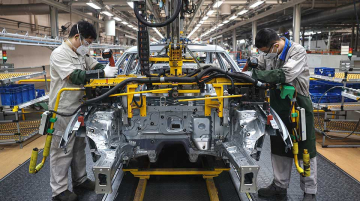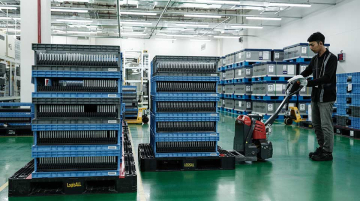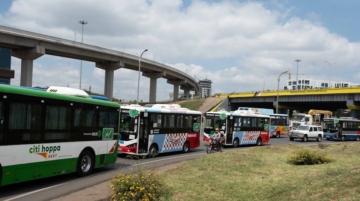
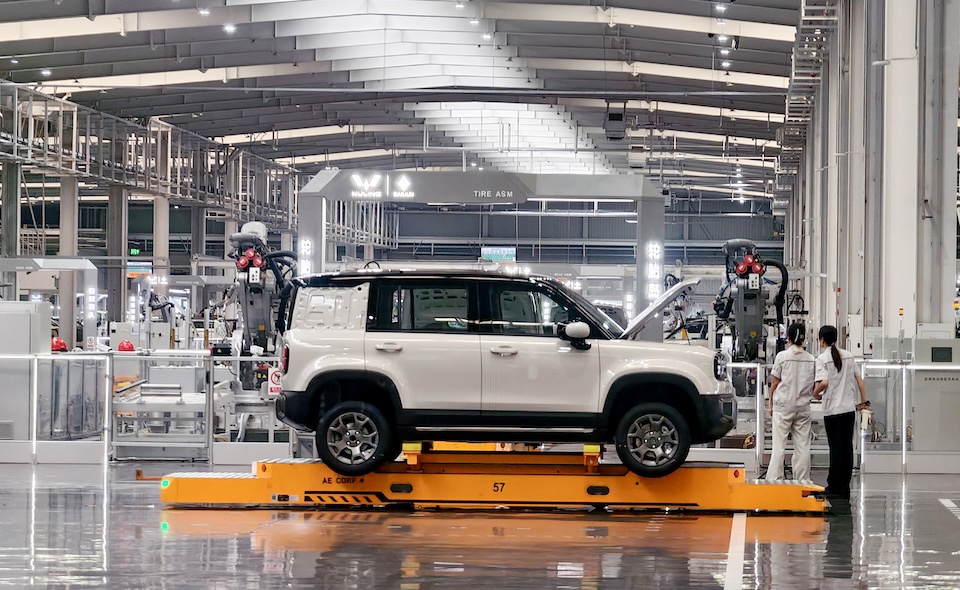

It is evident that Africa’s electric mobility transition is not happening in a linear and predictable way and it is more than just about importing new EVs.
In addition to converting existing vehicles, building local systems, and using data to make mobility work, mobility solutions in many African countries are defaulting to the basics- turning to what is available to build what is needed. The only deviation is that Chinese EV tech is employed in creating these solutions, which are unconventional by many world standards.
In this episode of The Africa EV Show, Arnold Mwangakala, founder of Smart Haven Tanzania, breaks down how lessons from China’s EV ecosystem, from supply chains to battery systems, can be adapted to not only Tanzania but African realities.
📌 Topics Covered in this Episode
- Why EV conversion (motorcycles & three-wheelers) is leading adoption
- How battery swapping is solving range and charging challenges
- The role of IoT and data in financing and scaling EV businesses
- Lessons from China’s manufacturing and supply chain dominance
- What it will take for Africa to build its own EV ecosystem
Show Notes:
- The China Global South Project: Cars May be Last to Electrify in Uganda, Kenya and Tanzania by Njenga Hakeenah
- The Progress Playbook: Inside East Africa’s Bold Electric Vehicle Push by Joseph Maina
- The China Global South Project: Tanzanian Startup’s Dual Approach With China’s Geely, Dongfeng to Accelerate EV Adoption by Njenga Hakeenah
About Arnold Mwangakala:

Arnold Mwangakala is an EV entrepreneur and clean mobility advocate based in Dar es Salaam, Tanzania. Through Smart Haven Tanzania, he is working to accelerate electric vehicle adoption across East Africa with a focus on the commercial infrastructure, supply chains, and connected systems that make the transition viable at scale. With a background spanning design, full-stack development, and strategic innovation, Mwangakala brings a rare combination of technical and systems thinking to one of the region’s most important transitions. He has built his own electric Bajaj prototype, written extensively on East Africa’s EV landscape, and has spent years researching the real barriers to adoption- from financing models and local assembly to battery swapping- to last-mile electric transport. A key part of his work centres on IoT and connected mobility systems. He argues that real-time data on tracking batteries, vehicles, and charging infrastructure is not just a feature but the foundation of a viable EV business model.
Transcript:
NJENGA HAKEENAH: There’s a version of Africa’s electric mobility story that gets told in headlines. It’s about shiny new cars, big announcements and ambitious targets. But on the ground, the real story looks very different.
It’s happening in workshops, in informal garages, in small assembly plants, and increasingly in lines of code tracking batteries, vehicles and charging systems in real time. Because here’s the thing, Africa’s transition will not fully start with brand new electric cars rolling off ships. It started with converting the motorcycles and three-wheelers already on the road and connecting them to smart systems that make them viable businesses.
Today’s guest, Arnold Mwangakana, sits right at the intersection of all of that. At Smart Haven, Tanzania, he’s not just thinking about electric vehicles only or products only. He is thinking of the systems, how they are built, how they are financed, how they attract and most importantly, how they actually work in African conditions.
He spent time studying China’s EV ecosystem approach, where scale, supply chains and speed have transformed the industry. And now we are asking the tougher question. What does it take to translate those lessons into places like Tanzania, where the market realities are completely different?
This is a conversation about what it actually takes to make electric mobility work in Africa, in practice. Welcome Mwangakana and it’s very good to have you shortly after your trip to China.
ARNOLD MWANGAKALA: Hello Njenga. Thank you for having me.
NJENGA HAKEENAH: It’s very good to have you, sir. And you’re with Smart Haven. Probably before we get into the conversation, you can just give us a brief, you know, intro and of your company, Smart Haven, Tanzania.
ARNOLD MWANGAKALA: So Smart Haven, we are an IoT company. So we deal with IoT in all skills. So from offices to homes to vehicles.
So we’re talking about security, tracking them and surveillance in general. So this is what actually helped me transition towards electric vehicles because I was trying to come up with a product and I had to import a sample and test it out, see how we can fit this product into this vehicle. And I’m not carried away, you can see.
NJENGA HAKEENAH: Alright. And when you talk about importing a sample, where did you import that from?
ARNOLD MWANGAKALA: So we imported it from China, like everyone else does. And we had a lot of lessons there. A lot of lessons were learned through that process until the vehicle was finally received here.
NJENGA HAKEENAH: Okay. And we’ve discussed a lot about, you know, why most people are importing from China. And the most that I’ve gotten from as a main response is that they are very responsive.
ARNOLD MWANGAKALA: Yes. So China, apart from being very responsive, is also the scale at which they have established their EV industry. So they make everything from two wheelers, three wheelers, they even make cargo vans, they make tricycles, cargo tricycles.
So they make everything, which ironically, we also needed over here. We kind of use the same thing. Yeah, so that’s why I say it’s the best option to get from China.
NJENGA HAKEENAH: All right. So the scale is one of the biggest. But our conversation today is that you’ve closely followed China’s EV scale and supply chains, where millions of vehicles and battery systems are produced every year.
What specific lessons from China’s approach, especially in batteries, components, sourcing and manufacturing, do you think Tanzania can realistically adopt and what needs to be adapted for local conditions?
ARNOLD MWANGAKALA: So what I saw in China was, as I said, the scale and the scale is I’m talking scale at every level. So from the smallest workshops to the big factories, everyone is trying to do what they can at their own level. And what I saw, which is the biggest lesson that we can take and also hopefully implement is this.
It’s almost like an obsession to make everything in-house. Like you make what you can in-house. So the small workshops, you can find that they’re making the motors there.
They’re assembling the batteries. So they’re making the whole thing from scratch. They just get sales and assemble them into a battery and then put it into the vehicle.
So this tends to drive the price very low. So I think if we want to make our own market be some sort of affordable to people, I think this is the right step we should take. Try to make everything ourselves.
We cannot do this overnight, but it’s the right step to take.
NJENGA HAKEENAH: And I think it is very possible because the most complex is refining the resources for batteries, raw materials for batteries. And Zimbabwe has already started refining lithium. And I think if we can just accelerate that and replicate it across the continent, then it would be something that probably we can say can bring down the cost of the vehicles that we manage to produce.
But it’s going to take time. Like you said, China has perfected this over like two decades. And so they have a monopoly.
How long that monopoly lasts is dependent on how fast others outside of China innovate and build their own systems, right?
ARNOLD MWANGAKALA: Yes, yes, for sure.
NJENGA HAKEENAH: All right. You have argued that Africa’s transition will likely start with two and three wheelers and even retrofitting existing vehicles. How do you see this conversation, conversion kits, especially those connected with smart data systems, competing with fully imported Chinese electric vehicles in terms of cost, reliability and scalability?
So in terms of like fully built units versus those which are locally assembled or built.
ARNOLD MWANGAKALA: So when we talk about easy adoption in Africa, especially in our context, East Africa, one of the many barriers is the upfront cost. So when you are importing a new vehicle, you’re actually importing like two main components which carry the ultimate cost. One is the chassis and second is the battery.
Now, when we do conversion, we’re taking out one of those two things, which is just the chassis. So we’re just doing a bit of modification to it. And we’re going to fit now the motor and the battery and some other few components.
So once you take that chassis cost out, we’re just left with the battery. So in the end, it becomes a lot cheaper for a person to transition to EV than to buy a fully new EV. And this is actually one of our core philosophies at Smart Haven is that we try to do like, how do I call it, prolonging the life cycle of an asset.
So let’s say you have a petrol bike today, you use it for six years, instead of discarding it or just having it lie around like scrap metal, we can extend that asset’s life by now changing it to an EV so it can last for many more years. So that’s what we’re trying to do.
NJENGA HAKEENAH: All right, and when you talk about converting vehicles, the recycling aspect comes in or reuse aspect comes in. But are the costs worth it in terms of if I have to replace a battery, well, I have to buy a new battery to put in my converted vehicle. And if I buy a new vehicle, are the costs really worth it having or doing a conversion instead of buying a new vehicle?
ARNOLD MWANGAKALA: Yes, yes. So the cost is worth it because in the end, you will end up with something which is much more similar to the other. It’s just that you have an old chassis, it’s just maybe your engine is now starting to wear out, but the chassis is fine.
So once you just swap out the engine for the motors and you put on the battery, you just end up with the same thing as a new EV in terms of the practicability, the practicality and the use and also the life cycle of the vehicles will just be the same as a newly imported bike. Maybe what you can’t have is just like the bells and whistles, like, you know, these new EV bikes have this certain style, yours would just be like a standard bike, but you could have the same capability as the new bike.
NJENGA HAKEENAH: Reliability and scalability, how would you compare?
ARNOLD MWANGAKALA: So reliability comes down to the quality of the work, which is what we are also trying to do, we are trying to partner. We’re actually talking to one of the big universities, so we’re trying to make a product that is reliable and scalability, I just think it’s a very small issue. It’s just an issue of convincing people to convert because we have millions of these vehicles already on the road which are running on petrol.
So once everyone is just ready to convert, then it’s just an issue of now implementing it at that scale.
NJENGA HAKEENAH: Alright, alright. And in Tanzania, I know I have seen a number of vehicles that have been converted, Land Rovers, Land Cruisers that are used in the tourism sector. Have you converted any four-wheelers or are you just doing bikes and three-wheelers?
ARNOLD MWANGAKALA: So we’re currently just doing two and three-wheelers because first it’s easy and second for the skill set that we currently have, it’s something that’s easy to adapt to, it’s easy to teach someone. Once we get that locked in, then now maybe we can look at other types of vehicles. I know there’s a company in Arusha that’s doing their Land Cruisers and Land Rovers, but you can see their scale, it’s a very capital-intensive operation over there.
NJENGA HAKEENAH: All right. And what is the response like when I, as a bike rider, bring in my bike and it is converted, what is the response you’re getting from these riders?
ARNOLD MWANGAKALA: So the response, the first response, the immediate response is the cost savings, because you know, an EV bike is very, it’s easy to maintain, there’s a lot of fuel parts, there’s a lot of parts, you just need to charge it and just do the other basic maintenance. Like the change tires, the valve goes out, you change it, but you’re omitting the oil changes, spark plug replacement. So all of that tends to add up into income being saved for the driver.
So instead of all of that going into refueling and changing all these parts, it’s retained to the driver. So that’s the immediate response. The second response that we are trying to also make it a bit more good for the drivers is now the battery.
Because you know, right now, with the current technology that we have, battery swapping is the way to go so that we can make it more competitive with refueling at the gas station. Since there’s a few number of swap stations, and secondly, they’re all standardized. So it’s a bit like everyone is trying to do their own thing.
So we are trying to see a way of how we can get all these things standardized. So it’s like you’re going from petrol station A, but you can also refuel at petrol station B. We’re trying to bring that same experience now to the EV side.
Like you can swap at station A or swap at station B. Just depends on which station it goes to.
NJENGA HAKEENAH: Okay. Sorry, but if you’re trying to create a universality, then it means that you’re working with other partners, right?
ARNOLD MWANGAKALA: So what we’re trying to do is work with, like I said, we’re trying to work with universities to build that awareness of why this is important and why it should be implemented like this. So then it can now spread out to the other players. Okay.
NJENGA HAKEENAH: All right. Then that helps. A big part of your work involves linking Chinese suppliers with African operators or Tanzanian founders like yourself.
What are the biggest misunderstandings or risks on both sides, and how do you structure these relationships so that they are commercially viable and not just one-off transactions?
ARNOLD MWANGAKALA: So I would like to give a personal story. I’d like to extend on the importation experience I had. Like I said, it was a CKD kit from China.
So the experience I had was I really didn’t know to the full extent of what I should look for and what I should expect. So that really led to some expensive lessons because the specifications were wrong. So the battery technology was wrong.
The suspension was wrong. A lot of things were not what I wanted, but I ended up having to pay for it either way. And I ended up having to accept it because you can’t take it back.
So I took that lesson and turned it into some sort of an opportunity. So by helping others who have the interest, have the capacity to invest, so we help them know what they should look for, what they should expect, what’s viable for our environment, what works here. So that’s what we try to do.
And we start by giving them education about what I just mentioned. And now we look for suppliers or partners that match with what they require. And I think that is the foundation for a commercially viable and also a long-term relationship as opposed to just a one-stop transaction like what happened to me.
So I think that’s the way forward that we are currently doing.
NJENGA HAKEENAH: And if I may ask, why could you not return the CKD you got? Is it because they would not accept it? Or is it because the costs were not worth it?
ARNOLD MWANGAKALA: Yeah. So the costs were not worth it. You can ship it back, but I know it’s not a very easy thing to do. Yeah.
NJENGA HAKEENAH: Wow. So that is interesting. And so from that lesson now, if you’re sourcing something from China, then you have to be very careful that whatever you’ve asked for is what you really need. Otherwise, it will be tears.
ARNOLD MWANGAKALA: Yes. Like you should really know what you’re trying to get.
NJENGA HAKEENAH: Yeah. Okay. Alright.
So you’ve emphasized connected systems and tracking batteries, vehicles, and charging infrastructure in real time. How critical is IoT in making EV business models work in Tanzania, especially for fleet operators and battery swapping networks? And this can also be replicated across the continent.
ARNOLD MWANGAKALA: So IoT, most people tend to think it’s just as an icing on the cake, like just something by the way, like just to make your operations in modern. But I think this is what makes the business model work. And I can say this across three points.
One is in financing. So in financing, as we know, data gives you a profile. So the more data you have about someone, you can start to get a picture of what kind of person this is.
So in IoT, we track the telematics, so the distance traveled, braking patterns, speed limit observations, things like that. And also, we can also track the battery swaps, the battery cycles. So in the end, you start to get a picture of the rider.
So this person, maybe he drives, let’s say, 120 kilometers a day. And he does this consistently across the whole length of the week. And you can see that he’s not an erratic driver.
He’s less of a risk on the road. And so, as you know, for these ordinary motor drivers, maybe in tuk-tuk operators, the traditional credit for them is either inaccessible or it’s very expensive for them. So now if we get all this data, and maybe we have some collaboration with the banks and financial institutions, I think it’s easier to now package something which is much more favorable for them.
Because these people do not have a financial history. Most of the time, they’re termed as non-bankable individuals. But through IoT now, we can start to get a profile for them.
And you can place them in a certain model. And maybe you can give them something which is less heavy for them financially.
NJENGA HAKEENAH: All right. So I think there’s a lot more to understand. Because if it cuts across the kind of sectors, the financing, the suppliers, the banking system, and everyone else, then it really can’t help.
Because like you’ve said, many of the informal sector workers, we call it informal sector, and these are the border riders, the drivers, and all these guys with the bikes. But they do not have a history, a financial history in terms of transactions. If you go to a bank, you can get their system.
But I think if the IoT then is going to help with mobile money, because I know most of them use mobile money, then that makes it easier to even be able to get loans by these machines and things like that. All right. So that helps.
And you’ve written about rent anxiety as a real barrier, not just perception. And between fast charging and battery swapping, which model do you think will win in cities like Dar es Salaam? And how should investors and policymakers think about that choice?
ARNOLD MWANGAKALA: So the end goal, I believe, is fast charging. Because you’re trying to make it competitive with how you normally refuel at a petrol station. You just go in, you spend maximum 10 minutes you’re out.
But the reality is for fast charging to work, you need these are called NMC lithium batteries. And these are very expensive. So it wouldn’t make sense for our scale here.
They’re normal, everyday, vodafone and tuk-tuks. So what we have is now lithium phosphate batteries, which are much cheaper. But they’re not really suitable for fast charging.
So the route we can take is now battery swapping, which you end up with the same rule, you spend minimal amount of time to swap. And also at a very good cost. So I believe now investors should now just focus on how to make this self-sufficient in terms of energy.
They should look at green energy options. And also policymakers now should look at how to make this grow. Instead of policing them, they should help them in terms of incentives, in terms of policies, to make at least some sort of a stable network, which is standardized, of course, as I say.
And maybe later on now they can now start thinking about how to regulate it.
NJENGA HAKEENAH: Okay, so we first provide the infrastructure and then we think about how to regulate. It’s a case of an egg and a chicken coming fast, right? Yes.
I meant knowing who crosses the road. All right. So Tanzania is beginning to see lock-on assembly and policy shifts supporting EVs, but there are gaps that remain in infrastructure and skilled labor.
How can Tanzania and other countries, African countries, ensure that working with Chinese partners leads to real lock-on capability? And in this case, we are talking about jobs, technical skills and manufacturing, rather than long-term dependence on, you know, we are just importing.
ARNOLD MWANGAKALA: Yes. So I think there is a path to local capability in manufacturing. And it all starts with local assembly, which fortunately is what most people are doing.
So I think we’re on the right path. But it starts there. And we don’t have to start with assembling the full vehicle.
We can start with assembling the semi-complete vehicle, like the SKDs and the CKDs, just to build the skills necessary to make people feel comfortable around an EV. I’m talking about the mechanics. Then later, we can move on to full assembly.
And later on, now when we have enough skill set, we can now start exploring manufacturing components locally. Yes, I think that’s the path that we can take, as opposed to importing like a complete vehicle. And you just end up being a market.
And they’re now dependent because you don’t have the skill set at home to work on these vehicles.
NJENGA HAKEENAH: All right. And then from financing models like battery as a service to partnerships with manufacturers, what does a well-structured EV ecosystem look like in East Africa? And where do you see the biggest opportunity today for entrepreneurs who want to get into this space?
ARNOLD MWANGAKALA: So I tend to think of the EV ecosystem as like a jigsaw puzzle. So we have this big picture made of small, small pieces that are all linked together. So I think that will be the perfect EV ecosystem for Tanzania, as well as for Africa in general.
We all have the same mission. We can all work individually, but we have to be interconnected in a way. So I think whatever we do, whether it’s battery as a service platforms, whether it’s battery swapping, whether it’s EV financing, manufacturing, all of those have to be interconnected.
And how do you do that? You do that through standardization.
NJENGA HAKEENAH: All right. So there has to be standards for the sector to work and, you know, to have everyone coming in and say, I know where to plug in. All right.
So thank you very much, Arnold Mwangakala. He’s the founder of Smart Haven at Tanzania. And he is involved in, you know, every aspect of the EV vanity in Dar es Salaam.
And what stands out from this conversation is just how different Africa’s EV transition might look from anywhere else in the world. Africans are importing a small number of vehicles. And to make up for the shortfalls, they are adapting them, rebuilding them and increasingly connecting them.
Whether it’s retrofitting motorcycles, deploying battery swapping networks or using IoT to track performance and reduce risk. The future here is being built piece by piece. And as Arnold Mwangakala makes clear, the real opportunity transcends the vehicles themselves to the systems around them, including the financing models, the supplier relationships, the data infrastructure and the knuckle skills that keep everything running.
The big takeaway is that Tanzania and Africa do not need to copy China’s model. What can be done is learning from it. And the countries that get this right will be the ones that focus not just on adoption, but on ownership of technology, of knowledge and of the value chain itself.
So as you think about where this sector is heading, a few questions are worth holding on to. What does a truly local EV ecosystem look like? How do you build trust across borders in a way that lasts?
And where exactly are the gaps that the next generation of entrepreneurs can step into? Because if there is one thing this conversation makes clear, it’s that the transition is already and just not always in the places people are looking. Thanks for listening and see you again soon.