

China’s rapid ascent from rural poverty to industrial superpower reshaped the global economy and established a new center of gravity for manufacturing. Today, Chinese factories anchor much of the world’s supply chains, producing goods at a speed and scale that few countries can match.
Behind this transformation is a system that author Dan Wang describes in his new book “Breakneck: China’s Quest to Engineer the Future” as the “engineering state,” a model defined by massive investments in infrastructure, strategic planning, and so-called “process knowledge” gleaned from the country’s rapid industrial development.
Now, more and more, the Chinese government touts this development model as an example for other countries in the Global South to emulate.
Dan joins Eric to discuss whether the so-called “engineering state” is replicable elsewhere or if it’s a uniquely Chinese phenomenon.
Chapters:
• Setting the Stage – China’s rise from rural poverty to industrial superpower
• The Engineering State – How China builds, plans, and organizes at a massive scale
• Roots of the Model – East Asian development traditions and Soviet legacies
• Infrastructure as Strategy – High-speed rail, bridges, airports, and the costs behind them
• Industrial Capacity – Manufacturing clusters, supply chains, and process knowledge
• The Speed Advantage – Why Chinese firms move faster than global competitors
• Tech Transfer Debates – Joint ventures, old IP, and myths about forced transfers
• Subsidies and Support – What Chinese industrial subsidies do—and what they don’t
• Exporting the Model – Limits of replication in Africa, Asia, and the Global South
• The China Price – How scale, logistics, and workforce learning lock in dominance
• Internal Tensions – Debt, underused infrastructure, and diminishing returns
• Shifting Priorities – Xi’s push away from consumer tech and toward strategic industries
• Global Backlash – Overcapacity, trade pushback, and rising protectionism
• Future Crossroads – Why China’s development engine is losing momentum
• Lessons for the Global South – What countries can adapt—and what they must avoid
Show Notes:
- South China Morning Post: China’s development model is reverberating around the world by Richard Heydarian
- ThinkChina: Can China lead the global south without changing its economic model? by Jackson Huang and Dianyi Yang
- The Diplomat: China Pitches Its Model of Modernization to the Global South by Shruti Jargad
About Dan Wang:

Dan Wang is a research fellow at the Hoover Institution, Stanford University, in its Hoover History Lab and is one of the most-cited experts on China’s technological capabilities. He is the author of Breakneck: China’s Quest to Engineer the Future (W. W. Norton [US] and Penguin [UK]). Wang was previously a fellow at the Yale Law School’s Paul Tsai China Center and a lecturer at Yale University’s MacMillan Center for International and Area Studies. From 2017 to 2023, he worked in China as a technology analyst at Gavekal Dragonomics, based in Hong Kong, Beijing, and then Shanghai. While based in China, Wang covered the web of US tech restrictions; their impact on leading companies; and the country’s growing capabilities in semiconductors, clean technology, and advanced manufacturing. In addition to a widely circulated annual letter from China, Wang has written essays that have appeared in in The New York Times, Foreign Affairs, the Financial Times, New York Magazine, Bloomberg Opinion, and The Atlantic. He has given keynote speeches in corporate and university settings, and he has been a guest on “The Ezra Klein Show,” Bloomberg’s “Odd Lots,” and other prominent podcasts. Wang studied philosophy at the University of Rochester and previously worked in Silicon Valley.
Transcript:
ERIC OLANDER: Hello and welcome to another special joint episode of the China in Africa and the China Global South podcast, both proud members of the Sinica podcast network. I’m Eric Olander. All week, we’re discussing China’s development model and the implications of its enormous manufacturing capacity on developing countries.
In our previous episode this week, I spoke with James King, who spent 30 years covering China for the Financial Times, about his new book on China’s manufacturing dominance. If you haven’t seen that or watched it, I highly recommend it. We’ll put a link in the show notes for you.
But essentially, the idea here is that China has developed the largest and most efficient industrial sector in history, enabling it to produce basically any product at scale and at an unrivaled cost. While this has been great for consumers around the world who benefit from low-cost Chinese goods, it also means that any manufacturer who wants to compete directly with China will face a very difficult challenge matching the so-called China price. And for developing countries in Africa, Asia, and elsewhere, this means they will likely remain stuck at the bottom of the global value chain.
Today, we’re going to examine China’s internal system to gain a deeper understanding of its current state and identify potential lessons for other developing countries to apply in their growth strategies. Now, if you listen or watch Chinese state media, the message coming from Beijing is very clear. China is the new development model for the global South.
As you’ll hear in this promotional video from Xinhua, which was released earlier this year, there’s nothing subtle about their message.
SOUNDBITE: The world today is changing a scale unseen in a century. Mankind has once again reached a crossroads. Faced with these fundamental questions of our time, the Communist Party of China has led the Chinese people in pioneering a uniquely Chinese path to modernization, forging a new form of human advancement.
This offers an effective solution to the common challenges facing all of humanity, evoking widespread attention and resonance from the international community.
China’s development model is a role model for all of us.
Today, the new form of human advancement forged by Chinese modernization is profoundly influencing the course of world history, blazing a new trail for other developing countries to achieve modernization and providing a Chinese solution to aid the exploration of a better social system for humanity.
ERIC OLANDER: OK, well, the other method that Chinese propaganda uses to convey the message about how their development experience is a model for the rest of the world is that they platform scholars and political leaders from other countries to validate this position. No one does that more often and with more enthusiasm than Columbia University professor Jeffrey Sachs, who told CGTN that African countries should emulate China’s development model.
SOUNDBITE: One of your key research areas is poverty alleviation, and you have a book titled The End of Poverty. And you have also called China’s eradication of absolute poverty a great historic accomplishment. So what are some of the lessons here in China, because you’ve been to many small villages here that you think might be helpful to other countries around the world?
China went from being a poor country in 1980 to ending poverty in 2020. It’s a roadmap. It’s a roadmap for Africa, incidentally, which I explain all the time in the African context.
First, Africa should be unified because it’s also 1.4 billion people. So if it acts as a true union, then it can emulate the roadmap of China. China was a high saving, high investing, well-planned economy for 40 years with market forces and government strategy and planning, big investments in infrastructure, big investments in education.
And that’s the basic roadmap that Africa too should take to eliminate poverty.
ERIC OLANDER: OK, for the sake of argument, let’s accept that premise that China is in fact a new development model for poorer countries. Then we have to understand how China got there, the DNA of its remarkable success over the past 40 years, as Jeffrey Sachs contends. And then let’s see how much of that is uniquely Chinese and how much of it might be transferable to other countries.
And to do that, we’re going to speak with the author of a landmark book, a breakout book this year that came out earlier this fall and has truly dominated the discourse about China over the past several months. I mean, I’ve been in the China space for almost 40 years now, and I’ve never seen a book get the kind of press coverage and media attention that Dan Wong has gotten for Breakneck, China’s quest to engineer the future. It’s a truly seminal book, and I’m thrilled to welcome Dan to the show.
Dan, a very, very good morning.
DAN WANG: Hi, Eric. I’m glad to be on the show.
It’s great to have you. And just before we came on, I was just telling you about how I was at the African Investigative Journalism Conference last week in Johannesburg. And one of my good friends, Emmanuel Matambo, who’s the research director at the Africa-China Research Center at the University of Johannesburg, gave a presentation about Chinese domestic politics.
And at the end of his presentation, he had, you know, a picture of your book and a recommendation for everybody in the audience to pick it up and purchase it. And I just wanted to let you know that the impact of your book is going far beyond the traditional New York, London, Los Angeles and Beijing book corners all the way to places like South Africa. So that is quite an accomplishment and really something to be proud of.
DAN WANG: That is very kind of Emmanuel. So I am very grateful to him.
ERIC OLANDER: Well, Dan, we’re catching you at the end or maybe the end of what must seem like a never-ending book tour where you’ve appeared on dozens of podcasts, TV shows and radio interviews. I’ve listened to pretty much every one of them, and all of them were largely focused on your primary thesis that compares the U.S. and the Chinese systems. China is an engineering state led by engineers focused on building big things, large scale physical and social projects that’s willing to move fast and take risks.
The U.S., you contend, is a lawyerly society dominated by legal professionals highly focused on process, regulations, lawsuits, caution, and in many cases just blocking construction that nothing gets done. And anybody who’s lived in any American city with potholes knows what I’m talking about. In our conversation today, I want to take a different approach and leave aside the U.S. part of that conversation to focus instead on your insights on China’s development as the engineering state. So let’s start there. When you say that China is an engineering state, can you just kind of flesh that out a little bit and explain what you mean?
DAN WANG: I think that China is an engineering state in addition to everything else that we know about China, that China is self-identified as a Marxist-Leninist system. They’re trying to achieve the great rejuvenation of the Chinese nation, that they are an autocracy, and pretty much everything else that all of the scholars have been using, mostly with these political science terms to understand China, I think these are all valid. And I want to just throw in a more playful, casual, inventive idea to think about how China is an engineering state because there are many things that it does that I think can be understood in a simpler way that is more intuitive for many people.
So first, China is very intent on engineering the environment. Part of China’s great success of the past 40 years can be understood through these vast spasms of construction, which China has built these big bridges, highways, roads, and solar, coal, wind, especially a lot of homes, really to give people places to live in, as well as better means to connect between various neighborhoods as well as between various cities. Now, China is also a country that is pretty intent on engineering the economy.
Over the last several years, Xi Jinping has really decided that certain parts of China’s economy is valuable and certain parts are not. So the less valuable parts include things like consumer internet, cryptocurrencies, the financial sector, and the Communist Party really wants the best and brightest from Tsinghua and Beida to go work in semiconductors, aviation, more strategic sectors instead. And then I think there is also an element which China is intent on engineering the soul, engineering the people, engaging in various aspects of social engineering as well, because they often treat the population as yet another building material to be torn down and remolded as they wish, as if people can be moved around, as if they were pieces on a chessboard, whether that’s through restrictions on the hukou program, whether that’s the operation of detention camps to try to synthesize a lot of Muslims in the Xinjiang region, or it might be something like a one-child policy or zero COVID in which the Communist Party really treated society as if it were just another math optimization problem, the numbers right there in the name. So that’s why I want to toss out this framework to say that when it comes to engineering the environment, the economy, or the population, they are often very liberal-minded about simply ordering people around.
ERIC OLANDER: Yeah, you say that the engineering state looks at people as aggregates, not individuals. And I guess as I’m hearing you break down what the engineering state is, I’m trying to square that with what we heard from both Xinhua and from Jeffrey Sachs, where they say China is a development model for the world. How much of what you saw and what you outline in the book you think is unique to China, the Chinese political system, Chinese history, and Chinese culture?
And how much of it do you think could be exported to, say, other developing countries in Africa and elsewhere?
DAN WANG: There are two parts to that question. To what extent is China’s model continuous with other models, and to what extent could it be exported? So first, to what extent is China’s model continuous?
China’s model is largely a continuation of two traditions. First and foremost, China is an East Asian development state that has achieved its current status by being highly investment-driven, export-dependent, and characterized by a high savings rate, with a primary focus on producing goods for foreign markets, especially the American market. That is a model that Japan first pioneered, which was rapidly followed by South Korea and then by Taiwan, which is known as the East Asian development model, East Asian miracle, whatever it is, that China has recognizably followed in a lot of different ways.
And then I think China is also very consistent with the Soviet Union. Mao Zedong, after the victory of the Chinese Civil War, looked to Stalin and the Soviet Union for having successfully beaten back a fascist invasion. Both countries managed to achieve that, and really try to industrialize the economy through emphasis on heavy industry, as well as some degree of central planning under a Marxist-Leninist party system.
And there are recognizable deviations between China and both the Soviet Union and Japan, namely, I’ll be very brief about this: China has a much more functional economy than the Soviets ever built. The Soviets were so focused on heavy industry, while China has a vibrant consumer economy. And at least in one critical deviation with Japanese way of industrialization, Japan was mostly focused on building up its own companies for export.
Most of the Japanese exports by value added were Japanese, whereas in China, in a pretty crucial way, China has been much more open than Japan. China has been famously welcoming of companies like Walmart, Apple, and Tesla to import a lot of American managerial expertise, as well as technology, to really train Chinese workers to produce some of the most sophisticated electronics or electric vehicles on the market and then export a lot of foreign value added. And so that is a pretty crucial difference between the Japanese as well.
Now, to what extent is China’s model exportable? If we examine some of the economic literature, there’s considerable skepticism. I think that China’s model can be replicated today by other countries, in part because the East Asian development model was kind of a product of its time.
There was something about geopolitical openness with the rest of the world that allowed Japan, South Korea, and Taiwan to tap into American markets as American allies. China was able to access the American market at a time when Americans were very open and receptive to Chinese goods. And that moment has mostly closed, in part because China has been so successful at building out so many of these different big projects that now in the era of trade wars and Donald Trump and protectionism, it has become much more difficult for other countries really to try to export their way into something like a middle income status.
I think there is something about the Chinese model itself that is not necessarily very generous towards exporting quite a lot of its technology and quite a lot of its production means to, let’s say, Southeast Asia, to South Asia, to Africa, to really try to train other people into replicating a lot of parts of its success that I feel like the rhetoric is there for China to be a member of the global South. I’m not sure I’m seeing quite a lot of Chinese generosity in terms of actually exporting productive capacity, not just infrastructure to other countries.
ERIC OLANDER: Can I just stop you right there and just, can we expand on that point? What do you mean by that one? Because the Chinese I could see would come back and say, listen, BYD is setting up factories in Indonesia.
Hisense has factories in South Africa. Dan, what are you talking about? And I’m just be curious to hear what your response would be from people who would counter on that.
DAN WANG: Yeah. I think that there has certainly been some investment by Chinese firms abroad. BYD has been establishing factories abroad, including in Europe.
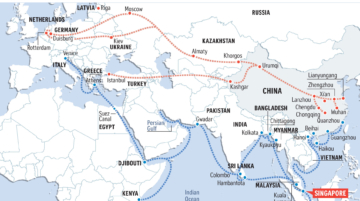
And I think that in a pretty important way, China has been building out infrastructure in developing countries under this rubric of the Belt and Road. And that is a pretty important thing in which they’re building light rail, highways, and bridges all across the global South. However, there are some crucial ways in which China has not been particularly generous in terms of building out industrial capacity, nor in teaching many other countries how to replicate various aspects of Chinese success.
And so, I think one can find examples of this, including with BYD and Xiaomi. A lot of the, I understand, the successes and the building out of capacity by these big companies overseas has been mostly to try to overcome these protectionist barriers that exist, especially in Europe and the United States, that there would be a lot more investment in these industrialized countries already, if it weren’t for investment restrictions on the American side, especially. So there’s definitely an appetite for investing more.
However, when it comes to even lower-end manufacturing, there is also rhetoric from the Chinese side to say that they don’t necessarily want a lot of the low-end manufacturing to move overseas. When it comes to even simple items like textiles, sneakers, shoes, and socks, there has been some sense in which the Chinese have said they want to keep it all because this is still an important part of industrialization for the Chinese countryside. Do you agree with that characterization that there has certainly been a lot of investment under the rubric of the Belt and Road?
There’s been some investment by big technology companies abroad, especially in Western countries, but there is definitely a sense among the Chinese government that they want to keep it all in, even in terms of the lower-end manufacturing.
ERIC OLANDER: Yeah. I mean, this is one of those things where people mistake investment and then loans. There have been numerous loans and lending initiatives through the Belt and Road initiative, but that’s quite different from investment, as in investment, risk is shared.
In loans, the borrower assumes the bulk of the risk. And so when you look in a place like Africa, the Chinese are actually one of the smaller investors, even though they’re a large trading partner and a large lender. So very different in that respect.
I think you’re right in that we shouldn’t invest as much. In Southeast Asia, the United States remains the largest investor in most of the region. Not the Chinese.
A lot of trade here, but not as much on the investment side. I’d like to get your take on the conversation I had in South Africa, where a policymaker mentioned to me that one of the ideas being floated is trying to use the Chinese tactic of forced technology transfers. So early on in the 70s and 80s, when companies were first starting to come to China, the Chinese said, if you want to come into our market, you’re going to have to hand over your technology.
I used to work at the Ford Motor Company in China, and there was a joint venture between Chang’an and Ford. 50-50. 50 cents of every dollar that Ford earned went to Chang’an.
And all of the Ford technology went over there. And in developing countries that have a lot of the resources that the Chinese want and need to fuel this powerful economy, people are trying to figure out how they can get more of this training and the skills transfer that you’re talking about that isn’t coming in the volumes that they need. So one idea that popped up was saying, why don’t we take from the Chinese playbook and use forced technology transfers?
You want our cobalt, you want our lithium, you have to then give us technology skills and training. But you write in the book that forced technology transfers actually stifle innovation, at least they did in China. Maybe expand on that and what your thoughts are about forced technology transfers.
DAN WANG: Well, I’m a fan of your podcast, Eric, because you are always interested in adding some nuance and complexity. And that is absolutely an exercise I want to engage in and encourage as well. So let’s add a little bit of texture to this idea of forced technology transfer.
Now, if I wanted to put on my Xinhua CGTN hat on, I would say that the Chinese say there is no such thing as forced technology transfer. These are voluntary agreements that Ford entered into with Chang’an. And so I don’t think that this is anything of a decisive, but let’s acknowledge the point that these were contractual agreements.
ERIC OLANDER: I mean, no one put a gun to Ford’s head to come into the market. If they didn’t like it, they could have left. Right.
I mean, that’s what I think that CGTN would say.
DAN WANG: That’s right. And I think the complexity on technology transfer is that sometimes it works and sometimes it doesn’t. And it doesn’t seem to be any sort of a very decisive advantage that the Chinese have been able to extract.
So as you say, 50 cents of every car sold went through this joint venture. Half went to Chang’an, half went to Ford. But I think that Chang’an would probably say that all the technology, Ford gave all its technology to Chang’an.
I think that is something that the joint venture might dispute, because a lot of the manufacturers would say something like, well, Ford gave us, and every other Western company gave us their old technology. They gave us technology that was relevant five, six years ago, but they weren’t giving us our cutting edge stuff and they weren’t investing very extensively in research and development in China. And that is kind of, I see the way that the Chinese do things overseas as well, which they’re giving older technologies.
They’re not necessarily trying to bring up the latest and greatest cobalt refinery processing capabilities in Congo in order to really train the workers how to make the cutting edge things. And my sense of the forced technology transfer argument is that in cars, are we seeing that Chang’an has become a giant automotive powerhouse on par with Ford? Well, we’re seeing, certainly seeing that many of these joint venture partners have done quite okay.
But the companies that have been very successful, companies like especially BYD, which is the giant breakout success in Chinese automotives, they did not enjoy these technology sharing agreements with Western companies. Because one problem with having a lot of money flow in, even if you’re not doing a lot of your own R&D, even if you’re not doing a lot of your own productive innovation, is that you can grow very lazy just earning half of every dollar from your joint venture partner. And that is what a lot of especially companies in the automotive side suffered, that they essentially grew lazy because they didn’t have to compete very much.
All of this money, IP and profit would just flow in. And so sometimes it works, sometimes it doesn’t. And I think there has to be a more sophisticated means of thinking about how to learn from China.
But one thing I will say is that I fully endorse this idea of trying to learn from the Chinese playbook in order to industrialize. I think that the global South should absolutely do it. I think the United States should absolutely do it.
Tariffs are a, frankly, a 16th century tool that may have some relevance today. But China, I would say, grew to the advanced manufacturing power that it has, mostly in an era of declining tariffs. As China acceded to the WTO in 2001, it was mostly cutting tariffs throughout the 1990s.
And China succeeded throughout this period, mostly by using non-tariff barriers, non-tariff barriers like technology transfer agreements, everything like industrial subsidies, government procurement, everything else. And so why don’t we study some of these other tools that China has pioneered, somewhat pioneered, in some cases copied. Now, throughout most of the 21st century, that is something that the United States, Africa, Southeast Asia should absolutely study and, to some extent, imitate.
ERIC OLANDER: Well, let’s bring up this issue of the industrial subsidies. There’s a conversation going on in the US right now that basically says that if the US wants to compete with China on critical minerals processing, it’s going to have to do so through public subsidies. There’s just not enough private sector interest or will to generate the huge amounts of money and technology that need to be spent on to do it.
And that is borrowing, basically, from the Chinese playbook. Conversely, that subsidies problem is one of the things that is, again, I’ll go back to South Africa, is something that is the bane of their existence. So I asked someone from the mining industry, I said, why aren’t you processing more of your minerals here before they go out?
And he said, even if I wanted to process the minerals here, he said, I can’t beat the China price because of the subsidies. He says, this is from a South African mining executive, the Chinese will give subsidies on labor, on water, on property tax, on electricity, and it’s 20% to 30% cheaper than what they can do in a country like South Africa. And so these subsidies have been very, very difficult for developing countries to compete against.
What is the role of subsidies in China’s engineering state and its success that it’s had as the manufacturer of everything and the processor of everything?
DAN WANG: It is one component of China’s big success, not the only component. To some extent, I feel like the U.S. understates China’s technology ambitions because it resorts to these lazy crutches for how China grew so dominant. I think there’s an East Coast flavor of this, which is that China is essentially completely cheating through these industrial subsidies.
And then I think there’s also a West Coast flavor to the China critique, which is that China engages in so much cyber theft. This is all IP theft. So either they’re stealing or they’re cheating, but none of this is their own thing.
I think that there is definitely a component of China having acquired a lot of IP that it really shouldn’t have had. I think that subsidies absolutely are a crucial component of China’s success. But I also feel like China’s success is driven very substantially by other major factors.
They include things like having all of this process knowledge of iterated learning through a very vast manufacturing base. So there’s something like 70 million manufacturing workers in China. They’re solving three new problems a day before breakfast.
They are the cutting edge of where the learning is. And by doing all of this learning and manufacturing of new products, they are able to iterate and create new products themselves. I think that there is a hyper-competitive business culture that exists in China.
And that is represented by the fact that Chinese just move so much faster in terms of creating all sorts of new products. The rule of thumb, since you brought up Ford, is that it takes about something like six years for an American, Japanese, or German automaker to conceive of a new product and then release it on the market. In China, it’s more like 18 months to two years.
So they’re just moving three times faster than the Americans can. And that is pretty important as well. But I think the subsidy component is indeed pretty valuable.
And here’s where I think that there are many ways to skin a cat. And here’s where I hope that people can be a little bit more creative in figuring out how the government can support various companies. Now, in the case of Rare Earths, what we have seen in the news over the last couple of months is a very novel arrangement by the U.S. Department of Defense, which has taken a direct equity stake in America’s national champion in Rare Earths, namely MP Materials. And it has guaranteed a price floor for a lot of these materials that are critical minerals that MP Materials will process. And that is a subsidy of a form and direct equity, a subsidy of a form. The Chinese are indeed very creative.
Many of the Chinese subsidies take the form of below-market-rate credits that banks essentially subsidize. So there are many ways to engage in subsidies. I’m hopeful that countries across Southeast Asia, Africa, and the West will establish arrangements to make life easier for businesses, thereby increasing their competitiveness with Chinese companies.
ERIC OLANDER: I’m glad that you contextualize the subsidies, because it is overstated oftentimes as the reason for China’s success. And it’s a part of China’s success. But as you write, it cannot be the main one.
You really give a lot of credit to this concept, which you reference as process knowledge. And that is something that I think countries trying to replicate the Chinese model, or at least part of it, can benefit from. And ironically, if they allowed more young people and entrepreneurs to come to China to learn this process knowledge, it could be something that could be exported back to other countries.
Tell me a little bit more about what this process knowledge is and why it is so important?
DAN WANG: I believe that technology is not simply a product. It is not simply a blueprint and patent. The technology is essentially people.
And that technology exists in people’s heads or between people’s heads. And if we forget how to do something, it is really, really difficult to relearn. We cannot simply write down everything that is crucial in our jobs. Even in my line of work, I have essentially become a scholar, albeit a somewhat unconventional one.
You can say that I have essentially just a job writing. And even this sort of job is really difficult to train someone on absolutely everything that I do. As I am sure, Eric, in your industry of writing and podcasting, you can’t simply write down everything that you know about podcasting and expect someone to pick it up.
You give me all of these instructions. I will be completely befuddled about all of your tech setup, exactly how you do everything that you do. And I think that exists absolutely in the manufacturing sense as well.
When you’re working with physical goods, when you are playing around with different sorts of electronics, when you’re fiddling with knobs of very complex machine tools, this is a knowledge that exists in people’s heads and in people’s hands. And that is something that the Chinese really have a lot of. Again, 70 million manufacturing workers, many of them not necessarily working in anything very complex, but a slice of them working with some of the most sophisticated electronics, especially in the world.
And I think it is no surprise that when you have so much knowledge production taking place on a daily level, Shenzhen is the hardware capital of the world. They went from assembling iPhone components into actually building some of these iPhone components themselves, and then making things like consumer drones, electric vehicle batteries, all sorts of very advanced manufactured products. And I think that China is still on the cutting edge of not only building some of the most sophisticated electronics, but creating new electronics as well.
Yeah.
ERIC OLANDER: You spent a lot of time in Guizhou, and I’ve spent quite a bit of time there myself. For those of you who are not familiar with it, it’s one of China’s poorest provinces, but arguably one of its most beautiful. And one of the things that you pointed out was that Guizhou is just filled with beautiful infrastructure.
And this is so interesting because when you look at Chinese soft power diplomacy around the world, particularly to the developing world, one of the things they show off is this amazing infrastructure. These bridges that you talked about in Guizhou, or the Chengdu subway in Sichuan province, or the Maglev train in Shanghai. And the idea is that to say, 40 years ago, we were just as poor as you, and today, look at where we are.
And that infrastructure has been remarkable by any standard. If you’ve lived in China, it’s a wonderful thing to be able to go from Hongqiao airport in Shanghai right into the subway, right to downtown, all with ease. At the same time, you point out in Guizhou, there are 11 airports.
Five have less than a dozen flights each week, and there are more than three airports still under construction. Guizhou has become one of China’s most indebted provinces and is starting to feel real fiscal distress. So behind a lot of this infrastructure, there is a lot of problems with it.
So that people don’t necessarily assume comes with the beautiful pictures of the bridges and airports. Talk to us a little bit, and I’m not trying to be negative here. I mean, to kind of dwell on the negatives.
I’m trying to kind of focus on the complexity of what this engineering state and this infrastructure boom that they’ve had entails.
DAN WANG: There are absolutely problems with building so much infrastructure under use. And if it is underused, it is not producing economic value, which makes it much more difficult to make the bond payments on a lot of these very tall bridges, as well as on underused airports. And so that’s a very direct financial cost.
There’s also an environmental cost in which if you are building all of these very tall bridges, high-speed rail lines throughout incredible ecologies in Guizhou province, which I agree, because of the mountains and the rivers and the streams, Guizhou is absolutely one of the most beautiful provinces in China. And I love visiting it, not only for the natural beauty, but also for the food, which is full of these pungent spices, as well as pickles. I love the sourness of Guizhou cuisine.
And I think there is totally an environmental cost, not just directly by ripping up a lot of these forests or mountain paths, but also by pouring a lot of carbon-intensive concrete into the ground. And that is all produced throwing a lot of CO2 into the atmosphere. And then there’s also a human displacement cost, especially if you’re building something like a dam in which you’re creating a very big flood zone.
That is going to be something that is difficult for people to get used to. But I would say that though this infrastructure has a lot of costs, I would say that it has overwhelmingly delivered a positive value to people across the province, as well as the country. There’s a lot of these bridges after which the Chinese state has built them.
They would say that we’ve reduced travel times from something like three to three. We’ve reduced travel times from three hours to three minutes. And I wonder if all of these claims are correct, but they are definitely within the right order of magnitude.
I think that people love being able to get around the mountains as well as the villages. There’s high-speed rail in Guizhou in which you can take the train. That takes about seven hours to go from Guiyang to Shanghai, a much bigger city.
Then you can take it onwards, if you like, to Beijing as well. But people are much more integrated into this network. And I feel like this construction boom has not only generated a lot of economic activity in China.
It has also built some degree of political resilience into the Communist Party. The Communist Party can’t very credibly claim to its people, we are bringing you out of poverty and we are giving people what they want, namely some degree of economic satisfaction and connection to other villages and other cities. I think overwhelmingly the benefit of infrastructure is positive.
You can debate on the margin whether China still needs quite a lot of infrastructure, but we can say that at least over the past few decades, that it has been pretty positive and a significant contributor to where China is today.
ERIC OLANDER: Yeah, I would agree on that front. It feels that that part of the Chinese social contract with the public remains very strong. Well, we started our conversation wondering whether or not this engineering state model is applicable to other countries.
Parts of it certainly seem to be. And parts of it, as you talked about, the Chinese could do more to export and to help and to facilitate. But I was kind of surprised at the end of your book when you said that the engineering state’s approach is no longer fit for purpose even in China.
OK, so two parts to this question. One, why? And if it’s not the engineering state in China, then what does it become in your view?
DAN WANG: It is probably not fit for purpose because China cannot continue generating so much economic activity through public works, that I feel like the economic agenda in China has grown relatively uncreative, in which if you’re a local party secretary of somewhere in Guizhou, you don’t really have any great ideas for developing your corner of a pretty poor province. You’ve seen other people build a lot of railways or bridges or airports, and so you simply do the next big thing. But it is far from clear that China needs yet more infrastructure.
We can say that China has made good use of most of its infrastructure in the past, but that doesn’t mean that it still needs more infrastructure. The marginal value is pretty low here. I think that China needs to get a little bit more creative in becoming a more advanced economy.
Now, there are a lot of countries that are complaining about China’s overcapacity issues, including in the global South, in which we have countries that are putatively positive and friendly towards China, including Brazil, Russia and Malaysia, that are all complaining about some degree of Chinese dumping of products into their markets and hurting a lot of their local producers. That is absolutely, I think, a valid complaint. But China does not seem all that eager to move away from this sort of model.
And I think there has to be some questions about, to what extent does it converge a little bit more into the West in terms of being more consumption driven? Now, according to OECD broad aggregate numbers, Europe spends on average of 30% of its GDP every year on transfer payments. These are essentially everything to do with what we can call government welfare.
And the United States spends something like 20%. China spends only 10%. So these are broad aggregates in which China is not very intent on supporting, let’s say, the poor, the unemployed.
It has really minimal birth subsidies when it acknowledges that it has a demographic issue. So here’s where I think that the Chinese could look a little bit more towards the West in terms of being less manufacturing-driven and trying to economically empower families, not necessarily by building a giant bridge for them, but by having some more direct transfer payments from the rich to the poor.
ERIC OLANDER: Ironically, you point out that the Chinese and Xi Jinping is more MAGA than MAGA is in many respects, very patriarchal, not very generous on social benefits, very limited immigration. In many respects, this is what the conservatives in the United States have long dreamed about is being more like China in some respects, which is ironic.
DAN WANG: Sounds like Ronald Reagan to me when Xi Jinping says, let’s not let people get lazy.
ERIC OLANDER: Yeah. It was just that they have a lot more in common than I think than they first appreciate. So, listen, Dan, thank you so much for your time today and for your insights.
And congratulations again on the enormous success of this book, Breakneck, China’s Quest to Engineer the Future. Again, if you are in the China space or interested in what China’s doing, this is a fascinating book. And even if you’re not interested in the whole US-China part of it, Dan spends a lot of time, as we’ve talked about on the show here, really exploring how China got to where it is today, both the positives and the negatives, and really appreciate your time today.
Thank you so much for joining me.
DAN WANG: Thank you very much, Eric.
ERIC OLANDER: And we’ll be back again next week with another edition of the China in Africa podcast. We’ll break apart the two shows, the Global South and the Africa Show, again. We brought them together this week to speak with Dan and with James.
And if you’d like to follow our conversation with James King again, we’ll put the link in the show notes. So, to everyone around the world participating in the China Global South Project, I would like to thank you for listening and watching.