

China has funded, designed, and built more than 200 government buildings across Africa, including the headquarters of the African Union and Ecowas, foreign ministry annexes in Ghana and Kenya, and at least 15 national parliaments.
Eric and Cobus speak with Innocent Batsani-Ncube, an associate professor of African politics at Queen Mary University of London and author of the new book China and African Parliaments.
Drawing on extensive fieldwork in Lesotho, Malawi, and Zimbabwe, Batsani-Ncube explains how China’s parliamentary construction boom works, why African governments welcome it, and what he calls “subtle power”—a form of elite-level influence that sits between soft and sharp power.
📌 Key topics in this episode:
- Why China builds African parliamentary buildings — and why African governments accept them
- “Subtle power” vs. soft power vs. sharp power
- The politics behind construction, design, and land selection
- How these buildings shape legislative capacity and political identity
- Case studies: Lesotho, Malawi, Zimbabwe, Congo-Brazzaville
- Does this compromise sovereignty? Or strengthen parliaments?
- Are these buildings really vectors for Chinese espionage?
📘 Purchase China and African Parliaments by Innocent Batsani-Ncube on Amazon
About Innocent Batsani-Ncube:
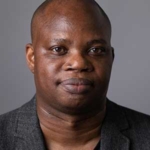
Innocent Batsani-Ncube: is an award-winning interdisciplinary Politics and International Relations scholar – trained in Africa and the UK. His research and teaching explore China’s role in the Global South, political dynamics in megacities, African regional organisations, and nuclear power politics. His monograph, China and African Parliaments – based on his research that was awarded the 2022-2024 African Studies Association (ASA-UK) Best PhD Thesis Prize – was published in June 2025 by Oxford University Press. The book is the first to explore and explain the impact of China’s expanding influence in African parliaments. It maps the political controversies surrounding the designing, making, utilisation and maintenance of three parliament buildings in Southern Africa that were financed and constructed by China.
Transcript:
ERIC OLANDER: Hello, and welcome to another edition of the China Global South podcast, a proud member of the Sinica Podcast Network. I’m Eric Olander, and as always, I’m joined by CGSP’s Managing Editor, Cobus van Staden, from lovely Cape Town, South Africa. A very good afternoon to you, Cobus.
COBUS VAN STADEN: Good afternoon.
ERIC OLANDER: Cobus, we got news last week that the new headquarters for ECOWAS, the West African Regional Group, is now 85% done and will be finished, probably sometime early next year. Now, this is important for our purposes because ECOWAS in their new headquarters, this new headquarters building, is the latest government building that is being funded, planned, and constructed by the Chinese government.
So, this is a multi-million-dollar project. This is one of more than 200 buildings across the continent, everything from obviously the African Union headquarters, the Africa CDC that came online a couple of years ago, the new foreign ministry annex in Ghana, the new foreign ministry annex in Kenya, and then we’re looking at parliaments now, about 15 parliaments across the continent, most notably the Zimbabwe parliament, which by the way, I saw some video this week, just looks stunning in terms of what they’ve done. All of these have been paid for, built, planned, and donated by the Chinese government. Cobus, this is a topic we have discussed at length over the years.
In fact, about four or five years ago, we had an analyst named Joshua Meservey on the show. Back then, he was at the Heritage Foundation talking about his research. Now, this was from 2020, according to Josh’s research at Heritage, 186 African government buildings were built and paid for by the Chinese, including 15 parliamentary buildings.
We might get an update on that today. I guess, Cobus, for me, what makes this such an interesting topic is that for a continent that is so sensitive to, and understandably sensitive to, outside intervention, the legacy of colonialism, the legacy of foreigners, you know, leveraging power to intervene into domestic African politics, that there would be so much enthusiasm for a foreign power, any foreign power, to build these very symbolic buildings across the continent. And yet, it does not appear that African governments have any qualms about this.
COBUS VAN STADEN: Yeah, this is a key issue. And you mentioned Josh Miservy’s work. Obviously, his work, while at the Heritage Foundation, was focused on this from a very specific geopolitical perspective, you know, in relation to US and Western power versus Chinese power in Africa.
I’m very interested in this issue in relation to African power in Africa, particularly African agency. And I think this question that you raise, of like, why African governments are so on board with this, is this kind of key mystery, in a way, or a key question, I think, that then unlocks a lot of other aspects of China’s involvement and the way Chinese involvement works on the continent.
ERIC OLANDER: Yeah, well, there’s a new book that just came out on this topic. And it’s actually a very important book to talk about, because it’s the first in-depth study of its kind that focuses on China’s practice of funding, designing, and constructing African parliamentary buildings. Now, we’re going to focus specifically on parliamentary buildings.
Now, the book draws on fieldwork in Lesotho, Malawi, and Zimbabwe, and really talks about how the Chinese are building these not only as gifts, but as instruments of what the author calls subtle power. Well, let’s dive into this. The book is China and African Parliaments by Innocent Batsani-Ncube, a senior lecturer and associate professor in African politics at Queen Mary University of London and an associate at LSE Ideas.
And we are thrilled to have on the show for the first time, Innocent. Congratulations on this important book, and welcome to the podcast. Thank you, Eric.
INNOCENT BATSANI-NCUBE:
And thank you, Kobus, for having me.
ERIC OLANDER:
It’s wonderful to have you. Let’s start with this concept of subtle power that you talk about in the book. You say that it’s not about soft power or sharp power, but subtle power.
And this is, again, looking at it from the Chinese towards the African side. Of course, Cobus is going to interrogate you on this question of African agency. But let’s start with this idea of what the Chinese are trying to achieve with this, and the subtle power you introduce.
INNOCENT BATSANI-NCUBE: The starting point is, when we are looking at this phenomenon, one of the first things that someone might say is within the framework that denies soft power, because it might fit in that mode. But some scholars, particularly in the US and policy circles, have argued that what China is doing in the global south cannot be characterized as soft power. And some also think it’s sharp power.
So, soft power is about the perforation of institutions. It denotes a more aggressive kind of engagement. But when I was doing this project, I realized that probably there’s one part of China’s engagement that doesn’t fit the realm of soft power in the context of it wanting to use the framework of attraction.
But also, it doesn’t really fit the mold of sharp power. And what I then found was that there is a sense that China would want to ingratiate itself with the political elites in Africa, for example. So, in using this frame of ingratiation as a way to get access to the elites, but not only just the ruling elites, because this is also something that is sort of like China’s engagement has been characterized as targeting those in government, but it’s even targeting those who are going to come into government later on.
So this is when I started to build this idea of first the method of ingratiation and then then starting to characterize it as probably it could be subtle power that it comes in a way that you wouldn’t know their intention, and they don’t necessarily explicitly mention what they intend, for example, with the project of parliament buildings. We want to build your parliament building. We are interested in ensuring that you don’t pay for anything.
And so that in a is what I started to build on in terms of that concept.
COBUS VAN STADEN: In relation to this, the transfer of these buildings or the provision of these buildings is frequently called a gift. So I was wondering if you could unpack that wording for us, like, what do we mean by gift? And specifically, how does this relate to like, very interesting, you mentioned the very interesting kind of issues around the design, for example, and you know, kind of of these buildings, but even in relation to, for example, the land acquisition of the plot that the parliament would stand on, for example, like, where does the gift start and end, you know, kind of like in the process of this kind of like transfer of these assets?
INNOCENT BATSANI-NCUBE: Interesting question. Let me start by saying, from the Chinese perspective, they present this as a gift in terms of that the recipients are not supposed to pay for anything, be it in the design, in the construction. And, you know, there’s also the issue of maintenance.
So it’s a full package gift. But coming back to the part of the question where you said, in terms of where these parliament buildings are sited, for example, that is also an interesting issue. Of course, in all the cases that I’ve studied, the governments are sort of like, you know, that land sort of like belongs to governments.
But I’ll speak about a specific case of Zimbabwe, where the land where the parliament is built, it was a place, it was a church, it belonged to a church, but it is in a place called Mount Hamden. So Mount Hamden is historic because it is a place where the Cecil John Rhodes, the British South Africa Company, was supposed to use pioneer column, was supposed to set up shop, that was supposed to be the original capital of Rhodesia. But as I did tell you in the book, they were moving with Frederick Courtney Selu, the one who named this Mount Hamden.
But he then left, and then they got lost, and then they set up shop at the Kopi. Now, with the Chinese coming in, so the government of Zimbabwe, with people that I spoke to, they say that now they wanted to correct that mistake, you know, that happened over 100 years ago. It’s quite interesting that what the British failed to do in 1890, the Chinese have managed to do.
So that place in itself is quite symbolic in that it was supposed to be the capital of Rhodesia. And then so when the Chinese came in, in 2015, they wanted also that site. Well, there was an original site at the Kopi, the Kopi is where the actual Union Jack was mounted in 1890.
So the parliament was supposed to be sited there. So they didn’t like that spot. They then went for that spot.
So it’s quite interesting in terms of the site. But quickly, let me just finish on the issue of the give. There is a sense that I write in the book about what I call top office endorsement.
But the Chinese present this as a gift to the head of state or to the head of government in the case of Lesotho, for example. And that creates a problem for the bureaucrats because now they cannot implement the local, you know, construction guidelines. So presenting it as a gift to the head of state or head of government then allows the Chinese side to have, you know, more hold on the project.
ERIC OLANDER: Interesting. So back in 2020, I think it was around 2020, 2021, when Joshua Meservey did his research on this, that Cobus and I talked about earlier. He said there were about 15 Chinese-built parliamentary buildings across the continent.
How many are we talking about today in terms of Chinese, the total number across the continent?
INNOCENT BATSANI-NCUBE: In my book, I speak about almost a similar number. You say about 15 is what you think, but 15, 16 is the number? Yes, about 15, because the one that is being finished now in Congo Brazzaville, I included in the headcount, but there could be, you know, some other projects that, you know, are in the pipeline, for example.
They also wanted to refurbish the Gabon one after the fire. So yeah, so that’s the average number.
ERIC OLANDER: Okay. So we’re looking at probably 16 or 17 by now with Congo Brazzaville and then also Zimbabwe, which I don’t think was factored into Joshua’s calculations back then. That’s a sizable number, gentlemen.
That is probably close to a third of the entire parliamentary buildings on the continent that are built by the Chinese. And I’d like to know if this is a phenomenon that is unique to China. Do other countries also do the same thing, offer a parliamentary building, will pay for it and build it?
And if it happens, or is this something that’s unique to the Chinese?
INNOCENT BATSANI-NCUBE: Actually, these parliaments that we have now in the continent, they emerge from what we call legislative assemblies. So in the first place, the legislative assemblies buildings themselves were constructed, you know, by colonial powers. So you get like in the case of Usutu, so that building is called the Basutule National Council Building.
It was built for the Basutule National Council. Also the same thing, you know, with the parliament building in Zumba, which is like the old parliament building in Malawi. Those are all from the colonial era, correct?
ERIC OLANDER: Yeah. I guess I’m just wondering, is there anything that’s comparable to the Chinese of what, say, are the Japanese building, you know, parliamentary buildings? Are the Emiratis, the Turks, is there anything comparable to what the Chinese are doing in the modern era?
INNOCENT BATSANI-NCUBE: No, it’s a model that they have designed. For example, if you go to Angola, you know, they’ll use some Portuguese firms to do that. So that’s like a commercial transaction.
So in the case of how China is doing it, which is A, they provide this gift, I mean, this building as a gift, they provide the money, the construction, the design. So it is uniquely China. But we should also go beyond buildings because it’s about what to make frame as parliamentary strengthening.
So around the mid-2000s, like 2004, there was a move to strengthen parliaments. So this is a part of Western donors supporting the expansion of parliamentary practice in Africa through the introduction of portfolio committees and these other things and ensuring that there’s more parliamentary staff. So this process is a scholar called Joel Buchan, late now one of the big scholars in this area of African legislative studies.
So there was this move to expand parliaments and UNDP and all these Western donors were involved. But one thing that they forgot is that as you expand parliament, you need actually a proper place, like a purpose-built, you know, structure to actually have this operation. So the Chinese have seen a gap in this because they are also involved in their own parliamentary strengthening with what we call Chinese characteristics, without interfering with the quality of debates, you know, the staff, like Western donors do.
They’ve decided to provide the theatre, the space.
ERIC OLANDER: Cobus, there’s something I’m just struggling to get my head around here that I want you to try and help me understand. Angola is a country that generates significant wealth from oil. Zimbabwe generates significant amounts of wealth for elites, albeit, through its mineral resources.
In fact, the president just bought a $400,000 Rolls-Royce this month. Is there not a sense of national dignity that the taxpayers of that country should pay for the parliament and the government building? I mean, again, forget the Chinese are going to want to give money.
There’s no doubt. Let’s understand that. But this sense that this is the house of the people.
This is the politics of the people. This is the symbol of the country. This should come from the wealth of those people.
Let the Chinese make a research institute or some other building. Great. But it’s not because Angola doesn’t have enough money to build its own parliamentary building.
It does. Or I’m not sure if Angola is on the list, but Republic of Congo, Brazzaville, they have enough money to build their own parliamentary building. It just feels to me a little bit of a, I don’t know, a sense of loss of sovereignty when another country builds your parliament.
COBUS VAN STADEN: Well, I mean, you know, and it stands in interesting kind of contrast to see if you think about like a parliamentary building that the iconic one in Dhaka in Bangladesh, that was, you know, designed by Louis Kahn was, you know, really beautiful building. And the symbol of, post-colonial independence, of national pride and so on. So yeah, and I mean, the sovereignty issue that you mentioned, of course, comes back to key, very concrete sovereignty issues, you know, particularly kind of around, you know, so for example, the EU headquarters building, you know, the classic big scandal about the possibility that there was regular kind of transfers of like a lot of digital data to China via systems embedded in the in the EU building. And then when that was raised, Paul Kagame could have had this famous one line of like, well, you know, kind of like we, you know, we should probably be building these ourselves.
And in classic Kagame…
ERIC OLANDER: Well, he said, if we don’t want to get it bugged, then we should build our own damn building.
COBUS VAN STADEN: That was a very famous Paul Kagame. We should build our own damn building. In classic Kagame style, and classic African leaders’ style, that one liner was then couched as both a joke and as a rhetorical question, essentially, and then left in the air, and people moved on. I kind of learned, you know, so that question was never really interrogated, I think. And so, you know, which is a long winded way of saying that I don’t really know exactly why, like innocent, like you in your book, you also you make the point that these are not necessarily such expensive assets, you know, kind of like even for countries with small budgets, like Lesotho, like, you know, like, that amount of money, they could probably make it work themselves.
Why don’t they? Do you think? Why don’t they innocent?
ERIC OLANDER: Yeah, yeah. Why don’t they?
INNOCENT BATSANI-NCUBE: In fact, the point that you’re making, you say exasperated about that, why didn’t they do that? So, when I was talking to these local women on the long way, that’s the same point they made: the Malawi parliament is 50 million; they say our government, if it’s serious, could raise that 50 million. So here is the issue.
From what I see, it’s not just the parliament building, in a way; it goes to the relationship that is actually built at that level. Remember, I stated, I said earlier on that, there are three ways that they do this top office endorsement presented as a gift to the head of state or head of government. And then they do this design loop, they say they want to design it themselves.
So in the case of, I mean, across all the three cases, they were already plans that, you know, this country’s head, well advanced plans. So what then was puzzling was the Chinese didn’t want to adopt those plans, because it was going to be cheaper in a way, because they already designs prototypes. In the case of the Malawi parliament, it’s quite interesting, because it had been built up to the first floor.
And it’s something that had actually, you know, gone off the cracks, I mean, fell in the cracks rather, deleted now that there was the Malawi and they had started building it. So it was more than just the building, it’s about the relationship between the Chinese government, and these African ruling elites. So it’s not about the building, it’s not about the money, it’s about this relationship, and what such a building would mean to the relationship.
ERIC OLANDER: Cobus, is that better or worse? Because what that does is that exacerbates the asymmetries in the relationship, right? I mean, if I’m giving you your parliamentary building, that is, that’s an asymmetric type of relationship.
And so when African governments need to go then negotiate harder trade deals, or they negotiate sensitive issues on illegal mining, or they want to talk about even more sensitive issues, like Taiwan, and innocent, let’s bring up Taiwan, because in Malawi, this was an issue that you raised in the book. This does seem to compromise African agency in their relationship with China, that this is not a pairing of equals, not state to state, this is one that is a benefactor and one that is a recipient of largesse. I mean, I guess I’m struggling with this one.
And by the way, we should make it very clear that Africa is by no means alone in this. This type of infrastructure diplomacy happens in other parts of the world as well, including the South Pacific and things like, in other places like that. So this is not uniquely a China-Africa phenomenon.
That’s a very important distinction to make. But Cobus, innocent, I’m going to get to you in a second, but Cobus, maybe just reflect on what innocent said, that it’s on the state to state relationship, but that does seem to undermine the parity in the relationship.
COBUS VAN STADEN: Well, one assumes that some of the officials, some of the African officials would worry about, like, if they refuse this kind of offer, whether that would then, you know, kind of make the relationship harder down the line. And innocent, I was wondering whether you know, do we know of a situation where this kind of this gift was kind of diplomatically refused, you know, like, and whether there was any kind of fallout from that, we have no evidence whatsoever that that’s the case.
ERIC OLANDER: I mean, zero evidence that that would be the case.
INNOCENT BATSANI-NCUBE: Not any in terms of like, that it was actually flatly refused. But what I can say, talking about two cases quickly, so which, you know, there was lots of kind of tension. So let me start with Lesotho quickly, then go to Zimbabwe.
So in the Lesotho case, so as I said, there were already plans to set up the parliament. There was an interim ministerial committee that had been set up.
I think it was just before the first FOCAC summit, which was going to be held, I think, the following year. So the Chinese government then offered him this gift. So when he comes back to Macero, things have changed.
So now, you know, that project that had been done is now supposed to be sort of subordinated to this new plan. And when I was speaking to the architects in the building design services, which is the technical arm in the Ministry of Public Works. So they had this plan that they had, which they wanted to talk to the Chinese about.
But the Ministry of Foreign Affairs said, OK, you can bring your plans, and we’ll take them to Beijing for standardization. And then there was a bit of tension. And this tension now, not between the Chinese and the Lesotho, but within the government.
So the Foreign Affairs versus the public works. So that tension, because public works, they wanted to do things in the way in which they were used to, to ensure that the materials, for example, the design specifications feed into the South African construction materials, which they are going to have. But the Foreign Affairs Ministry, I think, under brief, you know, from the Prime Minister’s office to facilitate the gift.
Right. So those tensions emerge. Now, in the case of Zimbabwe, in the case of Zimbabwe, in an interesting way, across all these three cases that I studied, that’s where there was like most, I mean, the biggest level of urgency, you know, from the Zimbabwean side.
So there was a committee that was set up. So the Chinese designed the building and then brought three prototypes for the government to choose from. But then also there is tension that the building that they designed, there are local architects who had been contracted in the 80s, 90s, sorry, in the 90s, sorry, to design the building.
And these architects, they are saying that, you know, the design by the Chinese has an uncanny resemblance to their own original design. So there are those tensions that emerge in terms of within the, in terms of this design journey. But also, one last anecdote.
When the Chinese were designing this building, the Zimbabwe Parliament building, and now when it came to stage of finishing it, the Zimbabwean Parliament, because of experience from the old one, they said they wanted the floor to be only tiles, because there are some members of parliament that are asthmatic and from the old building, they saw that that creates a problem because people come in there with shoes and on carpet. So they insisted that it should be tiles.
And the Chinese insisted that it should be a carpet, right? So then there was that standoff. So I was interested because I went there when they were constructing it and went to film it when it was finished.
I was really eager to see who won the debate. Put the carpet.
ERIC OLANDER: Okay, now don’t keep us, don’t keep us waiting, Innocent.
INNOCENT BATSANI-NCUBE: Yeah.
ERIC OLANDER: Don’t keep us waiting here. Who won? Is it carpet or is it tiles?
INNOCENT BATSANI-NCUBE: They put in the carpet. And when I was now analysing why, I got a sense that the company that was constructing this, and there are smaller companies involved. So already, because this is done by the Minister of Commerce, Mofcom is the one that funds.
So it could be a case that already there were all these people that were supposed to supply things, right? And now to change it midstream would actually cut off some of those people. So even when the carpet was not needed, at the end of the day, it was put into the final building.
Yeah.
ERIC OLANDER: Very quickly, Innocent, we were running short on time here. You mentioned in the book, the question of Taiwan and Malawi and how the building plays into that. Talk to us about that.
INNOCENT BATSANI-NCUBE: So the building was actually started on a five million US dollar sort of like grant from Taiwan before the Chinese got involved. I mean, the People’s Republic of China got involved. There was a design competition of Malawi architects.
And that design competition was won by a consortium called the M&A. Like I said, three companies that came together. And then there was also a company that in Malawi that, of course, you know, some of them from Portugal, but it’s now a Malawi company called Terra Stone & Deco.
So they started constructing this. But when now the diplomatic negotiations to switch happened. So parliament building was one of the things that the People’s Republic of China promised that we’re actually going to make this parliament building bigger and better.
We’re going to construct the Karongasitipa Highway. So those two projects were sort of like what the People’s Republic of China promised as a way of consummating that relationship. So it’s really directly tied to the switch that happened in 2008.
And I was lucky I spoke to all these key architects and involved, yeah.
COBUS VAN STADEN: So just finally, you know, in relation to this, to the issue of Chinese, you know, the imposition of Chinese designs on these African parliament buildings, did you get a sense that these designs, how are these built structures now affecting the work of these parliamentarians? You know, the fact that are there kind of working processes being affected by the fact that they’re in this building that was designed according to Chinese specifications and not their own, you know, kind of working methods. So I was wondering, you know, kind of like in terms of the actual lived use of these spaces, actual spaces of legislation, kind of like how does that design relationship impact on that?
INNOCENT BATSANI-NCUBE: Okay, quickly. So one, in terms of legislative institutionalization, these buildings have enhanced, in a way, counterintuitively. So they have strengthened, I mean, because there’s more space for parliament to work and to do things.
So that’s what these buildings do. So that’s the positive of it. And secondly, it has strengthened, again, the sociopolitical significance of parliament, because these are like buildings that you can see, the kind of landmark buildings, just like your Westminster or your Congress or your House of Parliament in Cape Town.
So they are like big, big. So that’s the positive. Negatives.
In Lesotho, there are two bicameral parliaments. So the Chinese built it, but there was no chamber for the Senate and it created a problem. So the Senate now is located in the old place.
So again, tensions between the politicians and the hereditary folks that are in Senate. In Malawi, the building, the dome, which is like it’s called the biggest dome in the chamber and the debate chamber, it leaks every rainy season. So that’s another big problem that works.
In the case of Zimbabwe, it’s still a work in progress because it is new, but we don’t yet know the full effect of it.
ERIC OLANDER: The book is China and African Parliaments. This is a very important contribution to the discourse on China-Africa. It’s one that’s been long overdue, written by Innocent Patsani Nkube.
Innocent, thank you so much for sharing your insights and congratulations again on filling an important void in the China-Africa conversation. This infrastructure diplomacy is very important. It’s going to keep going and we don’t understand enough about it.
And your book has really helped to better understand what’s going on. We’re going to put a link to it in the show notes. And we’ll also put a link to a seminar that Innocent did with our old friend Chris Alden at LSE Ideas.
Innocent is a senior lecturer and associate professor in African politics at Queen Mary University in London, and also an associate at LSE Ideas also in London. Thank you so much for your time today, Innocent. We really appreciate it.
INNOCENT BATSANI-NCUBE: Thank you, Eric, and thank you, Cobus.
ERIC OLANDER: It’s been a while since we’ve had a new China-Africa book out there on the scene, so that’s kind of exciting. And Innocent, he’s well known in the space and he’s written for us in the past, so I’m really excited that people will have a chance to hear more of his ideas. And again, this is a very poorly understood part of the China-Africa relationship that I think is worth a lot more investigation.
Of course, he only focused on the parliamentary buildings. There are a lot of other government buildings that the Chinese are building, financing, and designing. Everything from state broadcasters to, again, foreign ministry annexes, ECOWAS, these are the regional headquarters, the CDC in Addis Ababa, as well as the African Union headquarters.
I mean, there are so many of them, and it’s a very effective tool of diplomacy on the part of the Chinese. I understand why the Chinese are doing this. I’m still struggling to get my head around the logic on the African side, particularly, say, for foreign ministry or for a Again, to have a foreign power to do this just feels unusual to me.
And let me be up front here. This is not uniquely an African thing. Let’s not forget, of course, that the Qataris gifted a $400 million plane to President Trump.
Again, those same questions came up of like, what? I mean, this feels like a compromise in sovereignty to do that. And again, just like many of these African countries, they can afford to build these buildings.
These are choices that they’re making. And when we have conversations with people on the streets, you hear a lot of frustration when they do these kinds of things on the part of local people in many African countries, who don’t necessarily feel great about their governments feeling indebted to foreign powers, whether it’s the Chinese or others. And I think that touches on these very sensitive issues of colonialism and subjugation and whatnot, that is very important in understanding the discourse in Africa.
So all of this seems to intersect.
COBUS VAN STADEN: Yeah, it also affects, as you say, you know, national pride, national image, you know, in these countries. Like, I think like one of the really great contributions, I think, of Innocent’s book is that it really is a challenge to this idea of this, these parliamentary buildings being kind of vanity projects, you know, like it’s frequently, you know, like, they frequently lump together with soccer stadiums. And I would actually make the argument that even soccer stadiums don’t necessarily count as these kind of white elephant vanity projects.
You know, there’s this idea that it’s just, you know, it’s just this kind of trifle to please leaders. I think, as he pointed out, that they have a very significant actual impact on, you know, on how politics runs in these countries. So, you know, so they deserve a lot more scrutiny, I think.
And so the book is really smart, I think, in relation to that, and also in relation to unpacking the particular kind of power projection that’s happening, you know, kind of like, like taking it away from the kind of early ideas of soft power. I think it’s really, it’s really kind of a smart approach.
ERIC OLANDER: There’s a little bit of an irony, and I kept thinking about this, as Innocent was talking, that a country that is a single party rule country that has effectively a rubber stamp legislature that doesn’t have any power of any kind, funding parliaments in somewhat robust democracies, in many cases. And as Innocent said, it’s actually boosting parliamentary activity and legislative activity, and it’s helping democracy in many of these countries. I just, I think that’s just such weird optics here, that a communist authoritarian country is supporting institutions of democracy on the other side of the world.
I mean, you again, would think that, as he talked about in the beginning, that, you know, the democracies of the West would be the ones building these buildings in order to facilitate, you know, democracy and free exchange of ideas and legislative and parliamentary activity. That isn’t happening. It’s the Chinese that are doing this.
That just feels rather ironic to me.
COBUS VAN STADEN: Yeah, yeah, exactly. And, you know, and it almost feels like a very elaborate version of the old, the old, it doesn’t matter if the cat is black or white, as long as the cat is mice approach, you know, kind of like, it ends up kind of advancing Chinese interests and Chinese influence, you know, kind of like whether boost democracy in the process or not, you know, so it has this kind of like weird, like value neutral kind of like aspect to it.
So yeah, it’s like the more, the more Innocent was talking, the more kind of like complications he uncovers, you know, kind of, it’s just, it’s really fascinating.
ERIC OLANDER: Yeah, a lot of those domestic political confrontations were uncovered in all of this, but it doesn’t necessarily lead to controversy between the host government and the Chinese. That seems to be, you know, in fully intact. And again, I just wonder if, I mean, again, I understand why the Chinese are doing this.
So I, I take nothing away from the Chinese, you know, Cobus, if I want to give you a $15,000 Rolex, that’s on me, whether you accept it is a different, you know, story. And that changes the dynamic of our relationship. If I give you a $15,000 Rolex, right, you will feel something that again, wow, he gave me a 50.
Who gave that to you? Oh, Eric gave that to me. Why did he give it to you?
He just, it was a gift. That’s it. There’s no strings attached.
Really? There are always strings attached in politics. I don’t know if you can see the strings, maybe they’re fine strings, but if one of these parliaments decides one day to start recognizing Taiwan or to go against the Chinese on one of the red line issues, I don’t know.
I get the sense that those strings might be pulled, right? I mean, which one has to think, I mean, it just nothing’s free in this world and in this life, right?
COBUS VAN STADEN: Nothing is free in this life. I mean, definitely on the state level, you know, there seems to be building some kind of influence there. But I think it also reveals that it is analogous to the plane gift you were mentioning to Trump.
It highlights a split between this kind of top leadership, the influence on decision-making of top leadership, and the structure of the government more broadly. The fact that all of the conflicts that were happening were happening, you know, between different levels or different kind of departments of African governments, I think, is revealing, because it does show that that kind of decision making really is happening at the top leadership level, in direct, you know, conversation with Chinese partners. And that is where a lot of the decision-making happens, you know. I think that that becomes a larger kind of story in the Africa-China relationship, like the vast, like 99% of African populations feel zero control over what their countries are doing with China or not doing with China, you know, that it happens somewhere away, you know, kind of. Therefore, one can see why conspiracy theories about China are so perennial in Africa, because they play into this exact kind of feeling of disempowerment in relation to the people actually working the levers in their own country.
ERIC OLANDER: And it comes at a pretty cheap price. I mean, some of these investments are in the low single millions, and maybe they go into the 20 million. But for a country like China, that is not that significant.
So they’re buying an enormous amount of goodwill, an enormous amount of what Innocent calls subtle power. And again, it’s not sharp power, it’s not soft power, it’s subtle power. But Innocent makes the point that I’m trying to make as well, which is, there’s power there.
It’s a power dynamic that comes with this. And it’s subtle power, but it’s still power. Fascinating, Coppice.
I mean, again, I also want to just close our conversation on one part of this. So Miservi would talk about how these are vectors for Chinese spying a lot of these buildings. That’s what he kind of made the allegation in his report five years ago.
I actually don’t believe that’s the case anymore. Because I don’t think spying happens the same way where you put bugs in walls, the way we did in the 60s and 70s. I think spying is happening now in so many different ways, that you don’t necessarily need to put a bug in the wall in order to do intelligence.
You can bug phones, you can bug any number of networks, you can bug sites, you know, the Chinese have capabilities for state level espionage, far beyond putting a physical bug into a wall of a building that they’re building in Africa. So I’m not convinced that this is about espionage, which I’m sure the Americans are probably thinking that that’s what this is all about. And again, I think the Chinese have capacities on state spying and state espionage.
Again, a government that large that are far beyond what we think about in the movies of traditional espionage and hearing any thoughts on that?
COBUS VAN STADEN: Yeah, I mean, it’s also obviously we are, you know, we’re in a moment of where Google is also harvesting your inbox for AI training. And so we’re in a moment of like radical deprivatization, right, you know, of data broadly. So all of this conversation about this kind of data harvesting is happening in that larger context.
And so I agree with you. I think, you know, it may be a vector for it, but it’s certainly not the only vector for it. For data gathering, spying, and surveillance, that’s happening in a lot of different places at the same time.
ERIC OLANDER: And remember, a couple of years ago, the Daily Nation in Nairobi reported that the Chinese had conducted extensive espionage on the Kenyan Ministry of Finance, basically to monitor their capacity to repay the loans. The Chinese did not build the Kenyan Ministry of Finance. So it doesn’t really need a building built by the Chinese to make it a vector for spying.
So I’m going to push back on that narrative. Spying happens now, as you pointed out, everywhere. And our information is now leaking everywhere.
And it’s probably easier than ever for big states to kind of conduct that type of surveillance. Let’s leave the conversation there. Thank you, Cobus, for taking the time to join us.
And we’ll be back again next week with another episode of the China Global South podcast. We’ve got some fantastic discussions coming up on a lot of new research from AidData, Rhodium, and a number of other institutes. So we’re in this season of research right now.
Cobus is covering a lot of that in the newsletter. If you’d like to get the newsletter that thousands of diplomats, corporate leaders, academics all over the world, and a lot of students also get, go to ChinaGlobalSouth.com. And you’ll see that subscriptions are very affordable.
We want to make this accessible to everybody. And this is what supports independent, fact-based, agenda-free journalism, the kind that we’re doing in this analysis. We’re producing data.
We’re producing research. We’re producing the day-to-day take on these big issues. Cobus and I put the newsletter together every week.
And it’s a lot of work. It takes a lot of time. It takes a lot of expertise.
But we’re getting feedback from a lot of our government clients that say what we’re producing every day is better than what they’re getting from their intelligence services. And so, I mean, if you are in the business of tracking and understanding what China is doing around the world, then this is a service you’ll want to subscribe to. By the way, if you’re a student, email me eric at ChinaGlobalSouth.com, and I will send you the links for the half-off discounts. So let’s leave it there, Cobus. We’ll be back again next week with another edition of the China Global South podcast. Until then, thank you so much for listening and for watching.