This is a free preview of the upcoming Africa EVs Weekly Digest, part of the new CGSP Intelligence service.
Africa is emerging as a critical, increasingly complex space in global electric-vehicle strategy. No longer viewed solely as a source of raw materials such as cobalt, lithium, and manganese, the continent is now seen as a potential center for assembly, distribution, and consumer growth.
Yet the path to electrification is constrained by the dominance of the second-hand vehicle market, which remains the primary entry point for most buyers. A new challenge is also taking shape: Chinese automakers, working to reduce excess inventory, are exporting more internal combustion engine vehicles to Africa, adding to the surge of fossil-fueled models on the continent’s roads.
China’s expanding role across the EV value chain, from the supply of critical minerals to the sale of finished vehicles, signals deeper integration with African markets. But with an influx of affordable Chinese gasoline vehicles arriving alongside low-cost EVs, African consumers may soon find themselves choosing between two competing mobility futures.
This week in Africa’s EV scene:
China’s Maneuver For Gasoline Cars It Can’t Sell at Home
Gasoline and diesel-fueled vehicles made up 76 percent of China’s auto exports in 2020, and annual shipments have soared from 1 million to an estimated 6.5 million this year.
The surge is enabled by similar government subsidies and industrial policies that advanced China’s electric-vehicle sector, leaving foreign competitors struggling to match Beijing’s ambition to dominate key industries both at home and abroad.
Why This Matters: Gasoline and diesel-powered vehicles are likely to remain prevalent on African roads, mainly driven by economic constraints and the absence of policies to accelerate a transition. While this may delay the e-mobility shift in the short term, the arrival of affordable new vehicles in a market used to second-hand vehicles will likely build brand loyalty for Chinese-made vehicles, if pricing targets the mass market.
Kenya’s First Locally Fabricated EV Sets Stage For Full Manufacturing
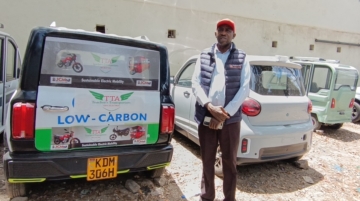
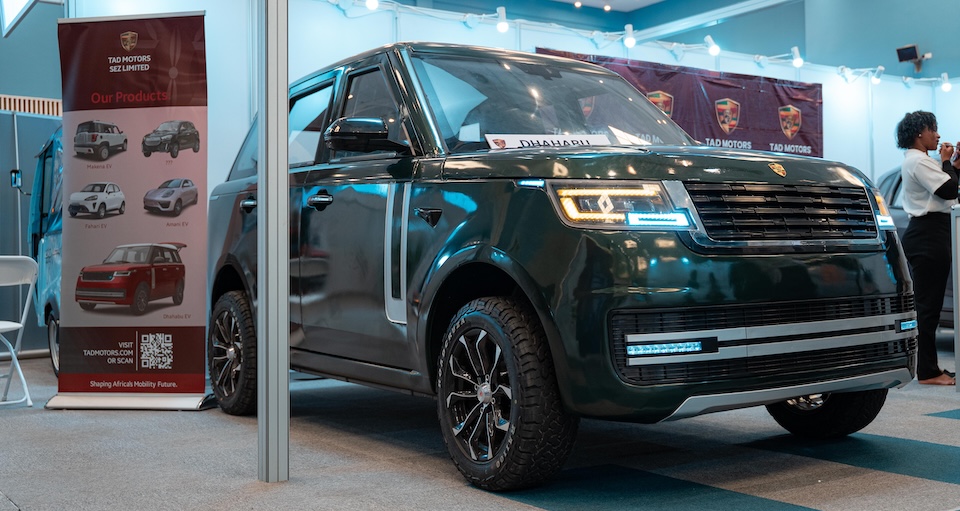
In Kenya, TAD Motors is launching what it calls the country’s first “homegrown” electric vehicles, partly built from Kenyan-sourced steel and partly assembled with key components (such as batteries and electronics) imported from China.
Why This Matters: The founder, engineer Tadesse Tessema, frames the venture as more than “bolt-and-screw” assembly. He instead sees it as the start of an authentic Kenyan automotive brand aiming for local manufacturing and, eventually, up to 90% local content by 2026. This venture has the potential to change EV manufacturing dynamics not only in Kenya but across the continent, lessening Africa’s dependence on imported vehicles.
BYD Accelerating South Africa Expansion After Hitting Targets Earlier Than Expected
Driven by strong demand, BYD is speeding up its dealership expansion in South Africa after surpassing its target of 35 locations earlier than expected in June. The company now plans to establish between 60 and 70 dealerships nationwide by the end of 2026, aiming to deepen its presence in the electric and hybrid vehicle market.
Why This Matters: BYD plans to build as many as 300 fast-charging stations across South Africa by the end of 2026. With the government signaling potential incentives for electric vehicles, the company could capitalize on competitive pricing, a growing charging network, and rising consumer interest to accelerate EV adoption nationwide. This could create an environment similar to China, where the company has managed to undercut competition, leading to its dominant role in the global EV market.
China to Ban Export of Certain Models
Beginning January 1, 2026, all battery-electric passenger vehicles (BEVs) exported from China will require a formal export license. This regulation aims to raise safety, quality, and after-sales service standards. The rule marks a shift from volume-driven exports to a “quality-first” export model.
Why This Matters: For African buyers and importers of Chinese EVs, the new export rules could represent a turning point. By filtering out substandard models and enforcing post-sale support, the policy may improve vehicle reliability, safety, and service standards. That could build greater confidence among African consumers and investors, potentially accelerating EV adoption on the continent and reducing risks tied to imports of low-quality or unsupported vehicles.
BYD’s Denza Challenges Luxury SUVs on Design, Premium Features
BYD’s Denza SUV, with its sleek design, premium features, and aura of prestige, is being hailed as a “half-price Range Rover.” By offering the look and feel of a high-end luxury vehicle at a fraction of the cost, it could make aspirational SUVs more accessible in emerging electric-vehicle markets, where brand prestige still carries significant weight.
Priced well below its Western competitors, the Denza SUV underscores a broader trend: luxury and affordability are increasingly converging in the EV market, bringing high-end vehicles within reach for a growing number of consumers.
Why This Matters: For African consumers, this trend could reshape the car-buying landscape. Cheaper luxury or near-luxury SUVs may become more accessible, making previously out-of-reach vehicles an option.
In context
China’s automakers are reshaping Africa’s vehicle market, exporting affordable EVs and gasoline cars while local ventures rise, making luxury, reliability, and electrification more accessible than ever.
The takeaway:
China’s push in both gasoline and electric vehicles is reshaping Africa’s roads: cheap Chinese cars are flooding markets, BYD is rapidly expanding across South Africa, and Kenya is building its first homegrown EVs. With rising affordability, luxury-style EVs, and new quality standards for exports, African consumers are gaining unprecedented access to vehicles—setting the stage for a fast-evolving, China-influenced auto market across the continent.