This is a free preview of the upcoming Africa EVs Weekly Digest, part of the new CGSP Intelligence service.
Many African countries are talking up local electric vehicle (EV) manufacturing, but the lack of infrastructure and reliable energy remains the Achilles heel of the continent.
Chinese automakers are becoming the alternative, even venturing into markets where political instability threatens the business environment.
And to make up for the shortfall in local manufacturing, imported parts continue to flow into various African countries, where markets are already getting accustomed to Chinese EV tech. This is driven by partnerships and investments aimed at offering reliable mobility solutions.
This week in Africa’s EV scene:
Kenya’s EV Startup Builds Vehicles Giving Farmers Charging Independence
Ecomobilus is taking a different approach by building vehicles that can be easily charged at home, powered by solar energy, and “tropicalized” to handle rough roads, heat, and heavy loads. The result may be slightly more expensive upfront, but it works.
Why This Matters: In Kenya and across Africa, farmers are the backbone of the economy. Affordable solutions to some of their most back-breaking work could be a welcome relief. With limited Chinese EV tech in agriculture, Ecomobilus promises not only lighter workloads but also profitability once the company scales production.
Chinese Automaker Chery SA to Buy Nissan’s South Africa Rosslyn Plant
Chery Automobile’s South African unit will acquire a local manufacturing facility from Nissan Motor, marking a notable shift in the country’s automotive landscape as Chinese carmakers deepen their footprint on the continent.
Under the agreement, Chery South Africa will purchase the land, buildings, and related assets of Nissan’s Rosslyn plant, including a nearby stamping facility, by the middle of this year. The transaction is subject to regulatory approvals.
Why This Matters: Chinese automakers are entrenching themselves in South Africa’s auto sector, and this latest acquisition shows that competition will only get stiffer in the country where almost ten Chinese automakers are establishing themselves.
A Journey of Parts For Vehicle Assembly in Kenya
The mass transit company BasiGo will continue importing Completely Knocked Down (CKD) kits for local assembly. The decision is driven by economies of scale. Currently, the company is assembling vans commonly used for intercity commutes.
Why This Matters: Full vehicle manufacturing in Kenya will take time, as the transport sector is small and remains reliant on second-hand vehicles. Companies that become first movers in the EV sector at whatever level of the value chain could be an advantage when the sector catches up, which could translate to profitability
Ghana to Accelerate Local Vehicle Assembly With Two Chinese Companies
The Ghanaian government has signed a memorandum of understanding with Shenzhen New Jekyll, a Chinese electric-vehicle company, to establish an EV assembly plant in the country, as it moves to position itself as a manufacturing hub in West Africa’s nascent electric-mobility industry.
Officials also said Ghana is in talks with Chery International, one of China’s largest automobile exporters, to set up a second EV assembly facility, underscoring growing interest from Chinese carmakers in Ghana’s automotive ambitions.
Why This Matters: Ghana imports more than 85% of its petroleum products, which raises transport costs. A government-driven shift to electric vehicles would reduce the import bill and reroute fuel costs into more productive economic sectors. As always, the biggest beneficiaries of such a shift would be early EV adopters, who will have laid the groundwork for their businesses to take off once a comprehensive government plan is in place.
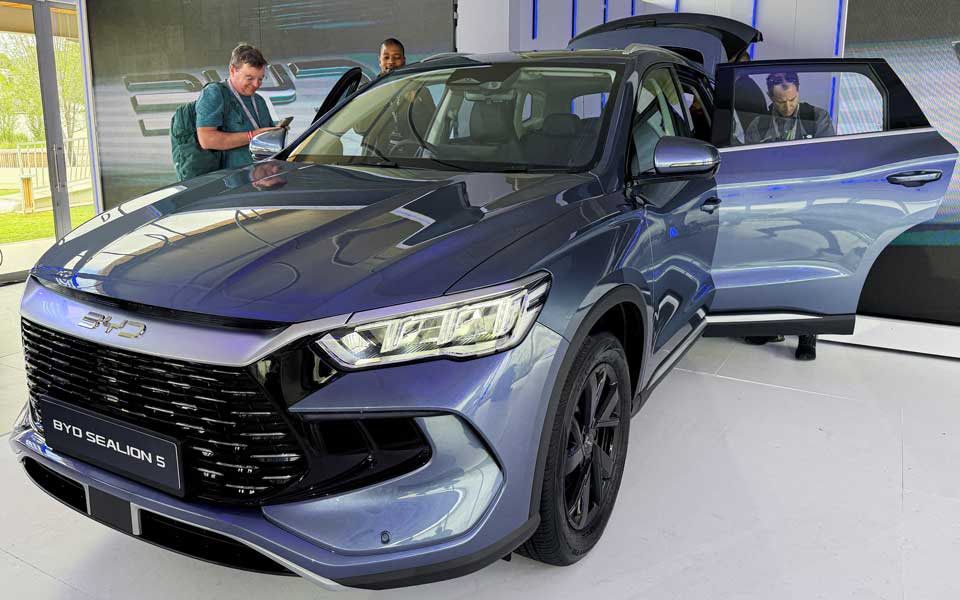
BYD Opens Tanzania Brand Centre Amid Africa Expansion
The opening of BYD’s first brand center in Tanzania marks another milestone in the Chinese automaker’s measured expansion across Africa’s emerging electric-vehicle markets.
The facility functions as a showroom and a hub for sales and after-sales service, rather than a manufacturing site, reflecting the company’s cautious, market-by-market approach to the continent.
Why This Matters: Electric vehicle manufacturing remains an aspiration for many African countries, whose infrastructure is limited. Tanzania’s latest election violence and upheaval have not deterred BYD from setting up shop there. This sets the stage for expansion in a country with limited spending power, and it could be a pointer to the lengths Chinese automakers will go to offload the inventory they’re struggling to sell.
In context
African countries will continue relying on Chinese EV technology at least in the foreseeable future due to various limitations in vehicle manufacturing. As such, local players are taking the most practical options, such as CKD assembly, to ensure they create and sustain markets for their vehicles.
The takeaway:
The lack of a vibrant vehicle manufacturing sector in many African countries means that most markets will continue to rely on second-hand vehicles from various countries, while imports from China will continue to grow. Unless governments decisively act to improve their manufacturing sectors, the auto market dynamics will remain beholden to foreign interests, hampering independence and autonomy.