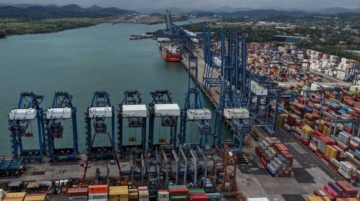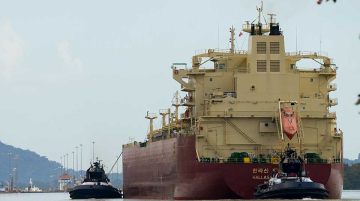
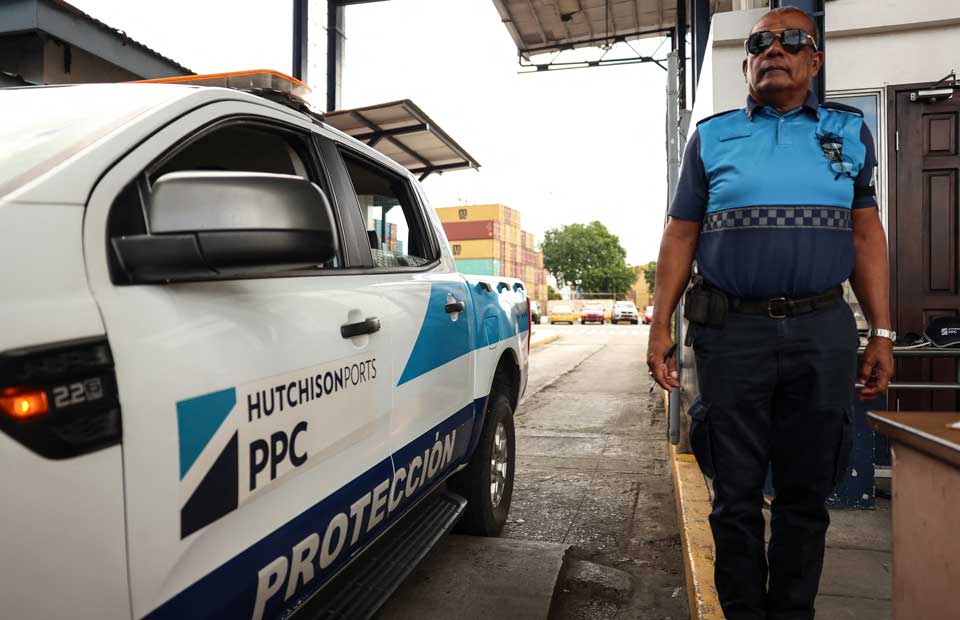
In the wake of the forced transition at the ports of Balboa and Cristóbal, Panamanian Foreign Minister Javier Martínez-Acha sent a clear message to the international community: Panama is a country of legal certainty, and the government is “simply respecting a Supreme Court ruling” regarding the ouster of Hutchison Ports.
It is a convenient diplomatic narrative, but a quick comparison with another recent Supreme Court (CSJ) ruling exposes a glaring contradiction. When we place the government’s aggressive dismantling of Panama Ports Company (PPC) next to its delicate handling of the Canadian-owned Minera Panama (First Quantum Minerals), the illusion of impartial justice fades. What emerges instead is a “rule of law” heavily conditioned by geopolitical alignment and U.S. pressure.
The Hutchison Playbook: De Facto Expropriation
On January 29, 2026, Panama’s Supreme Court declared the 1997 contract and its 2021 extension with PPC unconstitutional. The government did not just oversee a legal transition; it immediately escalated to physical seizure. Through Executive Decree No. 23, the government ordered the Panama Maritime Authority to temporarily occupy the ports due to “urgent social interest”. Crucially, this occupation explicitly included Hutchison’s private movable assets, including cranes, vehicles, computers, programs, and proprietary software.
For the Hong Kong-based conglomerate, this goes far beyond a contract dispute; it is a de facto expropriation. Snatching private, billion-dollar logistical equipment and software under the guise of an administrative transition sends a chilling message to foreign investors. Hutchison is now demanding $2 billion in international arbitration, and the seizure of its private assets provides the company with near-perfect ammunition to argue that Panama violated investment protection treaties.
The Minera Panama Paradox
Now, contrast this with the government’s approach to the Cobre Panamá mine. In late 2023, the Supreme Court unanimously declared Law 406—the contract with Minera Panama—unconstitutional, citing a lack of public bidding, environmental hazards, and violations of sovereignty. In short, many of the same arguments used to strike down the Hutchison concession.
By the Foreign Minister’s logic applied to Hutchison, the government should have orchestrated an immediate, aggressive exit of the mining company. Instead, the Panamanian government has been engaging in negotiations with the mining firm aimed at a reopening of the copper mine and First Quantum paused its arbitration proceedings in March 2025 following signals from the Multino government that it was open to negotiation.
Even more provocative is Mulino’s explicit strategy to reopen the mine by bypassing the National Assembly entirely. He has stated that whatever agreement is reached to restart operations will not go to the Assembly for ratification as a new “Contrato Ley,” precisely to avoid “setting the country on fire again”.
Geopolitics Dictating the Law
Why does a Supreme Court ruling against a Chinese-owned port operator trigger an immediate, decree-led seizure of private assets, while a similar Supreme Court ruling against a Western mining company results in the government bending over backwards to find legal loopholes to keep the copper flowing without legislative approval?
The answer lies not in the Panamanian Constitution, but in Washington.
The aggressive push against Hutchison Ports aligns perfectly with U.S. strategic interests to purge Chinese influence from critical logistical nodes in the Americas. Meanwhile, First Quantum Minerals—whose shareholder base is largely composed of U.S. institutional investors, with the notable exception of China’s Jiangxi Copper—enjoys a vastly different treatment. The U.S. government views Western control of critical minerals like copper as essential, making the preservation of the Cobre Panamá mine a strategic priority. In fact, the Center for Strategic and International Studies, a Washington DC-based think tank, explicitly spelled out this logic in an April 2025 analysis: “For the United States, supporting the negotiations in Panama should be a strategic priority. It offers an opportunity to reinforce ties with a key regional ally, reduce dependence on China, and secure a reliable supply of copper—an essential resource for national security, economic growth, and the energy transition.”
The contrast between these two case studies shatters the narrative of strict legal compliance. By aggressively utilizing executive decrees to seize Hutchison’s private assets while simultaneously engineering workarounds to bypass the legislature for Minera Panama, the government is proving that legal certainty in Panama is no longer a universal guarantee. It is a variable that depends entirely on which great power backs your capital.
Pedro Armada is the Managing Partner at Armada Risk Consulting in Panama City.