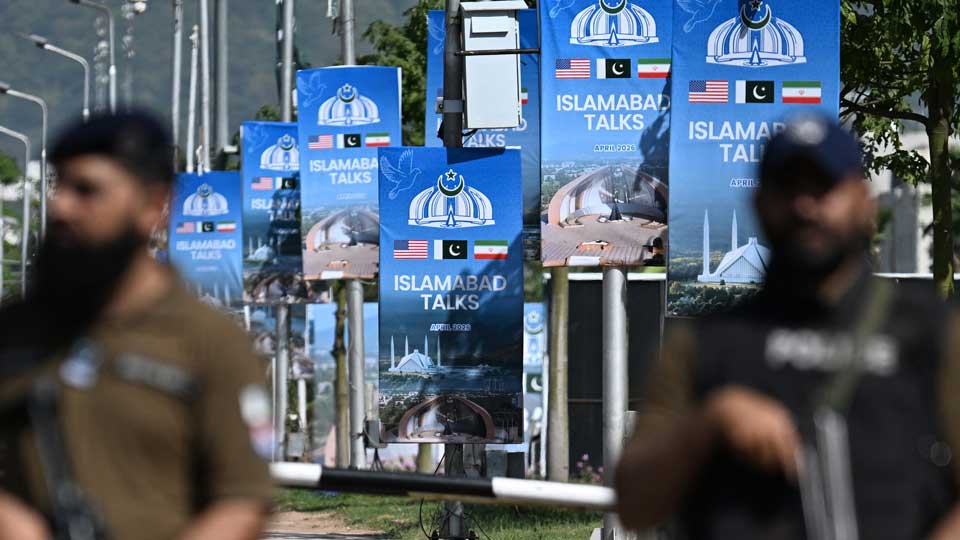
Embroiled in a war of its own, Pakistan’s emergence as a mediator in the war between United States-Israel and Iran is perhaps not something that could have been predicted, but equally, is a testament to the growing unpredictability in the current disruption.
Along its 2600-km-long border with Afghanistan, Pakistan has been engaged in recurring conflict with the Afghan Taliban since the latter came to power in 2021. The most recent escalation in February 2026 has resulted in an ‘open war’ and casualties on both sides.
On the other hand, Pakistan has successfully brokered some diplomatic wins for itself in recent years. Islamabad signed a defense pact with Saudi Arabia in September 2025. The latter stipulates that any aggression against either would be considered an aggression on both and warrant a joint response. Also in the pipeline is a Saudi-Turkey-Pakistan trilateral, as representatives of the three have been in talks exploring how such a defense pact would play out. The need for alliances and partnerships is understandably intertwined with growing uncertainty and conflict in the region, and aligning with a nuclear-armed partner is sure to be attractive.
Besides, proximity to the U.S. is likely to be another major factor. While close relations with U.S. presidents is not a novel concept to previous leaders of Pakistan, the relationship between the current Army Chief General Asim Munir and President Trump is indeed remarkable. Dubbed by Trump as his “favorite Field Marshall”, Munir has reportedly played a significant role in mediating the ceasefire between the United States and Iran.
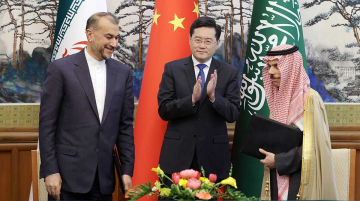
The peace plan proposed jointly with China is yet another one of Pakistan’s recent diplomatic achievements. A one-day meeting between Pakistani Foreign Minister Ishaq Dar and his Chinese counterpart Wang Yi in Beijing resulted in a five-point peace plan for the Gulf, including advocating for a cessation of hostilities, and the territorial integrity of Iran along with the Gulf states.
While the efficacy of this initiative is questionable, it is notable in the context of China’s relative passivity in the current conflict in the Middle East. Beijing has not been immune to scrutiny from analysts and China-watchers, particularly over its reluctance to take a larger stake in resolving overseas security issues, especially in the Middle East, amid renewed U.S. engagement.
China’s engagement with Iran is primarily economic, through the BRI, but has evidently precluded formal security guarantees. While China’s endorsement of the peace plan has been hailed in Pakistan as a victory for Islamabad’s diplomatic endeavors, it would be remiss not to exercise caution. The extent to which Beijing is willing to be involved seems to be a function, at least in part, of Islamabad’s involvement, a player more keen to exercise agency as a middle power affected by the energy shock from the Middle East.
Pakistan’s eagerness to take on a bigger role on the global stage may lead it to walk a diplomatic tightrope that could prove difficult to navigate. While the hope is that the pay-off from taking the centre-stage results in long-term credibility gains, it cannot be ignored that Islamabad’s charm offensive against Trump has little tangible backing. Bringing long-standing ally China into the mix may not sit well for too long. A delicate balance, a crucial neighbor, and an unpredictable White House – what could possibly go wrong?
Saniya Kulkarni is an executive program manager at LSE IDEAS