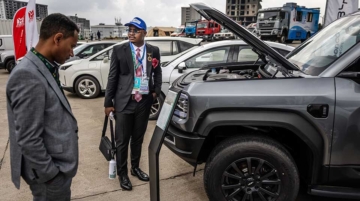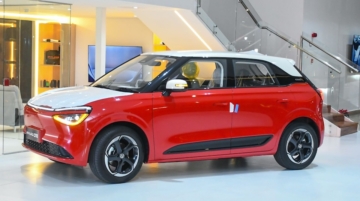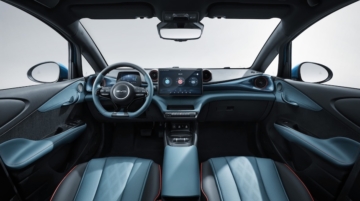

On the outskirts of Nairobi’s industrial zone, Engineer Tadesse Tessema, a soft-spoken power electronics graduate who built Ethiopia’s first car assembly plant nearly two decades ago, is once again trying to do something no one has done in East Africa: create a locally manufactured electric vehicle — built not just in Kenya, but by Kenya.
Born in Ethiopia and now a Dutch citizen, Tessema spent 15 years cultivating a vast network of suppliers in China, the heart of the global electric vehicle supply chain. That network is the foundation of his current endeavor. But this time, he says, the goal is not to import China’s cars. He wants to import Chinese EV manufacturing process knowledge.
“It feels like my home,” he says, settling into his chair in a modest office where engineers, many in their late 20s, move briskly between prototype chassis. “Now, I’m saying that I’m more Kenyan.”
Beyond Assembly Lines: Building a Kenyan Brand
His plan is both ambitious and defiant. Tessema is not interested in “bolt-and-screw” assembly lines, which have proliferated across Africa as Chinese and European vehicle makers seek access to emerging markets. He wants to build an original Kenyan brand starting with a compact electric car named TAD, the first three letters of his own name.
“If China can produce car parts, if Europe or America can, why not Africa?” he asks. “The technology is there. The only thing you have to do is bring it back here and do it.”
To build a Kenyan car, Tessema first went to China. He met with companies not as a buyer ordering turnkey vehicles, he says, but as a system architect selecting components one by one, the way a tech firm might assemble a smartphone. He identified a body supplier, sourced electronics through his 15-year network, and negotiated relationships with manufacturers of seats, glass, interior trims, and fiberglass.
The objective, he says, was affordability, the great dividing line between hope and reality in Africa’s electric mobility transition. Tessema wants to replace the flood of aging, secondhand imports that dominate African roads. His vehicles aim to sell for roughly the price of a used car, perhaps slightly higher, but with a new car’s reliability and drastically lower operating costs.

Local EV Manufacturing And Capital Barriers
Affordability alone will not make the TAD vehicle Kenyan. Local manufacturing, he argues, must come quickly, and it must go deep. He plans to manufacture up to 90 percent of the car locally by the end of 2026, beginning with body parts, then batteries, the most expensive component and the most costly to import.
“Bringing batteries from outside is a huge expense,” he says. “If you want to be affordable, you have to produce most of the parts here.”
A small but growing group of Kenyan suppliers has already signed on. The experiment is rewriting expectations in a country where, as Tessema points out with wry disbelief, even toothpicks are widely imported.
If the technical challenges are formidable, the financial ones are existential. Tessema says Africa’s greatest hindrance is not talent or demand, but capital — or the absence of it. He recalls receiving a Dutch government grant in 2005 to build Ethiopia’s first car plant. In Europe, he says, innovation is treated as a public good. In Africa, banks fund imports and not ideas.
“That’s killing,” he says. “Ideas, products all come from start-ups. But they cannot go further because they don’t have that little seed money.”
Many of those sidelined innovators, he notes, end up driving Ubers.
Training the Workforce of a New EV Industry
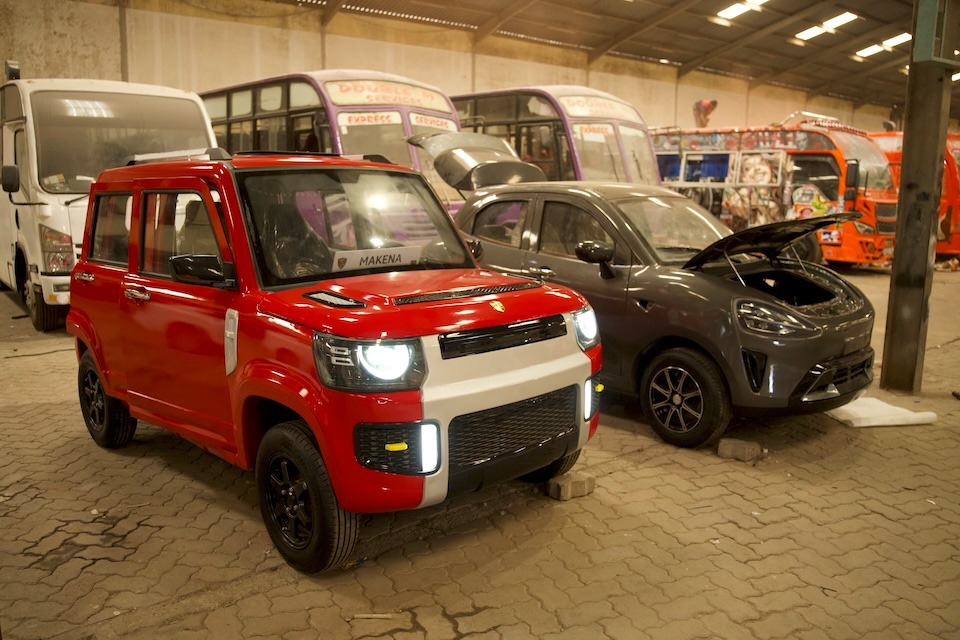
His solution is not simply to train workers, though he is doing that, but to institutionalize training. Workers have already traveled to China for months-long programs. Some will leave, he concedes. But the skills will stay.
“If people go, they go,” he says. “I will set up a training school. Anyone who goes away will be replaced.”
He insists that scale, not protectionism, is what convinces policymakers. In Ethiopia, he recalls, his plant faced double taxation on imported parts, a barrier that would have ended the venture before it started. He built the car anyway. Then he walked into the cabinet and asked them to cancel the tax. They did.
“Without having anything in your hand, asking for policy doesn’t make sense,” he says. “Do something. Show something. Then tell them the problem you are facing.”
His confidence remains steady, even when the conversation turns to energy, the Achilles’ heel of African electrification. Electricity in Kenya is expensive. Batteries are costly to charge. Tessema plans to build solar and biogas-powered charging hubs to cut costs for riders, especially the millions who depend on motorcycle taxis.
“We don’t want the grid,” he says flatly.
A Kenyan EV Future
He believes Kenya will see its first fully Kenyan electric vehicle by 2027. And after that? Commercial EVs including buses, trucks and vans where profits are bigger, and the case for electrification is strongest.
When that moment comes, he says, the company will go public through an IPO. He wants Kenyans to own it.
“If the company makes a profit,” he says, “money remains here.”
He smiles. The engineer, the entrepreneur, the pragmatist who has decided that seeing is believing.
“My goal,” he says, “is that everybody who is involved in this has to come out as a winner.”
And then, as if testing the name aloud, he repeats it: TAD — a Kenyan brand, built at home.