By Lukas Fiala
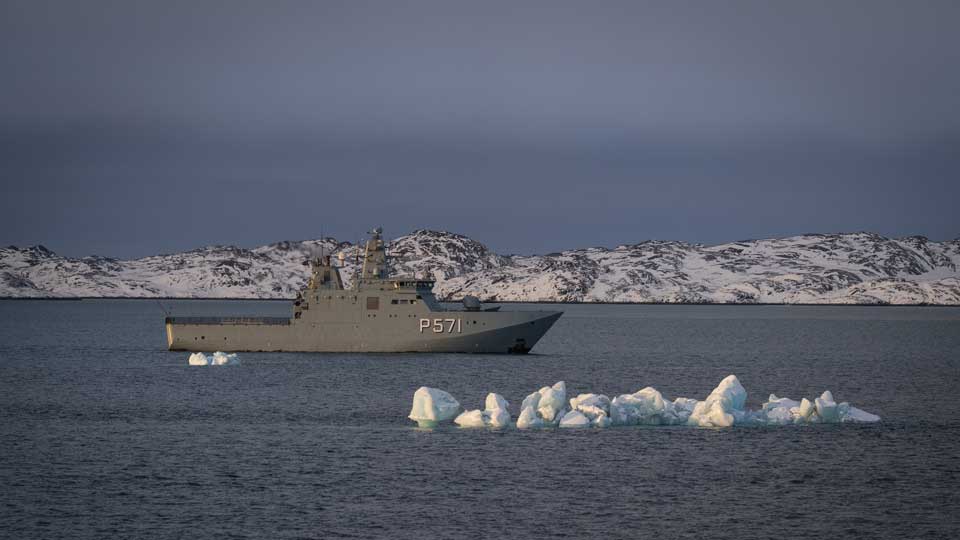
After a showcase of U.S. military might in Venezuela, the longstanding back-and-forth about a potential U.S. intervention in Greenland continues apace. With President Trump announcing earlier this week that the U.S. would acquire Greenland “one way or the other”, the contours of an international system once couched in liberal internationalist language are fraying rapidly.
While the White House has cited several reasons for its interest in Greenland, one area of commonality with U.S. policy in other regions has been the longer durée of resource nationalism.
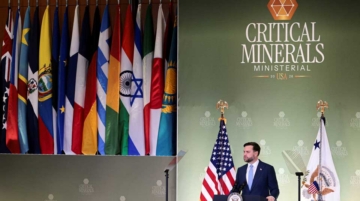
Far from focusing solely on hydrocarbons, as in the case of Venezuela, the White House has demonstrated an outright fixation on critical minerals such as lithium, cobalt, and rare earths, which are crucial inputs into modern technologies required for the green transition and defence innovation. Beyond Greenland’s geographic importance, Trump has eyed the country’s considerable mineral deposits to reduce supply chain vulnerabilities linked to China’s dominant role in the global mining and processing industry.
Regardless of feasibility, this places Greenland at the heart of a new scramble for resources to power twenty-first century technological revolutions, linking the administration’s expansionist ambitions to the U.S.’s competition with China over the future of innovation, industrialisation, and technology. Ultimately, this is not just about geopolitics or strategy but also more fundamentally about who controls the primary inputs of economic growth and innovation going forward.
And Greenland is not the only potential source Washington has pursued in this regard. In April last year, the U.S. and Ukraine signed the U.S.-Ukraine Minerals Deal, which establishes a joint reconstruction fund to invest in Ukrainian mineral reserves such as lithium, rare earths, and titanium. The linking of resource extraction to U.S. economic and security engagement for a democracy defending itself, and Europe at large, from Russian aggression, reflects how critical minerals sovereignty has been placed at the heart of a more transactional U.S. foreign policy.
Some have alleged that a similar minerals-for-security dynamic has been playing out in Africa, with the DRC and U.S. governments in late 2025 agreeing to a strategic partnership giving U.S. companies priority access to cobalt, copper, and zinc, among other critical minerals.
Efforts to friend-shore and de-risk supply chains for critical minerals serve obvious national security objectives. Given the fragmented nature of most of these supply ecosystems, they represent a potential geoeconomic chokepoint amidst the coming decades of industrial and technological transformation. China’s imposition of export controls on rare earths and permanent magnets is a case in point.
And yet, the direct application of state power to extract wealth is all too reminiscent of a bygone era of great-power competition. If the past provides any guidance for our contemporary pursuits, then it stands to reason that the most vulnerable communities will suffer the greatest negative externalities from the increasing geopoliticisation of critical minerals.
Furthermore, with U.S. rhetoric about Greenland straining the transatlantic alliance and potentially threatening the existence of NATO, it undermines the U.S.’s larger objective of competing with and deterring China and Russia. While we all wait for Washington’s next moves, we can only hope President Trump is aware of these potential consequences.
Lukas Fiala is the Head of China Foresight at LSE IDEAS