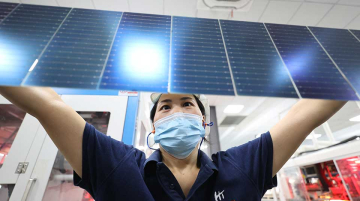
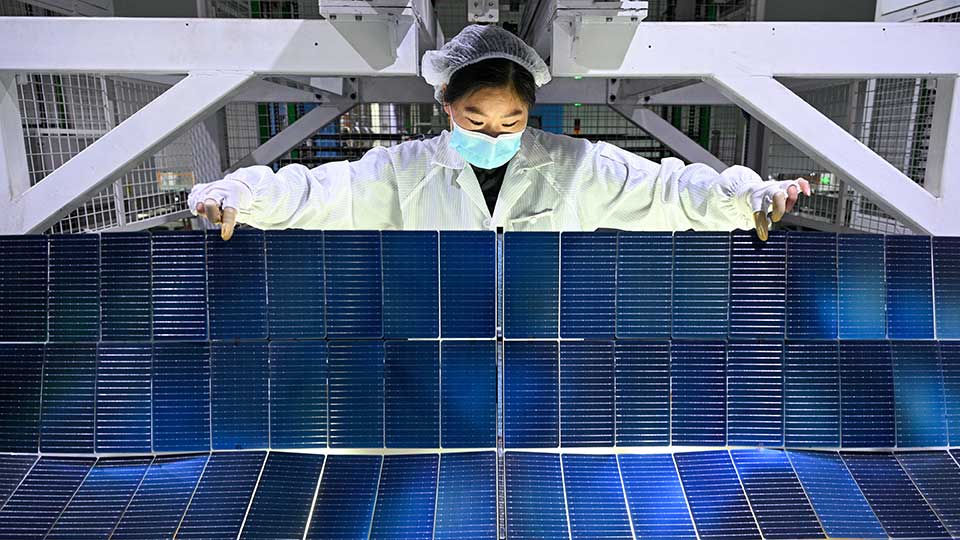
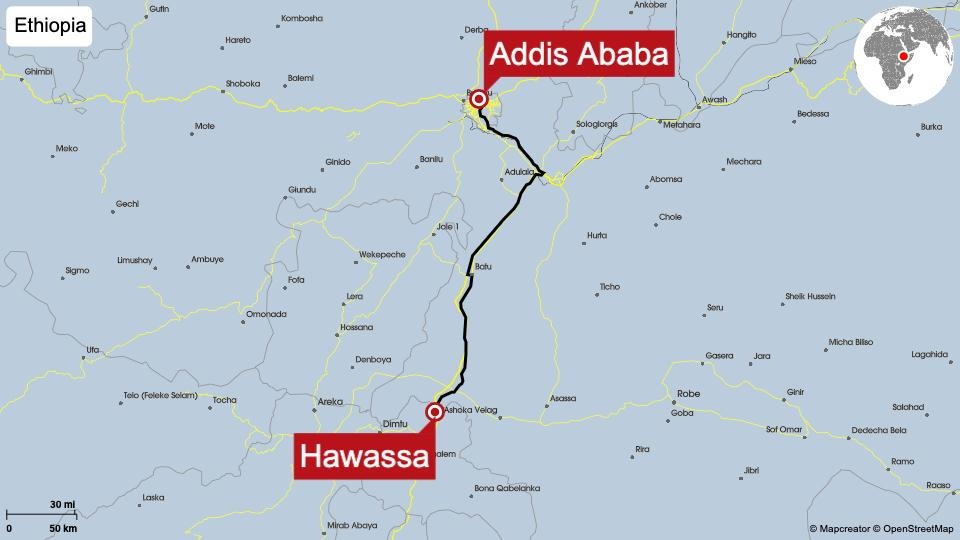
In an industrial park on the edge of Hawassa, a fast-growing Ethiopian city about 286 kilometers south of Addis Ababa, rows of automated machines are turning imported wafers into solar cells destined largely for export markets in the United States and Europe.
These factories are run by a growing number of Chinese-linked solar manufacturers establishing operations across Africa in such economic zones.
And while this shift reflects a broader restructuring of the global solar industry- as Chinese manufacturers, squeezed by shrinking margins at home and hit by U.S. tariffs and anti-circumvention rules targeting Southeast Asia, are increasingly looking to Africa as a new manufacturing frontier- another storm that could stop African manufacturing on its tracks is building up.
In April, U.S. Customs and Border Protection data showed a sharp increase in detentions of solar products linked to Ethiopia under the Uyghur Forced Labor Prevention Act. Products containing Ethiopian-made cells accounted for more than two-thirds of detained solar imports by value in the first two months of 2026.
To compound the situation, on Tuesday last week, U.S. solar manufacturers asked federal trade officials to investigate solar panel shipments from Ethiopia, arguing that companies may be using the country to bypass tariffs on Chinese-made products.
This latest development may slow the Chinese-driven solar juggernaut that was starting to gain momentum, enabling African countries like Ethiopia to edge up the manufacturing hierarchy in the energy sector, long dominated by Western companies and, in the last decade, China.
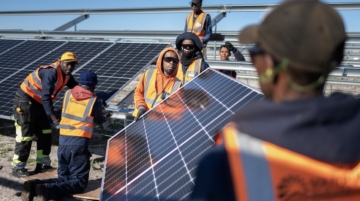
Currently, some factories are operating while others are under development in Ethiopia, Kenya, Egypt, Ghana, and Nigeria, often inside export-processing zones or special economic areas tied to Chinese investment and infrastructure projects.
Industry analysts say Africa offers lower labor costs, improved logistics, and, until recently, less scrutiny in the export markets. But that edge may start to fade amid current developments in the U.S. However, there is an advantage to all these bottlenecks.
Johnstone Chikwanda, a mechanical engineer in Zambia and an energy expert, notes that locally producing solar panels will reduce project turnaround times within a country and eliminate logistical nightmares, especially for nations whose imported consignments must pass through multiple states and navigate unpredictable transport infrastructure before reaching their destination.
He adds that it is desirable to see a company emerge in Africa, whether it develops its own technology or draws on Chinese knowledge to manufacture here.
“Of course, they (Chinese companies) have a competitive advantage because by making the solar panels there (In China), they have economies of scale, so their pricing is okay. But again, you cannot underestimate the cost of transportation. If you make them in Africa, you will have cut out that expense, which means you could compete fairly on price. And our labor costs are not really that high,” he said during an earlier interview.
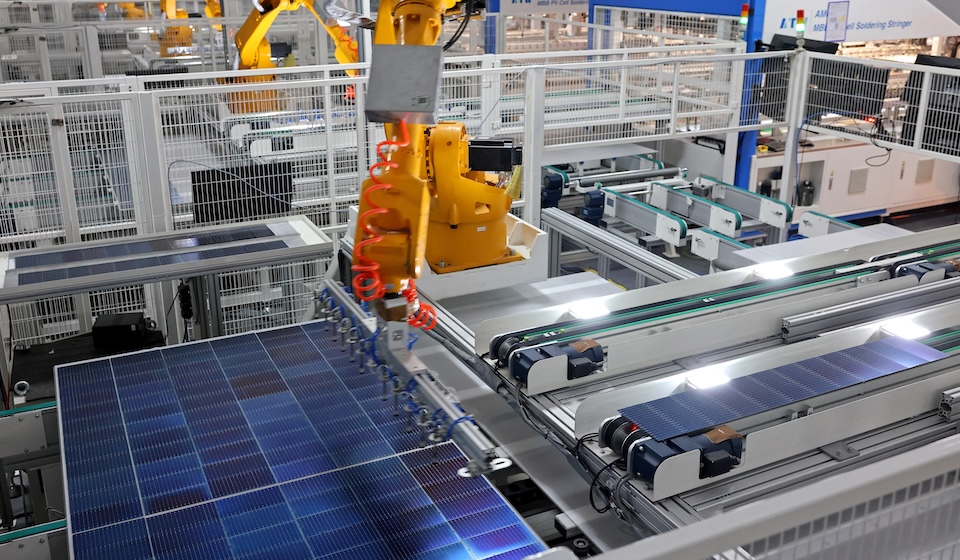
Ethiopia’s Growing Solar Cluster
The Hawassa Industrial Park hosts at least three Chinese-linked solar manufacturers, but they’re by no means the only ones there.
Japan’s TOYO Solar began pilot production in early 2025, following a $60 million investment the previous year. It is the most advanced manufacturer of tunnel-oxide passivated contacts (TOPCon), a solar cell that uses an ultra-thin insulating layer to optimize energy capture from sunlight. The cells are for the export markets.
The company plans to expand the Ethiopian factory to 4 gigawatts of solar panels from the initial 2 gigawatts.
In addition to TOYO, Singapore-based investors back Origin Solar, which operates as a technology partner to Canadian Solar, whose primary operating subsidiary, CSI Solar, is headquartered in China. It is publicly traded on the Shanghai Stock Exchange. The Canadian parent owns 63% of this Chinese subsidiary, while Chinese institutional investors and public shareholders own the remaining 37%.
In Ethiopia, the company is building a factory with a 4.2-gigawatt solar cell production line using TOPCon and PERC technologies aimed primarily at the U.S. and European markets.
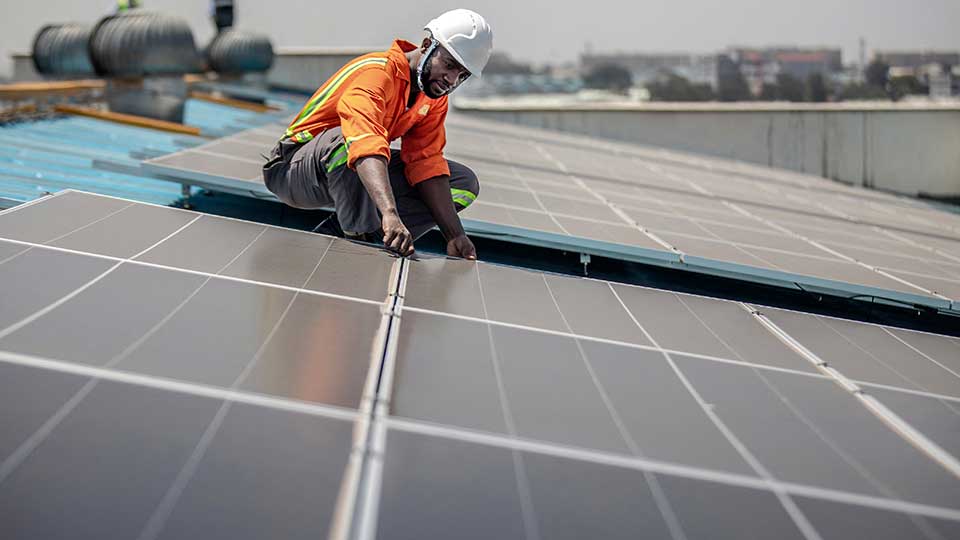
But while Ethiopia features prominently in solar manufacturing, Egypt is also another major destination for Chinese solar investment, particularly inside the Suez Canal Economic Zone. Among the largest projects is one by Chinese-owned JA Solar, which is developing solar cell and module production facilities aimed at the European and Middle Eastern markets.
ET Solar, another Chinese-owned company headquartered in Nanjing and Wuxi, is also building manufacturing operations for both cells and modules in Suez. In contrast, JetSolar, a newer Chinese-linked brand focused on module assembly, has also established operations there.
Other countries like Kenya, Ghana, and Nigeria are also rising, with sporadic but increasing solar value chain activities, from assembly to full manufacturing.
But while much of Africa’s manufacturing remains export-oriented rather than focused on domestic energy access, the rapid emergence of factories across the continent suggests it is becoming an increasingly important link in the global clean-energy supply chain — even as geopolitical tensions and trade disputes follow the industry there.