By Andrea Ghiselli
This edition of the ChinaMed Observer returns to the Chinese official narrative and expert debate on the ongoing war in Iran. In a previous issue, we examined initial Chinese reactions: restrained, framed in international law, and calling for dialogue and de-escalation. Moreover, as discussed in an interview with Esfandyar Batmanghelidj, China, for the moment, is unlikely to take concrete measures to actively support or “rescue” Iran.
Two weeks on, the picture is becoming more defined and, seemingly, more assertive. A closer read of official statements and expert commentary suggests an apparent hardening of Beijing’s position. At the same time, Chinese analysts have become somewhat more optimistic about the resilience of the Iranian regime. For the near-term, they assess Iran’s strategy as effective, but do not see any prospects for de-escalation. Alongside these assessments, a new layer of interesting commentary has begun to shed some light on what the war means for China itself, particularly its implications for its relations with the United States and Iran.
China’s Evolving Official Position
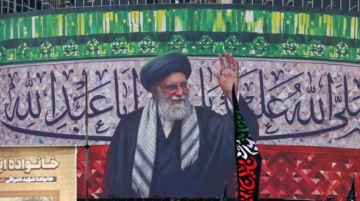
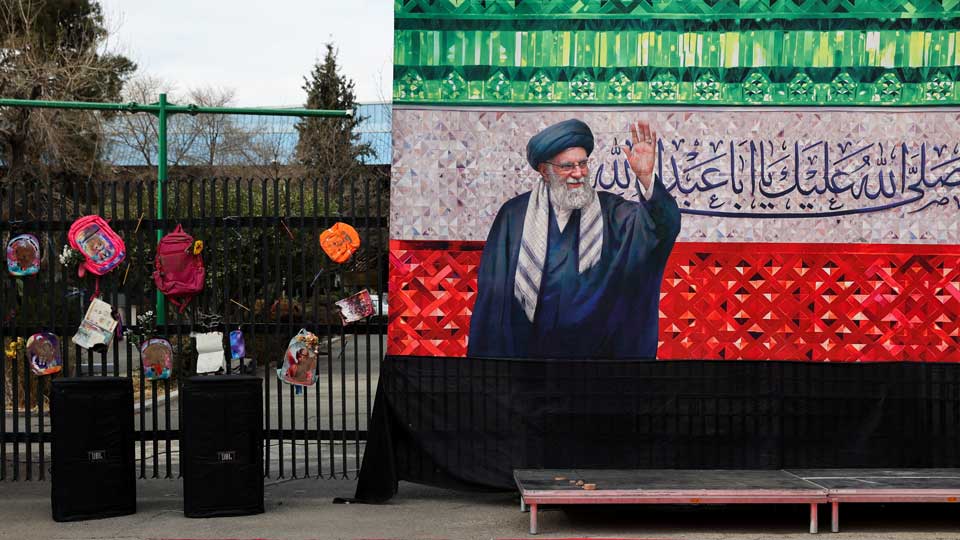
As Pekingnology’s Zichen Wang has noted, Beijing’s initial response was rather mild and selective. Chinese officials were willing to condemn specific acts, such as the assassination of Iran’s Supreme Leader Ayatollah Ali Khamenei. At the same time, however, they stopped short of directly condemning the U.S. or Israel; China was merely “highly concerned,” and Iran’s sovereignty “should” be respected.
In comparison, the Chinese Ministry of Foreign Affairs’ (MFA) reaction to the U.S. attack on Venezuela was far more explicit:
“China is deeply shocked by and strongly condemns the U.S.’s blatant use of force against a sovereign state and action against its president. Such hegemonic acts of the U.S. seriously violate international law and Venezuela’s sovereignty, and threaten peace and security in Latin America and the Caribbean region.”
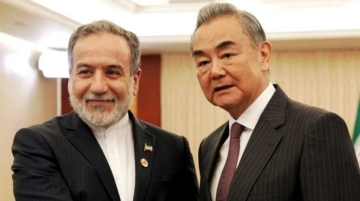
While Iran and the ongoing war in the Middle East remain central fixtures of the Chinese MFA’s regular briefings, Beijing’s position has not changed. Over the past few weeks, Chinese Foreign Minister Wang Yi and Special Envoy of the Chinese Government on the Middle East Issue Zhai Jun have engaged in much diplomatic outreach, holding phone conversations and meetings with counterparts across the region. Much of this effort has been focused on Gulf Cooperation Council (GCC) countries, though Wang Yi has also called the Iranian Foreign Minister Abbas Araghchi on March 2 and Israeli Foreign Minister Gideon Sa’ar on March 3.
Three elements stand out in the readouts. First, Wang Yi’s persistent refusal to directly address Iranian attacks on GCC countries. The Foreign Minister has consistently called for the respect of each country’s national sovereignty, without explicitly naming Iran as a violator.
Second, the issue of Chinese citizens in the region has become prominent. On March 10, the MFA announced that more than 10,000 Chinese citizens had already been evacuated. However, this is just a drop in the ocean. In 2025, more than 300,000 Chinese lived in the United Arab Emirates alone. There is not much that China can do beyond asking local authorities to provide support.
Finally, much like Wang Zichen pointed out, Wang Yi consistently expressed opposition to the U.S. and Israeli attacks, including during his call with the Israeli Foreign Minister. However, condemnation has so far remained indirect. For example, in a call with his Omani counterpart, Wang stated that:
“The United States and Israel deliberately provoked a war against Iran, which clearly violated the purposes and principles of the UN Charter.”
Recent weeks have seen further rhetorical shifts from the Chinese. While Beijing did not describe itself as “shocked” by the killing of Ayatollah Ali Khamenei, MFA Spokesperson Lin Jian declared that “China is shocked” when a CCTV journalist raised the death of Ali Larijani, the Iranian Secretary of the Supreme National Security Council.
A more consequential shift occurred on March 23, when Zhai Jun addressed an event hosted by the China Public Diplomacy Association in Beijing. In outlining his recent diplomatic activities and China’s official position, Zhai largely echoed Wang Yi’s outreach, focused on Arab states and Iran (with no mention of Israel), and reiterated the line that “this is a war that should never have happened.” However, compared to earlier comments by Chinese officials, Zhai’s remarks suggested a hardening of China’s position, as he was much more explicit in assigning blame. To begin with, he stated that:
“Against the backdrop of the widespread expectation for peace and stability among the people of the Middle East and the ongoing new round of negotiations between Iran and the United States, the United States and Israel suddenly provoked a war, rendering diplomatic efforts futile.”
Then, while Chinese officials in the past matter-of-factly stated that the United States and Israel violated international law, Zhai added that:
“The United States and Israel attacked Iran without authorization from the UN Security Council, blatantly violating the purposes and principles of the UN Charter and international law. China firmly opposes and condemns this. In discussing solutions to the current crisis, it is essential to grasp the root causes and the full picture of this conflict.”
Probably in reaction to the rapidly expanding energy and economic crisis, Zhai said that:
“The current conflict seriously endangers the security and stability of the Middle East, impacts the global economy, energy, and shipping lanes, and threatens the well-being of all countries. Arab countries, especially those in the GCC, are suffering undeservedly. Under no circumstances should the ‘red line’ of protecting civilians be crossed in military conflicts; non-military targets such as energy, economic, and livelihood targets should not be attacked, and the safety of international shipping lanes such as the Strait of Hormuz should not be compromised. China condemns all indiscriminate attacks on civilians and non-military targets.”
And yet, for all the rhetorical sharpening, he failed to articulate China’s intentions with regard to its potential role in the conflict. Zhai simply told his audience that:
“As a responsible major power and a sincere friend of countries in the Middle East, China will maintain close communication and coordination with all relevant parties to ‘extinguish’ the tensions, ‘pave the way’ for a ceasefire, ‘build bridges’ for dialogue, and make unremitting efforts to promote regional peace and stability.”
Chinese Experts Discuss the Future of the Regime
Writing in Qiushi, the Chinese Communist Party’s official theoretical journal and news magazine, Tang Zhichao, a senior expert at the Chinese Academy of Social Sciences, summarized the impact of the U.S. and Israeli attacks on the Iranian regime:
“The U.S.-Israeli military strikes have severely impacted Iran’s political order. First, the killing of Iranian political and military leaders has jeopardized the government leadership and military command chain. On February 28, the first day of the conflict, Leader Khamenei, along with key leaders such as the Minister of Defense, the Chief of the General Staff, and the Commander of the Revolutionary Guard, were killed in attacks. The U.S. and Israel attempted to use ‘decapitation strikes’ to cripple the Iranian leadership and create conditions for regime change.
Second, the attacks on Iran’s political system and government institutions have disrupted the normal functioning of the state apparatus. Since the start of the war, the U.S. and Israel have continuously attacked political and military targets, smeared and attacked Iran’s political system, spread rumors of internal divisions within Iran’s political leadership, sowed discord between the Islamic Revolutionary Guard Corps and the regular government army, and instigated a mutiny within the Iranian military, intending to plunge Iran into turmoil and chaos.
Third, they have attempted to create division, endangering Iran’s national unity and territorial integrity. The U.S. and Israel have actively instigated internal unrest in Iran, openly supporting Kurdish anti-government forces in the war, attempting to create national division by introducing civil war, and putting pressure on the Iranian government.
Fourth, they have combined ‘color revolutions’ with military action. While militarily striking Iranian public security forces, the U.S. and Israel have attempted to incite the public to engage in ‘street revolutions’ to achieve their goal of overthrowing the Iranian regime.”
As discussed in our previous issue of the ChinaMed Observer, Chinese scholars initially debated whether the Iranian regime could collapse, even with Khamenei’s death. However, if anything, their assessment has since become more optimistic.
According to Shu Meng, a researcher at the Middle East Research Institute of Shanghai International Studies University, the selection of Mojtaba Khamenei, the son of Ali Khamenei, as the new supreme leader should not be read solely through a dynastic lens. Rather, it reflects a wartime state of emergency and the imperative to ensure regime survival by elevating a candidate capable of quickly securing the loyalty of the Islamic Revolutionary Guard Corps and stabilizing both the military and political system.
A similar emphasis on consolidation emerges in the analysis of Dong Manyuan, a researcher at the China Institute of International Studies. In his view, the hardline tone adopted in Mojtaba Khamenei’s first public address serves a clear political function, reinforcing authority and rallying elite loyalty at a moment of acute crisis. The outcome, Dong suggests, is a significant shift in Iran’s internal balance of power: conservative forces have been strengthened, while reformist and pragmatic factions have been further marginalized.
Writing in Phoenix News, Li Shaoxian, Honorary Dean of the China-Arab States Research Institute at Ningxia University, offered a structured reading of that same speech, identifying three aspects:
“First, he highly praised the united will of the Iranian people, the Revolutionary Guard, and the military to resist; second, he emphasized that the Strait of Hormuz would remain closed; and third, he appealed to Gulf countries and regions, calling on them to expel U.S. military bases. Khamenei’s statement is permeated with a central theme: the unwavering will to resist.
Therefore, things are now complicated. The U.S. wants to end the war, but the initiative lies with Iran, and Iran is not prepared to easily let the U.S. and Israel off the hook.”
At the same time, Chinese analysts are far from sanguine about the regime’s underlying vulnerabilities. The killing of Ali Larijani on March 17, regarded as the most senior figure eliminated since Khamenei, has heightened concerns about institutional resilience. Li Zixin, Assistant Researcher at the China Institute of International Studies, argued that Larijani’s death disrupts the upper echelons of Iranian decision-making, weakening strategic coherence, resource allocation, and inter-service command structures.
For Li, Larijani occupied a rare bridging role within Iran’s political system. With extensive experience in both domestic governance and direct nuclear negotiations, he served as a “buffer” between hardliners and pragmatists within Iran. His assassination, Li believes, is likely to tilt the balance of power further toward hardline conservative forces, consolidating their power over diplomatic and security affairs. This will harden Iran’s stance on the nuclear issue, complicating any future diplomatic pathway to resolving the Iranian nuclear impasse.
Other analysts point to structural pressures that extend beyond elite politics. According to Fudan University’s Sun Degang, “the situation in Iran remains far from optimistic.” Despite recent counter-espionage successes, including the reported arrest of 500 spies, Iran continues to deal with the deep and long-standing infiltration by the U.S. and Israel, both through human and technical means. The penetration of a large number of surveillance systems ensures that Iran’s counter-espionage pressure will remain acute.
At the same time, internal cohesion, while temporarily strengthened, offers only a partial buffer. Dong Manyuan notes that while public support appears to be currently shifting toward Mojtaba Khamenei, this political consolidation does little to resolve Iran’s underlying economic fragilities. Inflation, currency devaluation, rising unemployment, and livelihood difficulties remain extremely thorny issues, ones that are likely to resurface with urgency once the immediate pressures of war begin to recede.
Dong is not alone in noting these vulnerabilities. Fan Hongda, an acute observer of Iranian politics at Shaoxing University, was in the country shortly before the war broke out. An article originally published by Jiefang Daily reported some of his observations:
“Shortly after returning home, Fan Hongda wrote an article observing and reflecting on the current situation in Iran. In the article, he wrote: Although there are many uncertainties in the future, for Iran, it is almost certain that 2026 will be the year or starting point for significant changes in the country. […]
On January 27, Fan Hongda arrived in Tehran. His first impression was one of calm. People were going about their lives as usual. On February 11, Fan Hongda observed the grand parade celebrating the victory of the Islamic Revolution on Revolution Street in Tehran. He recalled, ‘Compared to previous years, the number of people participating in the demonstration this year was significantly larger, and the number of security personnel and police along the route was also noticeably increased. The entire demonstration went very smoothly without any incidents.’
Beneath the calm surface, Fan Hongda also vaguely sensed an undercurrent. For example, his China Mobile phone, with international roaming enabled, had no signal. Talking with local people, he could clearly feel their anger and discontent. In Fan Hongda’s words, it was a peculiar sense of disconnect: the streets were calm, but people’s hearts were churning.”
Chinese Experts and What Comes Next
On March 11, Iranian President Masoud Pezeshkian stated that the only way to end the ongoing conflict between the U.S., Israel, and Iran is the recognition of Iran’s “legitimate rights,” alongside firm international guarantees against “future aggression.”
Commenting on these remarks, Niu Xinchun, executive director of the China‑Arab Research Institute at Ningxia University, suggested that Iran’s demands are demands made by a victorious nation against a defeated one. According to Niu, the U.S. is currently not ready to sit at the negotiating table as a defeated nation. As a result, he argues, there is no basis for peace talks between the two sides.
In an article published by Phoenix News, Dong Manyuan argues that Trump initially sought a temporary halt to military operations, but two factors undermined this intention: first, the difficulty in persuading Israel, whose war resources were not yet exhausted, to cease hostilities; second, Iran’s explicit statement that the initiative to end the war does not rest with Washington.
Within Chinese commentary, Israel is identified as the main reason for the war and the primary obstacle to peace. Famous commentator “Chairman Rabbit” wrote an entire article for Guanchazhe arguing that “From the very beginning, Trump’s attack on Iran was for Israel’s sake—this was entirely a war waged by Israel” and that “the whole world lives in one world, and the United States lives in Israel’s world.”
By contrast, Li Weijian, a senior scholar at the Shanghai Institutes of International Studies, argued that there now exists a “strategic temperature difference” between Washington and Tel Aviv: Trump faces domestic pressure to end the war, while the Israeli political leadership is incentivizing the prolongation of it to avoid domestic legal and political accountability. Therefore, “in the next phase, the U.S. may gradually tighten its support for Israel, forcing it back to the negotiating table, though both sides will need a dignified “exit.”
On this note, Cao Yang of the China Institute for International Strategic Studies wrote that:
“Iran’s asymmetric warfare strategy of ‘missiles + drones’ is dragging the U.S. military into a quagmire. Using millions of dollars’ worth of anti-aircraft missiles to intercept drones costing tens of thousands is increasingly costly; even with ample funds, such attrition is unsustainable. Moreover, with U.S. debt exceeding $39 trillion, the U.S., as the world’s leading debtor, rightfully deserves its heavy burden. As long as Iran continues to attack U.S. bases in the Middle East, and even strategic assets related to oil and gas infrastructure, the U.S. will inevitably have to back down and adjust its strategy towards Iran—this is an inevitable outcome.”
Yet, in the short term, analysts remain divided over the direction of the war. Sun Degang identifies two possible scenarios. First, the U.S. military may attempt to seize control of Kharg Island, thereby cutting off Iran’s principal oil export terminal and using it as leverage to force negotiations. The second, the U.S. and Israel may attempt to assassinate Mojtaba Khamenei in order to declare victory.
Regarding the first scenario, Li Zixin argues that a potential U.S. ground operation against Iran would likely be limited in scope, more akin to a targeted raid or temporary occupation operation than a full-scale invasion. That said, experts like Niu Xinchun and Shanghai International Studies University’s Liu Zhongmin remain highly skeptical that occupying Kharg would meaningfully shorten the war. On the contrary, they suggest it could have the opposite effect.
Chinese attention is also turning to the situation of the Gulf states, which are increasingly exposed to the spillover effects of the conflict. The director of the Center for African and Arab Studies at Zhejiang Normal University Yang Yuxin points out that these countries “are caught in a strategic dilemma determined by their security strategies and geographical locations. They had no intention of participating in the war, but their hosting of U.S. military bases and proximity to Iran has passively placed them on the frontline. Their numerous oil fields, ports, airports, and other economic facilities make them highly vulnerable targets in the conflict.”
Now, their security model is in crisis. As Yang writes:
“The deep-seated structural pressures facing the Gulf states are becoming increasingly apparent. For a long time, the Gulf states have relied on a security-development model of ‘trading internal development space for U.S. security guarantees.’ They have housed numerous U.S. military bases and purchased hundreds of billions of dollars’ worth of advanced U.S. defense equipment. They rely on U.S. security guarantees to deter adversaries and protect the Gulf region in the event of conflict. But this crisis has exposed the fundamental contradiction of this model; precisely because these countries host U.S. military bases, they have become targets for Iranian missiles and drones.
Finding a new balance between ‘alliance security commitments’ and ‘strategic autonomy,’ and reducing over-reliance on a single external power, has become a crucial issue that the Gulf states must confront and resolve. For the Gulf states, the real challenge lies not only in dealing with the current conflict, but also in how to reconstruct a more sustainable and autonomous security architecture in the post-conflict era.”
Li Weijian advances a similar point. He suggests that “in the process of the transition between the old and new regional order, more and more Middle Eastern countries hope to break free from ‘proxy games’ and move toward regional reconciliation and independent development. Focusing on internal governance and development, and breaking the security dilemma dominated by external powers, is the only truly possible path.”
What About China?
Tang Zhichao wrote that Beijing’s stance is clear:
“it maintains that national sovereignty must be respected, as sovereignty is the cornerstone of the current international order. The sovereignty, security, and territorial integrity of Iran and other Gulf states should be respected and inviolable. China maintains that Middle Eastern affairs should be decided autonomously by the countries in the region, and that orchestrating ‘color revolutions’ and regime change is unpopular. China advocates that all parties return to the negotiating table, resolve differences through equal dialogue, and strive to achieve common security.”
That said, it seems unlikely that China’s declaratory framework will translate into any concrete action. Indeed, a growing strand of Chinese commentators has expressed the idea that this war is not about China. Chairman Rabbit and Zhou Bo’s Guanchazhe articles offer the clearest formulation of this belief. Zhou approvingly mentioned Kyle Chan’s Foreign Affairs article titled “China Is Winning by Waiting” and stated:
“This is indeed true. Reportedly, dozens of ships transiting the Strait of Hormuz have updated their destination signals to indicate that they are registered in China or have ties to China.
This is an unintentional advertisement for Beijing: security is linked to China, and chaos is linked to the United States. In 1994, U.S. National Security Advisor Anthony Lake designated North Korea, Cuba, Iran, Libya, and Iraq as ‘rogue states.’ Today, between Iran and the United States, whose behavior is more like that of a ‘rogue state’? Which U.S. official can still talk about a ‘rules-based international order?’”
Interestingly, while Zhou interprets the postponement of Trump’s trip to Beijing as a sign of the U.S. President’s weakness, Fang Ning of the Chinese Academy of Social Sciences hints that China might also not have wanted Trump to visit at this time:
“From the U.S. perspective, the conflict with Iran remains tense, and the Commander-in-Chief of the Armed Forces may not have time for a foreign trip. From China’s perspective, inviting the other side’s president to visit during a large-scale U.S. attack on Iran may not be appropriate, as Iran is a member of the Shanghai Cooperation Organization and has friendly relations with China.”
As for the trajectory of Sino-Iranian ties, Fan Hongda is the only one who briefly discussed their future. While a retired Chinese diplomat told the South China Morning Post that “Beijing’s economic leverage would keep Tehran engaged regardless of political shifts,” Fan expressed some doubts. Reflecting on his recent trip to Iran, he wrote that:
“[the Iranians] are considering domestic reforms, exploring how to make the country develop more healthily, and discussing different paths; many have a strong interest in the Chinese path. On the other hand, in the diplomatic arena, whether to improve relations with the West and how to handle attitudes towards countries like China are also key topics of discussion […] Many Iranian scholars are reflecting on past foreign policies, including whether the policy toward China was appropriate, and even whether the previous government missed opportunities to deepen relations with China.”
Conclusion
In this issue of the ChinaMed Observer, we continued to track the evolution of the Chinese narrative surrounding the war in Iran. Overall, China’s official position seems to be hardening, though the different choices of words might not necessarily reflect a meaningful reorientation in policy or Beijing’s point of view, especially as any shift is more about degree than substance.
At the level of expert discourse, Chinese analysts have become somewhat more confident in the Iranian regime’s resilience, even as they acknowledge severe structural constraints. Iran still faces enormous domestic problems, which the war is likely to intensify rather than resolve. Moreover, even if Tehran’s strategy appears effective, there is little expectation among Chinese commentators of an imminent end to the conflict.
Finally, the discussion reveals partial but important insights into China’s own perspective about the war’s broader implications for Beijing’s relations with the United States and Iran. There is no doubt that they reflect the views of at least a part of the Chinese elite. However, especially today, Sino-Iranian ties and China’s relations with the Middle East more broadly have become increasingly sensitive topics. As such, the reader must be aware there are possibly significant “known unknowns” in the available discourse, with certain positions, disagreements, or policy debates remaining deliberately obscured.
Dr. Andrea GHISELLI is Head of Research of the ChinaMed Project. He is also a Lecturer in International Politics in the Department of Social and Political Sciences, Philosophy, and Anthropology of the University of Exeter. His research focuses on Chinese foreign and security policy-making and China’s policy toward the Middle East and North Africa.